


Fall Riding Season Prep: Leather Care After a Dusty Rally
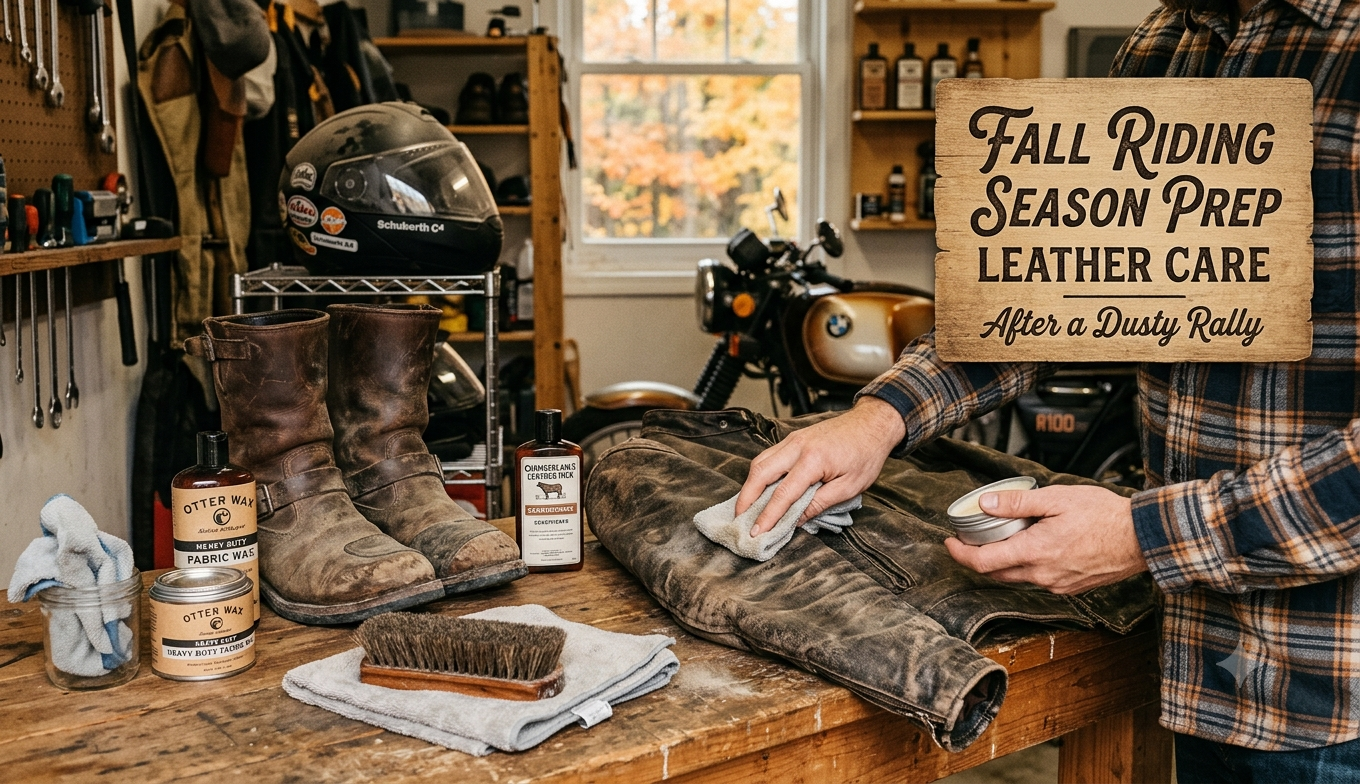
Summer rallies leave a mark, and not just the good kind you brag about at the campfire. Between the miles of open highway, the gravel backroads, and the inevitable dust storm that rolls through every outdoor rally from Sturgis to the Blue Ridge, your leather takes a beating. As the days shorten and temperatures start to drop, fall isn't just riding season prep for your bike. It's the season to take care of the gear that's been taking care of you.
Riders who skip this step often don't notice the damage until it's too late — a men's leather motorcycle jacket that's gone stiff in the shoulders, a women's leather motorcycle vest that's starting to crack along the seams, saddlebags that smell faintly of mildew from a rain-soaked ride home. Leather is forgiving, but only if you meet it halfway.
Why Dust Is Worse Than It Looks
Dust seems harmless compared to rain or road salt, but it's actually one of the sneakier threats to leather. Fine particulate works its way into the grain of the hide and sits there, acting like sandpaper every time the material flexes. Ride enough dusty miles — the kind you rack up on rallies through South Dakota, West Texas, or the high desert of Nevada — and that abrasive buildup slowly wears down the surface finish, leaving leather dry, dull, and more prone to cracking.
There's a chemical side to it too. Dust carries trace minerals and organic debris that pull moisture out of leather when they sit against it for hours at highway speed. Add sweat from a long day in the saddle, and you've got a recipe for leather that's lost its natural oils long before you even get home.
Step One: Get the Dust Out Before You Do Anything Else
The instinct after a long rally is to hang the jacket up and deal with it later. Resist that. Dust left to sit works itself deeper into the leather with every day that passes.
Start with a dry microfiber cloth or a soft-bristled brush and go over every seam, pocket, and panel. Pay extra attention to areas that flex — elbows, shoulders, the back panel of a men's leather motorcycle jacket or the back panel of a women's leather motorcycle jacket, or the seat pan on your bike. These spots take the most mechanical stress and show wear first.
Avoid shaking gear out aggressively or using compressed air at close range; both can drive dust further into stitching and seams rather than removing it. A slow, deliberate wipe-down does more good than a fast one.
Step Two: Clean Before You Condition
A lot of riders jump straight to conditioner, thinking it'll "wash away" the grime. It won't — conditioner locks in whatever is already on the surface, dust included. Cleaning has to come first.
Use a cleaner formulated specifically for leather, not household soap or all-purpose cleaners, which strip natural oils and can leave residue that attracts even more dust down the road. Apply with a damp (not wet) cloth in small, circular motions, working in sections so you're not letting cleaner sit and dry unevenly.
For saddlebags, seats, and grips that see direct weather exposure, a slightly more thorough pass is worth it — these are the pieces most likely to have picked up grime from rain, road spray, and fuel splashes over a season of riding, not just one rally.
Let everything air dry away from direct heat. A heater vent or a sunny windowsill feels like a shortcut, but rapid drying pulls moisture out unevenly and is one of the most common causes of surface cracking in leather gear.
Step Three: Condition Like You Mean It
This is the step that actually reverses the damage dust does. A quality leather conditioner replenishes the oils that dust and sun exposure strip away, restoring flexibility to areas that have gone stiff.
Apply conditioner sparingly — a little goes further than most people expect. Work it in with a soft cloth, focusing on flex points and any areas that look visibly dry or lighter in color than the rest of the piece. Let it absorb fully before wearing or storing the item; this can take several hours depending on the product and the leather's condition.
Riders with older leather — a broken-in men's leather motorcycle jacket that's been through a few seasons, or a seat that came with the bike used — may need a second, lighter application a few days later. Leather that's been neglected for a while doesn't fully rehydrate in one pass.
A Word on Vests and Custom Patchwork
Vests get treated differently than jackets, and they need it. A men's custom motorcycle vest or a women's leather motorcycle vest is usually worn closer to the body, over a shirt, which means it picks up sweat and body oils on the inside lining even when the outside looks fine. Flip it inside out occasionally during a clean-and-condition cycle so the lining gets attention too, not just the outer shell.
Custom vests bring an extra layer of care. A men's custom motorcycle vest or a women's custom motorcycle vest is often loaded with patches, pins, and club or event embroidery — pieces that carry real sentimental weight and can't just be replaced. Clean around stitched patches carefully, working the cloth in the direction of the stitching rather than across it, and skip heavy conditioner on patch borders where adhesive or backing material may still be doing some of the holding. A dust storm at a rally is rough on custom leatherwork specifically because grit settles into the tight seams around patches, so those areas deserve a slower, more deliberate pass than the rest of the vest.
Don't Forget Hardware and Stitching
Zippers, snaps, and buckles take their own kind of abuse on a dusty ride. Grit works into the mechanism and, combined with moisture from sweat or rain, can start corrosion faster than most riders expect. A dry brush and a drop of light lubricant on metal hardware — not on the leather itself — keeps things moving smoothly into next season.
Stitching deserves a look too. Dust and grit can wear at thread the same way it wears at leather, and a small fray caught in fall is a five-minute fix. Left unaddressed over winter storage, it can become a full seam failure by spring.
The Storage Mistake Almost Everyone Makes
Once gear is clean and conditioned, how you store it over the off-season matters almost as much as the cleaning itself. Plastic garment bags and sealed totes feel protective, but they trap humidity and can cause mildew, especially in gear that isn't bone dry when it's packed away.
Leather wants to breathe. A breathable garment bag, a cotton cover, or simply hanging gear in a closet with some airflow does far more for its longevity than sealing it in plastic — this goes for a highway ready men's leather motorcycle jacket hanging next to a women's leather motorcycle vest just as much as it does for a seat or saddlebags. If you're storing a seat or saddlebags on the bike itself over winter, a breathable cover beats a tight-fitting tarp for the same reason.
Humidity control matters too. A small moisture absorber in a storage closet or garage — the kind sold for basements and closets — can make a real difference in regions with humid falls and winters, like the Southeast or parts of the Midwest.
A Seasonal Habit, Not a One-Time Fix
The riders who get the most life out of their leather treat this as a seasonal rhythm rather than a one-off chore after a big rally. A quick dust-and-wipe after every significant ride, a deeper clean-and-condition cycle each fall, and a spot-check each spring before the first ride of the year covers most of what leather needs to age well instead of just wearing out.
It's a small time investment against a real cost. A quality leather jacket or a well-broken-in seat isn't cheap to replace, and gear that's been properly maintained doesn't just last longer — it rides better too. Stiff, dried-out leather is less comfortable on long hauls and, in the case of riding jackets, can compromise how abrasion-resistant gear performs if it ever needs to do its job in a slide.
Riding Into Fall
There's something about fall riding that a lot of bikers consider the best stretch of the year — crisp air, changing leaves, roads that finally clear out after the summer rally crowds head home. It's worth showing up to that season with gear that's ready for it.
Give your leather the same attention you'd give your engine or your tires before a long ride. A weekend spent cleaning, conditioning, and properly storing gear after a dusty rally pays off every time you throw that men's leather motorcycle jacket or women's custom motorcycle vest on for a crisp October ride — and it pays off again next spring, when your gear is ready to go instead of needing a rescue.
- Goth Lifestyle
- Fashion & Style
- Music & Bands
- Art & Photography
- Creative Writing & Poetry
- Events & Scene
- Occult & Spirituality
- DIY & Tutorials
- Beauty & Self-Care
- Relationships & Dating
- Gaming & Media
- Tech & Gadgets
- Body Art & Piercings
- Underground Culture
- Spotlights & Interviews
- Travel & Places
- Lifestyle & Daily Life
- Fitness & Health
- Travel & Adventure
- Books & Literature
- Tech & Gaming
- Movies & TV
- Food & Drinks
- Humor & Memes
- Pets & Animals
- General Arts & Crafts

 English
 Arabic
 French
 Spanish
 Portuguese
 Deutsch
 Turkish
 Dutch
Dutch
 Italiano
 Russian
 Romaian
 Portuguese (Brazil)