

Alternative subcultures don’t exist in isolation. Emo, punk, and goth grew from different roots, but they’ve always overlapped — influencing each other through music, fashion, and shared rejection of the mainstream. Understanding where they came from helps explain why these scenes continue to thrive today.
⚡ Punk: The Original Rebellion
Punk emerged in the mid-1970s as a raw response to social stagnation and political frustration. It wasn’t polished or pretty — and that was the point. Punk rejected authority, perfection, and excess with loud guitars, DIY ethics, and confrontational style.
- Core values: anti-establishment, self-expression, DIY culture
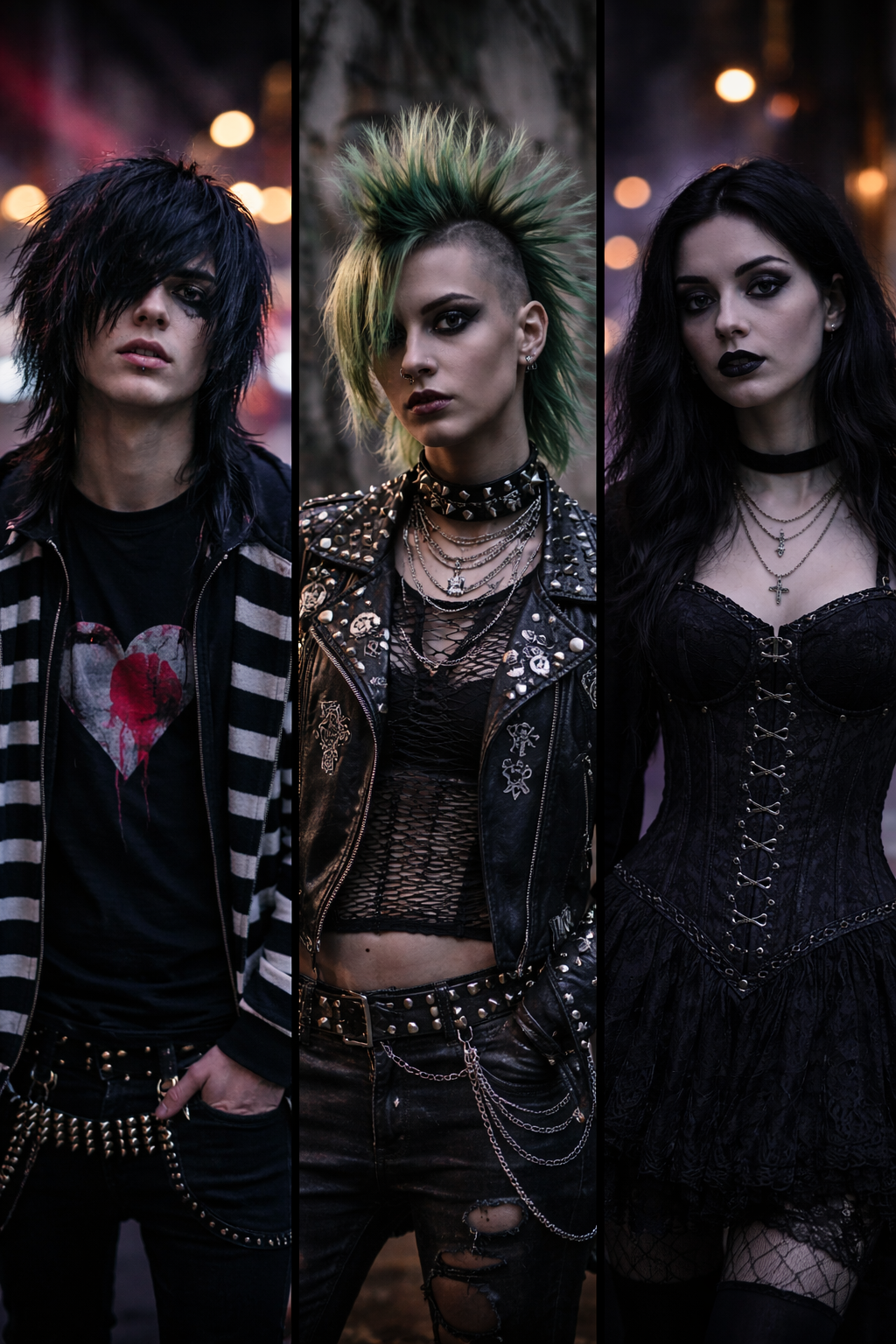
- Style: leather jackets, ripped clothing, safety pins, spikes
- Music roots: Sex Pistols, The Clash, Ramones
Punk didn’t ask for permission — and that attitude laid the foundation for everything that followed.
🕸️ Goth: Darkness with Depth
Goth evolved in the late 1970s and early 80s from post-punk’s moodier edge. While punk shouted, goth brooded. It explored emotion, atmosphere, and beauty in darkness — not as shock value, but as art.
- Core values: introspection, creativity, romanticism
- Style: black clothing, lace, velvet, dramatic makeup
- Music roots: Bauhaus, The Cure, Siouxsie and the Banshees
Goth became a space for outsiders who found comfort in melancholy and meaning beyond surface-level happiness.
💔 Emo: Emotion as Identity
Emo grew out of the hardcore punk scene in the mid-1980s, but gained mainstream visibility in the early 2000s. Unlike punk’s anger or goth’s atmosphere, emo centered on vulnerability — turning emotional honesty into a defining trait.
- Core values: emotional expression, self-reflection
- Style: skinny jeans, band tees, side-swept hair
- Music roots: Rites of Spring, My Chemical Romance, Dashboard Confessional
Though often misunderstood, emo gave a generation permission to feel deeply — without apology.
🖤 Where the Lines Blur
Today, the boundaries between emo, punk, and goth are more fluid than ever. A single playlist might include post-punk, emo revival, and darkwave tracks side by side. Fashion blends spikes with lace, eyeliner with band tees.
This crossover isn’t dilution — it’s evolution. Subcultures survive because they adapt while holding onto their core values.
🌙 The Modern Alternative Identity
In the digital age, people aren’t forced to choose one label. You can be goth with punk ethics, emo with gothic aesthetics, or something entirely new. Online platforms like HeyFreaks allow these identities to coexist without hierarchy or gatekeeping.
💬 Your Scene, Your Rules
Whether you came from punk shows, emo playlists, or gothic poetry, you belong in the alternative world. The scene isn’t about purity — it’s about passion, creativity, and refusing to disappear into the mainstream.
Join the discussion in our Goth Culture & Lifestyle Forum and tell us where your journey began.