


Web Analytics
  • Stonewall Jackson trusted very few men. He demanded absolute discipline, unquestioning obedience, and relentless aggression. But there was one general whose brilliance he admired—and whose behavior he could never fully forgive. Their partnership helped win battles, yet their personal relationship remained one of the Confederacy’s most complicated rivalries.


    Time Period: 1862–1863
    Conflict: American Civil War
    Key Figures: Stonewall Jackson and A.P. Hill


    The image portrays two of the Confederacy's most famous commanders: Lieutenant General Thomas “Stonewall” Jackson and Major General Ambrose Powell (A.P.) Hill. Together they helped create some of the most remarkable Confederate victories of the Civil War. Yet behind the battlefield success lay a relationship filled with tension, arguments, and lingering resentment.


    When the Civil War intensified in 1862, A.P. Hill emerged as one of the Confederacy's most talented combat commanders. Leading his famous Light Division, Hill developed a reputation for aggressive attacks, rapid movement, and personal courage under fire.


    Stonewall Jackson immediately recognized Hill's military ability.


    In battle, Hill was often exactly the type of commander Jackson needed. He moved quickly, fought aggressively, and inspired his troops. During the Shenandoah Valley Campaign of 1862, Jackson's lightning-fast victories depended heavily on officers capable of executing difficult orders under extreme pressure.


    However, the two men possessed very different personalities.


    Jackson was intensely private, deeply religious, and demanded strict obedience from subordinates. Orders were expected to be followed without question. Hill, by contrast, was independent, outspoken, and often challenged decisions he believed were mistaken.


    Their disagreements soon became legendary.


    Throughout the Valley Campaign, Jackson and Hill repeatedly argued over marching orders, troop movements, and battlefield decisions. On several occasions Jackson accused Hill of moving too slowly or failing to carry out instructions precisely as ordered. Hill, meanwhile, believed Jackson sometimes issued vague or impractical commands.


    The tension reached a breaking point during the Seven Days Battles outside Richmond in June 1862.


    During one heated dispute, Jackson became so frustrated that he temporarily placed Hill under arrest. Although the arrest did not last long, it revealed just how strained their relationship had become. Few Confederate officers could imagine openly clashing with the feared Stonewall Jackson, yet Hill repeatedly did so.


    Despite these personal conflicts, Jackson never doubted Hill's fighting ability.


    In fact, some of the Confederacy's greatest successes occurred because Hill's division arrived at critical moments. At Antietam in September 1862, Hill's troops completed a grueling march and arrived just in time to prevent the collapse of Lee's right flank. Their counterattack helped save the Confederate army from potential disaster.


    Even Jackson reportedly acknowledged the value of Hill's battlefield leadership.


    Yet trust between the two men never fully developed.


    Jackson admired Hill's courage but disliked his independence. Hill respected Jackson's military genius but resented what he considered unfair criticism and excessive secrecy. Their relationship became a constant balance between professional respect and personal frustration.


    Everything changed in May 1863.


    After the Confederate victory at Chancellorsville, Stonewall Jackson was accidentally wounded by Confederate soldiers and later died from complications. The Confederacy lost one of its greatest commanders.


    Following Jackson's death, A.P. Hill eventually rose to command a corps in Robert E. Lee's Army of Northern Virginia. He continued serving with distinction until he was killed near Petersburg in April 1865, just days before Lee's surrender.


    Historians still debate exactly what Jackson truly thought of A.P. Hill. What is clear is that Jackson considered Hill difficult, stubborn, and occasionally infuriating. Yet he also knew that Hill was one of the most capable combat commanders in the Confederate army.


    In war, mutual admiration does not always create friendship. Sometimes great victories are achieved by men who respected each other's abilities while never fully trusting one another
    Stonewall Jackson trusted very few men. He demanded absolute discipline, unquestioning obedience, and relentless aggression. But there was one general whose brilliance he admired—and whose behavior he could never fully forgive. Their partnership helped win battles, yet their personal relationship remained one of the Confederacy’s most complicated rivalries. Time Period: 1862–1863 Conflict: American Civil War Key Figures: Stonewall Jackson and A.P. Hill The image portrays two of the Confederacy's most famous commanders: Lieutenant General Thomas “Stonewall” Jackson and Major General Ambrose Powell (A.P.) Hill. Together they helped create some of the most remarkable Confederate victories of the Civil War. Yet behind the battlefield success lay a relationship filled with tension, arguments, and lingering resentment. When the Civil War intensified in 1862, A.P. Hill emerged as one of the Confederacy's most talented combat commanders. Leading his famous Light Division, Hill developed a reputation for aggressive attacks, rapid movement, and personal courage under fire. Stonewall Jackson immediately recognized Hill's military ability. In battle, Hill was often exactly the type of commander Jackson needed. He moved quickly, fought aggressively, and inspired his troops. During the Shenandoah Valley Campaign of 1862, Jackson's lightning-fast victories depended heavily on officers capable of executing difficult orders under extreme pressure. However, the two men possessed very different personalities. Jackson was intensely private, deeply religious, and demanded strict obedience from subordinates. Orders were expected to be followed without question. Hill, by contrast, was independent, outspoken, and often challenged decisions he believed were mistaken. Their disagreements soon became legendary. Throughout the Valley Campaign, Jackson and Hill repeatedly argued over marching orders, troop movements, and battlefield decisions. On several occasions Jackson accused Hill of moving too slowly or failing to carry out instructions precisely as ordered. Hill, meanwhile, believed Jackson sometimes issued vague or impractical commands. The tension reached a breaking point during the Seven Days Battles outside Richmond in June 1862. During one heated dispute, Jackson became so frustrated that he temporarily placed Hill under arrest. Although the arrest did not last long, it revealed just how strained their relationship had become. Few Confederate officers could imagine openly clashing with the feared Stonewall Jackson, yet Hill repeatedly did so. Despite these personal conflicts, Jackson never doubted Hill's fighting ability. In fact, some of the Confederacy's greatest successes occurred because Hill's division arrived at critical moments. At Antietam in September 1862, Hill's troops completed a grueling march and arrived just in time to prevent the collapse of Lee's right flank. Their counterattack helped save the Confederate army from potential disaster. Even Jackson reportedly acknowledged the value of Hill's battlefield leadership. Yet trust between the two men never fully developed. Jackson admired Hill's courage but disliked his independence. Hill respected Jackson's military genius but resented what he considered unfair criticism and excessive secrecy. Their relationship became a constant balance between professional respect and personal frustration. Everything changed in May 1863. After the Confederate victory at Chancellorsville, Stonewall Jackson was accidentally wounded by Confederate soldiers and later died from complications. The Confederacy lost one of its greatest commanders. Following Jackson's death, A.P. Hill eventually rose to command a corps in Robert E. Lee's Army of Northern Virginia. He continued serving with distinction until he was killed near Petersburg in April 1865, just days before Lee's surrender. Historians still debate exactly what Jackson truly thought of A.P. Hill. What is clear is that Jackson considered Hill difficult, stubborn, and occasionally infuriating. Yet he also knew that Hill was one of the most capable combat commanders in the Confederate army. In war, mutual admiration does not always create friendship. Sometimes great victories are achieved by men who respected each other's abilities while never fully trusting one another
    0 Commentaires 0 Parts 2KB Vue
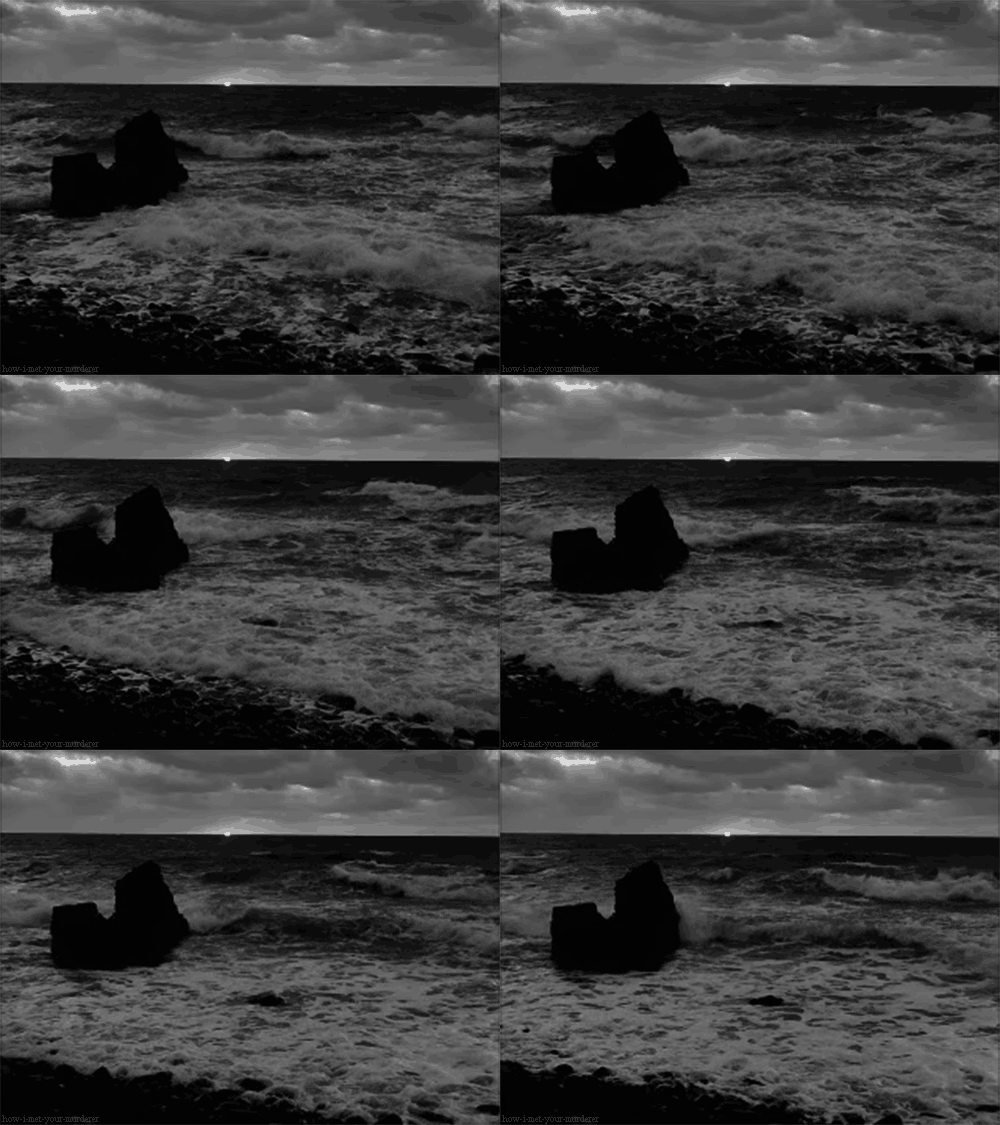
  • It seems a shadow of misfortune follows me. I've come to expect it: a fleeting moment of light is always chased away by a familiar storm, pulling me back under with brutal force.

    What truly unnerves me is the silence within. The emotional echo of these disasters has faded to nothing. I am a dry well—events that should summon a flood of tears now barely register. Is this resilience, or is it erosion? My psyche, to save itself, seems to have severed the wires, leaving me feeling like an spectator in my own tragicomedy, muttering, 'This can't be real.'

    I observe my life as through a thick, silent pane of glass. The impact is muted, the meaning distant. I am a curious stranger to my own apathy, asking, 'What happens when you simply have nothing left to feel?'

    Is this emptiness making me stronger, or is it the void before the collapse? I built these walls stone by stone for protection, but now they encircle me. They keep the world's anguish out. The question is no longer about weathering the storm, but whether I am fortified within a sanctuary, or entombed within a cell of my own making.
    It seems a shadow of misfortune follows me. I've come to expect it: a fleeting moment of light is always chased away by a familiar storm, pulling me back under with brutal force. What truly unnerves me is the silence within. The emotional echo of these disasters has faded to nothing. I am a dry well—events that should summon a flood of tears now barely register. Is this resilience, or is it erosion? My psyche, to save itself, seems to have severed the wires, leaving me feeling like an spectator in my own tragicomedy, muttering, 'This can't be real.' I observe my life as through a thick, silent pane of glass. The impact is muted, the meaning distant. I am a curious stranger to my own apathy, asking, 'What happens when you simply have nothing left to feel?' Is this emptiness making me stronger, or is it the void before the collapse? I built these walls stone by stone for protection, but now they encircle me. They keep the world's anguish out. The question is no longer about weathering the storm, but whether I am fortified within a sanctuary, or entombed within a cell of my own making.
    Goth Vibes
    2
    1 Commentaires 0 Parts 6KB Vue
  • Do you know that feeling when, after a good time, the world comes crashing down even harder than expected?
    I wish it were just the blues after one of the best times I've ever had, but somehow the shit just keeps piling up every day.

    Not only do I have a lot of work to do, but I also have to compensate for three people, and instead of support, I only get statements that downplay the actual workload, and I just end up angry, exhausted, and “done” with my job.

    On top of that, there is a current family disaster that I am currently unable to deal with mentally, so I am completely withdrawing.
    Unfortunately, it is so severe that it completely paralyzes me.
    I want to be there for my family, but I can't.
    My head is screaming to escape, but I don't know where to go anymore.
    With every breath I take, it feels as if the air is made of lead.
    Do you know that feeling when, after a good time, the world comes crashing down even harder than expected? I wish it were just the blues after one of the best times I've ever had, but somehow the shit just keeps piling up every day. Not only do I have a lot of work to do, but I also have to compensate for three people, and instead of support, I only get statements that downplay the actual workload, and I just end up angry, exhausted, and “done” with my job. On top of that, there is a current family disaster that I am currently unable to deal with mentally, so I am completely withdrawing. Unfortunately, it is so severe that it completely paralyzes me. I want to be there for my family, but I can't. My head is screaming to escape, but I don't know where to go anymore. With every breath I take, it feels as if the air is made of lead.
    0 Commentaires 0 Parts 3KB Vue
  • Either I'm too stupid for social interactions or I'm just getting along with private social understandings a lot less lately than I already do.

    I really don't have many friends, which is a shame because I normally like company, but my last experiences with company or trying to socialize or make friends were more or less a disaster.
    I'm beginning to suspect that this is more of a primal human feeling of envy, not having many friends (greed for something more) when I look at the whole thing reflectively.

    It's just ridiculous how clear and open communication is thrown out the window and is seen as a strange, perverse kind of challenge to some people.
    Either I'm too stupid for social interactions or I'm just getting along with private social understandings a lot less lately than I already do. I really don't have many friends, which is a shame because I normally like company, but my last experiences with company or trying to socialize or make friends were more or less a disaster. I'm beginning to suspect that this is more of a primal human feeling of envy, not having many friends (greed for something more) when I look at the whole thing reflectively. It's just ridiculous how clear and open communication is thrown out the window and is seen as a strange, perverse kind of challenge to some people.
    Goth Vibes
    3
    6 Commentaires 0 Parts 3KB Vue
  • #book #books #BookTwitter #booklovers #BookReview #BooksWorthReading #BookWorm #USA #postapocalyptic #disaster #ecology
    https://reactormag.com/five-futures-where-the-us-ended-not-with-a-bang-but-a-whimper/
    #book #books #BookTwitter #booklovers #BookReview #BooksWorthReading #BookWorm #USA #postapocalyptic #disaster #ecology https://reactormag.com/five-futures-where-the-us-ended-not-with-a-bang-but-a-whimper/
    REACTORMAG.COM
    Five Futures Where the US Ended Not With a Bang But a Whimper - Reactor
    Sometimes empires just kind of fall apart over time—no catastrophe required.
    Goth Vibes
    1
    0 Commentaires 0 Parts 6KB Vue
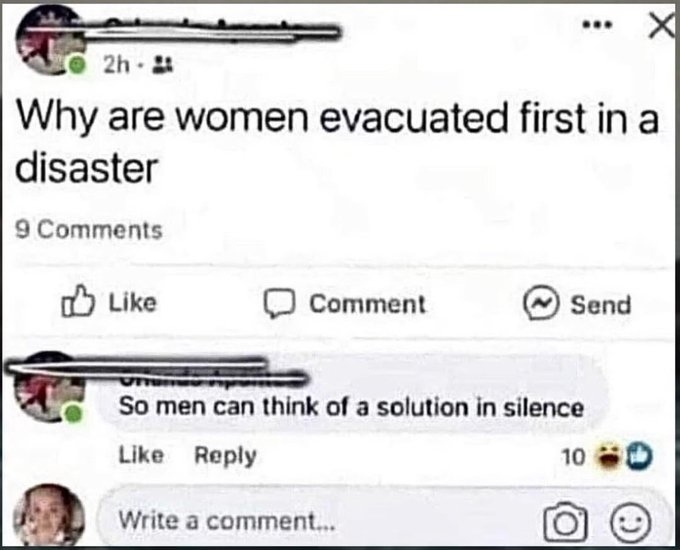
  • #women #men #disasters #silence #solutions
    #women #men #disasters #silence #solutions
    Rotten Laughs
    1
    0 Commentaires 0 Parts 3KB Vue
  • #hurricane #Milton #disaster #simulation #weather #rain #flood #Florida #Tampa #Naples #WeatherChannel
    https://x.com/weatherchannel/status/1843666019245797864
    #hurricane #Milton #disaster #simulation #weather #rain #flood #Florida #Tampa #Naples #WeatherChannel https://x.com/weatherchannel/status/1843666019245797864
    I'm Dead
    1
    2 Commentaires 0 Parts 6KB Vue
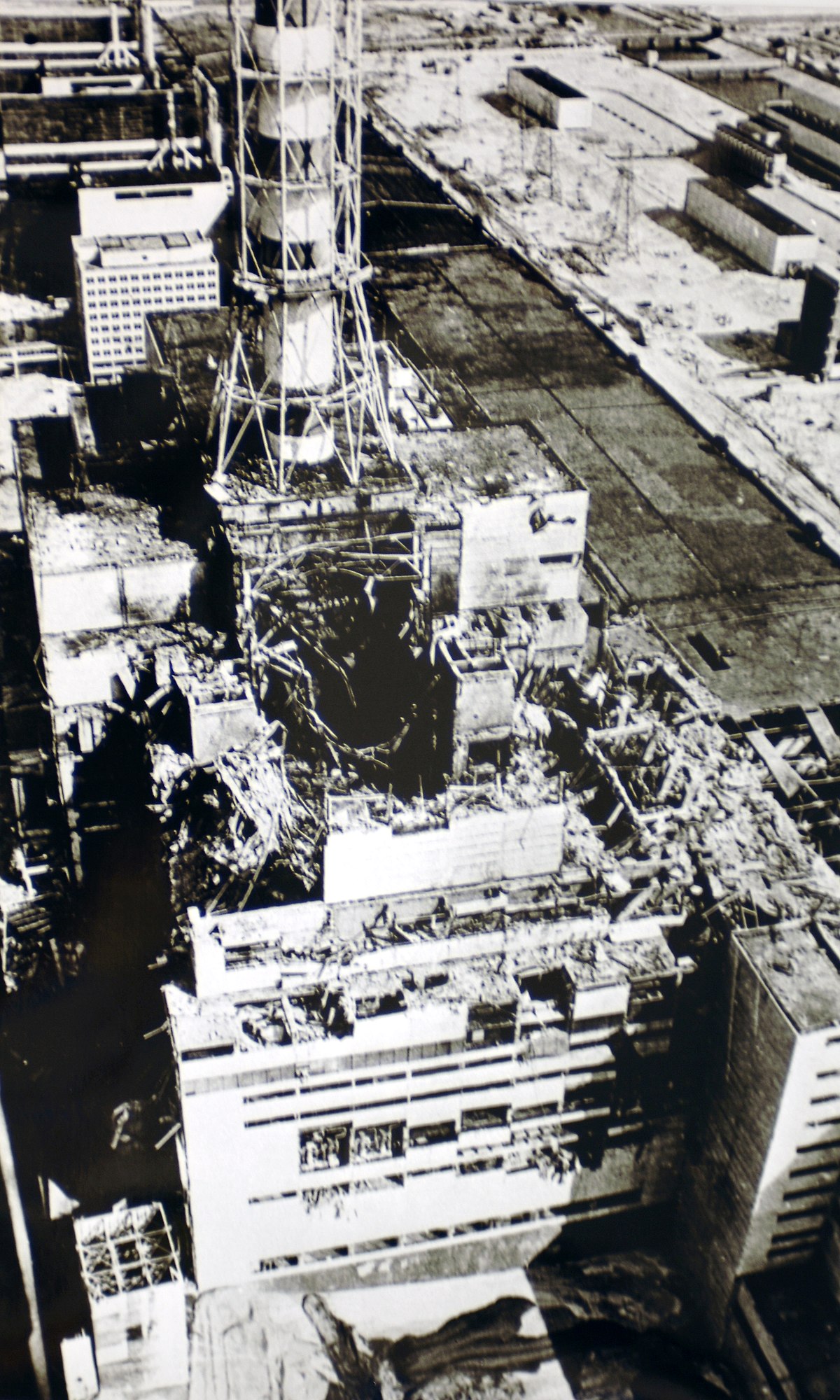
  • #chernobyl #disaster #radioactive #nuclear_energy

    38 years and still counting...

    https://en.wikipedia.org/wiki/Chernobyl_disaster
    #chernobyl #disaster #radioactive #nuclear_energy 38 years and still counting... https://en.wikipedia.org/wiki/Chernobyl_disaster
    EN.WIKIPEDIA.ORG
    Chernobyl disaster
    The Chernobyl disaster began on 26 April 1986 with the explosion of the No. 4 reactor of the Chernobyl Nuclear Power Plant, near the city of Pripyat in the north of the Ukrainian SSR, close to the border with the Byelorussian SSR, in the Soviet Union. It is one of only two nuclear energy accidents rated at seven—the maximum severity—on the International Nuclear Event Scale, the other being the 2011 Fukushima nuclear accident in Japan. The initial emergency response and subsequent mitigation efforts involved more than 500,000 personnel and cost an estimated 18 billion roubles—roughly US$68 billion in 2019, adjusted for inflation. It is considered the worst nuclear disaster in history. The accident occurred during a test of the steam turbine's ability to power the emergency feedwater pumps in the event of a simultaneous loss of external power and coolant pipe rupture. Following an accidental drop in reactor power...
    Goth Vibes
    2
    0 Commentaires 0 Parts 3KB Vue
  • My threads will be all inclusive as soon as I implement my No Goth Left Behind policy. My Trickle Down Emonomics plan was a disaster...I'll admit!
    My threads will be all inclusive as soon as I implement my No Goth Left Behind policy. My Trickle Down Emonomics plan was a disaster...I'll admit!
    Goth Vibes
    2
    0 Commentaires 0 Parts 2KB Vue
  • https://bsky.app/profile/beautifuldisaster.bsky.social
    https://bsky.app/profile/beautifuldisaster.bsky.social
    Goth Vibes
    1
    0 Commentaires 0 Parts 2KB Vue
Plus de résultats
Commandité
Commandité
HeyFreaks.com https://heyfreaks.com