

Acupuncture for Athletes: What to Do When Training Fatigue Stops Feeling Normal

A demanding training block can leave you tired, but persistent fatigue that does not improve with normal recovery deserves attention. If you are exploring how acupuncture for athletes may fit into a wider recovery routine, start by looking at training load, sleep, nutrition, stress, and changes in performance. An additional therapy should not be used to mask a problem that needs a coach, sports medicine professional, or healthcare provider to investigate.
Athletes often accept discomfort as part of improvement. However, there is a difference between expected short-term tiredness and a pattern in which performance declines, motivation changes, sleep becomes disrupted, or everyday energy remains low. Recognising that difference can help you make better decisions before a temporary training issue becomes a longer setback.
When normal training fatigue becomes a concern
A hard session can cause temporary tiredness or muscle soreness. In a well-managed programme, this is usually followed by recovery and an ability to train again as planned.
Concern increases when the pattern changes. You may notice:
-
Performance is declining despite continued effort.
-
Workouts that were previously manageable feel unusually difficult.
-
Fatigue continues between training sessions.
-
Sleep becomes disrupted or feels less restorative.
-
Motivation or mood changes persist.
-
You experience repeated minor illnesses or struggle to recover from them.
-
Your appetite, body weight, or general wellbeing changes unexpectedly.
These signs do not automatically mean you have overtraining syndrome. They can also be associated with inadequate energy intake, illness, iron deficiency, other medical conditions, psychological stress, or insufficient sleep. A healthcare professional can help investigate the possible causes.
Understand the difference between a hard training block and prolonged maladaptation
Training plans sometimes include periods of increased workload. A short-term performance dip may be expected during a demanding phase, provided the athlete recovers appropriately.
Problems arise when training stress and recovery remain out of balance. Sports medicine literature distinguishes between short-term functional overreaching, non-functional overreaching, and overtraining syndrome. The boundaries can be difficult to identify without considering the duration of symptoms, performance changes, and other possible explanations.
|
Pattern |
What may happen |
Why it matters |
|
Expected post-session fatigue |
Temporary tiredness after a demanding workout |
Usually improves with planned recovery |
|
Short-term functional overreaching |
A brief performance reduction followed by recovery and adaptation |
Can be part of a structured training plan |
|
Non-functional overreaching |
Performance and wellbeing remain affected for longer |
Requires a review of training and recovery |
|
Possible overtraining syndrome |
Prolonged performance decline with broader physical or psychological symptoms |
Needs professional assessment and exclusion of other causes |
Do not diagnose yourself from a checklist. If fatigue is persistent, significant, or worsening, arrange an assessment rather than trying to solve it with another recovery technique.
Review the training load before adding another recovery service
When performance drops, athletes sometimes look for an additional treatment immediately. Before adding appointments, review what has changed in the training programme.
Consider:
Volume: Have the number of sessions, total distance, repetitions, or weekly training hours increased?
Intensity: Are more sessions being performed at high effort? Has there been enough separation between demanding workouts?
Frequency: Have rest days been removed or replaced with extra conditioning?
Competition pressure: Are you training hard while also competing, travelling, studying, or working long hours?
Recent changes: Did the fatigue begin after a new programme, illness, injury, change in diet, or major life event?
This review can help a coach or sports medicine professional identify whether the programme needs adjustment. It is not always appropriate to respond to reduced performance by training harder.
Check the foundations of recovery
Training adaptation depends on more than the workout itself. Sleep, food intake, hydration, and psychological recovery all matter.
Sleep
Look at sleep duration, regularity, interruptions, and how alert you feel during the day. If you are consistently sleeping poorly, consider whether late training, travel, screen use, stress, or an irregular schedule may be contributing. Persistent sleep problems may require professional support.
Energy and nutrition
An athlete who increases training without increasing appropriate food intake may struggle to meet energy needs. Restricted eating, inadequate carbohydrate intake, insufficient protein, or unplanned weight loss can affect recovery and performance. A sports dietitian or qualified healthcare professional can help assess individual needs.
Hydration
Fluid needs vary with activity, environment, and individual sweat losses. Pay attention to training conditions and hydration habits rather than following a one-size-fits-all rule.
Stress outside sport
Work, family responsibilities, study, travel, and relationship pressures can add to the overall load. A training plan that ignores these demands may be unrealistic even if the number of workouts looks reasonable.
A practical fatigue-review process
If you have noticed a sustained change, use this sequence to prepare for a discussion with your coach or healthcare professional.
-
Record the change in performance. Note which workouts have become harder, whether pace or power has changed, and when the pattern began.
-
Review the last several weeks of training. Include session duration, intensity, competition, travel, and rest days.
-
Track sleep and daily energy. Record whether you wake refreshed, feel tired during the day, or struggle to concentrate.
-
Review food and hydration habits. Note major changes in appetite, meal timing, dietary restriction, or body weight.
-
Identify other symptoms. Record illness, pain, mood changes, dizziness, unusual breathlessness, or other concerns.
-
Speak to an appropriate professional. A sports physician or healthcare professional can assess persistent fatigue and decide whether investigations are needed. Your coach can help review the training programme.
-
Agree on a revised plan. Changes may involve reducing workload, adjusting intensity, improving recovery opportunities, or addressing a medical or nutritional issue.
-
Monitor the response. Review function and wellbeing over time rather than relying on a single good session.
Where complementary care may fit
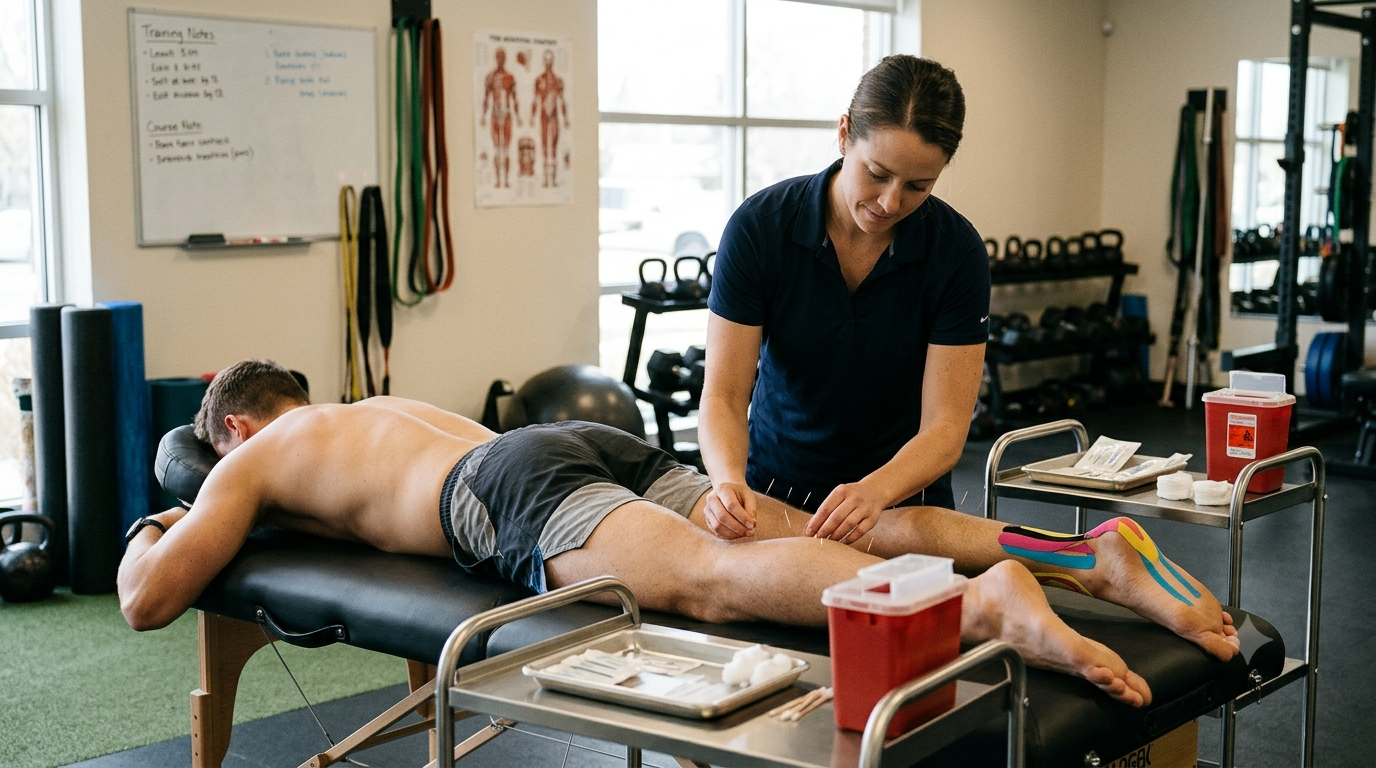
Some athletes explore acupuncture as an optional part of their wellbeing routine. When considering acupuncture for athletes, it is important to be clear about the intended purpose. It should not be presented as a proven treatment for overtraining syndrome, an unexplained performance decline, nutritional deficiency, infection, or another underlying medical condition.
Research into acupuncture-related interventions in sport has examined pain, soreness, and aspects of post-exercise recovery. Some studies report possible short-term changes, but the evidence varies by intervention and outcome. Findings from small studies cannot establish that acupuncture reliably restores performance or prevents overtraining.
A responsible practitioner should ask about your symptoms, training schedule, injuries, medical history, and any advice already given by your healthcare team. If you are persistently fatigued, the priority is to understand why before adding treatment.
Two examples of how to respond to fatigue
Example 1: A runner struggling during a high-volume block
A distance runner increases weekly mileage and adds extra interval sessions. After several weeks, normal training paces feel harder and the runner remains tired between sessions. Rather than booking extra recovery treatments immediately, the runner reviews the training log with the coach and arranges a medical discussion. The programme is adjusted while possible contributing factors are assessed.
Example 2: A team-sport athlete with poor sleep and low motivation
A player begins feeling unusually tired during the season. The athlete is also travelling frequently and balancing training with work. A discussion with the coach reveals that the schedule has left little time for sleep and regular meals. The player works with the relevant professionals to improve the routine and monitor performance.
Both examples show why fatigue should be understood in context. The same symptom can have different causes and require different responses.
Illustrative Case Study: Looking beyond the next recovery session
Alex is a competitive cyclist preparing for an important event. Training volume has increased, but performance is falling. Alex feels tired on rest days and has begun waking during the night. At first, Alex assumes another recovery treatment will solve the problem.
Instead, Alex records training sessions, sleep, and daily energy for a short period and discusses the pattern with a sports medicine professional. The assessment considers training load and possible medical or nutritional contributors. Alex also speaks with the coach about reducing the intensity of the programme.
Alex asks about complementary treatment but understands that it cannot identify the cause of persistent fatigue. Any optional appointment is considered separately from the medical assessment and revised training plan.
The lesson is to investigate sustained changes rather than treating every sign of fatigue as ordinary soreness.
A decision guide for athletes considering additional support
|
Your current situation |
Priority |
Is an optional treatment the first step? |
|
Mild tiredness after a hard session |
Planned recovery and routine monitoring |
Not necessarily |
|
Repeated fatigue with declining performance |
Review training and arrange professional advice |
No, investigate the pattern first |
|
Fatigue with unexplained weight loss or frequent illness |
Medical assessment |
No |
|
Persistent sleep or mood changes |
Discuss with a healthcare professional |
Not as a substitute for assessment |
|
A diagnosed issue with an agreed recovery plan |
Follow the clinical and coaching plan |
Only if the relevant professionals consider it suitable |
Conclusion
Persistent training fatigue should not be treated as a sign that you simply need to work harder or add more recovery appointments. Review training load, sleep, nutrition, stress, and changes in performance, and seek professional assessment when symptoms continue or worsen.
If you are considering acupuncture for athletes, view it as a possible optional addition—not a shortcut around diagnosis, adequate recovery, or a well-managed training programme. A responsible approach starts with understanding the cause of the fatigue and choosing support that fits the athlete's actual needs.
For more information about the services offered by Swiss Acupuncture, visit the clinic's website and discuss your training demands and health history before arranging a session.
Frequently Asked Questions
Is persistent fatigue always a sign of overtraining?
No. Fatigue can have many causes, including sleep loss, inadequate energy intake, illness, stress, and medical conditions. A healthcare professional can help investigate persistent or unexplained symptoms.
Should I keep training if my performance is declining?
Do not automatically push harder. Discuss the pattern with your coach and seek medical advice if the decline is sustained or accompanied by other symptoms. Your programme may need adjustment.
Can acupuncture treat overtraining syndrome?
It should not be presented as a proven treatment for overtraining syndrome. Persistent fatigue and performance decline need appropriate assessment and management.
What should athletes track when recovery feels poor?
Useful information can include training volume and intensity, performance changes, sleep, appetite, energy, mood, illness, and pain. A short record can help a professional identify patterns.
Can poor nutrition affect athletic recovery?
Yes. Inadequate energy or nutrient intake can affect health and performance. Seek individualized advice from a qualified sports dietitian or healthcare professional if you have concerns.
When should I seek medical advice about training fatigue?
Arrange an assessment when fatigue is persistent, worsening, unexplained, or affecting daily life and performance. Seek urgent care for severe or sudden symptoms.



