

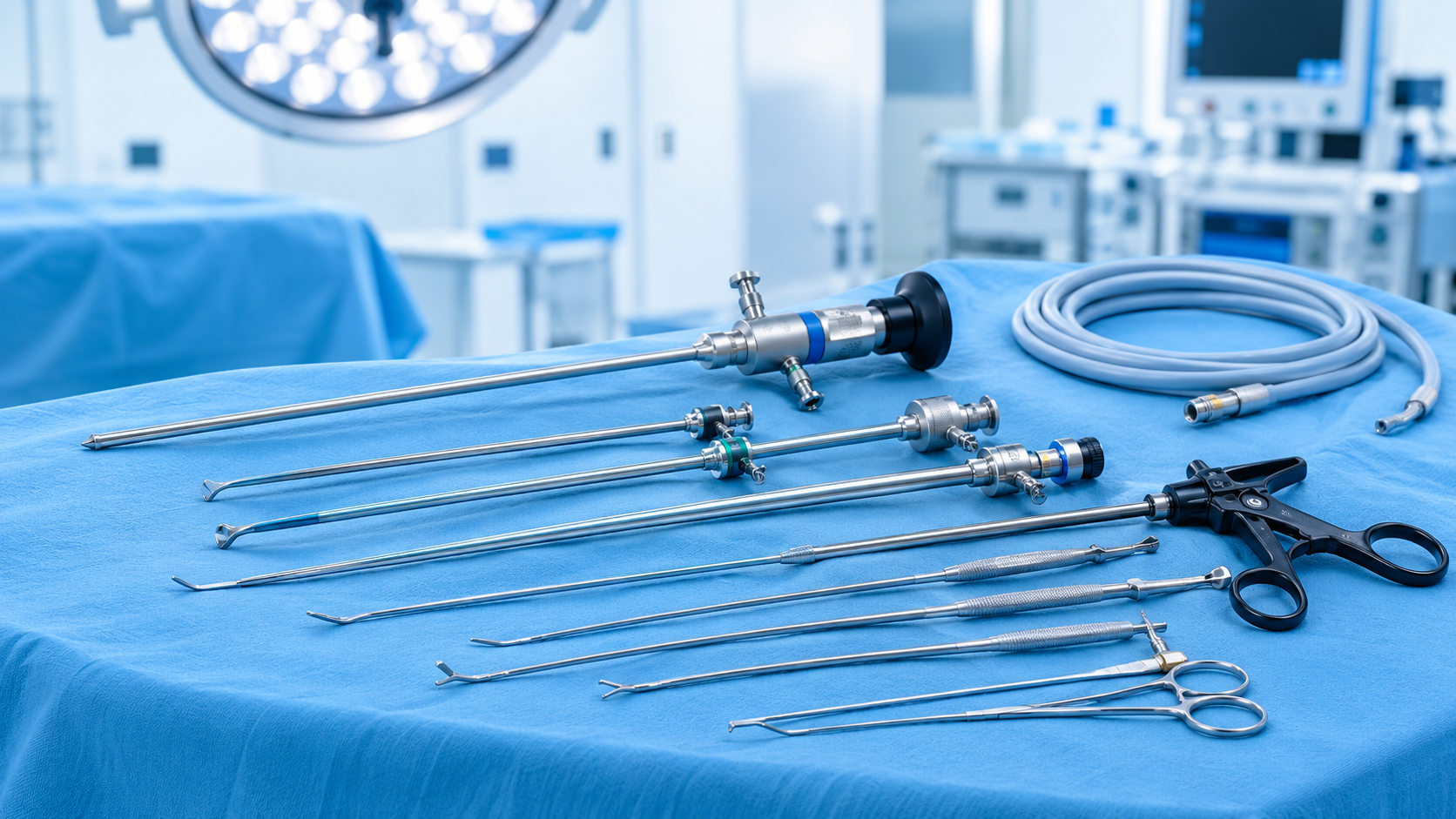

Arthroscopy is a minimally invasive surgical technique that allows qualified orthopaedic surgeons to examine and treat selected joint conditions. Hospitals and orthopaedic centres require specialised instruments to support these procedures according to their clinical requirements.
Selecting a suitable Arthroscopy Set requires careful evaluation of instrument configuration, material quality, equipment compatibility and supplier reliability. Purchasing decisions based solely on price may overlook important technical requirements.
Hospital procurement teams should work closely with orthopaedic departments to identify the instruments required for their approved procedures. This guide explains the essential factors healthcare buyers should consider before investing in arthroscopic surgical instruments.
Understanding the Components of an Arthroscopy Set
An arthroscopy instrument set may contain several specialised instruments designed for joint examination, tissue handling and other specific surgical functions. The exact composition depends on the intended procedure and instrument configuration.
|
Instrument |
Primary function |
|---|---|
|
Arthroscope |
Provides visual access to the joint interior |
|
Arthroscopic probe |
Supports examination of joint structures |
|
Grasping forceps |
Enables controlled tissue handling |
|
Arthroscopic scissors |
Supports tissue cutting where indicated |
|
Punch forceps |
Removes selected tissue |
|
Trocar and cannula |
Supports instrument access |
|
Arthroscopic shaver |
Supports tissue removal in applicable procedures |
Some of these components may be supplied separately rather than included in a standard instrument set. Buyers should request a complete product list before placing an order.
Evaluate Material Quality and Instrument Durability
Arthroscopic instruments are frequently exposed to mechanical stress, cleaning agents and, where applicable, repeated sterilisation cycles. Material quality is therefore an important consideration for hospital procurement teams.
Many reusable surgical instruments are manufactured from suitable grades of stainless steel because of their strength and corrosion resistance. However, material specifications can vary depending on instrument design and intended use.
Reputable Arthroscopy Set Manufacturers should provide relevant material specifications, maintenance instructions and product documentation.
Buyers should evaluate surface finish, joint construction, instrument alignment and resistance to wear before approving products for institutional purchasing.
Check Instrument Compatibility with Existing Equipment
Arthroscopic procedures may involve multiple instruments and supporting technologies. Compatibility between these components is essential for establishing a functional equipment configuration.
Hospitals should verify compatibility with their existing:
-
Arthroscopic cameras and imaging systems.
-
Light sources and connecting cables.
-
Trocar and cannula systems.
-
Motorised shaver systems.
-
Fluid management equipment.
-
Instrument connectors and accessories.
Purchasing incompatible components can create additional expenses and equipment replacement requirements. Procurement teams should obtain model-specific compatibility information and consult their biomedical engineering departments before finalising orders.
Consider Joint-Specific Instrument Requirements
Different joints may require instruments with different dimensions, working lengths and tip configurations. A standard instrument configuration may not address every orthopaedic requirement.
|
Surgical application |
Instrument considerations |
|---|---|
|
Knee arthroscopy |
Meniscus instruments, probes and punches |
|
Shoulder arthroscopy |
Suitable graspers and suturing instruments |
|
Hip arthroscopy |
Instruments with appropriate working lengths |
|
Ankle arthroscopy |
Compact instruments for smaller joint spaces |
|
Ligament repair |
Procedure-specific repair instruments |
Hospitals should establish their requirements according to the procedures performed by their orthopaedic departments.
Experienced Arthroscopy Set Suppliers can help procurement professionals understand available configurations and obtain technical product information.
Review Cleaning and Sterilisation Requirements
Reusable arthroscopic instruments require appropriate cleaning and reprocessing according to manufacturer instructions. Instruments containing narrow channels, movable joints or complex internal components may have specific cleaning requirements.
The FDA emphasises that reusable medical devices require device-specific reprocessing procedures.
Hospital procurement departments should coordinate with their Central Sterile Services Department (CSSD) to evaluate cleaning requirements, sterilisation compatibility and instrument maintenance instructions.
Buyers must also distinguish between reusable and single-use components. Not every instrument is suitable for steam sterilisation or repeated clinical use.
Assess Ergonomics and Instrument Handling
Instrument ergonomics is another important factor in arthroscopy equipment selection. Handle configuration, instrument weight, shaft design and movement control can influence handling during procedures.
Hospitals should involve qualified orthopaedic surgeons in non-clinical product demonstrations and instrument evaluations.
Feedback from surgical professionals can help purchasing departments identify suitable configurations based on practical requirements rather than catalogue descriptions alone.
Instrument selection should balance ergonomic considerations with technical specifications, intended applications and institutional quality requirements.
Verify Supplier Reliability and After-Sales Support
Reliable equipment supply is important for maintaining consistent hospital operations. Delayed deliveries or unavailable replacement instruments may create unnecessary procurement difficulties.
When comparing Arthroscopy Set Dealers, healthcare buyers should consider product availability, delivery schedules, replacement policies, technical documentation and communication quality.
Suppliers should also clearly identify the original manufacturer and provide relevant information about available accessories.
Establishing dependable supplier relationships can help hospitals coordinate future purchases and manage recurring instrument requirements more efficiently.
Compare Overall Investment Rather Than Purchase Price
The initial purchase price does not always represent the total cost of an arthroscopy instrument system. Hospitals should consider long-term ownership expenses before making purchasing decisions.
|
Cost factor |
What hospitals should evaluate |
|---|---|
|
Initial investment |
Instrument set price and included components |
|
Maintenance |
Inspection and servicing requirements |
|
Replacement |
Availability and cost of individual instruments |
|
Reprocessing |
Cleaning and sterilisation expenses |
|
Accessories |
Additional compatible components |
|
Equipment lifespan |
Expected durability under specified conditions |
A comprehensive cost assessment helps procurement managers compare available options without overlooking technical and operational requirements.
Choosing the Right Arthroscopy Set Supplier in India
Healthcare institutions should prioritise documented product quality, equipment compatibility and dependable supply arrangements when selecting surgical instrument suppliers.
Sangam Surgicals offers arthroscopy instruments for orthopaedic healthcare requirements. Hospitals, surgical centres and medical equipment distributors can contact the company to discuss available instrument configurations, technical specifications and bulk purchasing requirements.
Buyers should confirm product-specific documentation and clinical suitability before completing procurement approvals.
Conclusion
Purchasing an arthroscopy instrument set requires careful consideration of material quality, instrument configuration, compatibility, reprocessing requirements and long-term ownership costs.
Hospitals should involve surgical professionals, biomedical engineers and procurement departments throughout the equipment selection process.
A structured purchasing approach can help healthcare institutions manage their investment effectively while maintaining access to appropriate orthopaedic surgical instruments.
Frequently Asked Questions (FAQs)
1. What is an arthroscopy set used for?
An arthroscopy set contains specialised instruments used by qualified orthopaedic surgeons to examine and treat selected joint conditions through minimally invasive procedures.
2. What instruments are included in an arthroscopy set?
Common instruments include probes, graspers, scissors, punch forceps, trocars and cannulas. The exact configuration depends on the intended surgical application.
3. Are all arthroscopy instruments reusable?
No. Some instruments are designed for repeated use, while others are intended for single use. Always follow the manufacturer's instructions.
4. How can hospitals evaluate arthroscopy set quality?
Hospitals should examine material specifications, instrument construction, compatibility, applicable regulatory documentation and manufacturer-provided maintenance instructions.
5. How do I choose a reliable arthroscopy set supplier in India?
Evaluate product availability, technical documentation, delivery reliability, replacement support and original manufacturer information before placing an order.



