

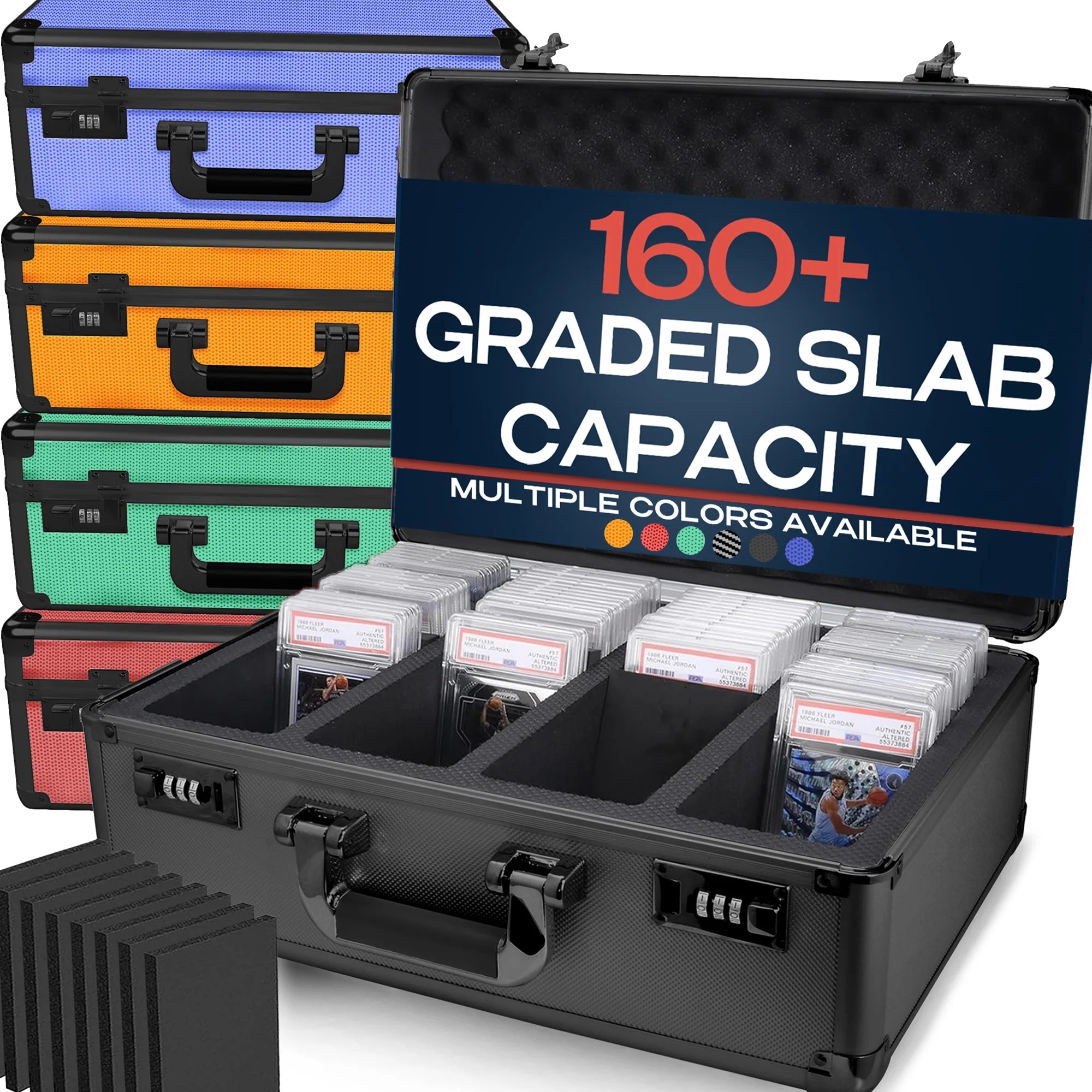

You’ve spent time and money building your collection, so the last thing you want is to damage it with the wrong storage. Yet many collectors buy a trading card display case on impulse, then discover it doesn’t fit their cards, doesn’t close properly or doesn’t protect the way they expected.
Here are five common mistakes, and how to sidestep each one.
Mistake 1: Buying for One Card Format Only
Most collections aren’t uniform. You might own graded slabs from several companies, plus toploaders, magnetic holders, sleeved cards and a few raw cards. A case designed for only one slab type can leave the rest of your collection without a home.
The fix: Choose a case built to handle several formats at once. Look for rows wide enough for the thickest slabs, so graded cards from PSA, BGS, SGC, CGC and TAG all fit, along with toploaders and magnetic holders.
Mistake 2: Trusting Capacity Numbers Blindly
A case advertised for 160 graded slabs sounds like plenty, but the number is a best-case figure. Dividers take up space, and cards packed too tightly are hard to flip through. One reviewer of a 160-slab case noted that about 36 or 37 per row feels comfortable when you want to browse.
The fix: Plan for some breathing room. If you mainly store toploaders or sleeved cards, capacity is far higher, so match the numbers to the holders you actually use.
Mistake 3: Ignoring the Foam
Foam is easy to overlook, but it does much of the protecting. Foam that’s too soft can lose its shape and let cards shift. Foam that’s too hard, or actual plastic, can scratch slabs.
The fix: Look for dense, pre-cut foam made for cards. Movable dividers help too. They stop cards tipping in half-full rows, and they let you organize by player, set or grade.
Mistake 4: Forgetting About Slab Guards
Many collectors add slab guards or protectors for extra security. The catch is that they add width, and some cases stop closing once they’re in place.
The fix: If you use guards, confirm the case is designed to handle them. Fit can still vary with certain slab types, so read the details before you buy.
Mistake 5: Skipping Security and Portability
A case that sits on a shelf has different needs from one that travels to card shows. Without a reliable lock, anyone can get into your collection. Without a sturdy frame, a bump in transit can cause damage.
The fix: Look for a combination lock, so there’s no key to lose, plus a durable frame and reinforced corners. Keep in mind that a fully loaded case is heavy, so a lightweight frame like aluminum helps.
A Quick Pre-Purchase Checklist
- List the holder types you own.
- Count your cards and leave room to grow.
- Check the foam, dividers and lock.
- Confirm the case works with any guards you use.
- Look for a return window and warranty, so you can test the fit with your own cards.
A Case That Checks Many Boxes
If you want a locking, high-capacity option, take a look at this trading card display case from Valun. It’s built with an aluminum frame, reinforced corners, pre-cut high-density foam, a combination lock and eight movable dividers, and it’s designed for graded slabs from several companies along with toploaders, magnetic holders and raw cards.
Final Thoughts
A good case is one of the best investments a collector can make. Avoid these five mistakes, match the case to your real collection, and give yourself room to grow. Your cards will stay protected, organized and ready to enjoy.



