

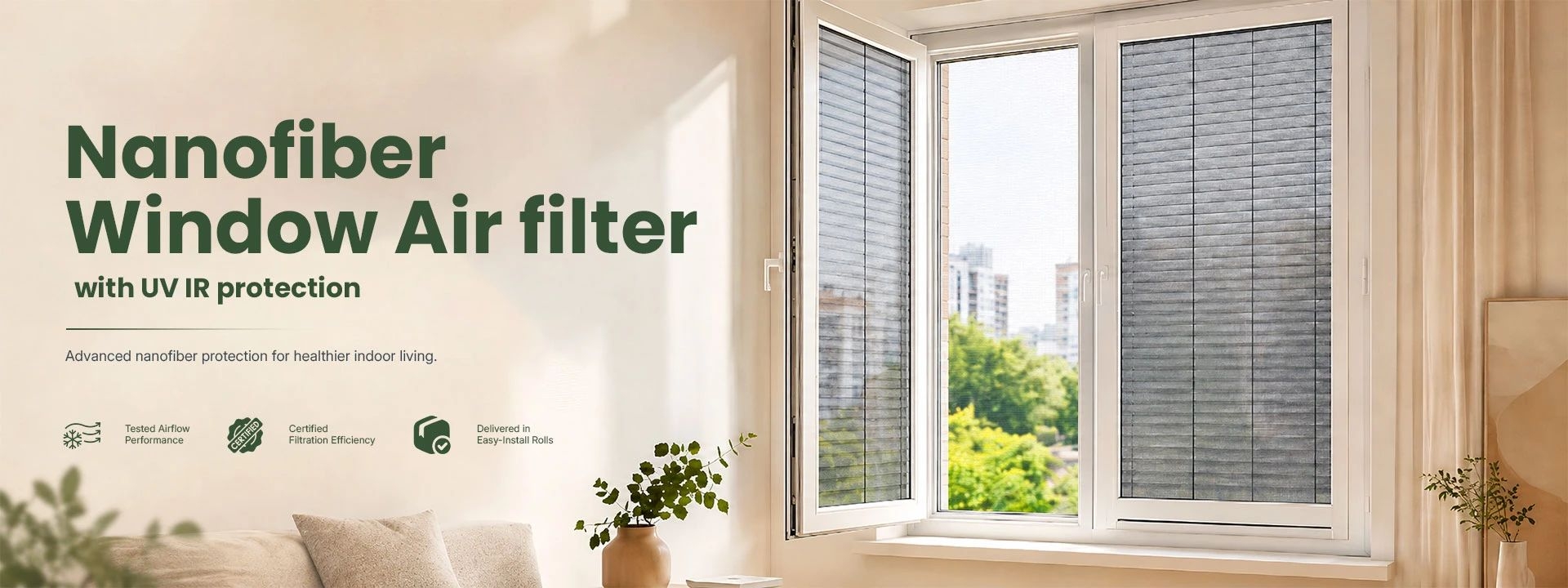

Fresh air is essential for a comfortable and healthy home, but outdoor air pollution can make opening windows a concern. Dust, smoke, pollen, vehicle emissions, and PM2.5 particles can enter indoor spaces through open windows. This creates a common challenge for homeowners: how can you enjoy natural ventilation without allowing excessive outdoor pollution inside?
Fortunately, modern window filtration solutions, such as the TNS Nanofiber Window Shield by ECDS, offer a practical approach to reducing the entry of airborne pollutants while maintaining airflow.
Why Does Outdoor Pollution Enter Through Open Windows?
Windows are one of the main pathways through which outdoor air enters a home. In busy urban areas, pollutants from traffic, construction activities, industries, and road dust can affect indoor air quality.
PM2.5 particles are particularly concerning because their small size allows them to travel deep into the respiratory system. Ordinary mosquito nets and conventional window screens are generally designed to block insects, not fine airborne pollutants.
This is why choosing an appropriate window air filter for pollution can make a difference when improving indoor air quality.
5 Ways to Reduce Outdoor Pollution Without Closing Windows
1. Install a Nanofiber Window Filter
One effective approach is to use a specialized nanofiber window filtration screen. Unlike conventional window mesh, nanofiber membranes are designed with extremely fine fibers that help capture airborne particles.
The ECDS TNS Nanofiber Window Shield is designed to help reduce the entry of dust and fine particulate pollutants while allowing natural airflow.
2. Maintain Proper Ventilation
Good ventilation is important for indoor comfort. However, outdoor pollution levels should also be considered before opening windows. During periods of high pollution, use appropriate filtration solutions and avoid unnecessary exposure to heavily polluted outdoor air.
3. Keep Window Screens Clean
Dust accumulation on window filters can affect airflow and filtration performance. Regular inspection and cleaning according to the manufacturer's instructions can help maintain their effectiveness.
4. Monitor Outdoor Air Quality
Check local Air Quality Index (AQI) levels before opening windows for extended periods. When pollution levels are high, limit ventilation from heavily polluted outdoor areas and use suitable indoor air filtration.
5. Combine Window Filtration with Indoor Air Purification
For better indoor air quality management, consider combining window filtration with a properly sized HEPA air purifier. These solutions work at different points: window filters help reduce incoming particles, while air purifiers help capture airborne particles already present indoors.
How Does ECDS TNS Nanofiber Window Shield Help?
The TNS Nanofiber Window Shield by ECDS is developed to address the challenge of maintaining ventilation while helping reduce outdoor particulate pollution entering homes.
Its nanofiber-based filtration technology is designed for capturing fine airborne particles, including PM2.5. It offers a window-level filtration option for residential spaces where dust and pollution are common concerns.
ECDS offers different variants, including TNS 90, TNS 85, and TNS 70. Homeowners can explore the available specifications to identify an option that suits their filtration and ventilation requirements.
Actual filtration performance depends on product specifications, installation quality, and maintenance.
Is a Window Air Filter Better Than Keeping Windows Closed?
Keeping windows closed may reduce the entry of outdoor pollutants, but it can also limit natural ventilation. A suitable window filtration solution offers another option by helping reduce incoming particles while permitting airflow.
However, no window filter can guarantee completely pollution-free indoor air. For best results, combine window filtration, proper ventilation practices, and indoor air purification according to local air quality conditions.
Frequently Asked Questions (FAQs)
Q1. How can I enjoy fresh air without letting pollution inside?
Consider installing a specialized nanofiber window filter designed to reduce airborne particles while allowing airflow.
Q2. Can window filters capture PM2.5 particles?
Some advanced window filtration products are designed for PM2.5 filtration. Always check verified product testing and filtration specifications.
Q3. Are ordinary mosquito nets effective against air pollution?
No. Ordinary mosquito nets are primarily designed to block insects and are not designed to filter fine airborne particles.
Q4. Is TNS Window Shield suitable for Indian homes?
ECDS TNS Window Shield is designed for residential window filtration and can be explored by homeowners concerned about dust and outdoor air pollution.
Conclusion
You do not necessarily have to choose between natural ventilation and cleaner indoor air. With appropriate filtration technology and smart ventilation practices, you can work towards reducing outdoor pollution entering your home. The ECDS TNS Nanofiber Window Shield is a practical solution worth exploring for homeowners looking for a window-based approach to air pollution control.



