

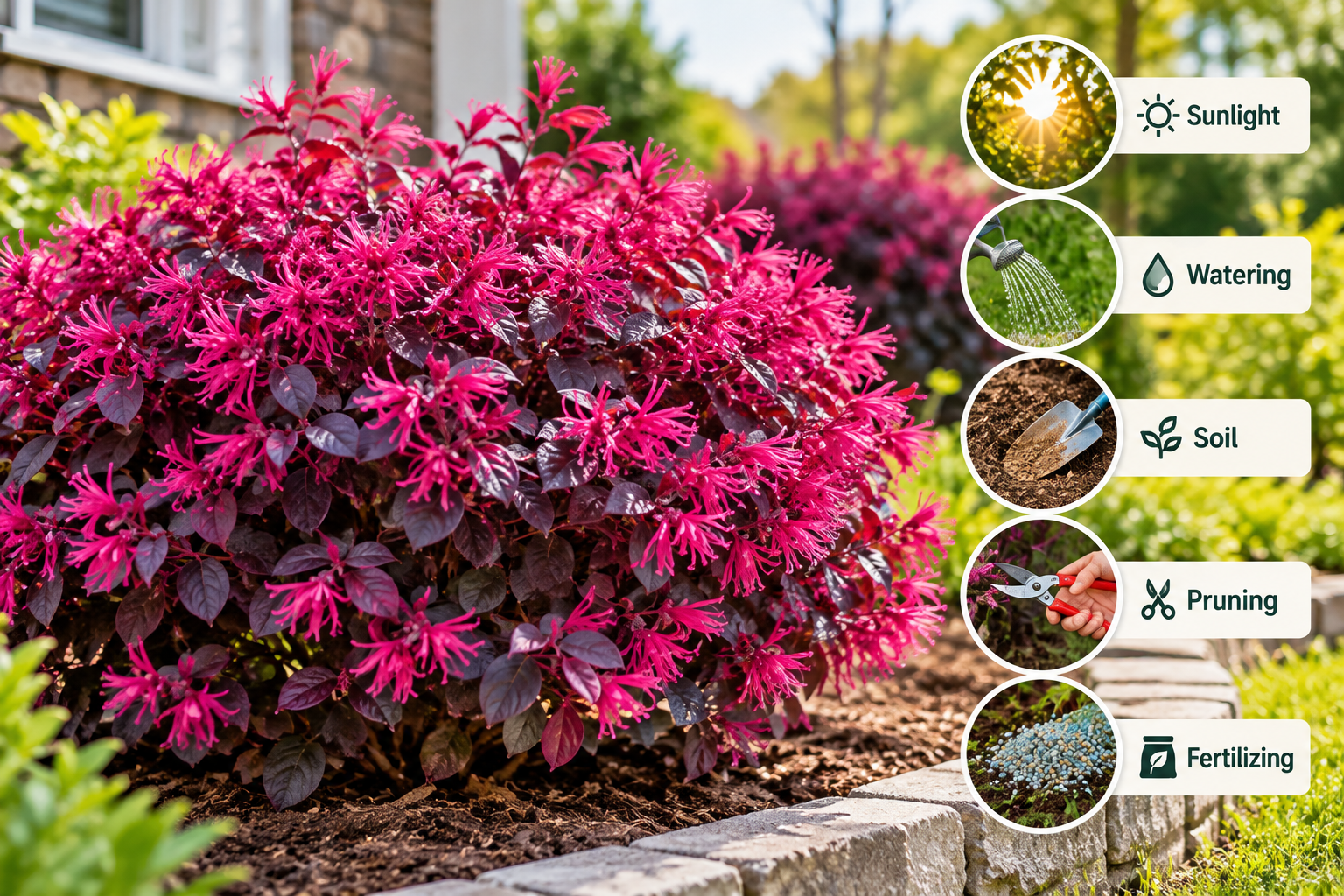

Loropetalum is a popular shrub with deep burgundy or green leaves and fringe-like pink flowers. It adds color to a yard almost all year. Many gardeners love it because it stays attractive with only basic attention.
If you want a simple guide to Loropetalum care, the main rules are easy to learn. The plant needs the right light, well-drained soil, steady water in its first year, and light pruning at the right time. This article covers each of these steps in plain language.
Meet the Loropetalum
Loropetalum is also called Chinese fringe flower. It is an evergreen shrub that grows well in USDA zones 7 through 10. Some types stay small, around 3 to 4 feet tall. Others can grow 10 feet tall or more if left alone.
Before you buy, check the label for the mature size. A compact variety is a better fit for foundation beds and small yards. A larger one works well as a hedge or a background shrub.
Pick the Right Spot
Loropetalum grows best in full sun to part shade. Aim for at least four to six hours of sun each day. The purple types keep their deep color best with more sun. In heavy shade, the leaves often turn greenish and the plant gets thin.
Leave enough space for growth. Plant at least 3 to 5 feet away from walls and other shrubs, depending on the variety. Good air flow helps prevent leaf problems.
Soil Matters
This shrub prefers acidic, well-drained soil. A pH between 5.5 and 6.5 is a good target. In soil that is too alkaline, the leaves can turn yellow because the plant cannot take in iron.
If you are not sure about your soil, a simple test kit can tell you the pH. Heavy clay can hold too much water, so mix in compost to help it drain. Raised beds also work well in wet areas.
How to Plant
Follow these steps for a strong start:
- Plant in spring or fall, when the weather is mild.
- Dig a hole twice as wide as the root ball and the same depth.
- Set the plant level with the ground and fill in with the native soil.
- Water deeply to settle the soil.
- Add 2 to 3 inches of mulch, keeping it a few inches from the stems.
Watering Tips
New plants need regular water. For the first year, water deeply once or twice a week, depending on the weather. The soil should stay slightly moist, but never soggy.
After the first year, loropetalum handles short dry spells fairly well. Still, give it a deep drink during hot, dry weather. A good rule is to check the top inch of soil. If it feels dry, it is time to water.
Feeding the Plant
Loropetalum does not need heavy feeding. In early spring, use a slow-release fertilizer made for acid-loving plants. Follow the label for the right amount.
Too much fertilizer can cause weak, leafy growth. Skip feeding late in summer, because new growth may get hurt by cold weather.
Pruning the Right Way
Pruning is where many gardeners go wrong. The best time to prune is right after the main spring bloom ends. Loropetalum sets its flower buds on older wood, so late pruning can remove next year’s flowers.
Start by removing dead or damaged branches. Then trim long stems back to a branch junction to keep a natural shape. Avoid shearing the plant into a tight ball. Shearing makes the outside thick and leaves the inside bare.
If a shrub has grown too large, you can cut it back harder, but do it in stages over two seasons. This is easier on the plant.
Using Mulch
A layer of mulch helps hold moisture, keeps roots cool, and cuts down on weeds. Pine bark and pine straw are good choices because they also suit acid-loving plants. Refresh the layer once a year, and keep it away from the base of the stems.
Common Problems
Loropetalum is tough, but it can have a few issues.
- Yellow leaves: This is often caused by high soil pH or poor drainage. Test the soil and check for standing water.
- Brown leaf tips: Dry wind, drought, or fertilizer burn may be the cause.
- Green leaves on a purple type: This usually means too much shade.
- Aphids or scale: These insects are rare, but a spray of water or insecticidal soap can help.
- Root rot: This happens in soggy ground. Improve drainage and water less.
Cold Weather Care
In the cooler edge of its range, a hard freeze can burn the leaves. Mulch the roots well in late fall. If a cold snap is coming, cover young plants overnight with a frost cloth.
If branches show damage, wait until new growth appears in spring before pruning. Many plants recover better than they first appear.
Growing in Containers
Smaller varieties do well in large pots. Use a good potting mix that drains well, and pick a pot with drainage holes. Container plants dry out faster, so check them often. Feed lightly in spring and move the pot to a sheltered spot in very cold winters.
Quick Care Checklist
- Light: Full sun to part shade
- Soil: Acidic and well-drained
- Water: Deep and regular in year one, then as needed
- Prune: Right after spring bloom
- Feed: Once in early spring
Final Thoughts
Loropetalum rewards simple habits. Choose a sunny spot, give it acidic soil that drains well, and water it deeply while it settles in. Prune lightly after the flowers fade, and the shrub will stay full and colorful.
With a little planning, this plant can be a long-lasting highlight in your garden.



