

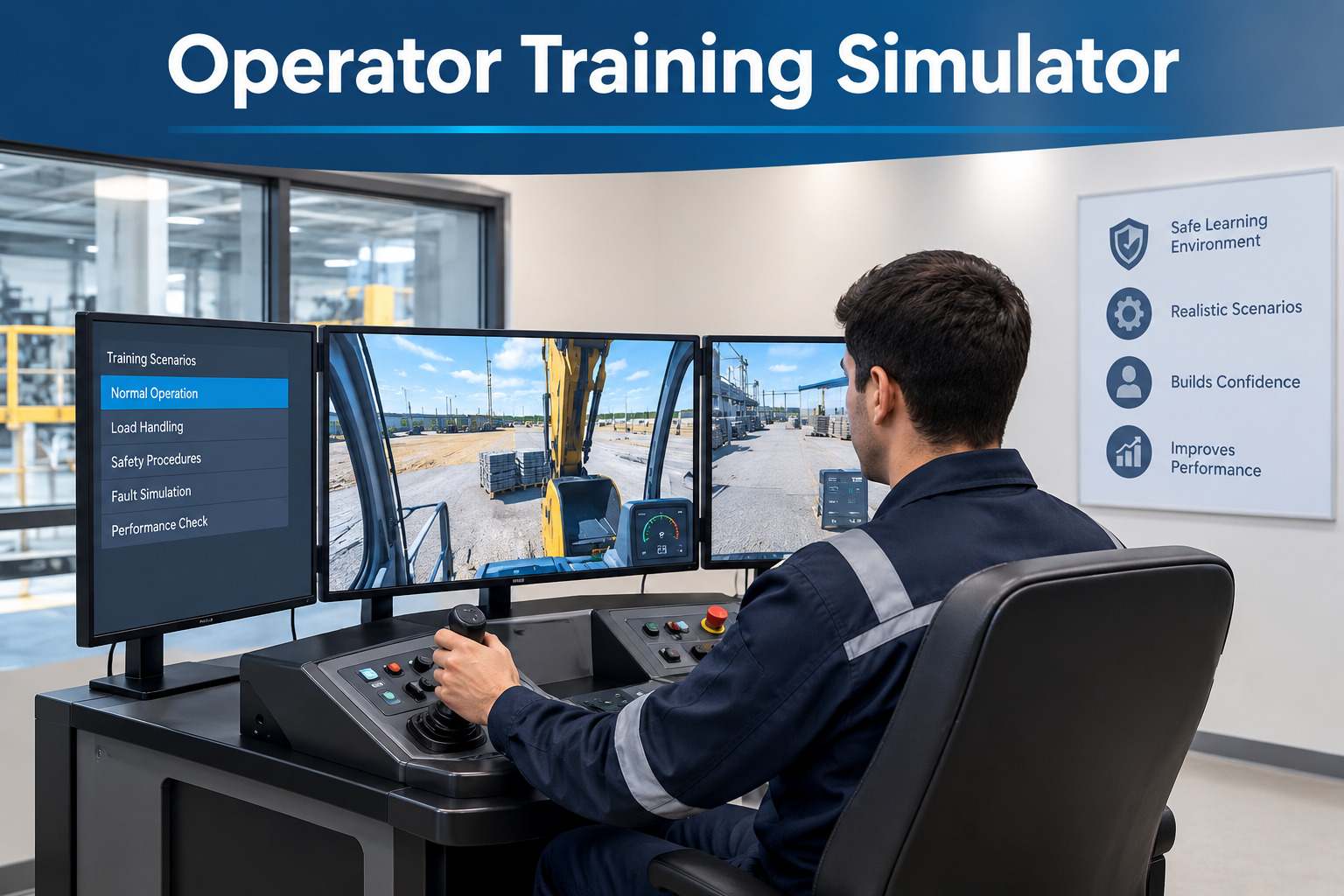

Industrial organizations need well-trained employees who can operate equipment, understand technical procedures, and respond confidently to changing working conditions. As manufacturing technologies and industrial processes become more advanced, companies must provide training that prepares workers for both routine responsibilities and unexpected challenges.
Traditional training methods often combine classroom instruction with practical experience. However, training directly on operating equipment may require additional supervision, affect production schedules, and limit opportunities to practice unusual situations. An Operator Training Simulator provides another approach by allowing employees to develop practical knowledge in a controlled and repeatable learning environment.
Why Workforce Training Matters in Modern Industries
Employees play an important role in maintaining operational efficiency and product quality. Even advanced equipment depends on operators who understand its functions, recognize warning signs, and follow established procedures.
Insufficient training can contribute to operating mistakes, avoidable interruptions, and inconsistent performance. Organizations therefore need structured learning programs that help employees develop the skills required for their responsibilities.
Simulation-based training can support this process by introducing industrial concepts through interactive exercises. Trainees can become familiar with controls, operating sequences, and system responses before applying their knowledge in an actual workplace.
What Makes an Operator Training Simulator Useful?
An Operator Training Simulator recreates selected features of an industrial machine, production process, or control-room environment. It allows employees to practice tasks and observe how different actions influence simulated operating conditions.
Depending on the application, the system may include virtual control panels, process indicators, alarms, equipment models, and predefined training scenarios.
For example, a new employee learning about a production system can practice starting a simulated process, monitoring important parameters, and responding to warning messages. An instructor can then review the trainee's performance and explain areas that require improvement.
This approach makes it possible to repeat exercises without deliberately disrupting actual production operations.
Benefits of Simulation-Based Employee Training
1. Faster Familiarization With Equipment
New employees often need time to understand industrial terminology, equipment functions, and control interfaces. A simulator provides opportunities to explore these elements before trainees begin working with actual machinery under supervision.
2. More Consistent Training
A structured simulation program can provide employees with standardized exercises and learning objectives. This helps organizations deliver consistent instruction across different training sessions.
3. Opportunities to Practice Difficult Situations
Some industrial situations occur infrequently and may be unsuitable for deliberate reproduction during normal operations. Simulation allows instructors to introduce selected abnormal conditions so employees can practice the appropriate response.
4. Improved Learning Through Feedback
Trainees can make mistakes in a controlled environment and learn from the results. Instructors can explain why a decision was incorrect and guide employees through the correct procedure.
5. Flexible Training Schedules
Simulation can provide additional learning opportunities without requiring every exercise to use production equipment. This flexibility may help organizations arrange training around operational demands.
The overall effectiveness depends on the realism of the scenarios, the quality of instruction, and how well the training program matches workplace requirements.
The Role of Simulation in Employee Onboarding
Employee onboarding introduces new workers to an organization's responsibilities, procedures, equipment, and workplace expectations.
For industrial roles, onboarding may involve understanding machine controls, production workflows, safety rules, and communication procedures.
An Operator Training Simulator can support this process by presenting technical concepts in a structured sequence. Beginners can start with basic operating tasks and progress to more challenging exercises as their understanding improves.
Instructors can use performance assessments to identify knowledge gaps and decide when additional instruction is needed.
Simulation should complement workplace orientation, formal safety instruction, and supervised practical experience. Employees should not operate real equipment independently until they meet the organization's competency and authorization requirements.
Industries That Can Use Operator Training Simulators
Manufacturing: Simulators can introduce production sequences, machine controls, and selected troubleshooting procedures.
Energy and Power Generation: Training environments can help employees understand plant operations, control-room interfaces, and responses to changing operating conditions.
Oil and Gas: Simulation can support training in process monitoring, operating procedures, and selected abnormal situations.
Chemical Processing: Operators can practice monitoring process variables and following established response procedures.
Water Treatment: Training exercises can explain treatment stages, operating parameters, and the functions of relevant equipment.
The training content should be customized to reflect the equipment, procedures, and responsibilities associated with each industry.
How to Evaluate Training Costs and Benefits
Organizations considering simulation technology should examine both the initial investment and the potential long-term benefits.
Costs may include software licensing, system configuration, hardware, training materials, instructor time, maintenance, and future updates.
Potential benefits may include reduced dependence on production equipment for certain exercises, more consistent training delivery, and improved opportunities to practice difficult scenarios.
Businesses should compare these costs with measurable training outcomes rather than assuming that a simulator will automatically reduce expenses.
Useful indicators include training completion time, assessment results, procedural accuracy, and the amount of supervised practice required before employees demonstrate competency.
Selecting the Right Simulation Technology
Choosing an appropriate simulator begins with identifying the organization's training objectives.
Consider whether employees need basic equipment familiarization, process-control training, troubleshooting practice, or preparation for specific operating scenarios.
The simulator should offer relevant models, realistic control interfaces, appropriate assessment tools, and sufficient flexibility to accommodate different experience levels.
Organizations should also consider ease of use, technical support, maintenance requirements, and compatibility with existing training systems.
A solution that closely matches actual job responsibilities is generally more useful than one with advanced features that do not support the organization's learning objectives.
Preparing Employees for Future Industrial Challenges
Industrial environments continue to evolve through automation, digital monitoring, connected equipment, and advanced control technologies. These developments increase the importance of ongoing employee training.
Simulation systems can help organizations introduce new procedures and provide opportunities to practice unfamiliar tasks before employees apply them in real operating environments.
Training programs can also be updated as equipment changes or new operational requirements emerge. Regular reviews help ensure that scenarios remain relevant and that employees continue developing the skills required for their roles.
Conclusion
Effective workforce development requires practical instruction, structured learning, and reliable methods for evaluating employee competency. An Operator Training Simulator provides a controlled environment where industrial employees can become familiar with equipment, practice operating procedures, and learn how to respond to different situations.
By integrating simulation into a comprehensive training program, organizations can improve learning consistency and provide employees with additional opportunities to develop technical skills.
The best results come from combining suitable simulation technology with qualified instructors, formal safety training, supervised workplace experience, and continuous performance evaluation.



