

What Are Natural Jute Rugs? A Complete Guide to Materials, Styles and Benefits

Natural Jute Rugs are a popular choice for homeowners who want to bring warmth, texture and a natural feel into their living spaces. Known for their earthy appearance and distinctive woven texture, these rugs can complement a wide range of interior styles, from modern minimalist homes to rustic and bohemian-inspired spaces.
Made from fibres obtained from the jute plant, these rugs offer a natural alternative to many synthetic floor coverings. Their neutral shades, tactile surfaces and versatile designs make them suitable for living rooms, bedrooms, dining areas and other indoor spaces.
Whether you are decorating a new home or refreshing an existing room, understanding the materials, styles, benefits and care requirements of jute rugs can help you make the right choice.
What Are Natural Jute Rugs?
Natural Jute Rugs are floor coverings made using fibres extracted from the stem of the jute plant. Jute is a natural plant-based fibre traditionally used to manufacture products such as ropes, sacks, textiles and home accessories.
For rug production, the fibres are processed, spun into yarn and woven or braided into different patterns. The result is a rug with a distinctive natural texture and an earthy appearance.
Most jute rugs feature shades of beige, tan, brown and golden yellow. These colours make them easy to coordinate with different furniture finishes, wall colours and decorative accessories.
Unlike some synthetic rugs, which are designed to create a uniform surface, jute rugs often have subtle variations in colour and texture. These natural characteristics give every rug a slightly distinctive appearance.
How Are Natural Jute Rugs Made?
The manufacturing process begins with harvesting mature jute plants. The stems are soaked in water through a process known as retting, which helps separate the fibres from the woody material.
After the fibres are extracted, they are washed, dried and processed into yarn. This yarn is then used to create rugs through different weaving and construction techniques.
The main production stages include:
-
Harvesting: Mature jute plants are collected for fibre extraction.
-
Fibre separation: The stems are processed to separate the usable fibres.
-
Drying and preparation: Extracted fibres are dried and prepared for spinning.
-
Yarn production: The fibres are spun into yarn suitable for rug making.
-
Weaving and finishing: The yarn is woven, braided or knotted into the final rug design.
The construction method influences the rug's texture, appearance, thickness and overall feel.
Different Styles of Natural Jute Rugs
One of the reasons jute rugs remain popular is their variety of designs. Although natural jute is commonly associated with simple woven patterns, modern collections include several shapes, textures and decorative styles.
1. Flatweave Jute Rugs
Flatweave jute rugs have a relatively thin construction and a smooth, low-profile appearance. They are created by interlacing fibres into a flat surface rather than using a deep pile.
Their simple construction makes them a practical option for areas where doors, furniture and regular foot traffic require a lower-profile rug.
2. Braided Jute Rugs
Braided jute rugs are made by weaving or twisting strands of jute together. They often feature circular, oval or rectangular shapes with a textured surface.
These designs work particularly well in farmhouse, coastal and rustic interiors.
3. Chunky Jute Rugs
Chunky jute rugs feature thicker fibres and a more pronounced woven texture. Their dimensional appearance can add depth and character to rooms with simple furniture and understated decoration.
They are often used as statement floor coverings in living rooms and bedrooms.
4. Round Jute Rugs
Round jute rugs can soften the appearance of rooms dominated by straight lines and rectangular furniture. They are useful beneath small dining tables, accent chairs, coffee tables and decorative furniture.
A round design can also help define a particular area without covering too much floor space.
5. Patterned Jute Rugs
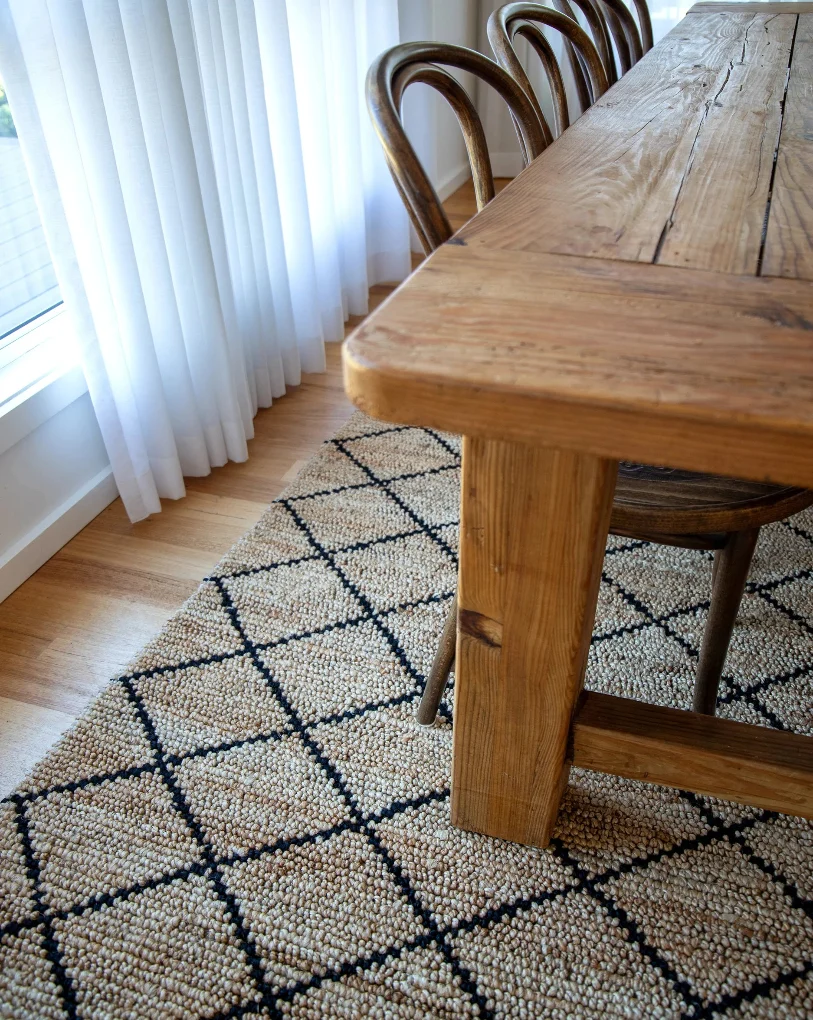
Patterned jute rugs combine natural fibres with decorative weaving techniques. Some designs feature geometric details, borders, contrasting colours or combinations of jute and other materials.
They offer a way to introduce visual interest while maintaining the natural character of jute.
Key Benefits of Natural Jute Rugs
Natural jute rugs offer several advantages that make them appealing for different home interiors. Their suitability depends on the room, construction quality and how the rug will be used.
1. Natural and Organic Appearance
One of the biggest attractions of jute rugs is their natural appearance. Their earthy colours and woven surfaces can make a room feel warmer and more inviting.
They are particularly suitable for homeowners who prefer natural materials and understated interior decoration.
2. Versatile Design Options
Jute rugs are available in different shapes, sizes, patterns and weaving styles. Whether your home has a contemporary, traditional, coastal or bohemian design, there are options that can complement the overall look.
Their neutral colour palette also makes it easier to coordinate them with existing furniture and accessories.
3. Adds Texture to Interior Spaces
A room with smooth flooring, plain walls and simple furniture can sometimes feel visually flat. The woven texture of a jute rug introduces another layer of detail.
This contrast can make a space feel more balanced without requiring additional decorative elements.
4. Made from Renewable Plant Fibres
Jute is a plant-based fibre that can be regrown and harvested. It is often considered by homeowners looking for natural alternatives to fully synthetic materials.
However, the overall environmental impact of a rug also depends on its manufacturing, transportation, backing, dyes and other materials used.
5. Suitable for Layering
Jute rugs are frequently used as a base layer in decorative rug arrangements. Their neutral appearance makes them easy to combine with smaller patterned rugs, wool rugs or colourful accent pieces.
Layering can create a more personalised interior while adding visual depth.
6. Works with Different Interior Themes
From modern apartments to country-style homes, jute rugs can complement a variety of decorative themes.
They pair particularly well with wooden furniture, linen upholstery, indoor plants, natural lighting and neutral colour schemes.
Where Can You Use Natural Jute Rugs?
Choosing the right location is important because jute is a natural fibre that can absorb moisture. These rugs are generally better suited to dry indoor spaces than areas exposed to frequent spills or dampness.
Living Room
The living room is one of the most popular places for a jute rug. A large rectangular rug can help bring together a sofa, coffee table and accent chairs.
Choose a size that allows the front legs of your main seating furniture to sit on the rug. This creates a more connected furniture arrangement.
Bedroom
A jute rug can add warmth and texture to a bedroom. You can position a large rug beneath the bed, allowing it to extend beyond the sides and foot of the frame.
Smaller rugs can also be placed beside the bed to create defined areas.
Dining Room
Jute rugs can work beneath dining tables in rooms where spills and moisture are limited. Select a size that allows dining chairs to remain on the rug even when pulled away from the table.
Because food and drink spills can be difficult to manage on natural jute fibres, consider how frequently the dining area is used before choosing this material.
Hallways and Entryways
A narrow jute runner can add texture to a hallway and create a welcoming appearance. However, entryways exposed to wet shoes, mud or frequent moisture may not be ideal locations.
Use a suitable rug pad to help keep the runner stable and protect the flooring underneath.
Natural Jute Rugs vs Other Natural Fibre Rugs
Jute is not the only plant-based fibre used in rug production. Sisal, seagrass and other natural materials also offer distinctive textures and practical characteristics.
| Feature | Jute Rugs | Sisal Rugs | Seagrass Rugs |
|---|---|---|---|
| Material | Jute plant fibres | Agave plant fibres | Aquatic grass fibres |
| Texture | Generally softer and more flexible | Firm and coarse | Smooth and tightly woven |
| Appearance | Warm, earthy and textured | Structured and natural | Subtle and often slightly glossy |
| Common colours | Beige, tan and brown | Cream and light brown | Greenish, beige and tan tones |
| Moisture considerations | Absorbs moisture easily | Requires careful cleaning | Often more moisture-tolerant than jute, but still needs care |
| Common use | Living rooms and bedrooms | Living areas and hallways | Indoor living spaces |
The right choice depends on the texture you prefer, the room's conditions and your cleaning requirements.
Jute is often preferred for its warm appearance and relatively soft feel compared with many other natural plant fibres.
How to Choose the Right Natural Jute Rug
Before purchasing a jute rug, consider the room size, furniture arrangement, construction and expected daily use.
1. Select the Correct Size
A rug should complement the furniture rather than make the room appear crowded or disconnected.
For living rooms, consider a rug large enough to accommodate at least the front legs of the main seating furniture. In bedrooms, choose a size that extends beyond the bed to create a balanced appearance.
2. Consider the Weave
Different weaving styles create different textures and appearances.
-
Flatweave designs offer a low-profile finish.
-
Braided designs create a more decorative appearance.
-
Chunky weaves add visible texture.
-
Patterned designs introduce additional visual detail.
Choose a weave that suits the room's overall decoration and practical requirements.
3. Check the Rug's Construction
Look at the fibre quality, stitching, backing and finishing. A well-constructed rug should have an even appearance and secure edges.
If the rug includes a backing made from synthetic materials, check the product description to understand its complete composition.
4. Think About Daily Usage
Consider how frequently the area is used and whether it is exposed to food, drinks, pets or outdoor moisture.
For areas where spills are common, another rug material may be easier to maintain.
5. Match the Colour with Your Interior
Natural jute colours work well with white, cream, grey, green, brown and other earthy shades.
For a calm appearance, choose a simple natural finish. If you want more visual interest, consider patterned designs or rugs featuring contrasting borders.
6. Use a Suitable Rug Pad
A rug pad can help prevent unwanted movement, improve stability and protect the floor underneath.
Make sure the pad is compatible with your flooring type and the rug's backing material.
How to Clean and Maintain Natural Jute Rugs
Proper care is important for maintaining the appearance and condition of natural jute fibres. Since jute can absorb moisture, avoid treating it like a washable synthetic rug.
Follow these basic maintenance practices:
-
Vacuum regularly: Use a suitable vacuum setting to remove loose dust and dirt. Avoid aggressive brushing that could damage the fibres.
-
Clean spills quickly: Blot liquid spills immediately with a clean, dry cloth. Do not rub the affected area.
-
Avoid excessive water: Wet cleaning can cause staining, fibre damage or changes in the rug's shape.
-
Keep away from damp areas: Avoid placing jute rugs in bathrooms, frequently wet kitchens or other moisture-prone spaces.
-
Rotate periodically: Rotating the rug can help distribute regular foot traffic and sunlight exposure more evenly.
-
Follow manufacturer instructions: Cleaning recommendations can vary depending on the rug's construction and backing.
For stubborn stains or extensive cleaning, consult a professional rug cleaner experienced with natural plant fibres.
Are Natural Jute Rugs a Good Choice for Modern Homes?
Natural jute rugs can be an excellent decorative choice for modern homes because they combine simple styling with an organic texture.
Contemporary interiors often feature clean lines, neutral colours and minimal decoration. A jute rug can introduce warmth and contrast without making the space feel overly busy.
For example, a natural beige rug can complement a white sofa, wooden coffee table and indoor plants. In a bedroom, it can add texture to a simple arrangement of neutral bedding and wooden furniture.
The key is selecting a suitable size and weave that complements the room rather than competing with other design elements.
Common Mistakes to Avoid When Buying Jute Rugs
Although jute rugs are versatile, choosing the wrong design or placing one in an unsuitable area can lead to maintenance problems.
Avoid these common mistakes:
-
Ignoring moisture exposure: Jute absorbs moisture, so avoid areas where spills and dampness are frequent.
-
Choosing the wrong size: A rug that is too small can make furniture arrangements look disconnected.
-
Ignoring the backing: The backing material can affect stability, floor compatibility and overall construction.
-
Using harsh cleaning products: Strong chemicals and excessive water may damage natural fibres.
-
Skipping a rug pad: Without a suitable pad, the rug may move during everyday use.
-
Not checking product details: Always review the material composition, dimensions and care instructions before purchasing.
Frequently Asked Questions About Natural Jute Rugs
1. What are Natural Jute Rugs made of?
Natural Jute Rugs are made from fibres extracted from the stem of the jute plant. These fibres are processed into yarn and woven, braided or otherwise constructed into floor coverings.
2. Are jute rugs suitable for living rooms?
Yes. Jute rugs are commonly used in living rooms because their earthy colours and textured surfaces complement many furniture styles. They are best suited to living spaces that are not regularly exposed to moisture.
3. Are natural jute rugs eco-friendly?
Jute is a renewable plant-based fibre, which makes it an appealing option for people interested in natural materials. However, the environmental impact of the finished rug also depends on manufacturing, transportation, backing and other materials.
4. Can jute rugs get wet?
Jute rugs should not be exposed to excessive water or prolonged moisture. The fibres can absorb liquid, potentially causing stains, odours or damage. Clean spills promptly and follow the manufacturer's care instructions.
5. Are jute rugs soft underfoot?
Jute rugs generally have a more natural, textured feel than many plush synthetic or wool rugs. Their softness varies according to fibre quality, weave and construction.
6. Can I use a jute rug in my bedroom?
Yes. Bedrooms are generally suitable locations because they are usually dry indoor spaces. A large jute rug beneath the bed can add warmth and visual texture.
7. How often should I vacuum a jute rug?
Vacuuming once or twice a week is a reasonable starting point for many homes. The frequency may need to increase in busy areas or homes with pets. Use a suitable vacuum setting to avoid damaging the fibres.
8. Do natural jute rugs suit minimalist interiors?
Yes. Their neutral colours and simple woven designs work well with minimalist interiors. They can add texture and warmth while maintaining a clean and uncluttered appearance.
Final Thoughts
Natural Jute Rugs offer a distinctive combination of natural texture, earthy colours and versatile styling. From flatweave and braided designs to chunky and patterned options, they can complement many types of home interiors.
They are particularly suitable for dry indoor spaces such as living rooms and bedrooms, where their organic appearance can add warmth and visual interest.
Before choosing a rug, consider its size, construction, fibre quality and maintenance requirements. With the right selection and proper care, a natural jute rug can become a beautiful part of your home's interior design.



