

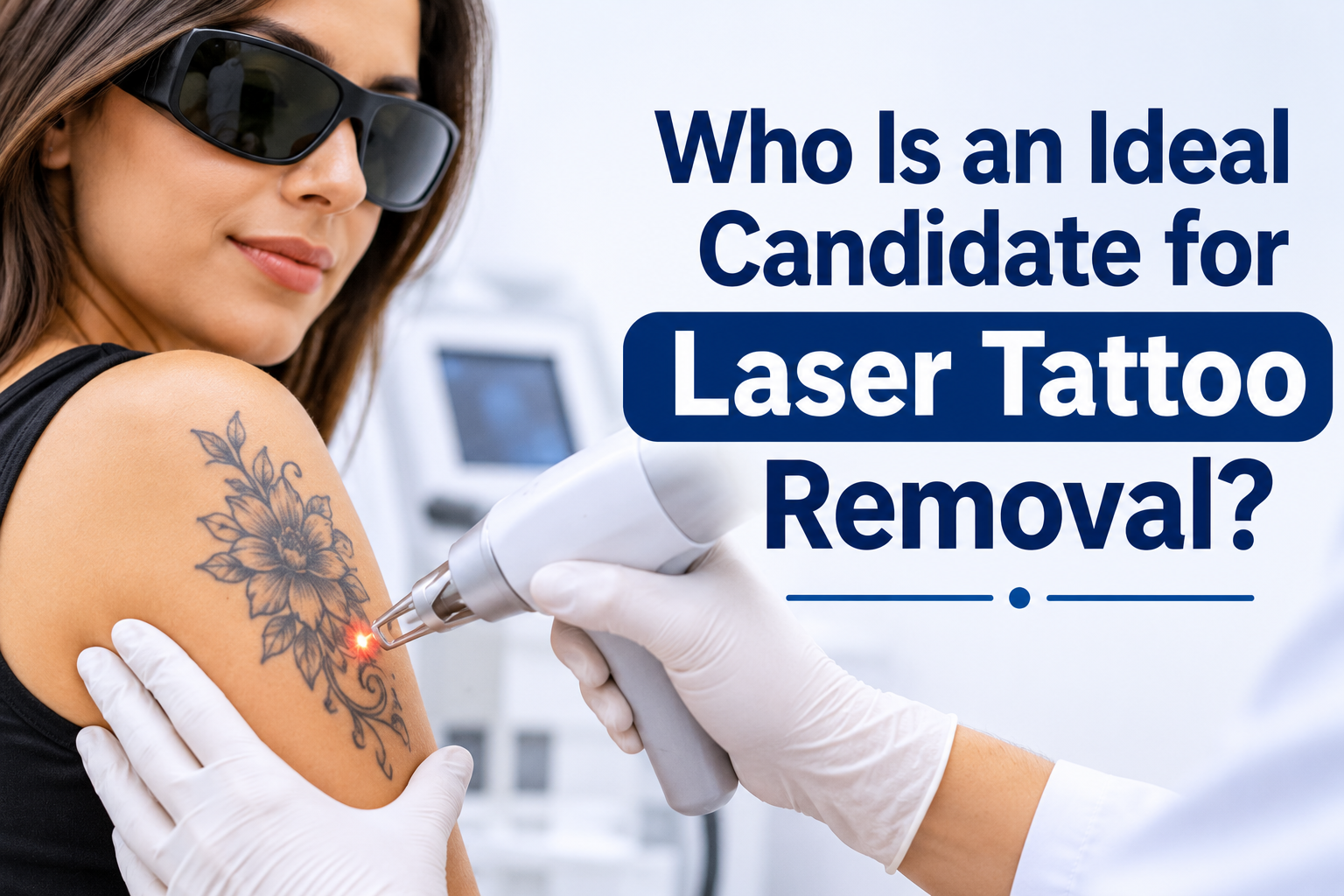

Tattoos are a popular way to express personal style, memories, and creativity. However, preferences can change over time, and some people may decide that they no longer want a particular tattoo. Laser tattoo removal is a widely used method for reducing or removing unwanted tattoos. It uses specialised laser technology to break tattoo ink into smaller particles, which the body's immune system gradually clears. However, the treatment may not be suitable for everyone. Understanding who makes an ideal candidate can help individuals make an informed decision.
1. Understanding Laser Tattoo Removal
Laser tattoo removal is a non-surgical procedure that uses controlled pulses of laser energy to target ink particles beneath the skin. The laser breaks the ink into smaller fragments, which are gradually removed by the body's natural processes.
People considering Tattoo Removal in Jaipur should first consult a qualified dermatologist or trained medical professional. A proper skin assessment helps determine whether the treatment is suitable, which laser technology may be appropriate, and how many sessions might be required.
2. People with Unwanted or Regrettable Tattoos
Individuals who no longer feel connected to their tattoos are among the common candidates for laser tattoo removal. Personal preferences, career requirements, lifestyle changes, and other reasons may influence the decision.
Some people may want to remove:
-
Names or initials of former partners.
-
Old designs that no longer match their preferences.
-
Tattoos with faded or unclear artwork.
-
Tattoos received at a young age.
-
Designs that affect their professional appearance.
Laser treatment can help reduce the appearance of unwanted tattoos, although complete removal cannot be guaranteed in every case.
3. People with Suitable Skin Health
Skin health is an important factor when considering laser tattoo removal. Individuals with healthy skin and no active infection in the treatment area may be suitable candidates.
Before starting treatment, the specialist checks for conditions such as:
-
Active skin infections.
-
Open wounds or irritation.
-
Severe inflammation.
-
Certain skin disorders.
-
A history of abnormal scarring.
People with existing skin conditions may need treatment or additional evaluation before undergoing laser procedures. The specialist determines the safest approach based on the individual's skin condition.
4. Individuals with Realistic Expectations
A good candidate should understand that tattoo removal is usually a gradual process rather than a one-time treatment. Multiple sessions are often needed because tattoo ink is located at different depths within the skin.
The number of sessions depends on several factors, including:
-
Tattoo size and location.
-
Ink colour and type.
-
Depth of the tattoo pigment.
-
Age of the tattoo.
-
Skin type.
-
Individual healing response.
Some tattoos may fade significantly, while others may leave slight traces of pigment. People who understand these limitations are better prepared for the treatment process.
5. People with Black or Dark-Coloured Tattoos
Black and dark-blue tattoos often respond well to laser treatment because their pigments absorb certain laser wavelengths effectively.
However, coloured tattoos may require different laser wavelengths depending on the ink used. Green, yellow, red, and other shades can respond differently to treatment.
A dermatologist or laser specialist evaluates the tattoo's colours and recommends suitable technology. The response also varies depending on the ink composition and depth.
6. Adults Who Can Follow Aftercare Instructions
Proper aftercare is an important part of laser tattoo removal. Ideal candidates should be willing to follow the specialist's instructions throughout the treatment process.
After a session, patients may be advised to:
-
Keep the treated area clean.
-
Avoid scratching or picking the treated skin.
-
Apply recommended ointments if prescribed.
-
Avoid direct sun exposure.
-
Use suitable sun protection after the skin has healed.
-
Avoid unnecessary friction on the treated area.
-
Attend scheduled follow-up appointments.
Following these instructions helps support healing and reduces the risk of complications.
7. People Without Certain Medical Risks
Some medical conditions and medications may affect skin healing or increase the risk of side effects.
Before treatment, patients should inform the specialist about:
-
Pregnancy or breastfeeding.
-
A history of keloid or abnormal scarring.
-
Skin sensitivity or pigmentation problems.
-
Current medications.
-
Previous reactions to laser treatments.
-
Any medical condition affecting wound healing.
Having one of these factors does not automatically mean that laser tattoo removal is impossible. However, an individual assessment is important to determine whether treatment should proceed, be modified, or postponed.
8. People Willing to Complete Multiple Sessions
Laser tattoo removal generally requires several appointments separated by healing intervals. The skin needs time to recover, and the body's immune system gradually clears the fragmented ink particles.
Patients should be prepared for a treatment schedule that may extend over several months or longer, depending on the tattoo.
Skipping sessions or undergoing treatments too frequently may affect skin recovery. Following the recommended schedule is important for safer treatment.
9. Who May Not Be an Ideal Candidate?
Although laser tattoo removal is suitable for many people, certain situations require extra caution.
Individuals with active skin infections, recently tanned skin, open wounds, or certain medical conditions may need to postpone treatment.
People expecting immediate results or guaranteed complete removal may also need to reconsider their expectations. A professional consultation helps identify possible risks and available alternatives.
10. Why Is Professional Consultation Important?
Before beginning laser tattoo removal, a professional consultation helps determine the treatment's suitability. The specialist examines the tattoo, evaluates the skin, discusses medical history, and explains the expected results.
Patients can also discuss possible side effects, session intervals, recovery time, and treatment costs.
Common temporary effects may include redness, swelling, tenderness, blistering, or temporary changes in skin pigmentation. Following professional guidance helps manage these effects and supports proper recovery.
Conclusion
Laser tattoo removal can be a suitable option for people who want to reduce or remove unwanted tattoos. Individuals with healthy skin, realistic expectations, and the willingness to follow proper aftercare may be good candidates. However, tattoo colour, size, depth, skin type, and medical history all influence treatment suitability and results. Before starting a Best Tattoo Removal in Jaipur, consulting an experienced skin specialist can help you understand the procedure, evaluate potential risks, and choose an appropriate treatment plan.



