

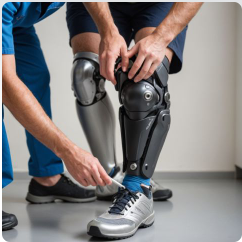

A knee brace provides support, stability, and compression for people dealing with knee pain, injuries, or arthritis. Some people wear one during exercise, while others need support during walking or daily activities.
However, wearing a knee brace for too long or choosing the wrong type might cause discomfort. The ideal wearing time depends on your condition, the brace design, and your healthcare provider's recommendations.
Understanding when to wear a brace, when to remove it, and how to choose the right fit helps you get the intended support without unnecessary discomfort.
1. How Many Hours Should You Wear a Knee Brace?
There is no universal number of hours for wearing a knee brace. Your wearing schedule depends on why you need it.
Consider these general situations:
| Reason for wearing a brace | Typical use |
|---|---|
| Mild knee discomfort | During activities that cause discomfort |
| Knee arthritis | During walking or other activities, as advised |
| Sports support | During selected physical activities |
| Ligament injury | According to a treatment and rehabilitation plan |
| Post-surgery recovery | According to your surgeon's instructions |
Some people need a brace for short periods during activity. Others require longer use during recovery from an injury or surgery.
Follow the instructions provided by your healthcare professional and the brace manufacturer.
2. How Long Should You Wear a Knee Support for Arthritis?
People with knee arthritis often experience stiffness, swelling, and discomfort while walking or standing.
A suitable knee support for arthritis might improve comfort and stability during daily activities. However, the wearing schedule depends on the type of brace and the severity of symptoms.
Common options include:
-
Compression sleeves for mild compression and support.
-
Hinged braces for additional stability.
-
Unloader braces for selected cases of osteoarthritis affecting one side of the knee.
-
Patellar braces for certain kneecap-related conditions.
You might wear a brace during walking, household activities, or exercise if it helps manage symptoms.
You do not necessarily need to wear it throughout the day. Remove it when resting if your healthcare provider recommends doing so, and check your skin regularly.
A brace should support movement without causing excessive pressure or restricting circulation.
3. Should You Wear a Knee Brace While Sleeping?
Most people do not need to wear a routine knee support while sleeping.
Removing the brace before bed allows you to check your skin and avoid unnecessary pressure during prolonged periods of inactivity.
However, certain injuries and post-surgical conditions require specific overnight support. Your doctor might recommend a brace that keeps the knee in a particular position.
Follow your treatment instructions rather than applying the same wearing schedule to every type of brace.
4. What Happens If You Wear a Knee Brace for Too Long?
A properly fitted brace is generally safe when used as directed. However, prolonged or incorrect use might cause problems.
Possible issues include:
-
Skin irritation.
-
Pressure marks.
-
Sweating and discomfort.
-
Numbness or tingling.
-
Reduced circulation if the brace is too tight.
-
Difficulty moving naturally if the brace restricts movement unnecessarily.
Long-term dependence on a brace without appropriate exercise might also reduce opportunities to strengthen the muscles supporting your knee.
A knee brace should complement rehabilitation, not replace it.
Remove the brace and seek medical advice if you notice persistent numbness, unusual swelling, skin discoloration, or increasing pain.
5. How Do You Know If Your Knee Brace Fits Properly?
Correct sizing is important for comfort and effective support.
Check these features:
-
The brace stays in position while walking.
-
Straps feel secure without excessive tightness.
-
The material does not pinch your skin.
-
You can bend your knee as intended by the brace design.
-
There is no numbness or tingling.
-
The brace does not cause increased pain.
Measure your knee according to the manufacturer's instructions. Different brace designs use different sizing methods.
If the brace repeatedly slips, bunches, or creates pressure points, ask a healthcare professional or orthotics specialist to check the fit.
6. Should You Exercise While Wearing a Knee Brace?
Some people wear knee braces during exercise to improve comfort or stability. The right choice depends on the type of injury or arthritis.
Activities that might suit certain people include:
-
Walking.
-
Stationary cycling.
-
Water-based exercise.
-
Gentle strengthening exercises.
-
Physical therapy movements.
For knee arthritis, strengthening the quadriceps and hip muscles helps support joint function.
Do not use a brace to push through sharp pain or significant swelling. Ask your physical therapist which activities and support options are suitable for your condition.
7. How Is an Orthopedic Back Brace Different From a Knee Brace?
An orthopedic back brace and a knee brace support different parts of the body.
An orthopedic back brace is designed to support the spine and surrounding structures. Depending on its design, it might help certain people manage back discomfort or follow a recovery plan.
A knee brace supports the knee joint and might help with stability, compression, or movement control.
If you experience both back and knee discomfort, you might need separate treatment plans. An orthopedic back brace does not directly treat knee arthritis or replace a knee support.
Choose each product according to your diagnosis and healthcare provider's recommendations.
8. When Should You Stop Wearing a Knee Brace and Seek Medical Advice?
A knee brace should not hide symptoms that need medical attention.
Consult a healthcare professional if:
-
Knee pain becomes worse despite wearing the brace.
-
Swelling continues or repeatedly returns.
-
Your knee frequently gives way.
-
You experience numbness or tingling.
-
The brace causes skin irritation or pressure sores.
-
You cannot comfortably bend or straighten your knee.
Seek urgent medical attention if your knee becomes suddenly hot, red, and severely swollen, especially if you also have a fever.
Frequently Asked Questions
1. Can I wear a knee brace all day?
Some braces are designed for extended use, while others are intended for specific activities. Follow your healthcare provider's instructions and remove the brace if it causes discomfort, numbness, or skin changes.
2. Should I wear a knee brace while walking?
You might wear one while walking if it provides useful support or improves comfort. The right brace depends on your condition and the amount of stability you need.
3. Is it safe to sleep with a knee brace?
Routine knee sleeves and activity braces are generally removed before sleeping. However, post-surgical or injury-related braces might require overnight use according to medical instructions.
4. Does wearing a knee brace weaken your muscles?
A brace does not automatically weaken your muscles. However, relying on external support without maintaining appropriate muscle-strengthening exercises might reduce opportunities to build strength.
5. Can I wear a knee brace over my clothes?
Some braces are designed to fit over thin clothing, while compression sleeves usually fit directly against the skin. Follow the manufacturer's instructions to maintain the correct fit and support.
Final Thoughts
The number of hours you should wear a knee brace depends on your condition, brace design, and treatment plan. Some people need support only during physical activity, while others require longer use during injury recovery.
A suitable knee support for arthritis might improve comfort during walking and daily activities. However, correct sizing, regular skin checks, and appropriate exercise remain important.
An orthopedic back brace serves a different purpose and should be selected according to your back condition. If you are unsure about your wearing schedule, ask your healthcare provider for guidance.



