

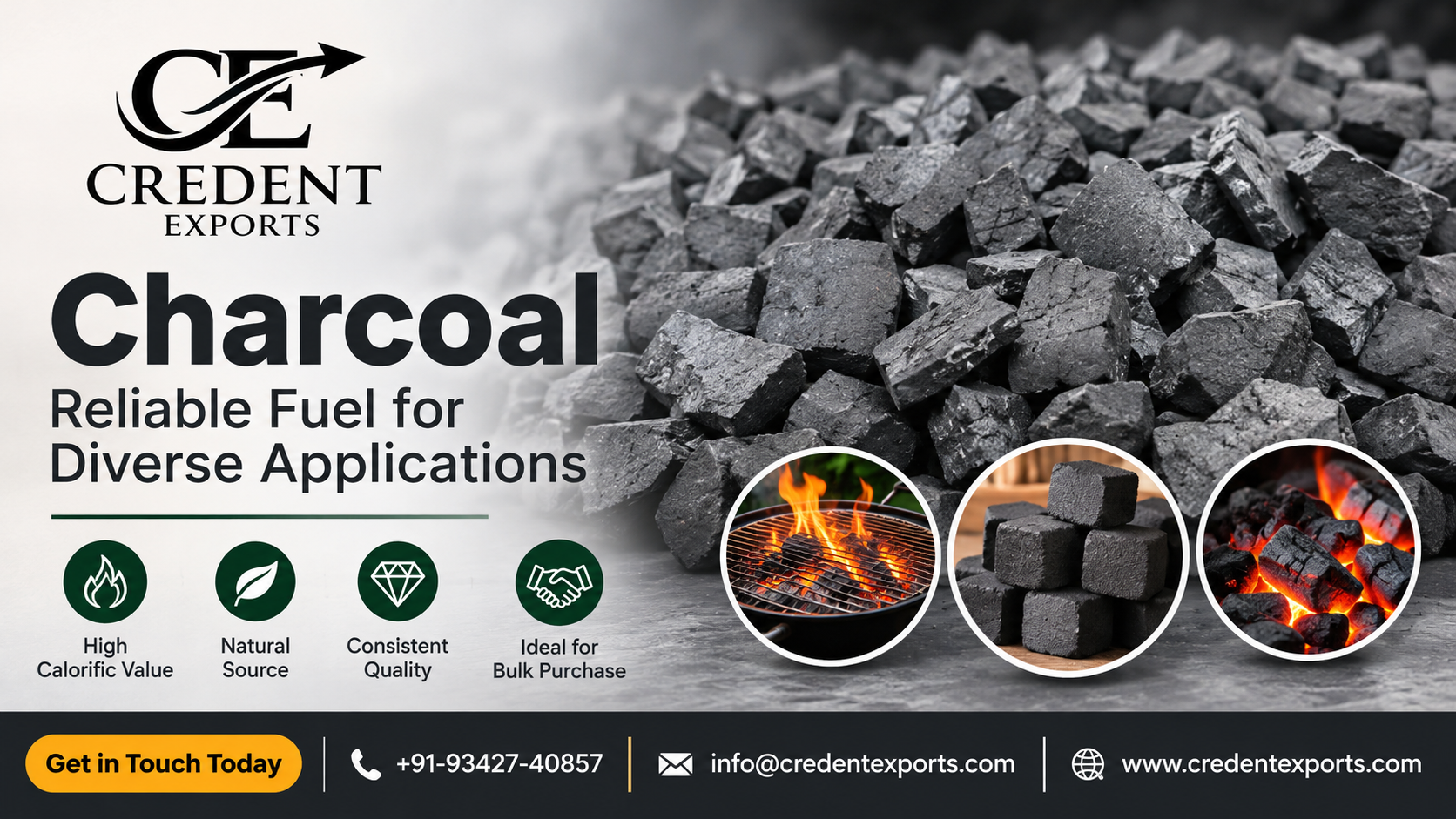

Charcoal is an important solid fuel used across several commercial and industrial sectors. From restaurants and barbecue businesses to metalworking facilities and wholesale distribution networks, different industries depend on charcoal products for specific operational requirements. However, choosing the correct variety requires an understanding of its raw materials, processing methods, physical characteristics and intended use.
For businesses purchasing in large quantities, product consistency and supply arrangements are just as important as the initial purchase cost. Understanding the differences between charcoal grades can help procurement teams make better decisions, reduce product mismatches and establish suitable supplier relationships.
Product Specifications
Charcoal is manufactured through carbonization, a process in which biomass materials are heated under controlled conditions with limited oxygen. Wood, coconut shells, bamboo and selected agricultural residues can serve as raw materials.
The production method and feedstock influence the finished product's physical and combustion characteristics.
Some common charcoal varieties include:
Hardwood charcoal: Produced from hardwood materials, this variety is used for cooking, heating, grilling and certain commercial applications. Its characteristics depend on the wood species and carbonization conditions.
Lump charcoal: Available as irregular pieces, lump charcoal is commonly selected for grilling and cooking. Piece dimensions and burning characteristics may vary between batches.
Charcoal briquettes: Manufactured by compressing charcoal powder or smaller charcoal particles into shaped units. Their relatively uniform dimensions can simplify storage, handling and fuel management.
Coconut shell charcoal: Produced from carbonized coconut shells, this variety is used in cooking, grilling and as a raw material for activated carbon production.
Activated charcoal: Specially processed to develop a porous structure suitable for adsorption and filtration applications. It should not be confused with ordinary fuel charcoal.
When assessing product specifications, wholesale buyers should pay attention to moisture content, fixed carbon, ash content, size, density and intended application. These parameters should be documented and agreed upon before an order is confirmed.
Businesses researching different product varieties can visit the Charcoal product page for information about available categories and applications.
Objective
The objective of a structured charcoal purchasing process is to match product characteristics with the requirements of the end market.
For example, a distributor supplying restaurants may prioritise suitable cooking performance and convenient packaging. A retailer serving barbecue customers may need consistent lump sizes or briquettes that are easy to handle. Industrial buyers may require documented quality parameters that correspond with their operational processes.
When evaluating Charcoal Manufacturers, procurement managers should ask questions about raw materials, manufacturing processes, quality checks, available product grades and order fulfilment.
It is also useful to prepare a written product specification before requesting quotations. This document can include the product variety, size requirements, quality parameters, packaging preferences, order quantity and delivery destination.
Benefits
Charcoal offers several advantages across different business segments when the appropriate variety is selected.
Flexible applications: Different charcoal products support cooking, grilling, heating, metalworking and specialised industrial processes.
Convenient inventory management: Properly packaged charcoal can be stored and distributed through established wholesale and retail channels.
Different product formats: Buyers can choose between loose charcoal pieces, lump charcoal and shaped briquettes according to their customers' preferences.
Useful fuel characteristics: Properly carbonized charcoal generally has lower moisture content than untreated wood and can provide concentrated heat under suitable operating conditions.
Potential for biomass utilisation: Depending on sourcing practices, charcoal production can use materials such as coconut shells, bamboo and agricultural residues.
Reliable Charcoal Suppliers can help buyers understand the available grades and select products according to their market requirements. When comparing Charcoal Suppliers in India, businesses should examine product consistency, sample quality, packaging arrangements and communication before entering into regular purchasing agreements.
Availability
Charcoal availability varies according to raw material sourcing, production arrangements, product specifications and order quantities. Buyers should communicate their expected consumption and purchasing schedules to avoid unnecessary inventory shortages.
Businesses working with Charcoal wholesalers should confirm whether the required product grade is available consistently and whether the packaging suits their distribution model. Similarly, Charcoal wholesalers in India should be assessed on their ability to coordinate bulk quantities, product handling and delivery schedules.
International buyers have additional procurement considerations. Charcoal Exporters should be able to communicate product descriptions, agreed specifications, packaging details and relevant shipping documentation.
When approaching Charcoal Exporters in India, importers should verify the applicable requirements of the destination country, agree on inspection arrangements and confirm the commercial and shipping documents before dispatch. Packaging should also protect the material against moisture and physical damage during handling and transportation.
About the Brand
Credent Exports operates in the charcoal and charcoal briquette segment, with a focus on supplying products for business and export markets. Its product information covers charcoal varieties, biomass-based raw materials, commercial applications and buyer considerations.
The company's product page also describes coconut shell charcoal briquettes, highlighting attention to natural coconut shell raw materials, product consistency, packaging and export-related requirements. Businesses can communicate their product expectations and intended applications when discussing potential orders.
Conclusion
Choosing suitable charcoal requires careful consideration of product type, raw materials, quality parameters and intended applications. Wholesalers and importers should evaluate samples, clarify specifications and confirm packaging and delivery arrangements before placing bulk orders. Working with an appropriately qualified manufacturer or exporter can support more organised and predictable procurement.
FAQs
1. What are the main types of charcoal available for businesses?
Common varieties include hardwood charcoal, lump charcoal, charcoal briquettes, coconut shell charcoal, BBQ charcoal and activated charcoal. Each variety serves different applications.
2. What is the difference between lump charcoal and charcoal briquettes?
Lump charcoal consists of irregular charcoal pieces, whereas briquettes are formed by compressing charcoal powder or smaller particles. Briquettes generally offer more uniform shapes and dimensions.
3. Which charcoal characteristics should wholesale buyers evaluate?
Buyers should review fixed carbon, moisture, ash, density, piece size and burning characteristics. The relevant parameters depend on the intended application.
4. Why is product sampling important before a bulk order?
Samples allow buyers to inspect appearance, size, physical consistency and suitability. However, visual inspection alone cannot establish all technical quality parameters; laboratory testing may be necessary.
5. What should distributors confirm about charcoal packaging?
They should confirm packaging material, bag capacity, product protection, labelling and handling requirements. Moisture protection is particularly important during storage and transportation.
6. What documents should importers discuss with charcoal exporters?
Depending on the shipment and destination, buyers may need commercial invoices, packing lists, transport documents, certificates or other customs-related paperwork. Requirements should be confirmed with the relevant authorities and logistics partners.
7. How can businesses establish long-term charcoal supply arrangements?
Businesses should agree on product specifications, order quantities, quality inspection methods, packaging, payment conditions and delivery schedules. Periodic sample checks can help identify changes between shipments.



