

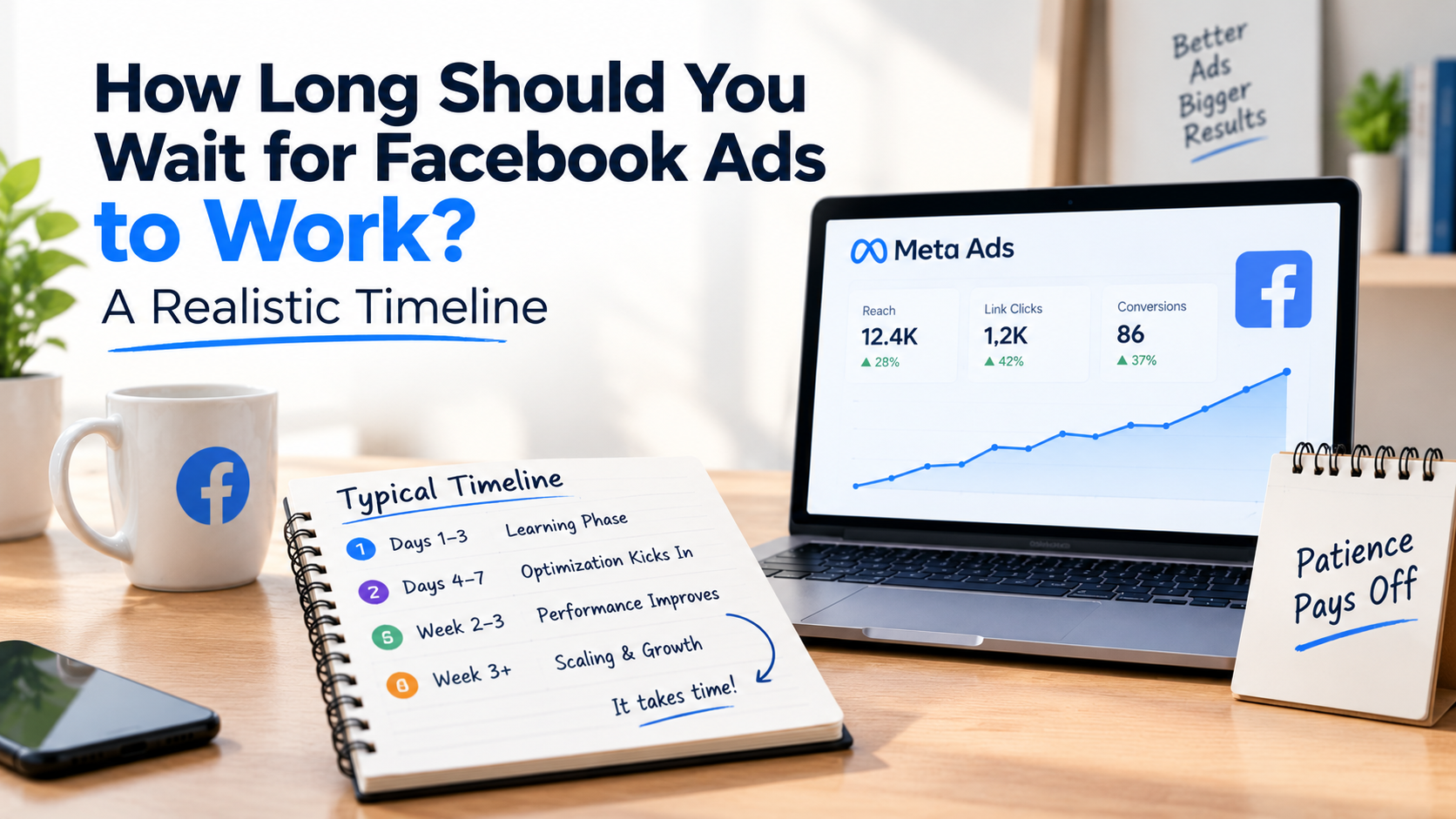
You launch your first Facebook ad, check the results the next morning and feel your stomach drop. A few clicks, no sales, and a budget that already seems to be disappearing. It is a very common moment, and it usually leads to a very common mistake: changing everything too early.
Facebook ads do need time to work, but not an unlimited amount of it. Here is a realistic timeline for what to expect, what is normal and when it is time to worry.
The First Few Days: Delivery and Learning
When a new ad launches, it first has to be reviewed, and this often takes anywhere from a few minutes to about a day. After approval, Meta's system starts testing who responds to your ad, and results in this period tend to be unstable. Costs may look high one day and low the next.
This early stretch is often called the learning phase. Meta has traditionally pointed to a certain number of conversions per week for an ad set to settle, so smaller budgets or rare conversion events can make it last longer. The practical lesson is simple: do not judge an ad by its first day.
The First Two Weeks: Patterns Start to Appear
By the end of the first week or two, you can usually see early patterns. Some ads hold attention and earn clicks, while others get ignored. This is the time to notice which messages are resonating, not to make dramatic decisions.
Resist the urge to edit constantly. Every major change, such as a big budget jump or a new audience, can push the system back into learning and make your data harder to read. Make small, deliberate changes and note what you did.
The First Month: Enough Data to Decide
After a few weeks, you often have enough information to make reasonable decisions. You can see which ads earn a sensible cost per result, which angles deserve more budget and which ones are not working. For many businesses, this is the point where the account begins to feel steadier.
Keep in mind that a month is a general guide, not a promise. Accounts with small budgets, long sales cycles or expensive products can take noticeably longer to produce clear conclusions.
What Makes the Timeline Shorter or Longer
Budget and Data Volume
More budget generally means more data, which means faster learning. A very small budget spread across many ads can leave each one with too little data to say anything useful.
Creative Quality
A clear message that matches what customers care about can show promise quickly. A vague or generic ad often needs several rounds before something connects. Planning your testing around genuinely different ideas speeds this up.
Tracking and Offer
If tracking is broken, you cannot trust any timeline. And if the offer or landing page is weak, even good ads will struggle. Both should be checked before you blame the ads themselves.
Your Product and Price
Impulse purchases tend to show results faster than high-priced items that need research and trust. A longer decision cycle naturally means a longer wait.
When to Be Patient and When to Act
Patience makes sense when tracking works, the ad has had reasonable time and the numbers are moving in an understandable direction. It does not make sense when tracking is clearly broken, when an ad has spent a meaningful amount with no engagement at all or when the landing page is obviously failing.
If you are unsure which situation you are in, a Facebook ads expert can review the setup and tell you whether you are looking at normal early volatility or a real problem.
You can also read through real case studies to see how long different accounts took to stabilize and what was changed along the way.
Frequently Asked Questions
How long does it take to see the first results?
Early signals such as impressions, clicks and engagement can appear within a day or two, but reliable conclusions usually take longer. Treat the first days as data collection, not a verdict.
What is the Facebook ads learning phase?
It is the initial period when the system tests who responds best to your ad. Performance can fluctuate during this time, and big edits can restart the process.
Should I turn off ads that do not work in the first two days?
Usually not. Two days rarely give enough data. Unless something is clearly broken, such as tracking or a policy issue, give the ad a fair window first.
Why are my ads taking longer than expected?
Common reasons include a small budget, rare conversion events, weak creative, broken tracking or a landing page that loses visitors. Check these before assuming the platform is the problem.
Final Thoughts
Facebook ads reward patience combined with attention. Give new campaigns room to learn, watch the early patterns without overreacting and make one clear change at a time. Check your tracking and offer first, because those problems can look exactly like slow results.



