


Soil, sand, gravel, mulch, and concrete are almost always sold by the cubic yard. It is a simple unit, but it trips up a lot of people because we measure in feet and inches. A small error in the math can mean an extra trip to the supply yard or a pile of material you cannot use.
A cubic yard calculator can do the conversion for you in seconds, and it is a handy way to double check your numbers. It still helps to know how the math works so you can spot a bad result. This guide covers the formula, common unit conversions, three real examples, and tips for hauling and ordering.
What Is a Cubic Yard?
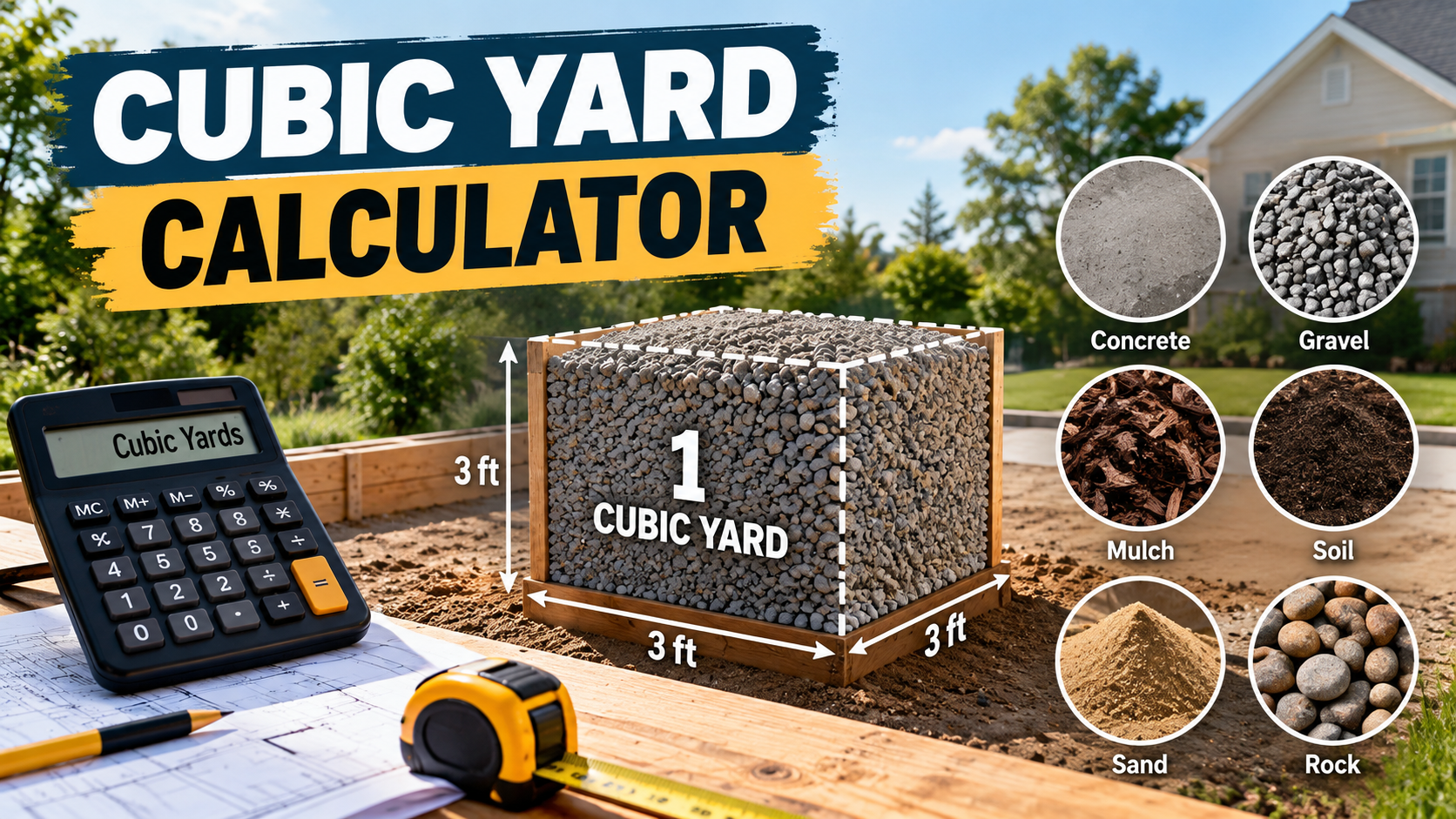
A cubic yard is a cube that measures 3 feet long, 3 feet wide, and 3 feet tall. That space holds 27 cubic feet. Think of it as a pile about the size of a small washing machine, or a little less than a full-size refrigerator.
The number 27 is the key to everything in this guide. If you can find a volume in cubic feet, you can divide by 27 and have cubic yards.
The Basic Formula
Measure the length, width, and depth of the space, all in feet. Multiply the three numbers to get cubic feet. Then divide by 27.
If your depth is in inches, divide it by 12 first. For example, 3 inches is 0.25 feet, and 6 inches is 0.5 feet. This one step prevents most mistakes.
Converting Other Units
Sometimes your plans use other units. These conversions cover the most common ones.
| If You Have | Do This |
|---|---|
| Cubic feet | Divide by 27 |
| Cubic inches | Divide by 46,656 |
| Cubic meters | Multiply by 1.31 |
| Square feet and depth in inches | Multiply, divide by 12, then divide by 27 |
Cubic meters show up in many plans from outside the United States. One cubic meter is about 1.31 cubic yards, so a 2 cubic meter order is around 2.6 yards.
Example One: A Raised Garden Bed
Say a raised bed is 4 feet wide, 8 feet long, and 1 foot deep. Multiply 4 by 8 by 1 and you get 32 cubic feet. Divide by 27 and you need about 1.2 cubic yards of soil.
Soil settles after watering, so many gardeners add about 10 percent. That brings the order to roughly 1.3 yards. Many suppliers sell by the half yard, so you would likely ask for 1.5.
Example Two: A Sand Base for Pavers
A patio base is 10 feet by 12 feet, and you want a 2 inch layer of sand. The area is 120 square feet. Two inches is 0.17 feet, so the volume is about 20 cubic feet.
That is 0.74 cubic yards. Sand is heavy, and the layer needs to be even, so order a small cushion and ask for about 0.85 yards.
Example Three: A Hole You Dig Out
Cubic yards also tell you how much soil you will remove. Take a pond or pit that is 8 feet long, 5 feet wide, and 2 feet deep. The volume is 80 cubic feet, or about 3 cubic yards.
Soil takes up more space once it is dug. Loose dirt can need 20 to 30 percent more room than it did in the ground. That means you should plan to haul or store about 3.7 yards, not 3.
How Many Loads Is That?
Convert yards into loads so you know how many trips you will make. A common 6 cubic foot wheelbarrow holds about 0.22 yards, so one yard takes about 4.5 loads. A smaller 3 cubic foot wheelbarrow takes about 9.
A pickup bed can carry about 1 to 2 cubic yards of light material, like mulch, when it is filled level with the sides. Heavy materials are different. Wet soil, sand, and gravel can weigh well over a ton per yard, so a full bed can overload the truck. Check your vehicle’s weight limit before you load up.
Ordering Tips
Add 5 to 10 percent for settling and uneven ground. Concrete needs a cushion for rough subgrade and spills. Rock needs less, since it does not compress much.
Ask about minimum loads and delivery fees. Many suppliers charge extra for small orders, so a slightly larger order can cost about the same as a smaller one. Also tell the driver where to drop the pile, and lay a tarp so cleanup is easy.
Planning Several Materials at Once
Bigger projects often use more than one material. A new patio might need gravel for the base, sand on top, and soil around the edges. Calculate each material on its own, since each has its own depth and its own supplier minimum.
Write each result on a separate line with the area, depth, volume, and yards. Add a cushion to each line instead of one big cushion at the end. This keeps the order clear and helps you compare quotes from different suppliers. It also shows you which material is driving the cost.
Common Mistakes to Avoid
The biggest mistake is mixing units. If depth stays in inches while length and width are in feet, the answer will be off by a wide margin. Convert before you multiply.
The second is forgetting to subtract areas you will not fill, like a stone path inside a bed. The third is trusting one measurement. Walk the space twice and measure at the widest and narrowest points.
Final Thoughts
To calculate cubic yards, measure in feet, multiply length by width by depth, and divide by 27. Convert other units first, and add a cushion for settling or loose soil. Check the answer against a quick estimate, and plan how you will haul the material. A few minutes of math up front keeps the project on schedule.



