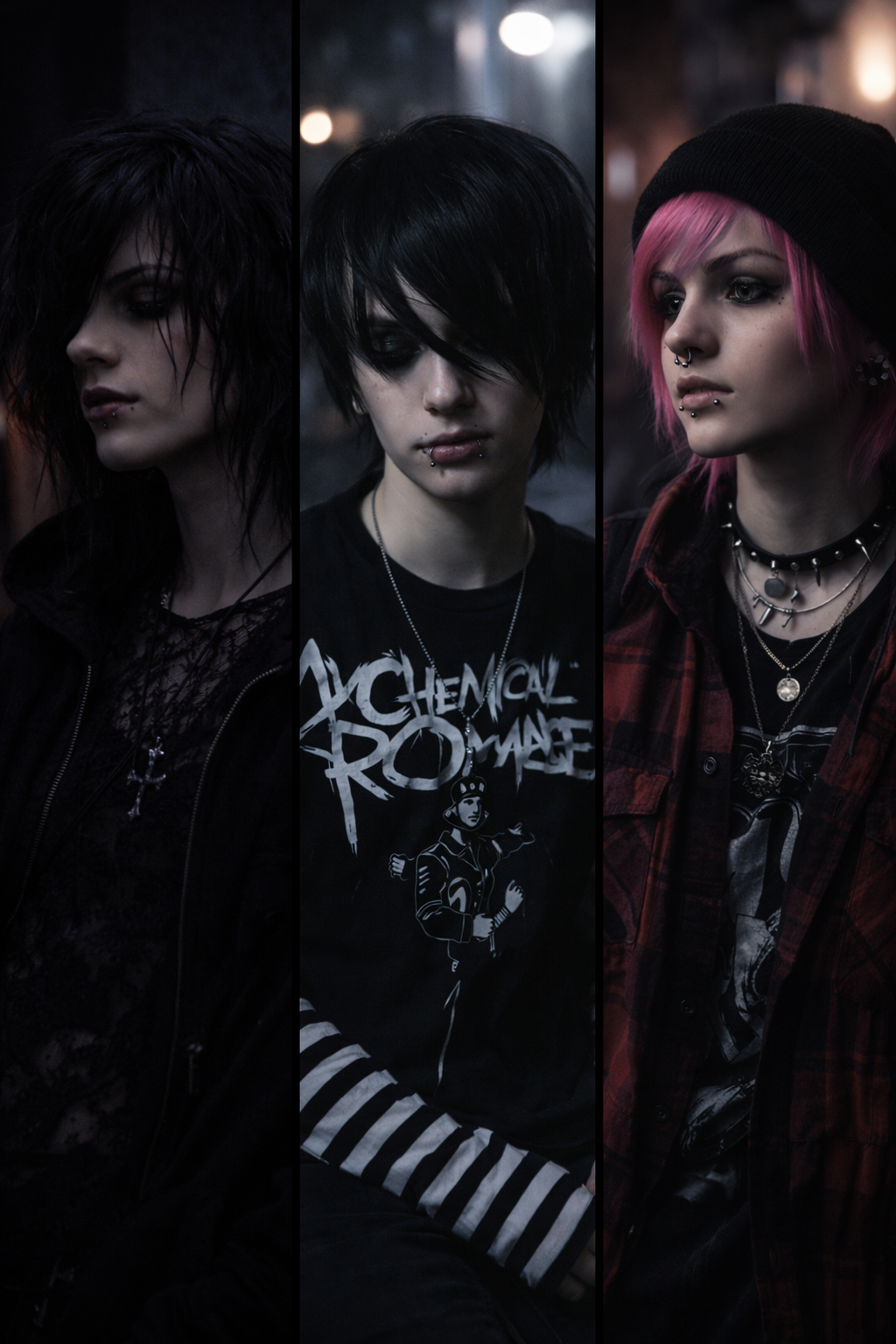

If you’ve ever been called “emo” when you’re goth — or “goth” when you’re just alternative — you’re not alone. These labels overlap visually, but they come from different histories, sounds, and mindsets.
🕯️ Goth
Goth emerged from post-punk in the late 1970s and early 80s. It centers around atmosphere, introspection, and dark romanticism.
- Music: Bauhaus, The Cure, Sisters of Mercy
- Aesthetic: black clothing, lace, velvet, dramatic silhouettes
- Core vibe: reflective, atmospheric, emotionally layered
💔 Emo
Emo evolved from hardcore punk and gained mainstream traction in the early 2000s. It emphasizes emotional vulnerability and confession.
- Music: Rites of Spring, My Chemical Romance
- Aesthetic: skinny jeans, band tees, side-swept hair
- Core vibe: emotionally expressive, direct, personal
🕸️ Alternative
“Alternative” is a broader umbrella. It can include goth, emo, punk, industrial, grunge, and more. It’s less a defined subculture and more a rejection of mainstream norms.
- Music: varies widely
- Aesthetic: flexible, eclectic
- Core vibe: non-mainstream identity
🌑 Why It Matters
Labels aren’t about superiority — they’re about history. Understanding the roots of a scene honors the music and people who built it. But identity is personal. You can appreciate one without attacking another.
“Respect the roots. Express yourself anyway.” — HeyFreaks Community
💬 Where Do You Fit?
Do you identify strictly as goth? A mix? Something entirely your own? Join the discussion in the Goth Culture & Lifestyle Forum.
New here? Create a profile and connect with others exploring their alternative identity.