
If you’re exploring goth culture, everything leads back to one place: the music.
Goth isn’t just an aesthetic — it’s a sound, a mood, and a feeling. And once you find the right tracks, everything starts to make sense.
🕯️ Start With the Classics
To understand goth music, you need to start where it began.
- Bauhaus — Bela Lugosi’s Dead
- The Cure — A Forest
- Siouxsie and the Banshees — Spellbound
- The Sisters of Mercy — Temple of Love
These tracks define the atmosphere that shaped the entire scene.
🌑 Explore Modern Darkwave
Goth music didn’t stay in the 80s. Modern darkwave carries the same emotional depth with a more electronic sound.
- Molchat Doma
- Lebanon Hanover
- She Past Away
- Boy Harsher
This is often where newer listeners connect first.
🕸️ Don’t Limit Yourself to One Subgenre
Goth music isn’t one sound — it branches into multiple styles:
- Post-punk (raw, minimal, emotional)
- Darkwave (synth-heavy, atmospheric)
- Ethereal wave (dreamy, layered)
- Gothic rock (dramatic, guitar-driven)
Exploring different sounds helps you find what resonates most.
🌙 Listen Actively — Not Passively
Goth music isn’t background noise.
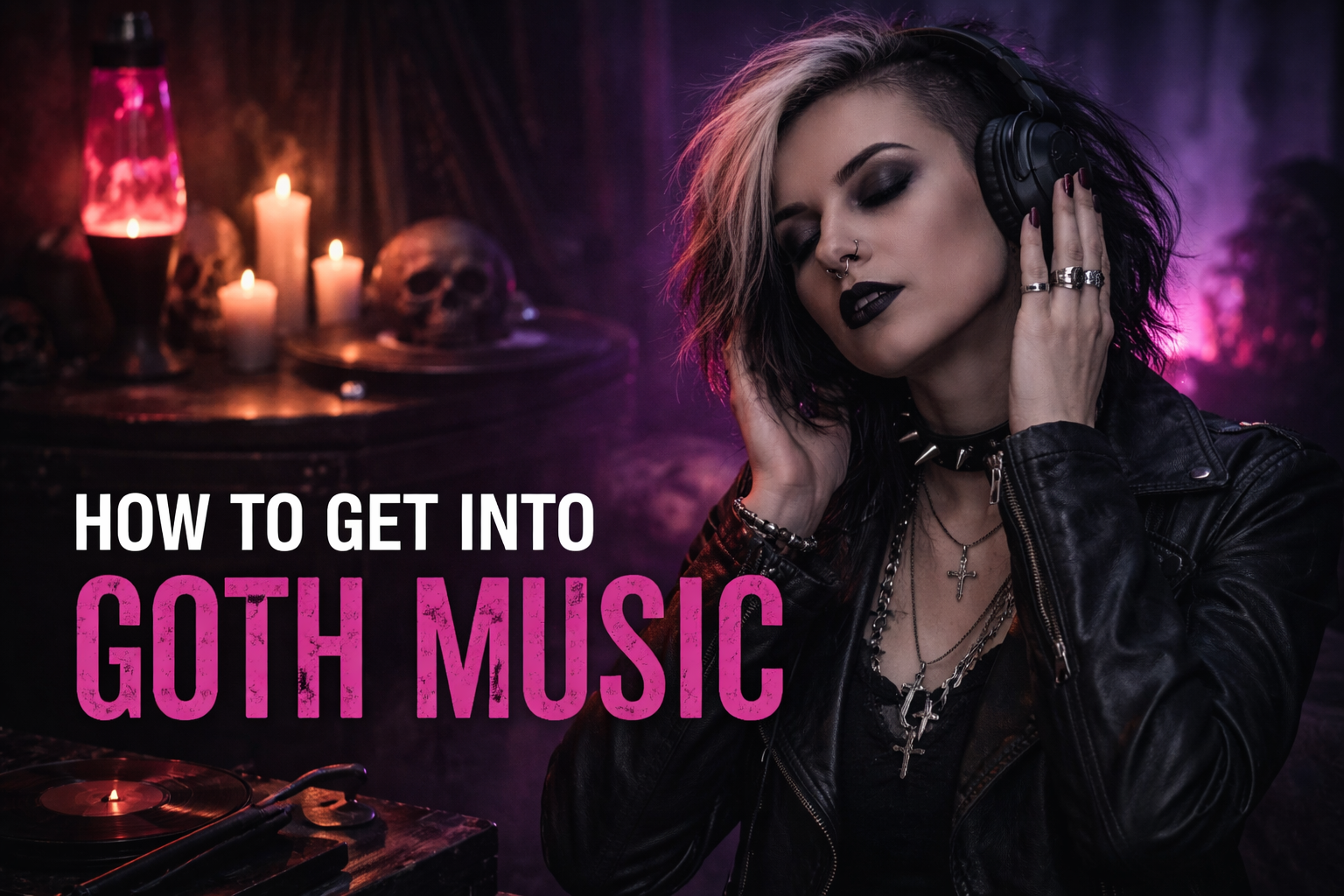
It’s meant to be felt. Late nights, headphones, quiet spaces — that’s where it hits differently.
🦇 Let Your Taste Evolve Naturally
You don’t need to memorize bands or prove anything.
Just listen. Over time, your taste will shape itself.
⚰️ Music First. Everything Else Second.
Fashion, aesthetic, and identity all come after.
The music is what connects everything.
💬 What Was Your First Goth Song?
Everyone remembers the track that started it.
New here? Create your profile and build your own dark playlist.