

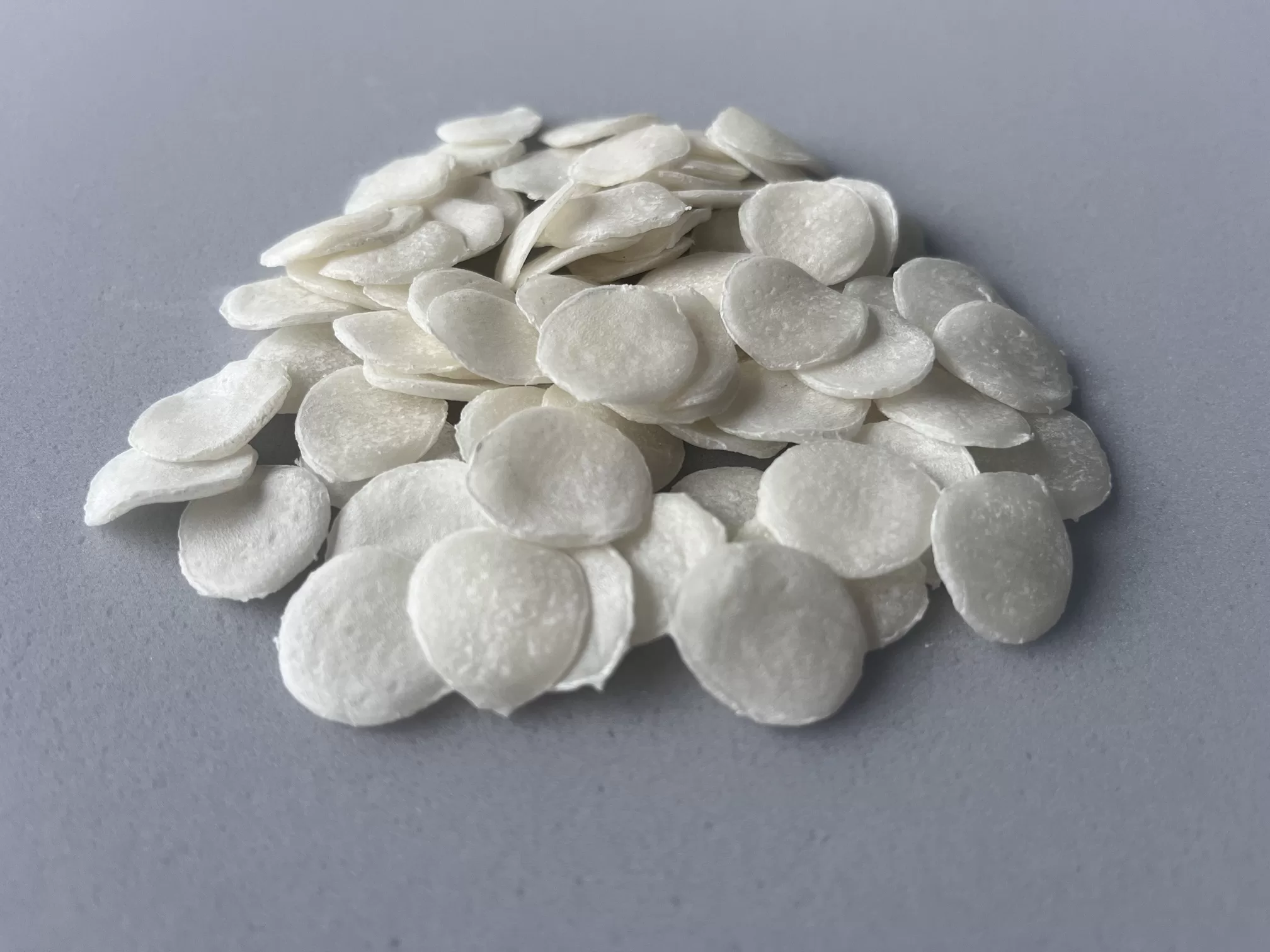
Chlorosulfonated Polyethylene (CSM) Production Plant Setup Cost: CapEx, OpEx & ROI

IMARC Group's report, "Chlorosulfonated Polyethylene (CSM) Production Plant Project Report 2026: Industry Trends, Plant Setup, Machinery, Raw Materials, Investment Opportunities, Cost and Revenue", offers a comprehensive guide for establishing a production plant. The chlorosulfonated polyethylene (CSM) production plant cost report offers insights into the production process, financials, capital investment, expenses, ROI, and more for informed business decisions.
Chlorosulfonated Polyethylene (CSM) Production Plant Project Report Summary: -
- Comprehensive guide for setting up chlorosulfonated polyethylene (CSM) production plant.
- Covers market trends and industry outlook for 2026.
- Detailed project setup, including unit operations and processes.
- Raw material and utility requirements.
- Infrastructure and machinery specifications.
- Workforce and staffing requirements.
- Packaging and transportation details.
- Financial aspects: investment opportunities, cost analysis, and revenue projections.
In addition to covering operational aspects, the report offers detailed insights into the chlorosulfonated polyethylene (CSM) production plant process and project economics.
- Detailed insights into the chlorosulfonated polyethylene (CSM) production plant
- In-depth project economics and financial metrics.
- Covers capital investments and project funding.
- Analysis of operating expenses and income projections.
- Breakdown of fixed and variable costs, direct and indirect expenses.
- Evaluation of ROI (Return on Investment) and NPV (Net Present Value).
- Profit and Loss account analysis.
- Comprehensive financial analysis for decision-making.
- Provides a roadmap for successfully establishing a chlorosulfonated polyethylene (CSM) production plant.
Request for a Sample Report: https://www.imarcgroup.com/chlorosulfonated-polyethylene-manufacturing-plant-project-report/requestsample
What is chlorosulfonated polyethylene (CSM)?
Chlorosulfonated polyethylene (CSM) is a synthetic elastomer produced by chemically modifying polyethylene with chlorine and sulfonyl chloride groups. This modification enhances its resistance to heat, ozone, weathering, chemicals, and aging, making it suitable for demanding industrial applications. CSM is valued for its excellent flexibility, mechanical strength, electrical insulation properties, and resistance to abrasion and corrosive environments. It is commonly used in the manufacturing of industrial hoses, conveyor belts, roofing membranes, protective coatings, electrical cables, and automotive components. Its ability to withstand prolonged exposure to sunlight, moisture, and harsh operating conditions makes it particularly useful in outdoor and heavy-duty applications. Additionally, CSM exhibits good flame resistance and maintains its performance across a broad range of temperatures. The material can be formulated to meet specific performance requirements, allowing manufacturers to customize its properties for diverse end-use industries. With its combination of durability, chemical stability, and versatility, chlorosulfonated polyethylene remains an important specialty elastomer in industrial manufacturing and infrastructure-related applications.
Market Trends and Drivers:
The global chlorosulfonated polyethylene (CSM) market is primarily driven by increasing demand for high-performance elastomers across automotive, construction, electrical, and industrial sectors. The growing need for durable materials that withstand extreme weather conditions, chemical exposure, ozone, and elevated temperatures is encouraging manufacturers to incorporate CSM into specialized products. In the automotive industry, its applications in hoses, seals, gaskets, and cable insulation support market expansion as vehicle production and component performance requirements increase. Meanwhile, infrastructure development and construction activities are stimulating demand for weather-resistant roofing membranes, protective coatings, and waterproofing solutions. The expansion of industrial manufacturing is also contributing to the adoption of CSM in conveyor belts, chemical-resistant linings, and flexible hoses.
Furthermore, rising investments in electrical infrastructure are creating opportunities for materials that offer reliable insulation and long-term durability. According to IMARC Group, the global chlorosulfonated polyethylene (CSM) market was valued at USD 1.26 Billion in 2025 and is projected to reach USD 1.98 Billion by 2034, exhibiting a CAGR of 5.10% from 2026 to 2034. Ongoing material innovations, product customization, and growing emphasis on equipment reliability are expected to further support market growth.
Capital Expenditure (CapEx) for a Chlorosulfonated Polyethylene Manufacturing Plant
The capital expenditure (CapEx) for a chlorosulfonated polyethylene (CSM) manufacturing plant primarily depends on production capacity, plant location, process technology, and infrastructure requirements. According to IMARC Group, the proposed production facility has an annual capacity of 5,000–15,000 tonnes. The initial investment includes land acquisition, site development, civil construction, machinery procurement, and other infrastructure expenses. Major equipment requirements include chlorination reactors, sulfonation units, agitated reaction vessels, washing and neutralization systems, dryers, and finishing equipment. Machinery costs account for a significant share of the overall capital investment, while land development and civil works contribute to the remaining setup expenses. A comprehensive CapEx assessment helps investors determine funding requirements, allocate capital efficiently, and establish a financially viable CSM production facility.
Operating Expenditure (OpEx) Breakdown and Cost Management
The operating expenditure (OpEx) of a chlorosulfonated polyethylene production plant is primarily driven by raw material procurement, utility consumption, labour, maintenance, packaging, transportation, depreciation, and taxes. According to the IMARC Group report, raw materials account for approximately 60–70% of total operating expenses, while utilities contribute around 15–25%. Key inputs include polyethylene, chlorine gas, sulfur dioxide, catalysts, solvents, and neutralizing agents. Manufacturers can manage operating costs by establishing reliable supplier relationships, optimizing raw material consumption, improving energy efficiency, and implementing preventive maintenance programmes. Efficient inventory management, process monitoring, and quality control can further reduce production losses and support consistent product quality. A detailed OpEx analysis enables businesses to assess fixed and variable costs, forecast expenditure, and identify opportunities to improve manufacturing efficiency and cost competitiveness.
Chlorosulfonated Polyethylene Plant ROI and Profitability Analysis
The return on investment (ROI) for a chlorosulfonated polyethylene manufacturing plant depends on capital investment, production capacity utilization, raw material prices, selling prices, and demand from downstream industries. CSM is used in wire and cable insulation, roofing membranes, industrial hoses, automotive components, coated fabrics, and seals and gaskets. According to IMARC Group, the project demonstrates potential gross profit margins of 20–30% and net profit margins of 10–15% under normal operating conditions. Investors should evaluate projected revenue, operating expenditure, taxation, depreciation, working capital requirements, and cash flows to estimate the project's financial performance. Key financial indicators include the payback period, net present value (NPV), internal rate of return (IRR), and break-even point. Sensitivity analysis based on changes in raw material prices, production volumes, and product selling prices can help assess financial risks and determine the long-term commercial feasibility of establishing a CSM manufacturing facility.
Ask Analyst for Customization: https://www.imarcgroup.com/request?type=report&id=24239&flag=C
Customization Options Available:
- Plant Location: Selection of optimal location for the plant.
- Plant Capacity: Customization based on desired production capacity.
- Machinery: Choice between automatic, semi-automatic, or manual machinery.
- List of Machinery Providers: Identification of suitable machinery suppliers.
Key Questions Addressed in This Report:
- How has the chlorosulfonated polyethylene (CSM) market performed so far and how will it perform in the coming years?
- What is the market segmentation of the global chlorosulfonated polyethylene (CSM) market?
- What is the regional breakup of the global chlorosulfonated polyethylene (CSM) market?
- What are the price trends of various feedstocks in the chlorosulfonated polyethylene (CSM) industry?
- What is the structure of the chlorosulfonated polyethylene (CSM) industry and who are the key players?
- What are the various unit operations involved in a chlorosulfonated polyethylene (CSM) production plant?
- What is the total size of land required for setting up a chlorosulfonated polyethylene (CSM) production plant?
- What is the layout of a chlorosulfonated polyethylene (CSM) production plant?
- What are the machinery requirements for setting up a chlorosulfonated polyethylene (CSM) production plant?
- What are the raw material requirements for setting up a chlorosulfonated polyethylene (CSM) production plant?
- And more...
How IMARC Can Help?
IMARC Group is a global management consulting firm that helps the world's most ambitious changemakers to create a lasting impact. The company provide a comprehensive suite of market entry and expansion services. IMARC offerings include thorough market assessment, feasibility studies, company incorporation assistance, factory setup support, regulatory approvals and licensing navigation, branding, marketing and sales strategies, competitive landscape and benchmarking analyses, pricing and cost research, and procurement research.
Services:
- Plant Setup
- Factoring Auditing
- Regulatory Approvals, and Licensing
- Company Incorporation
- Incubation Services
- Recruitment Services
- Marketing and Sales
Contact Us:
IMARC Group
134 N 4th St. Brooklyn, NY 11249, USA
Email: [email protected]
Tel No:(D) +91 120 433 0800 / 7827100593
United States: +1-201971-6302



