

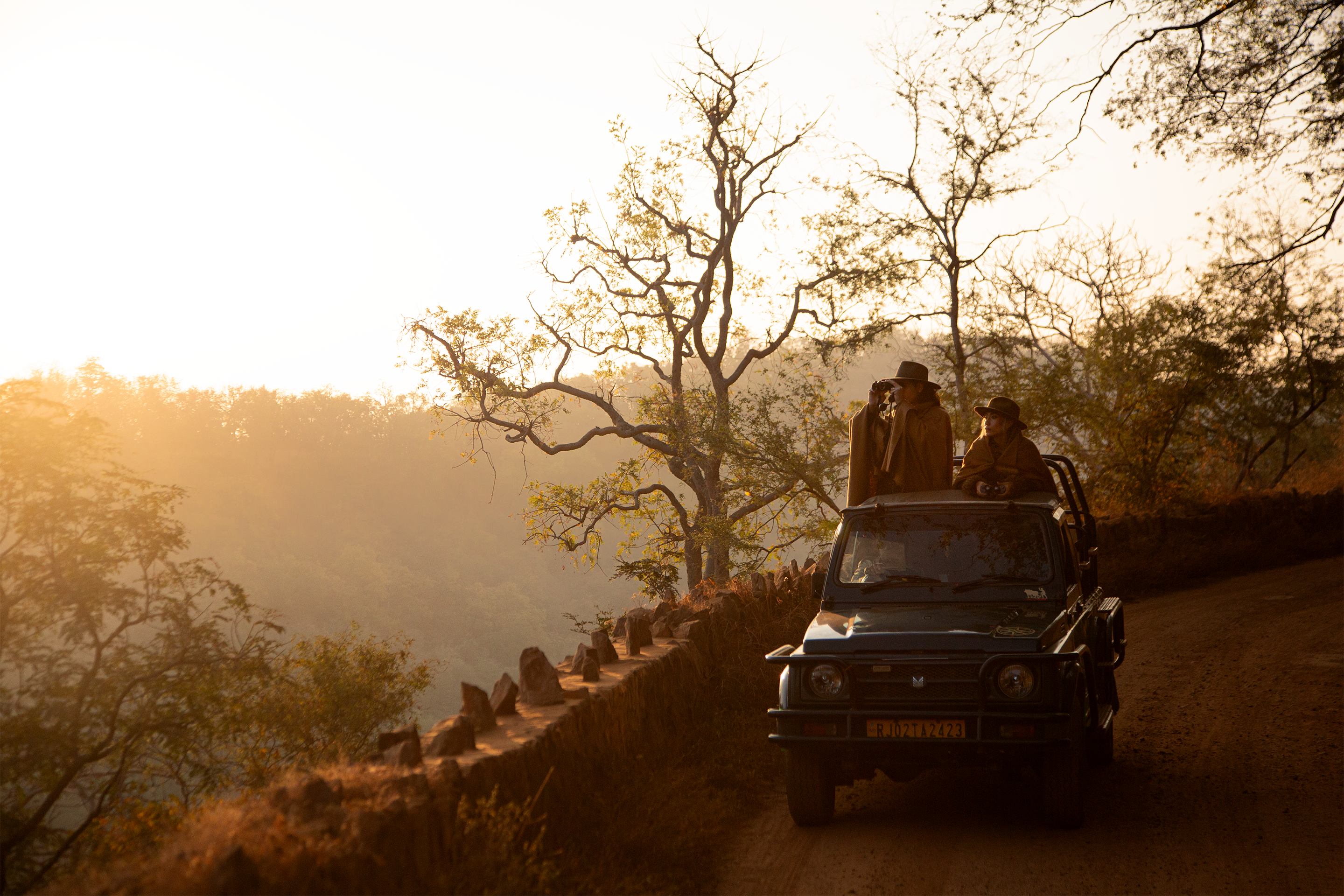

A wildlife safari can look simple on paper: enter the reserve, follow the track, look for animals. Anyone who has spent time in a forest knows it is nothing like that.
The best moments are often quiet and unscripted. A guide hears an alarm call. The vehicle stops. Everyone waits. Minutes pass with no guarantee that anything will happen. Then, perhaps, a leopard crosses the track or a herd emerges from the grass. The quality of the experience depends as much on patience, awareness and group dynamics as it does on luck.
That is one reason a small group wildlife safari India can feel very different from a large, fast-moving tour.
Smaller groups are easier to move with
Wildlife travel involves more logistics than most people realise. Safari permits, vehicle capacities, entry gates, departure times and travel between the lodge and the reserve all need to work together. When the group is compact, those moving parts are easier to manage.
People get into vehicles faster. Briefings are clearer. Meal timings do not become an event in themselves. If a naturalist wants to spend a few extra minutes explaining pugmarks or bird calls, the schedule can often absorb it.
Pre planned group trips also remove the administrative work from the traveller. Instead of arriving with a folder of bookings and permit details, you can focus on being in the landscape.
You notice more when the group is quieter
Forests reward attention. That is difficult when a vehicle is crowded, conversations are competing with one another, or people are constantly shifting for a better view.
In a smaller group, there is usually more space to listen. A good naturalist can explain what is happening without raising their voice. People can rotate seats fairly. There is less pressure to turn every sighting into a scramble.
It also changes the emotional tone. When the group finally spots something after a long wait, the moment feels shared rather than chaotic.
Photography benefits from patience
For travellers interested in cameras, small group photography tours India can be particularly valuable. Wildlife photography is not only about owning a long lens. It is about reading light, understanding behaviour, anticipating movement and knowing when not to take the shot.
A smaller group makes it easier for a photographer or mentor to give practical guidance. They can look at framing, shutter speed, exposure or composition in context rather than delivering a generic lesson back at the lodge.
There is also more room for different levels of experience. One person may be using a professional camera, another a bridge camera, and someone else may simply want better photographs on a phone. The common ground is curiosity, not equipment.
The experience should extend beyond the tiger
India’s wildlife reserves are often marketed around one headline species. Tigers deserve the excitement, but a trip becomes richer when the forest itself is the reason to go.
A thoughtful safari might include birding at sunrise, a walk around the buffer landscape where permitted, time with a naturalist between drives, or conversations about conservation and local ecology. Small groups make those quieter elements easier to include because the itinerary does not need to cater to dozens of people at once.
You start noticing the rhythm of the place: how the forest sounds different after rain, why certain birds follow grazing animals, how tracks change in sandy soil, or why a dry riverbed can still be full of activity.
What to look for before booking
Ask how many safari vehicles will be used and how people are allocated. Check whether a naturalist accompanies the group and whether the trip is designed for general wildlife lovers, photographers or a mix of both. Understand what is included beyond the drives, and whether there is downtime between early mornings and evening safaris.
Accommodation matters too, but not because it needs to be flashy. A comfortable lodge with good food, a sense of place and easy access to the reserve usually adds more value than a property chosen only for its star rating.
Wildlife travel works best when it is unhurried
A small group wildlife safari in India gives you something that cannot be added later: attention. Attention to the forest, to the guide, to the people you are travelling with and to the moments that do not fit neatly into an itinerary.
Salori’s small-group philosophy is built around this slower, more considered way of travelling. The destination matters, of course. But the real experience begins when you have enough space to notice what is happening around you.



