

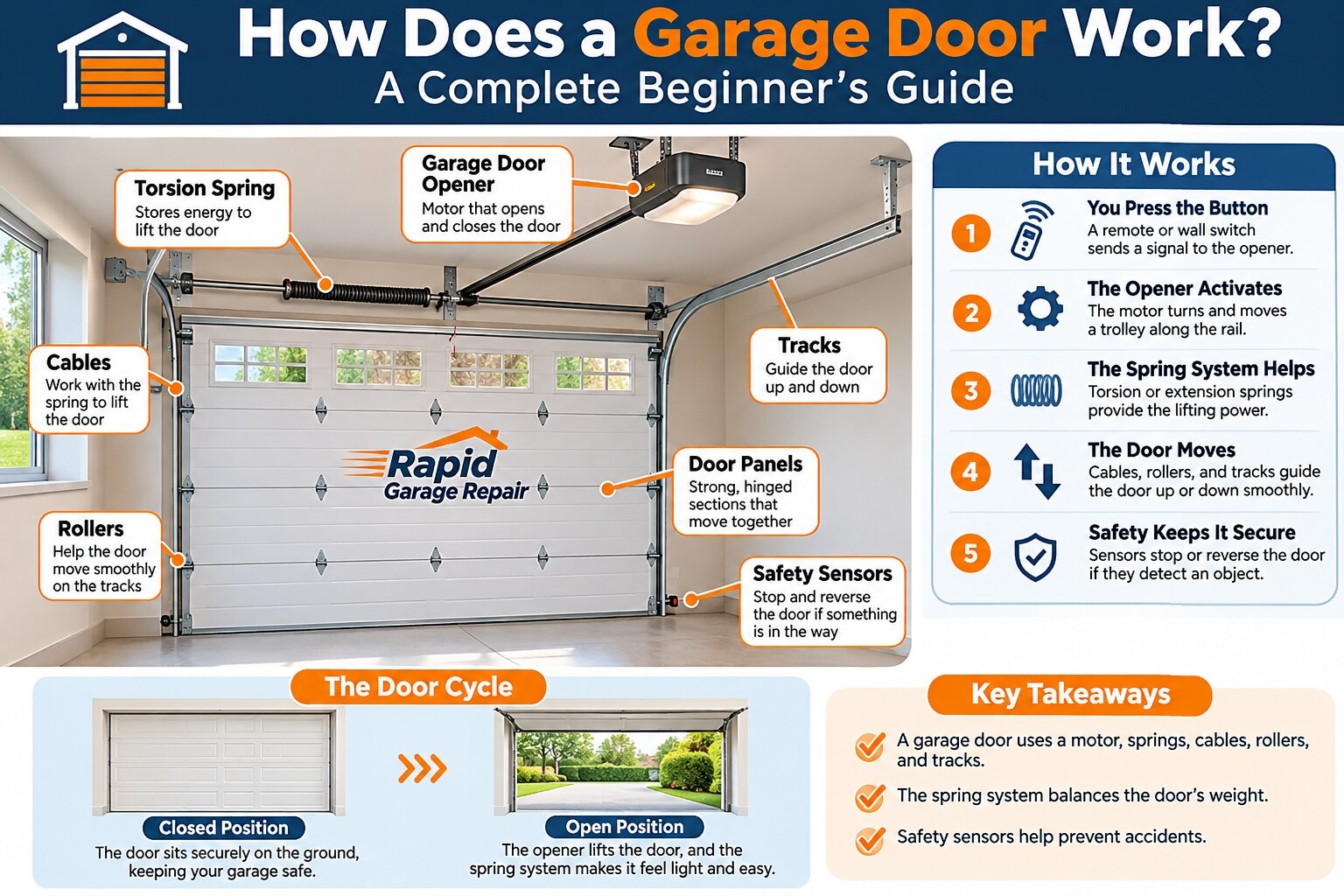
Commercial garage doors operate throughout the day in warehouses, industrial facilities, retail stores, and service centers. Their motors help lift and lower heavy door panels, allowing employees and vehicles to move in and out of the building.
When a commercial garage door repair motor fails, daily operations might come to a stop. The door might refuse to open, stop halfway, move slowly, or make unusual noises.
Understanding the warning signs and common causes of motor failure helps business owners respond before a small electrical or mechanical problem becomes a major disruption.
1. What Happens When a Commercial Garage Door Motor Fails?
The motor powers the garage door operator, which controls the opening and closing process. When it stops working, the door might lose its automatic operation.
Common problems include:
-
The door does not open or close.
-
The motor runs, but the door does not move.
-
The door stops halfway through its cycle.
-
The operator makes humming or grinding sounds.
-
The door moves more slowly than usual.
-
The opener repeatedly trips its circuit breaker.
In some situations, the door might remain closed and restrict access to the facility. In others, it might remain partially open and create a security concern.
Do not force the door or repeatedly activate a malfunctioning operator. Stop using the system and arrange a professional inspection.
2. Common Reasons Why Commercial Garage Door Motors Fail
Motor failure does not always mean the motor itself needs replacement. Several electrical and mechanical problems might affect its operation.
A. Electrical Problems
Power interruptions, damaged wiring, faulty connections, and electrical component failures might prevent the motor from operating.
Check whether the building has power, but leave electrical troubleshooting and repairs to a qualified technician.
B. Overheating
Commercial doors often complete multiple operating cycles throughout the day. Excessive use, poor ventilation, mechanical resistance, or an unsuitable operator might cause overheating.
Some operators include thermal protection that temporarily stops operation when the motor becomes too hot.
Allow the system to cool and arrange an inspection if the problem continues.
C. Worn Internal Components
Motor bearings, gears, capacitors, and other components experience wear over time.
Unusual noises, inconsistent operation, and repeated shutdowns might indicate internal damage.
D. Excessive Door Weight or Resistance
A commercial garage door should move smoothly when its mechanical components are functioning correctly.
Damaged rollers, misaligned tracks, broken springs, or poor balance might force the motor to work harder than intended.
The motor should not be expected to compensate for a mechanical problem.
E. Incorrect Maintenance
Neglected inspections allow minor problems to develop into larger failures.
Dust buildup, loose hardware, damaged cables, and worn moving components might affect the door's performance and place additional strain on the operator.
3. Warning Signs of an Failing Garage Door Motor
Recognizing early warning signs helps reduce unexpected downtime.
| Warning sign | Possible cause |
|---|---|
| Humming without movement | Motor or capacitor problem |
| Slow operation | Mechanical resistance or motor issue |
| Grinding sounds | Worn gears or damaged components |
| Repeated shutdowns | Overheating or electrical fault |
| Inconsistent operation | Control or wiring problem |
| Circuit breaker trips | Possible electrical fault or overload |
These symptoms do not always confirm motor failure. A technician should inspect the complete door system before recommending repairs or replacement.
4. What Should You Do When the Motor Stops Working?
A commercial garage door motor failure requires a careful response, especially when the door is heavy or partially open.
Follow these steps:
-
Stop operating the door.
-
Keep employees and customers away from the affected area.
-
Do not attempt to force the door open or closed.
-
Check whether the building has a general power interruption.
-
Look for visible damage without touching cables, springs, or electrical components.
-
Contact a qualified commercial garage door technician.
If the door is stuck open, secure the surrounding area and follow your facility's security procedures.
Avoid using the emergency release unless you are trained and the manufacturer's instructions confirm it is safe. A door with damaged springs or cables might fall unexpectedly.
5. Can You Repair a Commercial Garage Door Motor?
Some motor-related problems require minor component replacement, while others require a complete operator replacement.
A technician usually follows a structured diagnostic process.
Step 1: Inspect the Power Supply
The technician checks the power connection, circuit protection, wiring, and control system.
Step 2: Test the Operator
The motor and operator controls are examined to identify electrical or internal mechanical problems.
Step 3: Check the Door's Mechanical Components
The technician inspects springs, cables, tracks, rollers, and door balance. Mechanical resistance might be responsible for the motor problem.
Step 4: Repair or Replace Damaged Parts
Depending on the diagnosis, the technician might replace a faulty capacitor, gear assembly, control board, or motor.
Step 5: Test the Complete System
After repairs, the technician checks the opening and closing cycles, safety features, and overall operation.
Professional technicians determine whether it is practical to repair the existing operator or install a compatible replacement.
6. Do Hurricane Garage Doors Need Special Motor Maintenance?
Hurricane garage doors are designed and rated for specific wind pressures and impact requirements. Their storm-protection features often include reinforced panels, approved tracks, and specialized hardware.
The motor does not automatically provide hurricane protection. The door's complete approved assembly must meet the applicable requirements.
For these systems, inspect:
-
Motor and operator mounting hardware.
-
Door tracks and reinforcement components.
-
Locking mechanisms.
-
Electrical connections.
-
Weather seals.
-
Manufacturer-approved replacement parts.
Never modify reinforcement systems or install unapproved components. Such changes might affect the door's tested performance and compliance.
Before hurricane season, arrange a professional inspection to check the door's operating condition and storm-protection components.
If a hurricane is approaching, follow local emergency instructions and the manufacturer's guidance. Do not operate a damaged door during dangerous weather.
7. How Can Businesses Prevent Commercial Garage Door Motor Failure?
Regular maintenance helps identify problems before they interrupt operations.
Business owners should follow these practices:
-
Schedule routine professional inspections.
-
Keep accessible tracks free from dirt and debris.
-
Check rollers and hinges for visible wear.
-
Monitor unusual motor sounds.
-
Avoid exceeding the operator's rated cycle capacity.
-
Keep the operator area properly ventilated.
-
Test safety features according to manufacturer instructions.
-
Repair damaged door components promptly.
High-use commercial doors might require more frequent servicing than doors used occasionally.
8. When Should You Replace the Garage Door Motor?
Motor replacement might be appropriate when the existing operator has extensive internal damage or repeated failures.
Consider replacement when:
-
The motor repeatedly overheats.
-
Repair costs approach the cost of a suitable replacement.
-
Replacement parts are no longer available.
-
The operator cannot handle the door's operating requirements.
-
The motor has reached the end of its service life.
-
Repeated breakdowns interrupt business operations.
A technician should confirm the door's weight, dimensions, cycle requirements, and safety features before recommending a replacement operator.
Frequently Asked Questions
1. How long does a commercial garage door motor last?
Its service life depends on operating cycles, maintenance, environmental conditions, and motor quality. High-use commercial operators often experience more wear than residential systems.
2. Can a commercial garage door open manually if the motor fails?
Some systems include a manual release mechanism. However, manual operation is safe only when the door is properly balanced and its springs, cables, and other components are intact. Follow the manufacturer's instructions and technician guidance.
3. Why does my garage door motor make noise but not move the door?
Possible causes include worn gears, a faulty capacitor, a disconnected drive mechanism, or mechanical resistance. A technician needs to inspect the operator and door assembly to identify the problem.
4. Is it better to repair or replace a commercial garage door motor?
The decision depends on the extent of damage, availability of replacement parts, repair costs, and operator capacity. A professional diagnosis helps determine the more practical option.
5. How often should commercial garage door motors be inspected?
Follow the manufacturer's maintenance schedule and arrange regular professional servicing. High-cycle systems might require more frequent inspections because of their heavier daily use.
Final Thoughts
A failed commercial garage door motor can interrupt business operations, restrict access, and create security concerns. Slow movement, unusual noises, overheating, and repeated shutdowns are warning signs worth investigating.
Stop operating a malfunctioning system and contact a qualified technician. Professional repair garage door services help identify whether the problem involves the motor, electrical system, or mechanical components.
For hurricane garage doors, regular inspection of both the operator and storm-protection hardware helps maintain reliable operation and preserve the door's approved configuration.



