

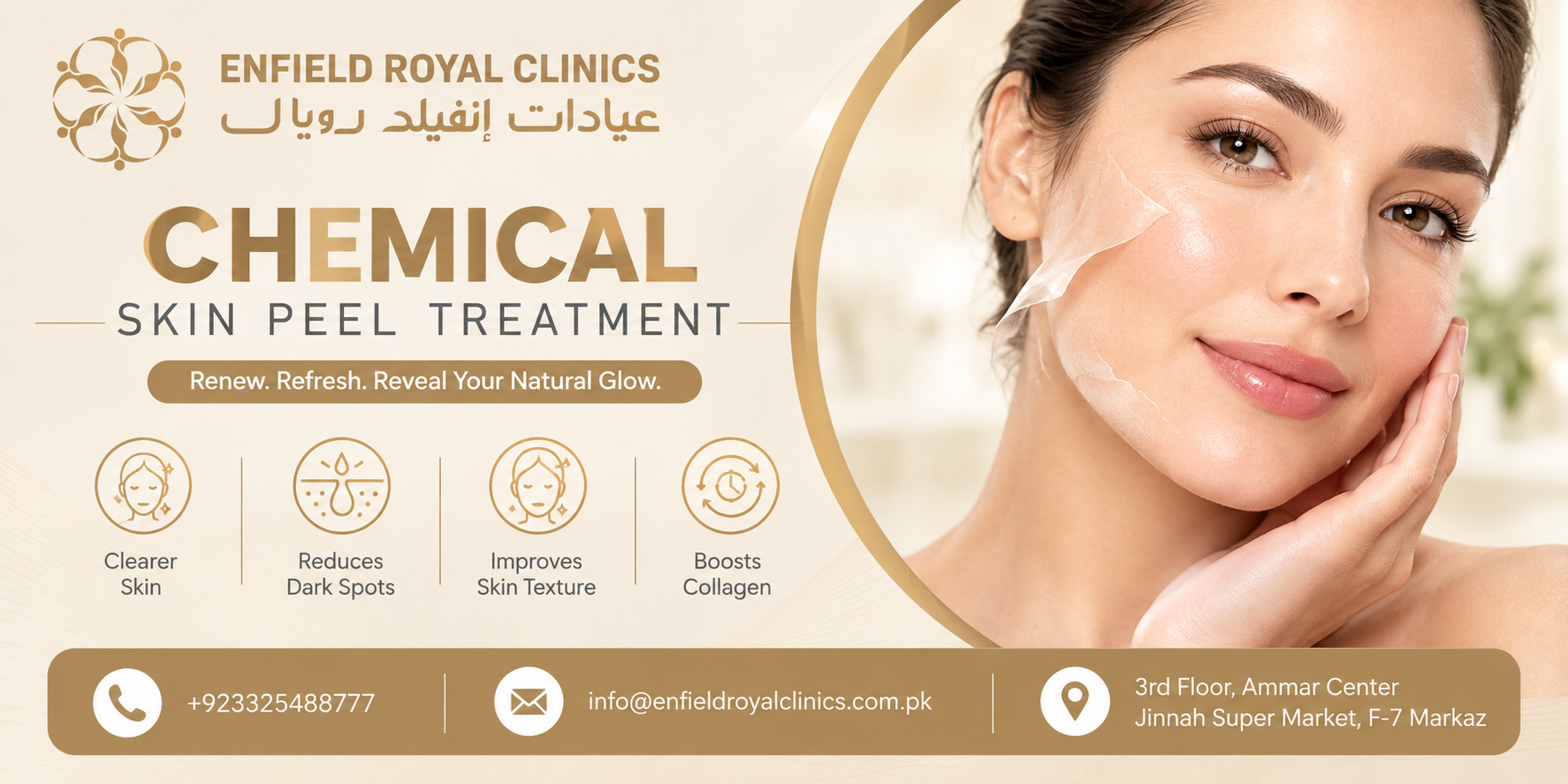

Healthy, smooth, and glowing skin is something many people want to achieve. However, factors such as sun exposure, ageing, acne, pollution, and dead skin cell buildup can make the skin appear rough, uneven, and dull. These concerns can affect the overall appearance of the face and make regular skincare products less effective. Chemical peel treatment is a popular skincare procedure that helps improve skin texture by removing damaged outer skin layers and encouraging natural skin renewal.
People considering Chemical peel treatment in Islamabad often want to understand how the procedure works, what skin concerns it can address, and what kind of results they can expect. This treatment uses specially formulated chemical solutions to exfoliate the skin, remove dead cells, and support the development of healthier-looking skin. Depending on the type and strength of the peel, it can address several concerns, including uneven texture, acne marks, pigmentation, and fine lines.
1. What Is Chemical Peel Treatment and How Does It Work?
Chemical peel treatment is a non-surgical skin rejuvenation procedure that uses carefully selected chemical solutions to exfoliate the skin. These solutions help loosen and remove dead or damaged skin cells from the surface, allowing newer skin to become visible.
The treatment generally involves applying a chemical solution to the targeted area for a controlled period. The solution works on the outer skin layers, depending on its formulation and strength. After the procedure, the skin may experience mild redness, dryness, peeling, or sensitivity as part of the renewal process.
There are different types of chemical peels, and each works at a different depth.
-
Superficial peels: These gently exfoliate the outermost skin layer and are commonly used for dullness, mild uneven texture, and minor pigmentation.
-
Medium-depth peels: These reach deeper layers of the skin and may help improve acne marks, sun damage, and more noticeable texture concerns.
-
Deep peels: These penetrate deeper skin layers and are used for selected skin concerns under careful medical supervision.
The most suitable option depends on the individual's skin type, sensitivity, concerns, and treatment goals.
2. How Does Chemical Peel Treatment Improve Skin Texture?
One of the main reasons people choose chemical peels is their ability to improve uneven and rough skin texture. Dead skin cells naturally accumulate on the skin's surface, making it look dull and feel less smooth. Chemical exfoliation helps remove this buildup and supports the skin's natural renewal cycle.
As the damaged outer cells shed, fresher skin gradually becomes visible. This process can make the skin feel softer and appear smoother.
Chemical peel treatment may improve skin texture in several ways:
Removes dead skin cells: The chemical solution helps exfoliate accumulated surface cells, reducing roughness and dullness.
Supports skin renewal: By encouraging the shedding of damaged cells, the treatment helps reveal newer skin underneath.
Improves uneven areas: It may help soften the appearance of mild acne marks, rough patches, and uneven skin tone.
Reduces clogged pores: Certain peels help clear excess oil and dead skin buildup that contribute to blocked pores.
Encourages collagen production: Some medium-depth peels can stimulate skin repair processes that support collagen formation, helping improve the appearance of certain fine lines and textural irregularities.
With appropriate treatment and aftercare, individuals may notice smoother, fresher, and more refreshed-looking skin.
3. Which Skin Problems Can Chemical Peel Treatment Address?
Chemical peels are used to improve several common skin concerns. However, the results depend on the type of peel, the severity of the concern, and individual skin characteristics.
Some common concerns that may benefit from this procedure include:
-
Acne marks and mild scarring: Certain chemical peels can improve superficial acne marks and mild textural irregularities.
-
Uneven skin tone: The treatment may help reduce the appearance of discoloration caused by sun exposure or previous breakouts.
-
Dark spots and pigmentation: Selected peels can help improve superficial pigmentation and some forms of uneven skin tone.
-
Fine lines: Certain peels may soften the appearance of fine lines by improving the skin's surface and supporting renewal.
-
Rough skin: Exfoliation helps remove accumulated dead cells that contribute to a rough appearance.
-
Enlarged-looking pores: Some formulations can help reduce oil and debris buildup, making pores appear less noticeable.
-
Dull complexion: Removing dead skin cells can improve the appearance of brightness and freshness.
A professional skin assessment is important because not every pigmentation or acne concern responds to the same type of peel. Some conditions may require alternative or combined treatments.
4. What Are the Different Types of Chemical Peels?
Choosing the right chemical peel is an important part of achieving satisfactory results. Different formulations target different skin concerns, and their suitability depends on the individual's skin condition.
Some commonly used chemical peel ingredients include:
Glycolic Acid Peel
Glycolic acid is an alpha-hydroxy acid (AHA) that helps exfoliate dead skin cells. It is commonly used to improve dullness, uneven texture, and superficial pigmentation.
Salicylic Acid Peel
Salicylic acid is a beta-hydroxy acid (BHA) that can penetrate oily pores. It is often considered for acne-prone skin, clogged pores, and excess oil.
Lactic Acid Peel
Lactic acid is generally considered a gentler AHA option. It helps exfoliate the skin while supporting hydration and may be suitable for certain individuals with mild dryness or uneven texture.
TCA Peel
Trichloroacetic acid (TCA) is used in different concentrations for medium-depth peeling. It may help address selected pigmentation concerns, sun damage, and textural irregularities.
The appropriate ingredient and concentration should be selected by a qualified professional after evaluating the skin.
5. What Happens During a Chemical Peel Treatment Session?
Understanding the procedure can help individuals feel more comfortable before their appointment. Chemical peel treatment usually involves several steps to prepare and treat the skin safely.
Skin assessment: The process begins with an evaluation of the skin type, medical history, current skincare routine, and specific concerns. This helps determine whether a chemical peel is appropriate.
Skin cleansing: The treatment area is cleaned to remove makeup, oil, dirt, and other impurities.
Application of the peel: A selected chemical solution is carefully applied to the skin. The application time depends on the formulation and treatment depth.
Removal or neutralisation: Depending on the product, the solution may be neutralised or removed according to the treatment protocol.
Post-treatment care: A soothing moisturiser and suitable sun protection are generally recommended to protect the skin.
The duration of a session varies depending on the type of peel and the area being treated. Some individuals experience temporary tingling, warmth, or mild stinging during application.
6. How Long Does It Take to See Results and What Is the Recovery Period?
Results from chemical peel treatment do not appear immediately in every case. The skin needs time to shed damaged cells and complete its natural renewal process.
After a superficial peel, some individuals notice a brighter and smoother appearance within several days. Mild dryness or flaking may occur during recovery. Medium-depth peels generally require more healing time, and visible peeling may be more noticeable.
The final outcome depends on several factors, including:
-
The depth and strength of the chemical peel.
-
The individual's skin type and sensitivity.
-
The severity of the original skin concern.
-
The number of recommended sessions.
-
Following the recommended aftercare routine.
Some individuals may benefit from multiple sessions rather than a single treatment. The appropriate interval between sessions should be determined by a qualified professional.
It is also important to understand that deeper acne scars and significant skin irregularities may not disappear completely with chemical peels alone.
7. What Aftercare Helps Maintain Chemical Peel Results?
Proper aftercare plays an important role in protecting the skin and supporting recovery. Since chemical peels temporarily make the skin more sensitive, individuals should follow the recommended skincare instructions.
Important aftercare tips include:
-
Apply sunscreen: Broad-spectrum SPF 30 or higher helps protect recovering skin from harmful UV exposure.
-
Keep the skin moisturised: A gentle moisturiser helps reduce dryness and supports the skin barrier.
-
Avoid picking or peeling: Removing flaky skin manually can increase irritation and the risk of scarring.
-
Use gentle cleansers: Harsh soaps and exfoliating products should be avoided during recovery.
-
Pause strong active ingredients: Retinoids, exfoliating acids, and other irritating products should be stopped for the period advised by the treating professional.
-
Avoid excessive sun exposure: Direct sunlight can worsen irritation and increase the risk of pigmentation changes.
Following these precautions can help reduce complications and support a more comfortable recovery.
For more information visit Enfield royal clinic in islamabad
Frequently Asked Questions (FAQs)
1. Does chemical peel treatment permanently improve skin texture?
Chemical peel treatment can provide noticeable improvements in skin texture, but results are not necessarily permanent. Natural ageing, sun exposure, and acne can cause new skin concerns over time. Maintenance treatments and a suitable skincare routine may help maintain improvements.
2. Is chemical peel treatment suitable for all skin types?
Not every chemical peel is suitable for every skin type. People with sensitive, darker, acne-prone, or easily irritated skin may require specific formulations and precautions. A professional skin assessment helps determine the safest option.
3. How many chemical peel sessions are needed for better skin texture?
The number of sessions depends on the skin concern and peel strength. Some individuals notice improvements after one superficial treatment, while others may need several sessions for more noticeable results.
4. Does chemical peel treatment help with acne scars?
Chemical peels may improve superficial acne marks and certain mild textural irregularities. However, deeper or pitted acne scars often require additional procedures because chemical peels alone may not provide sufficient improvement.
5. Is chemical peel treatment painful?
Most superficial chemical peels cause mild tingling, warmth, or temporary stinging rather than significant pain. Medium and deep peels may involve greater discomfort and require additional precautions.
6. Can someone wear makeup after chemical peel treatment?
Makeup may need to be avoided for a short period after treatment, depending on the peel's depth and the skin's condition. It is best to wait until the skin has recovered sufficiently and follow the treating professional's instructions.
Conclusion
Chemical peel treatment is a popular option for individuals who want to improve rough skin texture, dullness, uneven tone, and certain superficial acne marks. By removing damaged outer skin cells and supporting natural skin renewal, the procedure can help create a smoother and fresher appearance.
People considering Chemical peel treatment in Islamabad should choose an appropriate peel based on their skin type, concerns, and treatment goals. A professional consultation, realistic expectations, and proper aftercare are essential for achieving healthy-looking results while reducing the risk of complications.



