

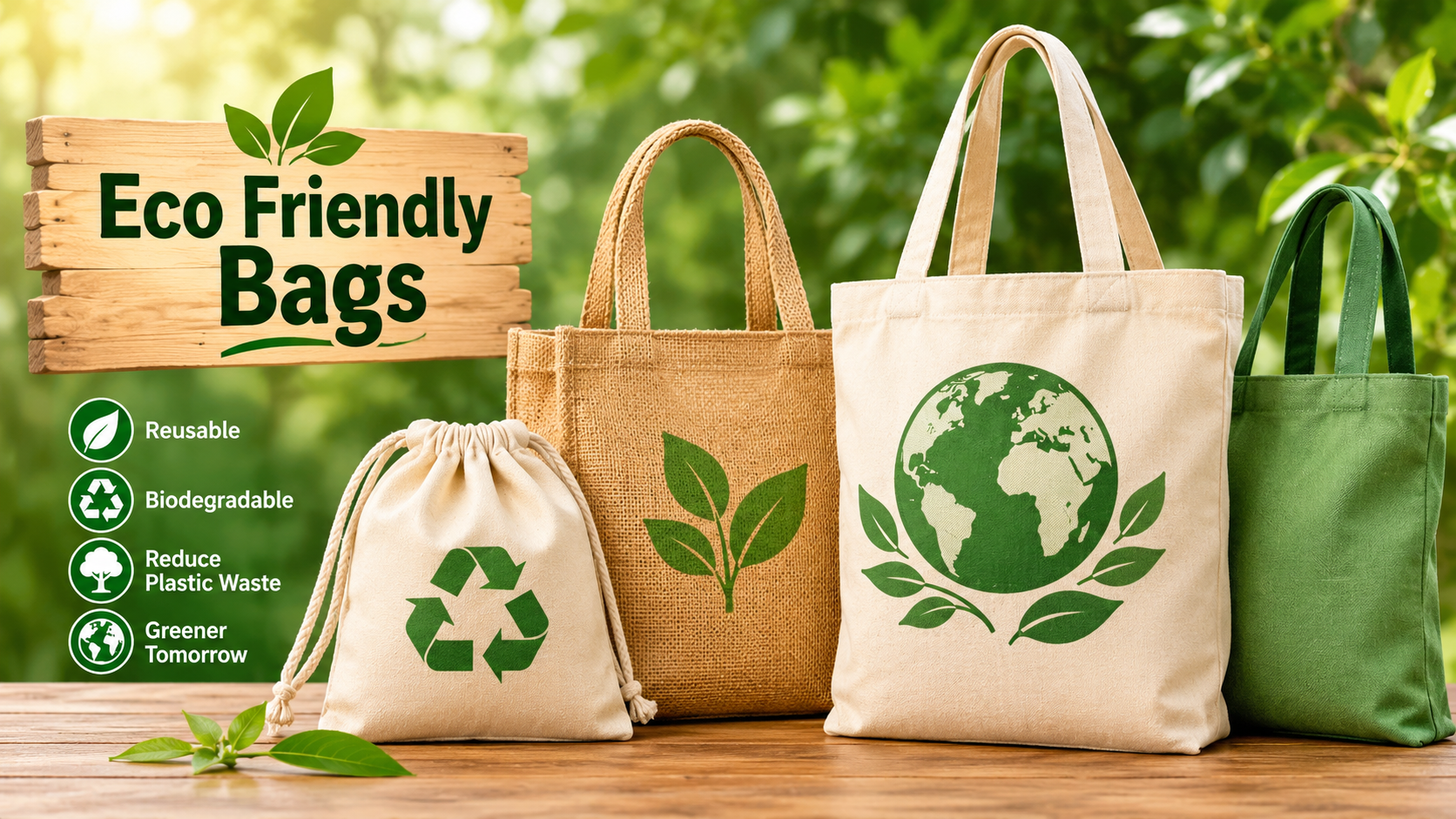
Businesses are paying closer attention to the packaging they use and the products they offer customers. From supermarkets to fashion retailers, reusable bags have become a practical option for everyday shopping, promotional campaigns, and corporate gifting.
However, choosing the right Eco Friendly Bags involves more than selecting an attractive design. Material strength, stitching quality, carrying capacity, customization, and order quantity all influence purchasing decisions.
For retailers, distributors, and corporate buyers, understanding these factors can help them source bags that meet customer expectations and support long-term business requirements.
Why Are Eco Friendly Bags Important for Retail Businesses?
Retail businesses use shopping bags to carry products, present their brand, and improve customer convenience. Reusable alternatives can serve these purposes while reducing dependence on disposable packaging.
A well-designed reusable bag offers several practical advantages:
-
Supports repeated use when properly maintained.
-
Provides space for printed logos and promotional messages.
-
Offers different sizes for various product categories.
-
Helps businesses offer alternatives to single-use plastic bags.
-
Creates additional branding opportunities beyond the initial purchase.
The environmental benefit depends on the material, production process, number of uses, and disposal method. Buyers should therefore evaluate durability rather than relying only on environmental marketing claims.
Which Materials Are Suitable for Wholesale Eco Friendly Bags?
Material selection directly affects the appearance, functionality, cost, and lifespan of reusable bags. Each material serves a different commercial purpose.
1. Jute Bags for Shopping and Promotional Packaging
Jute is a natural plant fibre commonly used to manufacture shopping bags, promotional bags, and gift packaging.
Its textured appearance makes it suitable for brands seeking a natural presentation. Depending on the fabric weight and construction, jute bags can also carry regular shopping items.
Businesses purchasing Jute Bags should examine fabric density, handle strength, stitching, and whether the bag contains any plastic lamination.
2. Cotton Bags for Everyday Retail Applications
Cotton bags are lightweight, flexible, and suitable for repeated shopping trips. They are frequently used by clothing stores, bookstores, exhibitions, and promotional businesses.
They also provide a useful surface for branding through suitable printing techniques.
When sourcing Cotton Bags, businesses should consider fabric weight, shrinkage, washing instructions, and the quality of printed designs.
3. Canvas Bags for Heavy-Duty Applications
Canvas is a woven fabric commonly made from cotton or other fibres. Its relatively firm construction makes it useful for tote bags, work accessories, and retail merchandise.
The carrying capacity depends on fabric specifications, seams, and handle attachment rather than material thickness alone.
Canvas bags are particularly suitable when buyers require a structured design that can withstand frequent handling.
How to Evaluate Eco Friendly Bags Manufacturers in India
Finding a manufacturer is straightforward. Identifying one that can consistently produce bags according to commercial requirements takes more careful evaluation.
Check Material Specifications
Ask manufacturers to explain the fabric composition, GSM, lining, and finishing materials.
GSM refers to grams per square metre and helps describe fabric weight. However, a higher GSM does not automatically guarantee better performance. Weave construction and stitching also matter.
Request samples before approving large production orders.
Inspect Stitching and Handle Strength
Handles and seams experience considerable stress during daily use. Weak attachment points can reduce the bag's usable lifespan.
Check seam alignment, reinforcement, thread quality, and handle placement. Buyers ordering shopping bags should also request appropriate load-testing information.
Review Production and Quality Control
Reliable manufacturing requires consistent cutting, stitching, printing, and finishing.
Before placing an order, discuss sample approval procedures, production inspection, acceptable tolerances, and how defective products will be handled.
For repeat orders, maintaining the same approved specifications is especially important.
What Customization Options Should Retailers Consider?
Different businesses require different sizes, colours, and branding styles. Customization helps them create reusable packaging that reflects their products and target customers.
Common options include:
-
Custom dimensions and bag shapes.
-
Short or long carrying handles.
-
Printed company names and logos.
-
Different fabric colours and finishes.
-
Additional pockets or closures.
-
Packaging designed for retail distribution.
Businesses interested in Eco Friendly Bags should provide precise requirements when requesting quotations.
A detailed specification sheet helps reduce misunderstandings about dimensions, materials, printing, and expected quality.
What Affects the Cost of Wholesale Eco Friendly Bags?
Bulk purchasing can offer pricing advantages, but the lowest quotation does not always represent the best commercial value.
Several factors influence manufacturing costs.
Fabric Type and Weight
Raw material composition, fabric quality, and GSM affect material consumption and pricing.
Order Quantity
Large production quantities may reduce per-unit manufacturing costs by distributing setup expenses across more products.
Printing and Branding
Complex artwork, multiple print colours, and specialized printing methods may increase production costs.
Finishing and Packaging
Reinforced handles, additional compartments, individual packaging, and export cartons can change the final quotation.
Buyers comparing Eco Friendly Bags Suppliers should request itemized quotations that clearly identify specifications, minimum order quantities, production schedules, and shipping terms.
How Can Businesses Choose a Suitable Wholesale Supplier?
Selecting a supplier requires evaluating both product quality and the ability to support ongoing procurement.
Start by reviewing available samples and asking whether the manufacturer can meet your size, material, and branding requirements.
Next, confirm the minimum order quantity, sample approval process, delivery schedule, and payment conditions.
International buyers should also discuss packaging protection, export documentation, shipping responsibilities, and any applicable material or product compliance requirements.
Most importantly, suppliers should communicate clearly when discussing changes to specifications or production schedules.
Working with established Eco Friendly Bags Manufacturers in India can help buyers explore suitable material options and discuss customized bulk manufacturing requirements.
Conclusion
Choosing reusable bags for wholesale or retail use requires careful consideration of material quality, durability, branding options, and production consistency.
Jute, cotton, and canvas bags offer different advantages depending on the intended application. Businesses should compare samples, request detailed specifications, and evaluate suppliers before confirming bulk orders.
Square N Circle offers reusable bag categories for retail, promotional, and packaging applications. Businesses can explore its product range and enquire about available customization and bulk supply options.
Frequently Asked Questions
1. Which eco friendly bags are best for retail stores?
Cotton, jute, and canvas bags are common retail options. The best choice depends on the products being carried, required load capacity, branding needs, and budget.
2. Can businesses order eco friendly bags with custom logos?
Yes. Many manufacturers offer custom printing, sizes, colours, and handle options. Available customization methods should be confirmed before placing an order.
3. What should buyers check before ordering reusable bags in bulk?
Buyers should examine fabric quality, GSM, stitching, handle strength, dimensions, sample consistency, order quantities, and delivery terms.
4. Are jute bags better than cotton bags?
Neither material is universally better. Jute offers a distinctive natural texture, while cotton is generally softer and more flexible. Suitability depends on the intended use and construction.
5. How can retailers compare eco friendly bag suppliers?
Retailers should compare material specifications, samples, customization capabilities, quality-control procedures, total pricing, and delivery commitments rather than considering price alone.



