

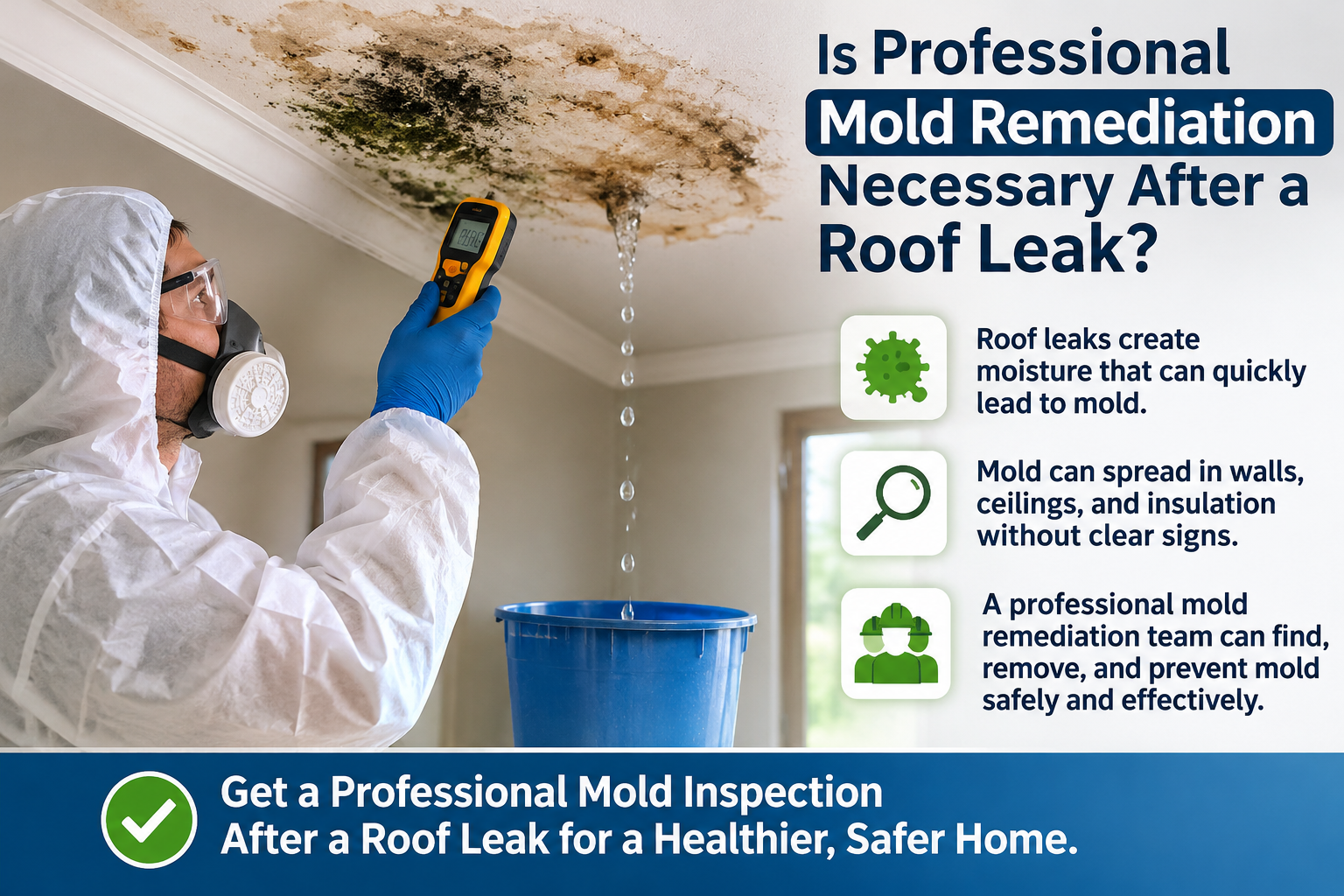

A roof leak might seem like a minor property issue, especially when the visible water stains appear small. However, water entering through damaged shingles, flashing, or roof openings might soak insulation, drywall, wooden structures, and ceiling materials.
When these materials remain damp, mold growth becomes a concern. Homeowners should address water damage quickly rather than waiting for visible mold to appear.
But does every roof leak require professional mold remediation? Not necessarily. The decision depends on how much water entered the property, how long materials remained wet, and whether mold growth or hidden moisture is present.
Understanding when to handle minor cleanup and when to contact professional mold removers helps you protect your property.
1. Why Can a Roof Leak Lead to Mold Growth?
Mold needs moisture and suitable organic materials to grow. Roof leaks provide both conditions when water reaches materials such as drywall, wood, insulation, and ceiling tiles.
Common roof leak causes include:
-
Damaged or missing shingles.
-
Cracked roof flashing.
-
Blocked roof drainage systems.
-
Damaged skylight seals.
-
Deteriorated roof membranes.
-
Storm-related roof damage.
Water might travel along rafters, insulation, and ceiling cavities before becoming visible inside a room. This means the visible stain does not always show the full extent of the damage.
The EPA recommends drying wet materials within 24 to 48 hours whenever possible to reduce the risk of mold growth.
2. What Happens If You Ignore Water Damage?
Ignoring a roof leak allows moisture to remain inside building materials. Over time, this might lead to several problems.
Mold Growth
Mold might develop on damp drywall, insulation, wooden framing, and other materials. Growth might remain hidden behind ceilings or inside attic spaces.
Ceiling and Wall Damage
Prolonged moisture exposure might cause paint to peel, drywall to soften, and ceiling materials to deteriorate.
Damaged Insulation
Wet insulation might lose some of its thermal performance. Depending on its condition, it might need removal and replacement.
Persistent Musty Odors
A damp or earthy smell might indicate hidden moisture or mold growth, especially when it continues after the visible leak has stopped.
Indoor Air Quality Concerns
Mold and dampness might affect indoor air quality. Some people experience nasal irritation, coughing, or worsening asthma symptoms after exposure.
3. How Do You Know If Mold Has Developed After a Roof Leak?
Not every roof leak results in mold growth. However, certain signs suggest that you need a closer inspection.
Watch for:
-
Dark or discolored ceiling patches.
-
Peeling or bubbling paint.
-
Musty odors near the affected room.
-
Damp or sagging drywall.
-
Visible growth on attic wood.
-
Wet or compressed insulation.
-
Repeated condensation around roof structures.
Pay attention to rooms directly below the damaged roof area. Also inspect nearby attic spaces because water often spreads beyond the original entry point.
If the ceiling is sagging or bulging with water, keep people away and arrange prompt professional assistance. Do not puncture or disturb it yourself.
4. When Is Professional Mold Remediation Necessary?
Small leaks that are repaired quickly might only require drying and monitoring. However, larger or prolonged leaks often require professional assessment.
Consider hiring professional mold removers when:
-
Water has affected a large ceiling or wall area.
-
Mold growth covers more than approximately 10 square feet.
-
Insulation remains wet.
-
Mold appears behind walls or ceiling materials.
-
The leak continued for several days before discovery.
-
Mold returns after previous cleaning.
-
HVAC equipment or ductwork might be contaminated.
-
The property has experienced extensive water damage.
The EPA generally recommends consulting experienced professionals for larger mold problems, significant water damage, and suspected HVAC contamination.
Professional assessment helps determine which materials need cleaning, drying, or replacement.
5. What Do Professional Mold Removers Do After a Roof Leak?
Professional mold removers follow a structured process based on the extent of water damage and contamination.
Step 1: Inspect the Affected Area
The inspection identifies visible mold, water stains, damp materials, and possible hidden moisture.
Technicians might use moisture meters and other inspection tools to assess affected surfaces.
Step 2: Identify and Repair the Roof Leak
The source of water intrusion must be corrected before remediation is complete.
Roofing professionals might need to repair damaged shingles, flashing, seals, or other roof components.
Step 3: Establish Containment When Necessary
For larger remediation projects, professionals isolate affected areas to reduce the spread of dust and mold particles.
Containment methods might include plastic barriers, sealed openings, and HEPA-filtered air equipment.
Step 4: Remove Materials That Cannot Be Restored
Wet or mold-damaged drywall, insulation, ceiling tiles, and other porous materials might require removal.
Materials that are suitable for cleaning should be treated using appropriate methods and dried thoroughly.
Step 5: Clean and Dry Affected Surfaces
Professionals physically remove mold from suitable surfaces and use appropriate drying equipment to address remaining moisture.
Cleaning methods depend on the material, contamination, and condition of the building.
Step 6: Complete a Final Inspection
The affected area is reviewed for visible mold, remaining moisture, and unresolved water damage.
The goal is to confirm that cleanup is complete and the conditions responsible for mold growth have been corrected.
6. Does a Roof Leak Require HVAC Mold Remediation?
Not every roof leak affects an HVAC system. However, professional HVAC mold remediation might be necessary when water reaches air conditioning equipment, ductwork, or insulation.
This situation is possible when:
-
Roof leaks affect attic ductwork.
-
Water enters around air handling equipment.
-
Duct insulation becomes wet.
-
Condensation develops around HVAC components.
-
Visible mold appears inside affected system parts.
An HVAC inspection should examine accessible components, including drain pans, evaporator coils, ductwork, and insulation.
If mold contamination is confirmed, technicians determine which components are suitable for cleaning and which materials require replacement.
Cleaning only the air vents does not address contamination inside other parts of the system.
The EPA does not recommend routine duct cleaning for every property. It does recommend appropriate action when there is a specific problem, such as confirmed mold growth inside hard-surface ducts.
7. Can You Handle Mold Cleanup Yourself After a Roof Leak?
Small areas of mold on hard surfaces might be suitable for careful homeowner cleanup if the water source has been fixed and the affected materials are not extensively damaged.
For minor cleanup:
-
Wear appropriate protective equipment.
-
Improve ventilation where safe.
-
Clean suitable hard surfaces with detergent and water.
-
Dry the surfaces completely.
-
Monitor the area for recurring moisture.
Do not attempt to clean extensive mold growth yourself. Avoid disturbing contaminated insulation, drywall, or HVAC components.
Never mix bleach with ammonia or other cleaning products. This can release dangerous gases.
If you have asthma, mold allergies, chronic lung conditions, or a weakened immune system, avoid handling mold cleanup.
8. How Can You Prevent Mold After Roof Repairs?
Fixing the roof leak is only the first step. You also need to make sure the affected materials are dry and the property remains protected from moisture.
Follow these preventive measures:
-
Inspect the roof after major storms.
-
Keep gutters and downspouts clear.
-
Check attic insulation for dampness.
-
Repair damaged flashing and roof seals.
-
Maintain proper attic ventilation.
-
Monitor indoor relative humidity.
-
Keep humidity below 60%, ideally between 30% and 50%.
-
Inspect ceilings for recurring water stains.
-
Maintain HVAC drainage and duct insulation.
Regular inspections help identify moisture problems before they develop into larger mold issues.
Frequently Asked Questions
1. How quickly does mold grow after a roof leak?
Mold might begin growing on wet materials within 24 to 48 hours under suitable conditions. Drying affected materials promptly helps reduce the risk.
2. Does every roof leak require professional mold removal?
No. A small leak repaired quickly might only require proper drying and monitoring. Professional assessment is advisable when water damage is extensive, materials remain wet, or mold appears.
3. Can mold grow inside ceiling insulation?
Yes. Wet insulation might support mold growth, depending on its material and moisture conditions. Insulation that cannot be cleaned and dried properly might need replacement.
4. Should I turn off my HVAC system after a roof leak?
If water has entered HVAC equipment or ductwork, avoid operating the affected system until a qualified technician assesses it. If the leak is isolated and the HVAC system is unaffected, an inspection might not be necessary.
5. How do I know if mold is hidden behind my ceiling?
Musty odors, recurring stains, peeling paint, damp drywall, and visible ceiling damage might indicate hidden moisture. A professional inspection helps determine whether further investigation is needed.
Final Thoughts
A roof leak does not always lead to mold, but delayed drying increases the risk. Homeowners should repair the leak, inspect affected materials, and dry wet areas as quickly as possible.
Professional mold removers are worth contacting when contamination is extensive, hidden, or associated with prolonged water damage. If water reaches ductwork or air conditioning equipment, HVAC mold remediation might also be necessary.
Addressing moisture early helps protect your home's structure, reduce recurring mold problems, and maintain better indoor conditions.



