

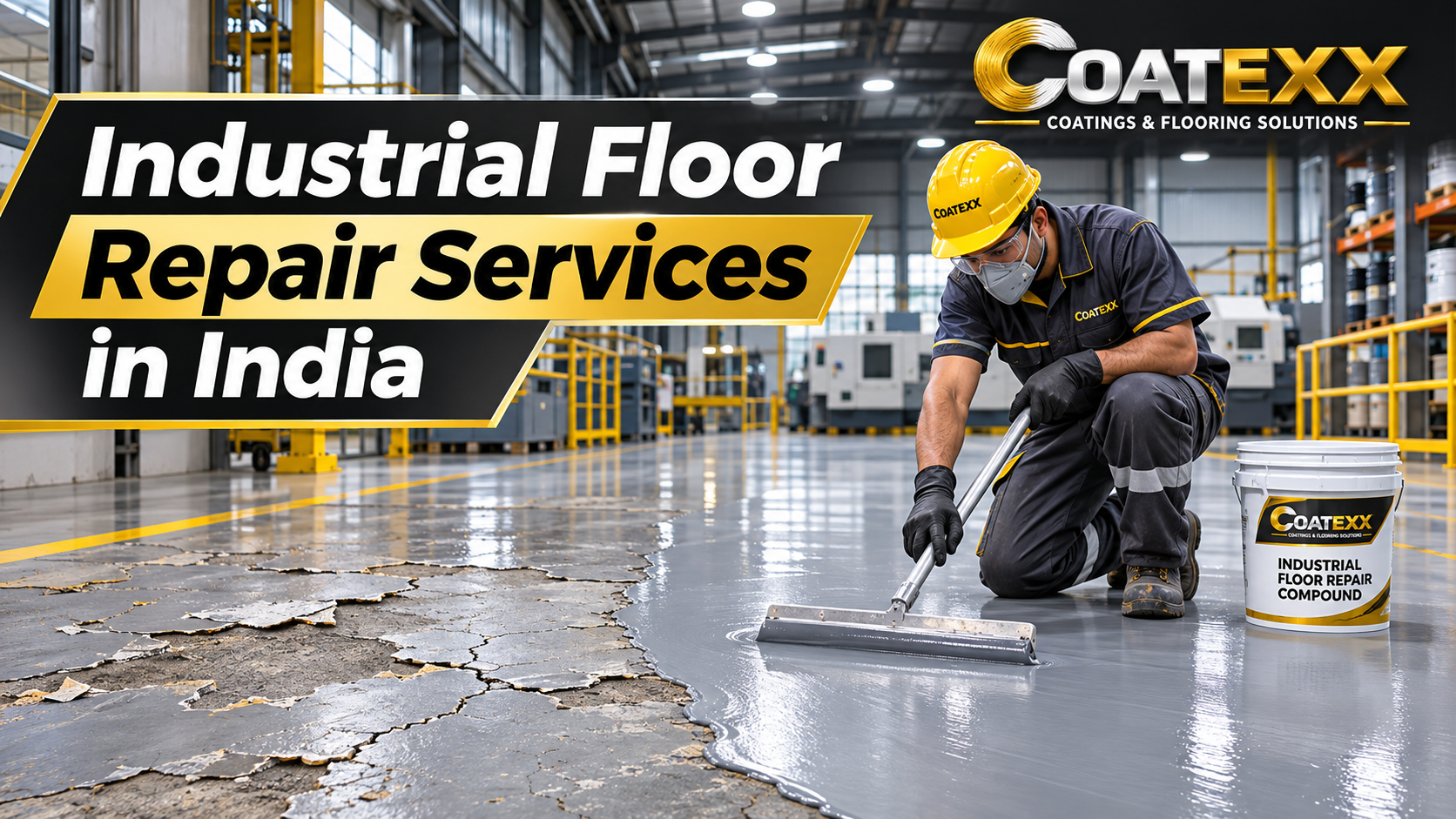
When Should Factories Repair Epoxy Floors Instead of Replacing Them?

Industrial floors experience daily wear from forklifts, machinery, chemical exposure, and continuous movement of materials. Over time, epoxy-coated surfaces may develop cracks, peeling, scratches, or damaged sections. When these problems appear, facility managers must decide whether to repair the affected areas or replace the entire flooring system.
Complete replacement is not always necessary. Depending on substrate condition and the extent of damage, professional repairs can restore suitable surfaces without rebuilding the entire floor.
Businesses exploring industrial floor repair services in India should understand which defects can be repaired and when replacement is a more practical option.
Why Do Industrial Epoxy Floors Become Damaged?
Epoxy flooring is used in factories, warehouses, pharmaceutical facilities, and manufacturing plants because properly specified systems can provide durable protective surfaces.
However, their performance depends on installation quality and operating conditions.
Common causes of damage include:
-
Heavy machinery traffic: Repeated forklift movement and concentrated loads can wear the surface.
-
Chemical exposure: Incompatible chemicals may damage the coating.
-
Poor surface preparation: Contamination or inadequate concrete preparation can weaken adhesion.
-
Moisture problems: Excess moisture may contribute to blistering or peeling.
-
Mechanical impact: Dropped materials and heavy equipment can cause chips or cracks.
Identifying the actual cause is essential before recommending a repair.
When Is Industrial Floor Repair Better Than Replacement?
Professional industrial floor repair is often suitable when damage is limited and the surrounding concrete remains structurally sound.
1. Localized Cracks and Surface Chips
Small, stable cracks and chipped sections may be repaired using compatible compounds.
However, cracks caused by movement or settlement require further assessment before treatment.
2. Minor Surface Wear
Epoxy floors may develop scratches and worn traffic lanes without significant damage to the underlying substrate.
When the existing coating remains firmly bonded, suitable surface preparation and recoating may restore protection.
3. Small Potholes and Damaged Edges
Localized potholes may be repaired by removing weak material and rebuilding the affected area with an appropriate repair mortar.
The repair material must match the damage depth and expected traffic conditions.
4. Dull or Worn Protective Coatings
A coating that has lost its appearance or developed superficial wear may not require complete removal.
Professional inspection can determine whether recoating is appropriate.
When Should Factories Consider Complete Floor Replacement?
Repairing isolated defects is not always practical.
More extensive intervention may be required when:
-
Large areas of coating have detached from the substrate.
-
Concrete deterioration extends beneath the surface.
-
Persistent moisture prevents reliable coating adhesion.
-
Structural movement causes recurring cracks.
-
The existing flooring system cannot meet operational requirements.
Severe damage may require concrete rehabilitation, removal of failed coatings, or a completely new flooring system.
The decision should follow a technical assessment rather than appearance alone.
What Is the Process of Repairing Epoxy Floors?
Professional repairing epoxy floors involves correcting the damaged area and preparing it for a compatible protective finish.
Step 1: Floor Inspection
Technicians inspect cracks, coating adhesion, concrete condition, moisture exposure, and traffic requirements.
Step 2: Surface Preparation
Loose coatings, contaminated materials, and weakened concrete are removed where necessary.
Mechanical grinding or shot blasting may be used to prepare the substrate.
Step 3: Crack and Surface Repair
Suitable repair compounds are applied to damaged sections based on their condition and required performance.
Step 4: Priming and Recoating
Once repairs are ready, compatible primers and protective coatings are applied according to manufacturer instructions.
Step 5: Curing and Inspection
The repaired floor is allowed to cure before reopening for foot traffic, machinery, or production activities.
The exact procedure depends on the selected repair system.
How Can Recoating Extend the Service Life of Industrial Floors?
Recoating provides a new protective layer over suitably prepared existing flooring.
It may help improve surface appearance, reduce concrete dusting, and restore protection in selected working areas.
For example, a factory with widespread superficial coating wear but sound underlying concrete may benefit from epoxy floor coating rather than complete reconstruction.
However, applying a new coating over peeling or poorly bonded material will not resolve the underlying problem.
What Affects Industrial Floor Repair Costs in India?
Repair costs depend on several project-specific factors.
These include the damaged area, substrate condition, repair depth, material selection, surface preparation, and required curing time.
Additional expenses may arise from machinery relocation, restricted access, specialized repairs, or phased installation schedules.
Facility managers should request quotations that clearly identify repair methods, material specifications, preparation work, and project timelines.
Why Choose CoatEXX for Industrial Floor Repair Services in India?
CoatEXX Industrial Solutions provides floor repair and recoating services for industrial and commercial facilities.
Its services include concrete crack repair, surface patching, joint treatment, epoxy recoating, and heavy-duty floor repairs.
The company describes a site-based approach involving inspection, system selection, preparation, application, and final handover.
Businesses can explore CoatEXX's Floor Repair & Recoating Services to discuss damaged flooring, operational requirements, and suitable repair options.
Conclusion
Choosing between industrial floor repair and complete replacement depends on damage severity, concrete condition, and operating requirements.
Localized repairs and recoating may provide a practical solution when the underlying floor remains suitable for continued use.
However, extensive deterioration, recurring structural movement, or severe adhesion problems may require a more comprehensive solution.
Contact CoatEXX Industrial Solutions to discuss industrial floor inspection, repair, and recoating requirements.
Frequently Asked Questions (FAQs)
1. What are industrial floor repair services in India?
These services include concrete crack treatment, pothole repair, surface patching, joint repair, coating removal, and protective recoating for industrial floors.
2. Can damaged epoxy flooring be repaired without replacement?
Yes. Localized cracks, chips, and surface wear may be repairable when the underlying substrate remains suitable.
3. What is the best method for repairing epoxy floors?
The appropriate method depends on damage type. Repairs may involve removing loose coatings, treating cracks, applying repair compounds, and recoating prepared areas.
4. How long does industrial floor repair take?
Project duration depends on damaged area, repair materials, substrate preparation, curing requirements, and facility operating conditions.
5. Is epoxy floor recoating cheaper than replacement?
Recoating may cost less when existing concrete and coating layers remain sound. However, extensive substrate damage or failed adhesion can make replacement necessary.



