

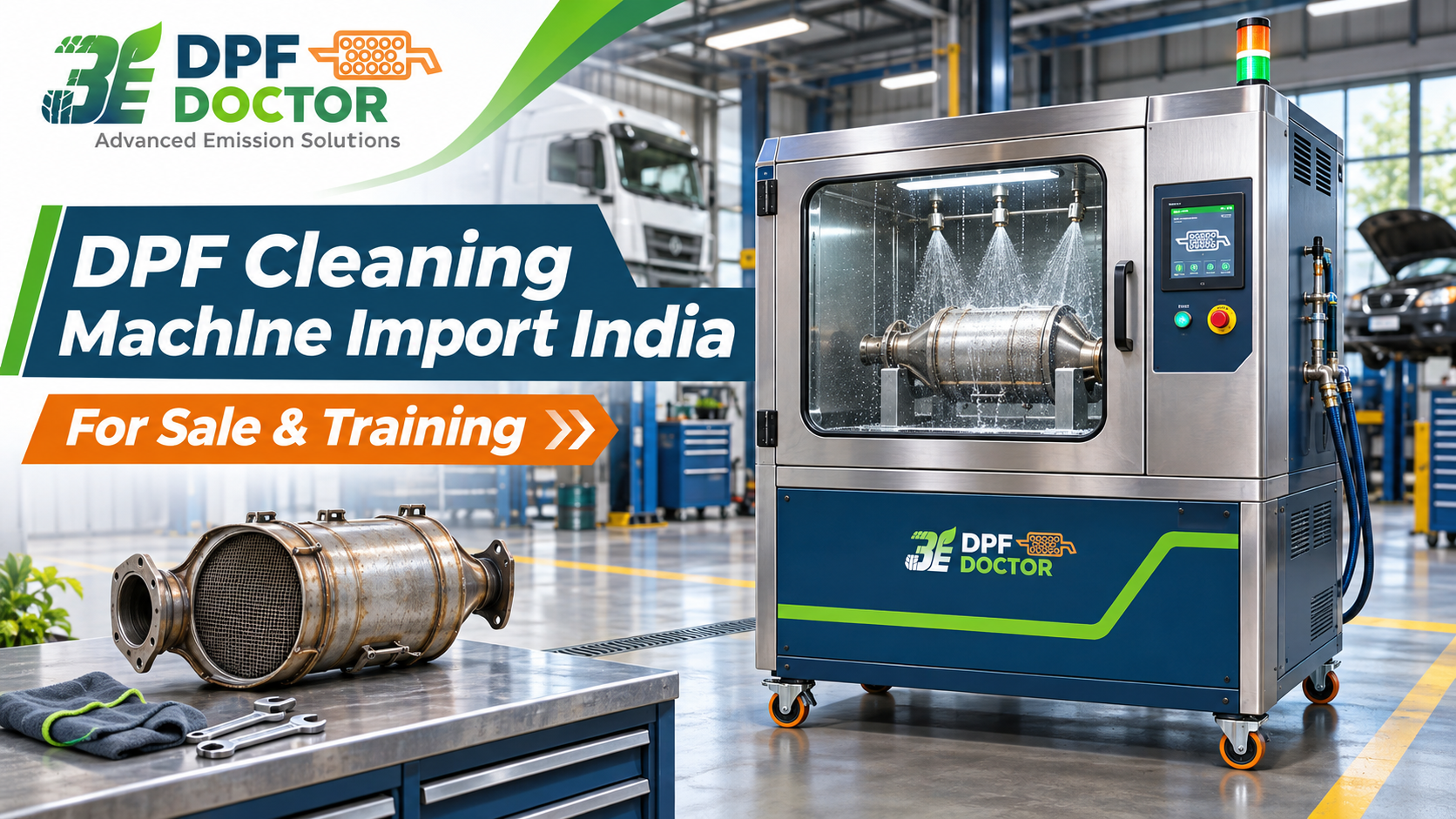
The demand for professional diesel particulate filter (DPF) cleaning equipment is creating new opportunities for automotive workshops and fleet maintenance businesses. However, choosing the right equipment requires more than comparing machine prices. Buyers must evaluate cleaning technology, vehicle compatibility, installation requirements, and operator training before investing.
For businesses exploring DPF cleaning machine import India options, understanding the differences between imported and locally manufactured equipment is essential. This guide explains how to compare machines, evaluate suppliers, and prepare technicians for professional DPF cleaning operations.
Why Are Indian Workshops Investing in DPF Cleaning Machines?
Diesel particulate filters capture particulate matter from diesel exhaust. Over time, ash accumulation, operating conditions, and vehicle-related faults can contribute to filter restrictions that require professional diagnosis and maintenance.
Specialized cleaning equipment helps workshops establish a controlled process for treating suitable filters.
Key business applications include:
-
Passenger car and SUV service centres
-
Commercial truck maintenance workshops
-
Fleet servicing facilities
-
Multi-brand automotive garages
-
Independent DPF cleaning businesses
Before investing, workshop owners should estimate local demand, expected cleaning volume, and operating expenses.
Imported vs Indian DPF Cleaning Machines: What Should Buyers Compare?
When researching DPF cleaning machine import India opportunities, buyers should compare complete ownership costs rather than focusing only on equipment quotations.
1. Equipment Purchase and Import Costs
Imported machines may involve international freight, customs duties, applicable taxes, clearance charges, and local transportation. The actual landed cost depends on the equipment classification, country of origin, and current import requirements.
Indian-manufactured equipment may simplify procurement and coordination, although pricing and support arrangements vary between suppliers.
2. Spare Parts and Technical Assistance
Before purchasing imported equipment, determine whether replacement pumps, valves, adapters, electronic components, and cleaning accessories are available locally.
Long replacement-part lead times can affect workshop operations.
Domestic manufacturers may offer easier access to service engineers and replacement components, but buyers should verify these commitments before ordering.
3. Compatibility With Indian Vehicles
Not every machine supports every filter.
Check adapter availability for passenger cars, SUVs, light commercial vehicles, heavy trucks, and buses.
Also verify whether the equipment is intended for DPF cleaning alone or supports additional aftertreatment components such as SCR and DOC units.
What Should You Check When Finding a DPF Cleaning Machine for Sale?
Finding a DPF cleaning machine for sale is relatively straightforward. Selecting equipment suitable for long-term workshop operations requires a structured evaluation.
Cleaning Technology and Performance
Different machines use pneumatic, aqueous, thermal, or combined cleaning methods.
Ask suppliers to demonstrate their process on compatible filters and explain how cleaning results are evaluated.
Pre-cleaning and post-cleaning flow or pressure measurements can help document results, although cleaning cannot repair cracked, melted, or otherwise irreversibly damaged filter substrates.
Machine Specifications and Workshop Requirements
Compare the following:
-
Filter size and vehicle compatibility
-
Electrical power requirements
-
Water and compressed-air requirements
-
Cleaning and drying cycle duration
-
Filtration and waste-handling arrangements
-
Warranty coverage and maintenance requirements
Request a written quotation identifying all accessories, installation costs, consumables, and ongoing support charges.
Why Is DPF Cleaning Machine Training Important?
Professional DPF cleaning machine training helps technicians understand machine operation, filter handling, safety precautions, and quality-control procedures.
Training is particularly important for workshops introducing DPF cleaning as a new service.
Essential Training Areas
Filter inspection: Technicians should learn to identify physical damage, contamination, and conditions requiring further diagnosis.
Machine operation: Operators need practical instruction on adapter selection, equipment settings, approved cleaning procedures, and safety controls.
Cleaning verification: Training should explain how to interpret available flow or pressure test results and document cleaning outcomes.
Routine maintenance: Operators should understand equipment inspection, consumable handling, cleaning-fluid management, and waste-disposal procedures.
Training should also clarify that filter cleaning does not resolve underlying engine, sensor, or exhaust-system faults.
How Does 3E DPF Doctor Support Equipment Buyers?
3E DPF Doctor offers locally manufactured DPF cleaning equipment designed for different automotive workshop applications.
Its product range includes:
-
3E DPF Doctor Pro: Designed for multi-brand workshop applications.
-
3E DPF Doctor Plus: Intended for passenger cars and small commercial vehicles.
-
3E DPF Doctor Supreme: Designed for heavy commercial vehicle applications involving DPF, SCR, and DOC cleaning.
According to its product information, the company provides installation, commissioning, operator training, and ongoing technical assistance.
Workshop owners can explore the DPF cleaning machine range to compare available models and discuss equipment suitability.
How Should Workshops Calculate Their Investment?
The purchase price represents only one part of the total investment.
Businesses should consider installation, technician training, cleaning solutions, electricity, labour, equipment maintenance, and potential downtime.
Estimating monthly cleaning demand and contribution per job helps determine whether the investment is commercially practical.
A machine offering suitable capacity, reliable servicing, and practical training may provide better long-term value than equipment selected exclusively on its initial price.
Conclusion
Choosing between imported and Indian-manufactured DPF cleaning equipment requires careful evaluation of technical specifications, ownership costs, vehicle compatibility, and after-sales assistance.
Before purchasing, workshop owners should request demonstrations, confirm installation requirements, and review the operator training programme.
For businesses considering DPF cleaning equipment, 3E DPF Doctor provides machine options for passenger and commercial vehicle workshops.
Contact Us Now to discuss suitable equipment, installation requirements, and operator training.
Frequently Asked Questions (FAQs)
1. Can businesses import DPF cleaning machines into India?
Yes, subject to applicable customs requirements, product classification, and any relevant import or safety regulations. Buyers should confirm current requirements before placing orders.
2. Where can I find a DPF cleaning machine for sale in India?
Buyers can contact domestic equipment manufacturers, authorized distributors, or international suppliers. Compare specifications, warranty coverage, installation, and support before purchasing.
3. Is DPF cleaning machine training necessary for workshop technicians?
Yes. Practical training helps technicians operate equipment correctly, follow safety procedures, inspect filters, and evaluate cleaning results.
4. What factors affect DPF cleaning machine prices in India?
Cleaning technology, automation, capacity, included adapters, accessories, installation, warranty, and technical support can influence the final cost.
5. Are imported DPF cleaning machines better than Indian-manufactured machines?
Not necessarily. Equipment quality depends on machine design, cleaning effectiveness, component reliability, compatibility, and service support rather than manufacturing location alone.



