

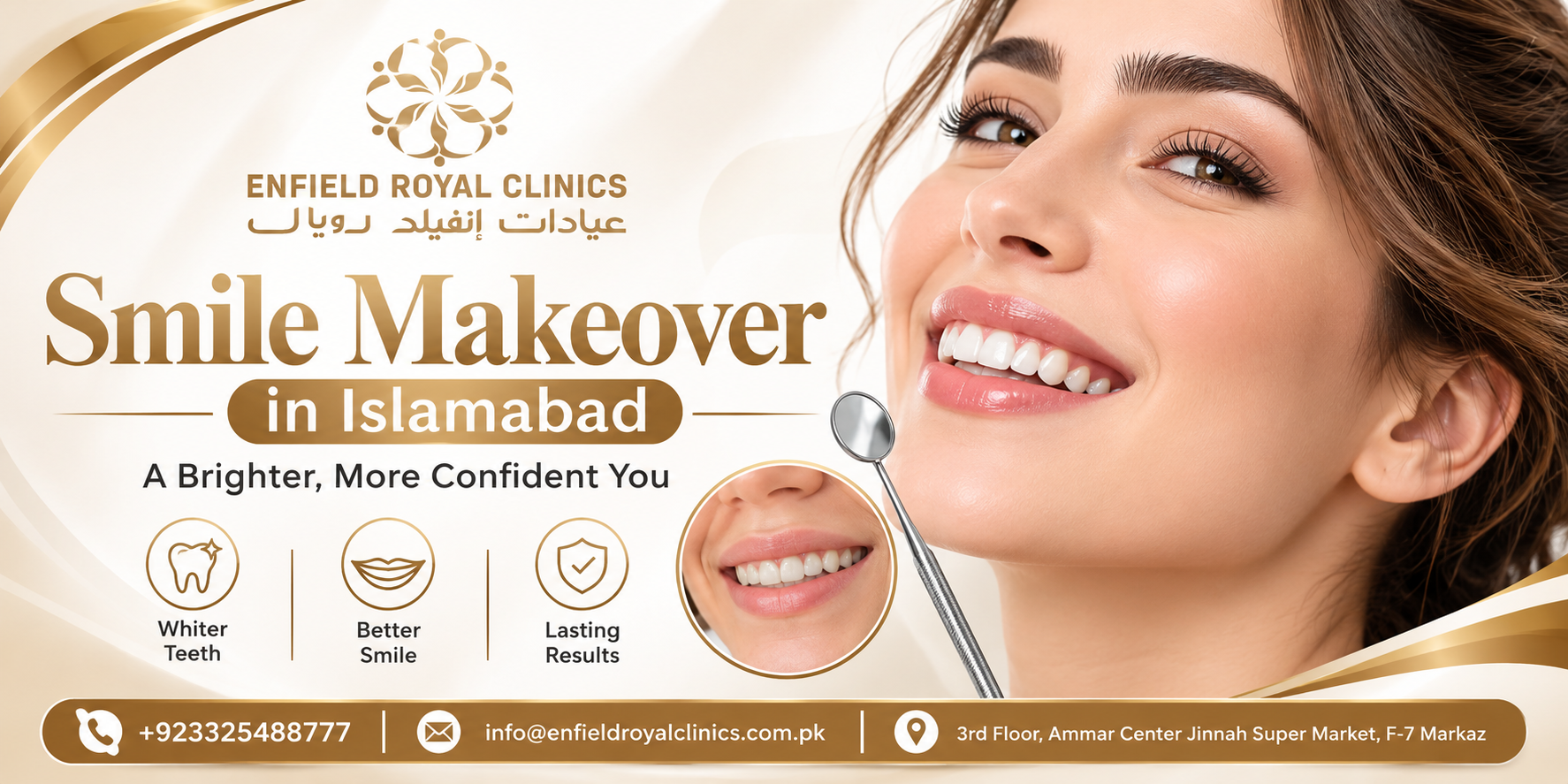

A beautiful smile can make a significant difference in a person's appearance, confidence, and everyday interactions. However, issues such as stained teeth, gaps, chipped enamel, uneven tooth shapes, and misalignment can affect how someone feels about their smile. Cosmetic dentistry offers several ways to address these concerns, and a smile makeover is one of the most comprehensive approaches.
A Smile Makeover in Islamabad combines different cosmetic and restorative dental procedures to improve the appearance and function of teeth. Rather than focusing on a single dental concern, this treatment approach considers the overall smile, including tooth colour, shape, alignment, proportions, and gum appearance. Each treatment plan is developed according to the patient's dental condition, personal preferences, and desired results.
With modern dental techniques, patients can explore different options to achieve a brighter, more balanced, and natural-looking smile. Understanding how the process works can help individuals decide whether a smile makeover is the right choice for their dental goals.
1. What Is a Smile Makeover and How Does It Work?
A smile makeover is a personalized combination of cosmetic and restorative dental treatments designed to improve the overall appearance of a person's smile. It addresses multiple concerns that may affect the colour, shape, size, spacing, and alignment of teeth.
The process usually begins with a detailed dental assessment. During this stage, the dentist examines the teeth, gums, bite, and facial proportions to understand which improvements may be suitable. Patients can also discuss the features they would like to change, such as discoloured teeth, uneven edges, or noticeable gaps.
Depending on individual requirements, a treatment plan may include:
-
Teeth whitening: Helps reduce stains and brighten natural teeth.
-
Dental veneers: Thin coverings placed over the front surfaces of teeth to improve their appearance.
-
Dental bonding: Uses tooth-coloured material to repair minor chips, gaps, and imperfections.
-
Dental crowns: Restore damaged or weakened teeth while improving their appearance.
-
Orthodontic treatment: Helps correct crooked or misaligned teeth.
-
Dental implants: Replace missing teeth and restore smile function.
-
Gum contouring: Reshapes excessive or uneven gum tissue when clinically appropriate.
Not every patient needs all these treatments. A suitable combination depends on oral health, cosmetic concerns, and the expected outcome.
2. How Can a Smile Makeover Improve Overall Appearance?
The appearance of a smile depends on several details working together. Even small imperfections can influence the overall balance of the teeth and facial features. A smile makeover focuses on creating harmony between these elements.
For example, stained or yellow teeth can make a smile appear less vibrant. Professional teeth whitening may help improve tooth brightness. Similarly, chipped or uneven teeth can affect the symmetry of a smile, while veneers or bonding may help create a more consistent appearance.
Patients with noticeable spaces between their teeth may benefit from bonding, veneers, or orthodontic treatment, depending on the size of the gaps and their underlying cause.
Another important consideration is tooth proportion. Teeth that appear too short, too wide, or irregularly shaped can affect the overall smile design. Cosmetic treatments can help improve these proportions while maintaining a natural appearance.
A carefully planned Smile Makeover in Islamabad also considers facial features. The goal is not simply to create extremely white or perfectly identical teeth. Instead, the treatment aims to complement the patient's natural appearance and create a balanced smile.
3. What Are the Main Benefits of Getting a Smile Makeover?
A smile makeover offers several potential benefits for individuals who want to improve multiple dental concerns. Its biggest advantage is the ability to combine suitable treatments into one coordinated plan.
Some important benefits include:
Improved Tooth Colour: Professional whitening and selected cosmetic treatments can help address stains and discolouration, creating a brighter appearance.
Better Smile Symmetry: Veneers, bonding, and other procedures can improve uneven tooth shapes and proportions.
Correction of Minor Imperfections: Small chips, gaps, worn edges, and irregular surfaces may be addressed through appropriate cosmetic techniques.
Increased Self-Confidence: People who feel comfortable with their smiles may become more confident during conversations, photographs, and social activities.
Personalized Results: Every smile makeover can be designed according to the patient's dental condition, preferences, and facial structure.
Improved Dental Function: When restorative treatments are included, they may also help restore damaged teeth, replace missing teeth, or improve certain bite-related concerns.
Although cosmetic improvements are a major reason people consider this treatment, maintaining healthy teeth and gums remains equally important.
4. Who Is a Suitable Candidate for a Smile Makeover?
A smile makeover may be suitable for adults who have one or more cosmetic dental concerns and want to improve the overall appearance of their teeth.
Common reasons for considering this treatment include:
-
Yellow, stained, or discoloured teeth.
-
Chipped, cracked, or worn tooth edges.
-
Uneven tooth shapes or sizes.
-
Small gaps between teeth.
-
Mild alignment concerns.
-
Old or unattractive dental restorations.
-
Missing teeth that affect smile appearance.
-
Uneven gum lines or excessive gum visibility.
However, suitability depends on the patient's oral health. Individuals with untreated cavities, gum disease, active infections, or significant bite problems may need additional dental care before cosmetic procedures begin.
A dental examination helps identify these issues and determine the safest treatment sequence.
Patients should also have realistic expectations. A smile makeover can create meaningful cosmetic improvements, but the final appearance depends on natural tooth structure, gum health, available treatment options, and individual healing.
5. What Happens During the Smile Makeover Process?
Understanding the treatment process can help patients feel more comfortable before beginning their dental journey. Although every treatment plan is different, the process generally involves several important stages.
Initial Consultation and Assessment
The first step involves examining the teeth, gums, and bite. The dentist discusses the patient's concerns, evaluates oral health, and identifies suitable cosmetic or restorative options. Dental photographs, X-rays, or digital scans may be recommended when necessary.
Personalized Smile Planning
After the assessment, a customized treatment plan is prepared. This may involve one procedure or a combination of treatments. The patient can discuss the expected changes, limitations, and possible alternatives before making a decision.
Preparing the Teeth
Some treatments require little or no preparation, while others may involve removing a small amount of tooth enamel or completing restorative work. The preparation depends on the selected procedure.
Performing the Treatments
Depending on the plan, procedures may take place during one appointment or across multiple visits. Teeth whitening, bonding, veneers, crowns, and orthodontic treatments all have different timelines.
Final Evaluation
Once the planned procedures are completed, the dentist checks the appearance, comfort, bite, and overall function of the teeth. Any necessary adjustments are made to support a comfortable and balanced result.
6. How Can Patients Maintain Their Smile Makeover Results?
Maintaining the results of a smile makeover requires consistent oral hygiene and regular dental care. Even high-quality cosmetic treatments need proper maintenance to preserve their appearance and function.
Patients can follow these simple recommendations:
-
Brush twice daily using a soft-bristled toothbrush.
-
Floss regularly to remove food particles between teeth.
-
Use dental products recommended for their specific restorations.
-
Limit excessive consumption of staining beverages such as coffee and tea.
-
Avoid biting hard objects, ice, or hard foods that may damage restorations.
-
Avoid smoking and tobacco products.
-
Attend regular dental checkups and professional cleanings.
-
Wear a night guard if recommended for teeth grinding.
Different procedures have different lifespans. For example, teeth whitening may require occasional maintenance, while veneers and crowns can last for many years with appropriate care. Their longevity depends on material quality, oral hygiene, lifestyle habits, and individual dental conditions.
Patients should also understand that veneers and crowns may eventually require replacement. Regular examinations help identify potential problems before they become more serious.
For more information visit Enfield royal clinic in islamabad
Frequently Asked Questions (FAQs)
1. How long does a smile makeover take?
The duration depends on the number and type of treatments involved. Some cosmetic improvements may be completed in one or two appointments, while orthodontic treatment, implants, or multiple restorations may require several months.
2. Is a smile makeover painful?
Most cosmetic dental procedures are generally well tolerated. Local anaesthesia may be used when necessary to improve comfort. Some patients may experience temporary sensitivity or mild discomfort afterward.
3. Can a smile makeover fix crooked teeth?
Yes, certain alignment concerns can be addressed through orthodontic treatment, veneers, or other suitable procedures. The best option depends on the severity of the misalignment and the patient's dental health.
4. Are smile makeover results permanent?
Results can last for many years, but they are not always permanent. Different procedures have different lifespans, and restorations may eventually need maintenance or replacement.
5. Is a smile makeover suitable for older adults?
Yes, older adults may be suitable candidates if their teeth and gums are healthy enough for the planned procedures. Treatment recommendations depend on individual oral health rather than age alone.
6. How can someone prepare for a smile makeover?
Patients should begin with a comprehensive dental examination and discuss their expectations with a qualified dental professional. Existing cavities, gum problems, or other oral health concerns should be addressed before cosmetic treatment begins.
Conclusion
A smile makeover can transform the appearance of teeth by addressing concerns such as discolouration, uneven shapes, gaps, chips, and missing teeth. Through a combination of modern cosmetic and restorative procedures, patients can achieve a brighter, more balanced, and natural-looking smile.
Choosing a Smile Makeover in Islamabad starts with understanding individual dental needs and selecting treatments that support both appearance and oral health. With proper planning, professional dental care, and consistent maintenance, patients can enjoy their improved smiles and feel more confident in their everyday lives.



