

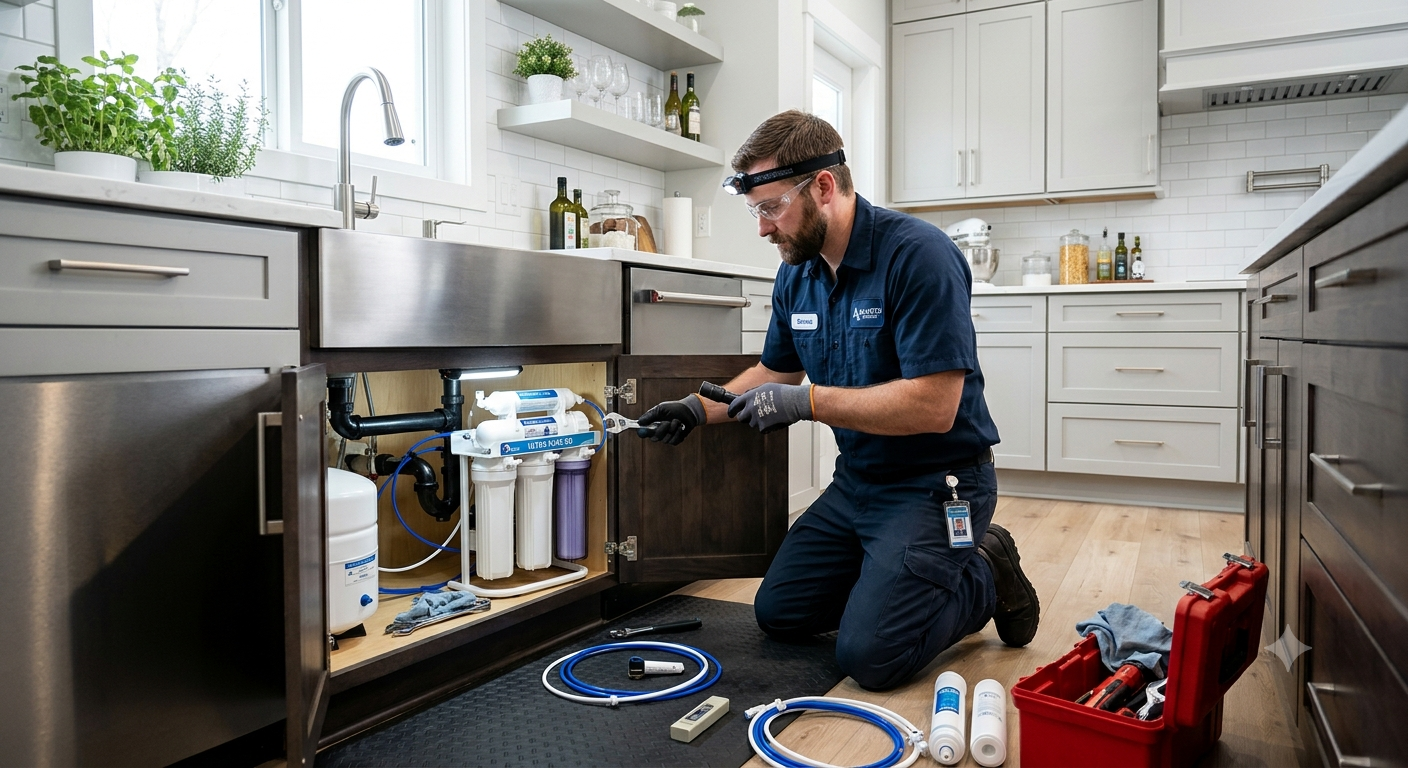
How to Find the Best RO Service in Noida and Build a Maintenance Routine That Works

A water purifier should not receive attention only after it stops working. Regular inspection, timely filter maintenance and proper cleaning can help households identify developing problems before they become inconvenient breakdowns. Finding the best ro service in Noida for a consistent water purifier maintenance routine is therefore an important part of managing a household drinking-water system.
Many families follow an irregular approach. They call a technician when water output becomes slow, replace components only after a noticeable change in taste or ignore minor leakage until it becomes serious. This reactive approach can make maintenance difficult to plan.
A better strategy is to maintain a service record, understand the purifier's individual components and arrange inspections according to actual operating conditions. The following guide explains how Noida households can create a realistic maintenance system without replacing filters unnecessarily.
Why a Maintenance Schedule Is Better Than Waiting for a Breakdown
An RO purifier contains several components that perform different functions. Depending on its design, the system may include sediment filtration, activated carbon filtration, a reverse osmosis membrane, post-treatment filtration, a storage tank, electrical controls and a dispensing arrangement.
These components do not necessarily require replacement at the same time.
For example, a sediment filter may become clogged because the incoming water contains considerable suspended material. A carbon filter may need attention for different reasons. The membrane has its own operating requirements and should not be replaced simply because another filter has reached the end of its useful life.
The best ro service in Noida should therefore involve component-specific inspection rather than treating every purifier as though it has identical maintenance needs.
A proper routine provides several advantages:
-
It helps identify developing faults.
-
It creates a record of previous replacements.
-
It reduces the likelihood of unnecessary component changes.
-
It makes repair appointments easier to organize.
-
It helps homeowners monitor unusual water production or leakage.
-
It supports more informed discussions with technicians.
The aim is not to service the purifier as frequently as possible. It is to maintain it according to its condition, manufacturer's instructions and water-supply characteristics.
Understanding the Main Parts That Require Attention
Before creating a schedule, homeowners should understand what the different components do.
Sediment filter
The sediment filter helps remove suspended particles before water reaches subsequent filtration stages.
When it becomes clogged, water movement through the system may be restricted. The actual replacement interval depends on incoming water quality and usage.
Activated carbon filter
Carbon filtration is commonly used to reduce certain substances affecting water taste and odour, including chlorine in suitable system designs.
Its performance depends on the filter specification and the quality of incoming water.
RO membrane
The reverse osmosis membrane performs the primary dissolved-solids separation function in an RO system.
Its performance is influenced by operating pressure, feed-water characteristics, temperature and membrane condition.
Post-filter
Some purifiers include a post-treatment filter to improve the final water characteristics.
Its maintenance should follow the manufacturer's recommendations.
Storage tank
The storage tank stores purified water for household use. It requires appropriate inspection and cleaning according to the purifier design.
Poor hygiene around the tank or dispensing outlet can affect water quality even when the filtration components are functioning.
Pump and electrical components
The pump supports the pressure requirements of the system. Electrical components control various operating functions.
Unusual noise, repeated shutdowns or failure to start should be investigated rather than treated as ordinary filter-maintenance issues.
Designing a Practical RO Maintenance Calendar
A maintenance calendar should be based on the manufacturer's recommendations, not a universal timetable.
The following framework helps organize household checks.
|
Maintenance activity |
Suggested approach |
What to look for |
|
External visual inspection |
Periodically |
Leaks, loose tubes and visible damage |
|
Water-output observation |
Regular household monitoring |
Unexpected reduction in flow |
|
Taste and odour observation |
Whenever a change is noticed |
Unusual smell or taste |
|
Filter inspection |
According to model requirements |
Clogging and service-life condition |
|
Membrane assessment |
As recommended or when performance changes |
Rejection performance and operating conditions |
|
Tank hygiene |
According to manufacturer instructions |
Deposits, odour and contamination concerns |
|
Electrical inspection |
When operating faults occur |
Damaged wiring or malfunctioning controls |
|
Professional servicing |
Based on condition and service schedule |
Overall system performance |
This is an organizational guide rather than a fixed replacement timetable.
For the best ro service in Noida, households should share the purifier's model, installation date and previous service history so the technician can determine the appropriate inspection requirements.
How to Build Your Own Maintenance Routine
A simple system can prevent important maintenance details from being forgotten.
1. Record the purifier details. Write down the brand, model, installation date and available warranty information.
2. Create a component record. Note the dates of sediment-filter, carbon-filter, membrane and post-filter replacements.
3. Observe normal performance. Understand how long the purifier usually takes to fill its tank and how it behaves during normal operation.
4. Record unusual symptoms. Note leakage, changes in taste, low output, unusual noise or continuous drainage.
5. Follow manufacturer instructions. Use the specified maintenance requirements for your particular model.
6. Schedule inspections appropriately. Arrange professional servicing when recommended or when symptoms indicate a possible fault.
7. Maintain invoices. Keep documentation showing what was inspected, cleaned, adjusted or replaced.
8. Review the history before each appointment. This helps prevent repeated work and allows the technician to investigate recurring faults.
A maintenance calendar should be flexible. If incoming water conditions change, the required inspection frequency may also change.
Choosing Between Basic Servicing and Comprehensive Maintenance
Not every service appointment needs to involve a complete overhaul.
Understanding the difference between routine inspection and more extensive servicing can help homeowners communicate their requirements.
|
Service requirement |
Basic servicing |
Comprehensive maintenance |
|
External inspection |
Usually relevant |
Relevant |
|
Visible leakage check |
Relevant |
Relevant |
|
Filter condition |
Initial inspection |
Detailed component assessment |
|
Pump operation |
Basic functional observation |
More detailed evaluation |
|
Internal cleaning |
As appropriate |
According to system condition |
|
Membrane assessment |
When indicated |
More detailed assessment where needed |
|
Component replacement |
Only when justified |
Only when justified |
|
Repair of identified faults |
May require separate work |
Can be included in the approved scope |
The exact scope depends on the service provider and purifier model. Ask for an itemized description before agreeing to work.
How to Recognize When Routine Maintenance Is No Longer Enough
Some symptoms require a repair appointment rather than waiting for the next scheduled inspection.
Unexpectedly slow water production
This may indicate a clogged filter, low inlet pressure, pump-related issue or membrane problem.
A technician should identify the cause before recommending replacements.
Persistent leakage
Leakage from the tubing, connectors or housing requires attention. If water approaches electrical components, switch off the appliance and isolate the supply where safe to do so.
Unusual taste or smell
A change in taste or odour may result from filtration issues, storage-tank hygiene or other contamination concerns.
Do not assume that clear-looking water is automatically safe.
Continuous operation
A purifier that does not stop appropriately may have a control, valve or pressure-related problem.
Leaving the condition unresolved can increase water wastage.
Unusual electrical behaviour
A purifier that repeatedly trips, fails to start or produces burning smells should be switched off and examined by an appropriately qualified technician.
Two Practical Household Examples
Example 1: A family that forgets filter replacement dates
A household in Sector 137 uses its purifier every day but does not maintain service records.
After noticing a reduction in water output, the family books an inspection. The technician discovers that the pre-filtration stage needs attention.
The household decides to maintain a written record of component replacements and future inspections.
The useful lesson is that a maintenance history makes it easier to identify recurring issues and avoid relying entirely on memory.
Example 2: A household with changing water-supply conditions
A family shifts to a different apartment in Noida.
Although the purifier is the same, the incoming water conditions are different. The family assumes that its previous filter replacement schedule will remain appropriate.
A technician inspects the purifier and recommends monitoring the new operating conditions before deciding on future replacement intervals.
The lesson is that a schedule suitable for one location may not be appropriate for another.
Illustrative Case Study: A Maintenance Log Prevents Repeated Confusion
Situation: A family in Greater Noida has used the same purifier for several years.
Problem: Different household members arrange servicing, but nobody knows which components were replaced during previous visits.
Circumstances: The purifier has experienced inconsistent output, and previous invoices are scattered across email and paper records.
Solution: The family creates a simple maintenance log.
Actions:
-
The model number is recorded.
-
Existing invoices are collected.
-
Component replacement dates are organized.
-
New service visits are documented.
-
Unusual operating conditions are recorded.
-
Future maintenance is planned according to the manufacturer's instructions.
Expected outcome: Better maintenance continuity and clearer communication during future inspections.
This is a hypothetical case study, not a verified customer account.
Transferable lesson: A maintenance record is useful even when different technicians handle different appointments.
What to Ask Before Selecting a Service Provider
When comparing the best ro service in Noida options, ask practical questions instead of relying exclusively on promotional claims.
-
Does the technician have experience with the purifier's brand and model?
-
Will the purifier be inspected before parts are recommended?
-
Are replacement components compatible with the manufacturer's requirements?
-
Will the technician explain the service scope?
-
Are labour and component charges listed separately?
-
What warranty applies to the work and replacement parts?
-
Will an invoice or service record be provided?
-
Is the service appointment available in your particular Noida sector?
Pahuja Aqua Service describes its offerings as including RO installation, repair, cleaning, maintenance and annual maintenance contracts. Its service page provides information for Noida customers.
You can explore the Pahuja Aqua Service official website to learn about its broader service offerings. Confirm the current service scope and terms before booking.
Conclusion: Make Maintenance a Regular Household Responsibility
The best ro service in Noida is not simply about arranging the fastest possible technician visit. It also involves creating a sensible maintenance routine, maintaining replacement records and identifying changes in purifier performance.
Households should avoid replacing every component on an identical schedule. Instead, they should follow the manufacturer's instructions and request inspection when operating conditions change.
A simple maintenance log, combined with appropriate professional assistance, makes purifier ownership easier to manage and helps homeowners make more informed repair decisions.
Frequently Asked Questions
1. How frequently should an RO purifier be serviced?
The frequency depends on the manufacturer's instructions, incoming water quality, usage and purifier design. Follow the model-specific schedule rather than applying the same interval to every appliance.
2. Should every filter be replaced during one service visit?
No. Each filter has different operating requirements. Replacement should depend on its condition, service life and manufacturer recommendations.
3. Can regular maintenance prevent every RO breakdown?
No maintenance routine can eliminate every possible failure. However, inspections and timely attention to developing faults can help identify problems earlier.
4. What information should I provide when booking maintenance?
Share the brand, model, installation date, previous service history and a description of the problem.
5. Is an annual maintenance contract always necessary?
Not necessarily. Compare the contract's coverage, included visits, replacement-part conditions, exclusions and total cost against your actual maintenance requirements.
6. What should I do if my purifier produces water slowly?
Check whether the incoming water supply is normal. If the issue continues, arrange a technical inspection instead of replacing the membrane without diagnosis.



