

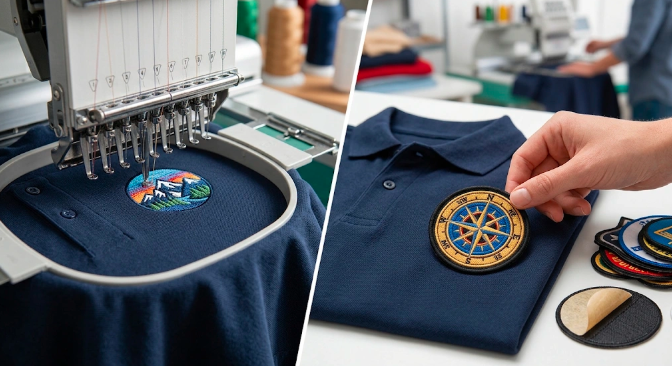
Embroidered Applique Patches vs Standard Embroidery: Which Is Best?

Introduction
Embroidery is a popular way to add logos, lettering, and decorative designs to clothing and accessories. However, not every embroidered design is produced using the same technique. Some designs are stitched directly onto a garment, while others use separate fabric pieces combined with embroidery to create a more distinctive finish.
This is where the difference between embroidered applique patches and standard embroidery becomes important. Both options can produce attractive results, but they serve different design purposes.
Standard embroidery creates a design using thread stitched directly onto the fabric. Applique embroidery uses an additional piece of fabric as part of the design, with stitching around its edges or across selected sections to hold it in place.
So, which option should you choose? The answer depends on the design, garment, desired appearance, and how the finished product will be used.
What Are Embroidered Applique Patches?
Embroidered applique patches combine fabric pieces with decorative embroidery to create a finished design. Instead of building every part of the artwork entirely from thread, the manufacturer uses selected fabric shapes as part of the design and secures them with stitching.
This technique can create larger colour sections without filling the entire area with dense embroidery. The fabric provides the main shape or background, while thread adds outlines, lettering, borders, and decorative details.
Common uses of embroidered applique patches include:
-
Clothing logos and brand designs.
-
Sports team names and numbers.
-
School and club badges.
-
Jacket and hoodie decorations.
-
Fashion and streetwear designs.
-
Decorative patches for bags and accessories.
One of the main advantages of applique is the ability to combine different fabrics, colours, and stitching styles within a single design.
What Is Standard Embroidery?
Standard embroidery creates a design by stitching thread directly onto the fabric. The embroidery machine follows a digitised pattern to build letters, shapes, logos, and other artwork using different stitch types.
Unlike applique, it does not normally require separate fabric pieces to form the main design areas. The thread itself creates the complete embroidered artwork.
Standard embroidery is commonly used for:
-
Company logos on uniforms.
-
Names and initials.
-
Small decorative designs.
-
School and organisation branding.
-
Monograms on clothing.
-
Logos on caps, jackets, and workwear.
It is particularly suitable for designs that rely on thread texture, detailed outlines, and stitched lettering.
Embroidered Applique Patches vs Standard Embroidery: Key Differences
Although both methods use embroidery, their construction and finished appearance are different.
1. How the Design Is Created
The biggest difference is how each technique builds the artwork.
With embroidered applique, fabric pieces are cut into specific shapes and placed onto a base material. Embroidery stitches are then used to secure the fabric and add design details.
With standard embroidery, the artwork is created directly through stitches without using separate fabric pieces for the main design areas.
Which is better?
Applique is useful when a design includes large fabric sections or contrasting colour areas. Standard embroidery is a better choice when the entire design needs to be created using thread.
2. Appearance and Texture
Embroidered applique patches combine the texture of fabric with stitched details. This creates a layered appearance, especially when different fabrics and thread colours are used together.
Standard embroidery has a more consistent stitched surface. Its texture depends on the stitch type, thread density, and design.
Which is better?
Choose applique when you want a combination of fabric and embroidery. Choose standard embroidery when you prefer a traditional stitched appearance throughout the design.
3. Design Detail and Complexity
Both methods can reproduce logos and decorative artwork, but they handle design details differently.
Applique works particularly well for larger shapes, bold lettering, and designs with clearly separated colour sections. It can reduce the amount of thread needed to fill large areas.
Standard embroidery is suitable for lettering, outlines, symbols, and designs that can be reproduced effectively through stitching.
However, very small details may become difficult to reproduce with either method if the artwork is too complicated for the final size.
Which is better?
Applique can be more practical for large, bold designs, while standard embroidery offers greater flexibility for designs built mainly around stitched details.
4. Fabric and Material Options
Applique allows manufacturers to use different fabrics within one design. Depending on the required appearance, these may include felt, twill, cotton, or other suitable materials.
Standard embroidery mainly depends on the garment or patch base fabric and the thread selected for the design.
Which is better?
Applique is worth considering when the design needs different fabric textures or colour sections. Standard embroidery is suitable when the thread itself should create the complete visual effect.
5. Durability and Everyday Use
Durability depends on material quality, stitching, construction, and how the finished item is used.
In applique designs, the fabric pieces need to be secured properly around their edges. Loose or poorly finished edges can affect the appearance over time.
Standard embroidery does not have separate applique fabric pieces, but its durability still depends on stitch quality, thread strength, and garment care.
For both techniques, suitable materials and professional finishing help maintain the design during regular wear and washing.
Which is better?
Neither method is automatically more durable. A properly manufactured design using either technique can perform well when it is suitable for the garment and intended use.
6. Cost and Production Requirements
The cost of each method depends on the design, size, quantity, materials, and production work involved.
Applique may reduce thread usage in larger filled areas, but it can require additional steps such as fabric selection, cutting, placement, and edge stitching.
Standard embroidery may involve more stitching when large areas need to be filled with thread. However, simpler designs can be relatively straightforward to produce.
Which is better?
There is no fixed cheaper option. Request a quotation based on the actual artwork and specifications rather than assuming one technique will always cost less.
When Should You Choose Embroidered Applique Patches?
Applique is a practical option when your design benefits from separate fabric sections and visible stitching.
Consider this technique for:
-
Large lettering: Fabric sections can form bold letters while embroidery adds outlines and finishing details.
-
Sports designs: Team names, numbers, and larger symbols can be created using contrasting fabrics.
-
Fashion clothing: Different textures and colours can give jackets, hoodies, and sweatshirts a distinctive look.
-
Decorative logos: Applique can combine fabric shapes with embroidered borders and smaller details.
-
Large colour areas: Using fabric instead of filling every section with thread can be useful for certain designs.
If the artwork contains large shapes and clearly defined sections, applique may provide the appearance you want without relying entirely on dense stitching.
When Is Standard Embroidery the Better Choice?
Standard embroidery is often the better option when the design needs a traditional stitched finish.
It may be suitable for:
-
Small company logos: Simple brand marks can be stitched directly onto uniforms.
-
Names and initials: Embroidered lettering is commonly used on workwear, school clothing, and personal accessories.
-
Detailed outlines: Thread can create clear borders and decorative elements.
-
Monograms: Small stitched initials can provide a neat finish on clothing and accessories.
-
Uniform branding: Standard embroidery is a practical choice for logos applied directly to garments.
If you want a design made entirely from thread without additional fabric shapes, standard embroidery is worth considering.
Can Embroidered Applique Patches and Standard Embroidery Be Combined?
Yes. Both techniques can be used together in the same design.
For example, a manufacturer may use fabric applique for the main logo shape and standard embroidery for the lettering, outlines, or smaller decorative elements.
This combination can provide several benefits:
-
Large areas can use fabric rather than dense stitching.
-
Embroidered outlines help define the design.
-
Different textures create visual contrast.
-
Small details can be added without changing the main applique structure.
The important thing is to prepare the artwork according to the final size and production method. Not every design needs both techniques, so the combination should serve a clear purpose.
What to Consider Before Ordering Custom Applique Designs
If you are planning to order custom applique patches, reviewing the specifications before production can help avoid unnecessary changes.
Consider the following points:
-
Artwork preparation: Provide clear artwork with defined shapes, lettering, and colours.
-
Fabric selection: Choose a suitable material for the design and intended application.
-
Patch dimensions: Confirm the exact width and height before production.
-
Stitching style: Discuss whether the design needs satin borders, decorative stitching, or additional embroidery.
-
Edge finishing: Make sure the fabric sections will be secured neatly.
-
Backing: Select sew-on, iron-on, or hook-and-loop backing according to how the patch will be used.
-
Sample approval: Review a digital proof or physical sample before approving a larger order.
-
Quantity: Confirm the required number of patches and ask about bulk pricing where relevant.
These details help ensure the finished patch matches the intended design and works well on the selected garment.
Common Mistakes When Choosing Between Applique and Standard Embroidery
Choosing a technique based only on appearance can lead to problems during production. Some common mistakes are worth avoiding.
-
Ignoring design size: Fine details may not reproduce clearly when the design is too small.
-
Choosing unsuitable fabric: The applique material should work with the base and intended garment.
-
Using too many small fabric sections: Complicated shapes can make cutting and stitching more difficult.
-
Overlooking edge finishing: Poorly secured applique edges can affect the final appearance.
-
Assuming applique is always cheaper: Additional material preparation and stitching can influence the cost.
-
Skipping artwork approval: Reviewing the digitised design or sample helps identify issues before production.
-
Ignoring garment requirements: The patch construction and backing should suit the fabric receiving it.
Frequently Asked Questions
What is the main difference between embroidered applique patches and standard embroidery?
Embroidered applique patches use separate fabric pieces as part of the design, secured with stitching. Standard embroidery creates the artwork directly through thread stitched onto the fabric.
Are embroidered applique patches more durable than standard embroidery?
Not necessarily. Both can be durable when made with suitable materials and proper stitching. The final result depends on construction quality, edge finishing, thread, and garment care.
Can applique patches have embroidered lettering?
Yes. Applique designs can include embroidered names, lettering, outlines, and decorative details. Combining fabric shapes with thread can create a more detailed finish.
Is applique embroidery suitable for jackets?
Yes. Applique patches are commonly used on jackets, hoodies, and other clothing. The fabric and backing should be selected according to the garment material and intended use.
Does standard embroidery use more thread than applique?
It can, particularly when large areas need to be filled with stitches. Applique uses fabric pieces for selected sections, which may reduce thread usage, although additional fabric preparation is required.
Which option is better for company logos?
It depends on the logo. Standard embroidery is suitable for logos that need a traditional stitched finish, while applique can work well for larger designs with bold shapes and contrasting fabric sections.
Conclusion
Embroidered applique patches and standard embroidery both offer useful ways to customise clothing, but they create different results. Applique combines fabric pieces with stitching to produce layered designs, while standard embroidery uses thread to create the complete artwork directly on the fabric.
If your design includes large shapes, contrasting materials, or bold lettering, applique may be the better choice. If you prefer a traditional stitched appearance for names, smaller logos, or uniform branding, standard embroidery may be more suitable.
The best decision comes down to your artwork, garment, budget, and intended use. Understanding these differences before production helps you choose a technique that delivers the appearance and finish you actually need.



