

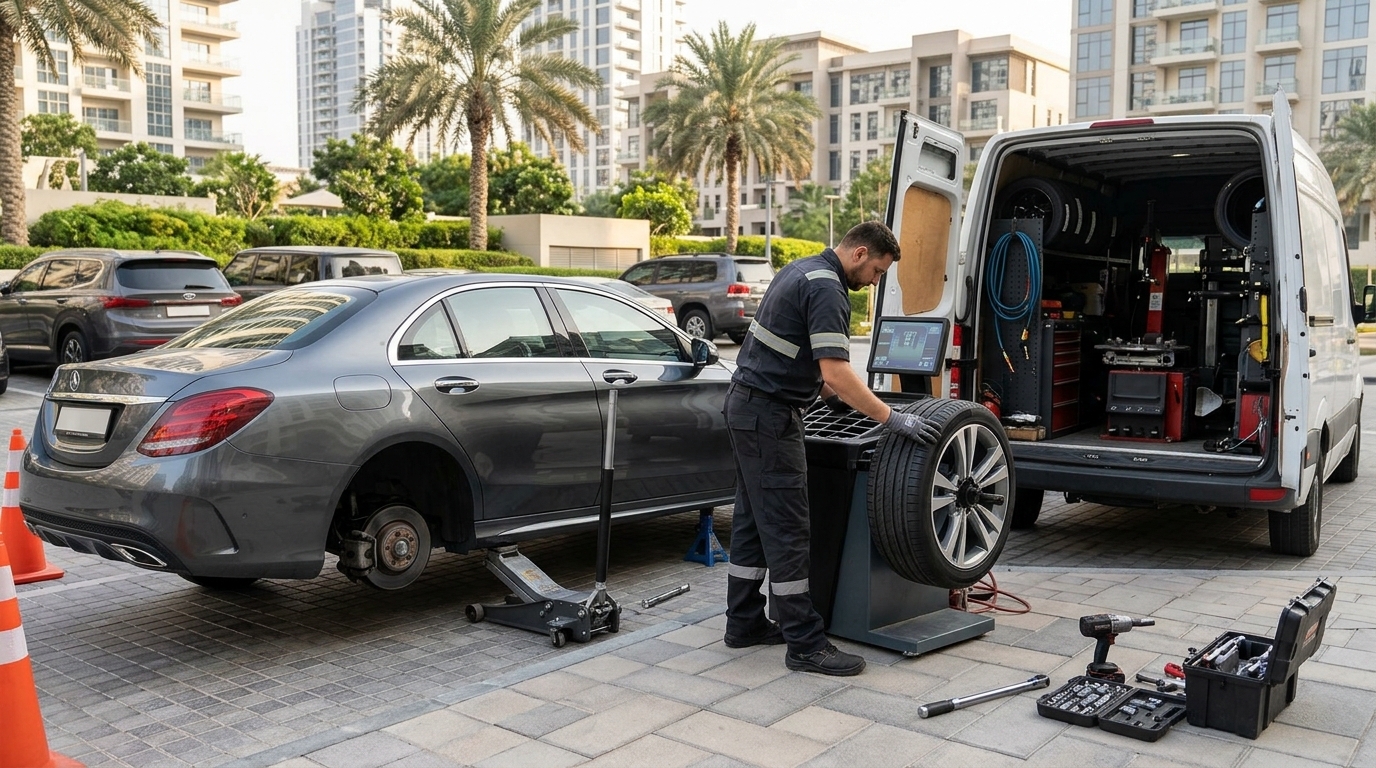

A smooth and comfortable drive depends on more than tire pressure and tread condition. Even small differences in the weight distribution of a wheel and tire assembly can create vibrations at certain speeds. For drivers dealing with these issues, tire and wheel balancing Dubai services can help identify uneven weight distribution and restore smoother wheel rotation. Regular attention to wheel balance also supports comfortable driving, predictable vehicle handling, and more even tire wear.
Dubai's roads include busy urban routes, highways, residential streets, and long-distance driving corridors. Vehicles frequently move between different speeds and driving conditions, making tire condition and wheel maintenance important parts of routine vehicle care. Understanding wheel balancing can help drivers recognize potential problems and decide when professional inspection is necessary.
What Is Tire and Wheel Balancing?
Tire and wheel balancing is a process that corrects uneven weight distribution in a wheel and tire assembly. Although a wheel and tire may appear perfectly round and correctly installed, their weight may not be distributed equally around the center of rotation.
When an assembly rotates, even a small imbalance can create centrifugal forces. These forces may become noticeable as steering wheel vibrations, seat vibrations, or shaking through the vehicle at particular speeds.
During a balancing service, a technician mounts the wheel and tire assembly on a specialized balancing machine. The machine measures imbalance and identifies the approximate amount and position of the correction required.
Small balancing weights are then attached to appropriate locations on the wheel. The assembly is checked again to confirm that the correction has reduced the measured imbalance to an acceptable level.
Wheel balancing is different from wheel alignment. Balancing addresses weight distribution, while alignment concerns the angles at which the wheels meet the road and their relationship to the vehicle's suspension and steering geometry.
Why Wheel Balancing Matters for Dubai Drivers
Driving conditions in Dubai make regular tire inspections a practical part of vehicle maintenance. Long highway journeys, frequent acceleration, braking, and daily commuting can expose existing tire and wheel problems.
Reducing Steering Wheel Vibrations
One of the most common signs of wheel imbalance is vibration that becomes noticeable as vehicle speed increases. Drivers may feel shaking through the steering wheel, particularly when the imbalance affects the front wheels.
Rear-wheel imbalance may produce vibration through the seats or vehicle body instead.
Professional balancing helps correct weight-related vibration when imbalance is the cause. However, similar symptoms can also result from damaged tires, bent wheels, worn suspension components, or other mechanical problems.
Supporting Even Tire Wear
Uneven weight distribution can contribute to vibration and additional stress during rotation. Correct balancing supports smoother operation and can help prevent problems associated with persistent imbalance.
However, not every pattern of uneven tire wear is caused by balancing issues. Incorrect alignment, unsuitable tire pressure, worn suspension components, and driving habits can also affect tread wear.
A technician should inspect the tires before recommending the appropriate corrective service.
Improving Driving Comfort
A balanced wheel and tire assembly rotates more smoothly when the correction is performed properly. This can improve comfort during city driving and longer journeys.
Reducing unnecessary vibration may also make the vehicle feel more stable, although balancing cannot correct every cause of poor handling or steering problems.
Supporting Tire and Vehicle Maintenance
Balancing is one part of a broader tire maintenance routine. Combining it with pressure checks, tread inspections, alignment assessments, and suspension inspections helps drivers identify developing problems before they become more serious.
Common Signs That Your Wheels Need Balancing
Recognizing the warning signs can help drivers arrange an inspection before vibration becomes more noticeable.
Vibration at Certain Speeds
A vehicle may feel smooth at low speeds but begin vibrating as it accelerates. If the vibration appears repeatedly within a particular speed range, wheel imbalance is one possible cause.
The exact speed at which symptoms occur depends on the vehicle, wheel assembly, and nature of the imbalance.
Steering Wheel Shaking
Shaking through the steering wheel may indicate an issue with the front wheels or other steering and suspension components.
Because several faults can produce similar symptoms, technicians should inspect the complete wheel assembly rather than automatically assuming balancing is required.
Vibration Through the Seats
When the rear wheels are affected, drivers may notice vibration through the seats or floor instead of primarily through the steering wheel.
An inspection can help distinguish wheel imbalance from tire damage, wheel deformation, and other possible causes.
Uneven Tire Wear
Uneven tread wear can indicate several maintenance issues. Although balancing may be needed, a technician should also check tire pressure, wheel alignment, suspension condition, and the tire's overall condition.
Recent Tire Replacement or Repair
Installing a new tire changes the wheel and tire assembly. The assembly should be balanced during installation to account for its individual weight distribution.
A tire repair may also justify rechecking balance if the repair or removal process affects the assembly or if vibration develops afterward.
How Professional Wheel Balancing Works
A professional service generally follows a series of steps to measure and correct wheel imbalance.
Initial Inspection
The technician examines the tire and wheel for visible damage, abnormal tread wear, missing weights, and other issues that may affect balancing accuracy.
The wheel should also be checked for mud, stones, or other material that could interfere with accurate measurements.
Removing the Wheel
Depending on the service arrangement, the technician removes the wheel from the vehicle and prepares it for mounting on the balancing machine.
Correct handling helps prevent damage to the wheel, tire, and surrounding components.
Mounting the Assembly
The wheel and tire assembly is mounted securely on the machine using suitable mounting equipment and adaptors.
Correct centering is essential because an incorrectly mounted assembly can produce misleading readings.
Measuring Imbalance
The machine rotates the assembly and measures its imbalance. It then indicates where corrective weight is required and how much weight should be applied.
The technician uses the measurements to determine the appropriate correction.
Applying Balancing Weights
Suitable balancing weights are attached to the designated positions on the wheel. The choice and placement depend on the wheel design, manufacturer requirements, and measured imbalance.
Final Verification
The assembly is measured again to verify the result. If the readings remain outside the required tolerance, the technician may need to adjust the weights or investigate other issues.
This final check helps ensure that the balancing process has been completed correctly.
Static and Dynamic Wheel Balancing
Different types of imbalance can affect a wheel and tire assembly.
Static imbalance occurs when weight distribution is uneven relative to the wheel's axis of rotation. It can cause an assembly to move or vibrate vertically as it rotates.
Dynamic imbalance involves uneven weight distribution across different planes of the rotating assembly. It can produce additional side-to-side forces and vibration.
Modern balancing machines can measure the types of imbalance relevant to the assembly and indicate appropriate corrections. The technician selects the balancing method according to the equipment, wheel design, and vehicle requirements.
Wheel Balancing Versus Wheel Alignment
Drivers sometimes confuse balancing with alignment because both services relate to tire performance and driving comfort.
Wheel balancing corrects uneven weight distribution in the tire and wheel assembly. It is commonly associated with vibration that changes with speed.
Wheel alignment adjusts the wheel angles according to vehicle specifications. Alignment problems may contribute to uneven tread wear, pulling to one side, or an off-center steering wheel.
A vehicle may need either service or both, depending on the inspection findings. Balancing does not correct incorrect alignment angles, and alignment does not remove wheel imbalance.
Factors That Affect Wheel Balancing in Dubai
Several factors can influence tire and wheel condition during everyday driving.
Road Conditions
Potholes, road debris, and impacts against curbs can damage tires or deform wheels. Such damage may create vibration that balancing weights alone cannot resolve.
After a significant impact, drivers should arrange an inspection if they notice vibration, pressure loss, or visible damage.
Tire and Wheel Condition
A worn or damaged tire may not rotate smoothly even when its weight distribution is corrected. Bent wheels, irregular tread wear, and internal tire damage can also affect driving performance.
Technicians should assess whether the assembly is suitable for continued use before completing a balancing service.
Installation Quality
Incorrect mounting, unsuitable adaptors, or inaccurate centering can affect balancing measurements.
Using appropriate equipment and following the correct procedure helps produce reliable results.
Missing or Displaced Weights
Balancing weights may become displaced or detached because of impacts, corrosion, or other factors. Their absence can allow vibration to develop.
A technician can check whether the assembly needs rebalancing or further inspection.
How Often Should You Balance Your Wheels?
There is no single balancing interval that suits every vehicle. The appropriate timing depends on manufacturer guidance, driving conditions, tire changes, and the symptoms experienced.
Wheel balancing is commonly recommended when installing new tires, after certain tire repairs, or whenever unexplained vibration develops.
Drivers should also consider an inspection if a wheel experiences a significant impact or if a balancing weight appears to be missing.
Routine tire maintenance should include pressure checks, tread inspections, and attention to any changes in vehicle behavior. Following the vehicle manufacturer's maintenance guidance is a sensible starting point.
Choosing a Tire and Wheel Balancing Service in Dubai
Selecting a suitable workshop involves more than looking for the lowest advertised price.
Qualified Technicians
Choose a service provider with technicians who understand tire mounting, balancing procedures, wheel designs, and vehicle-specific requirements.
Suitable Equipment
A workshop should use appropriate balancing equipment and ensure that wheels are mounted correctly during measurement.
Thorough Inspection
A reliable provider should inspect the tire and wheel assembly for visible damage and explain when a problem requires additional work.
Clear Pricing
Ask what the service includes before authorizing work. Pricing may vary according to wheel size, vehicle type, service location, and whether additional tire services are required.
Convenient Service Options
Dubai drivers may prefer a workshop visit or a mobile tire service, depending on their schedule and vehicle condition. Confirm that the chosen provider offers the required service for the specific vehicle and wheel type.
Conclusion
Tire maintenance plays an important role in driving comfort, predictable vehicle behavior, and long-term tire care. Professional tire and wheel balancing Dubai services help correct uneven weight distribution and can reduce vibration when imbalance is responsible for the symptoms.
Drivers should arrange an inspection when vibration appears, after installing new tires, or when a wheel assembly may have been damaged. Combining balancing with suitable tire pressure, alignment checks, and regular inspections supports better overall vehicle maintenance.
Frequently Asked Questions
What is tire and wheel balancing?
It is a process that measures and corrects uneven weight distribution in a wheel and tire assembly using specialized equipment and balancing weights.
How can I tell if my wheels are unbalanced?
Common signs include steering wheel shaking, vibration through the seats, or vibration that becomes more noticeable at certain speeds.
Is wheel balancing the same as wheel alignment?
No. Balancing corrects weight distribution, while alignment adjusts wheel angles according to the vehicle's specifications.
When should I get my wheels balanced?
Consider balancing when installing new tires, after relevant tire repairs, or when unexplained vibration develops. Follow the vehicle manufacturer's maintenance recommendations.
Can wheel balancing fix uneven tire wear?
It can address problems associated with imbalance, but uneven wear may also result from incorrect tire pressure, alignment problems, or worn suspension components.
What should I check before choosing a balancing service in Dubai?
Review the workshop's equipment, technician experience, inspection process, pricing transparency, and suitability for your vehicle.



