

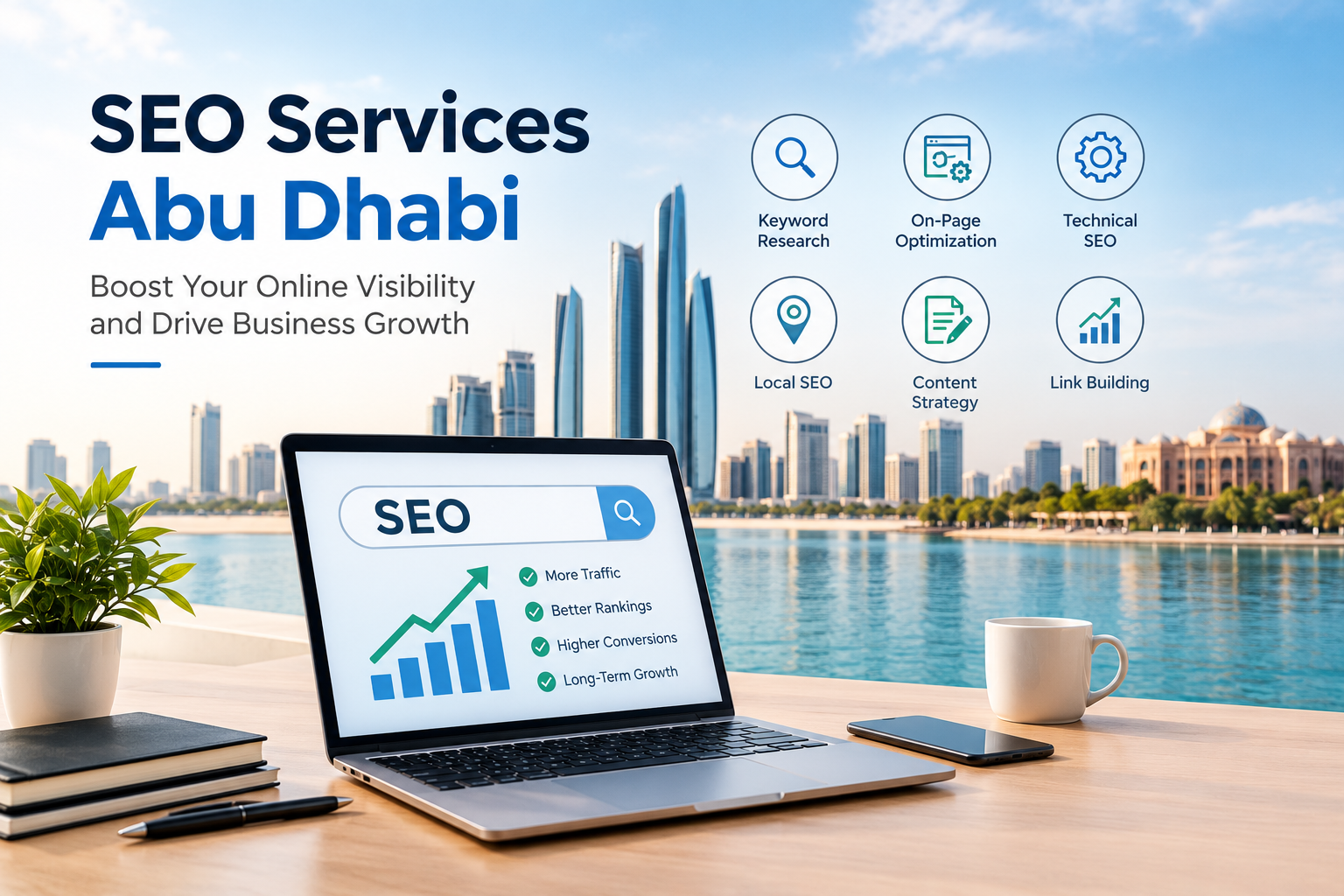

In today’s digital marketplace, having a website is only the first step toward building a successful online presence. Businesses also need to ensure that potential customers can find them when searching for relevant products or services. Whether a company operates in retail, healthcare, real estate, hospitality, professional services, or e-commerce, appearing in relevant search results can help attract qualified visitors and generate new business opportunities.
Abu Dhabi offers a competitive business environment where customers increasingly rely on search engines to research brands, compare services, and make purchasing decisions. Businesses that invest in search engine optimization can improve their website’s visibility, provide a better user experience, and establish credibility with their target audience.
Choosing the right seo services abu dhabi can help businesses develop a structured strategy for improving organic search performance. From technical website improvements and keyword research to content creation and local search optimization, a well-planned SEO campaign focuses on connecting businesses with people who are actively looking for what they offer.
This article explores how SEO works, why it matters for businesses in Abu Dhabi, which strategies can support long-term growth, and how to select an approach that aligns with your business objectives.
Why SEO Matters for Businesses in Abu Dhabi
Abu Dhabi is home to businesses serving local residents, international visitors, corporate clients, and customers across the wider UAE. With so many organizations competing for attention online, a website needs more than attractive design to stand out.
SEO helps search engines understand a website’s content and determine how relevant its pages may be to particular searches. When a website provides useful information, works properly, and matches the needs of its audience, it has a stronger foundation for earning organic visibility.
For example, a property consultant may want to reach people searching for residential properties in Abu Dhabi, while a medical clinic may want to attract patients looking for specific treatments. An effective SEO strategy considers these different search intentions and creates relevant landing pages, helpful content, and clear pathways for users to take action.
SEO is also a long-term investment. Unlike paid advertising, which generally stops generating paid visibility when a campaign ends, well-maintained organic pages may continue attracting visitors over time. Results are not guaranteed, and performance depends on competition, website quality, search demand, and other factors, but consistent optimization can build a valuable source of traffic.
Understanding the Main Components of SEO
Successful SEO combines several activities that work together. Focusing on only one area may leave important opportunities unexplored, so businesses should understand the role of each component.
1. Keyword Research and Search Intent
Keyword research identifies the phrases people use when looking for information, products, or services. It helps businesses understand what their audience wants and how to organize website content around those needs.
For an Abu Dhabi business, relevant search terms might include service-specific phrases, location-based searches, informational questions, and comparisons between providers.
However, selecting keywords should involve more than looking at search volume. Businesses should also consider:
-
Search intent: Is the person looking for information, comparing options, or ready to contact a provider?
-
Relevance: Does the keyword accurately describe the business’s products or services?
-
Competition: How difficult may it be to compete for the query?
-
Business value: Could the search lead to a useful inquiry, booking, or sale?
-
Content suitability: Can the website provide a genuinely helpful answer to the search?
Grouping related keywords into topic clusters can also help organize content. A main service page may target a core commercial topic, while supporting articles answer specific customer questions and link to the relevant service page.
2. On-Page SEO Optimization
On-page SEO improves individual pages so that users and search engines can understand their purpose.
Important elements include title tags, meta descriptions, headings, page copy, internal links, image alt text, and descriptive URLs. These elements should accurately communicate the subject of each page without excessive keyword repetition.
For example, a service page should explain what the business offers, who it serves, how its service works, and what customers can expect. Supporting information such as pricing factors, frequently asked questions, service areas, and clear contact options may also help visitors make informed decisions.
Internal linking is another important consideration. Connecting related pages helps users discover useful information and gives search engines additional paths for finding website content. Anchor text should describe the destination naturally rather than relying on repetitive exact-match phrases.
3. Technical SEO and Website Performance
Technical SEO focuses on the infrastructure that allows search engines to access, crawl, understand, and index website pages.
Even valuable content may struggle to attract organic traffic if important pages cannot be crawled or indexed properly. Regular technical reviews can identify problems before they affect a larger portion of the website.
Common areas to review include:
-
Crawlability and indexation of important pages.
-
XML sitemap accuracy and robots.txt configuration.
-
Broken links, redirect chains, and unnecessary redirects.
-
Duplicate URLs and canonical tags.
-
Mobile usability and responsive design.
-
Page loading speed and Core Web Vitals.
-
Structured data implementation and validation.
-
HTTPS security and website accessibility.
Technical improvements should be prioritized according to their impact. For instance, resolving an accidental noindex directive on an important service page may be more urgent than correcting a minor formatting issue.
A technical audit helps businesses identify the most important problems and create a practical action plan instead of making changes without a clear objective.
4. Content Marketing and Topic Development
Content helps businesses answer customer questions, explain their expertise, and build trust before a visitor makes contact.
Useful content can take many forms, including service pages, educational blog posts, industry guides, case studies, comparison articles, and frequently asked questions. The best format depends on what the audience needs at each stage of its decision-making process.
A business offering professional services in Abu Dhabi, for example, could publish an article explaining how to evaluate providers, a guide to common service costs, or a checklist for preparing to work with a specialist.
Content planning should begin with customer needs rather than a desire to publish as frequently as possible. Each article should have a clear purpose, provide original value, and connect logically to relevant pages on the website.
Updating older content is equally important. Businesses can review pages that have lost traffic, contain outdated information, or no longer address current search intent. Improving accuracy, clarity, structure, and usefulness may help those pages serve readers more effectively.
5. Local SEO for Reaching Nearby Customers
Local SEO is particularly useful for businesses that serve customers in specific areas of Abu Dhabi. It helps improve visibility for relevant searches that include a location or suggest that the person wants a nearby service.
A strong local SEO approach may include:
-
Creating and maintaining an accurate Google Business Profile.
-
Keeping the business name, address, phone number, and opening hours consistent.
-
Selecting appropriate business categories.
-
Adding useful photographs and up-to-date service information.
-
Encouraging genuine customer reviews and responding professionally.
-
Developing location-specific website pages where they provide real value.
-
Building relevant local citations and industry relationships.
Businesses should avoid creating numerous nearly identical location pages that offer little unique information. Each page should provide useful details about the services available in that area.
Local visibility also depends on factors beyond website optimization, so companies should assess performance through relevant metrics such as profile interactions, calls, direction requests, qualified inquiries, and organic landing-page traffic.
Key Benefits of Investing in SEO
SEO can support several business objectives when it is aligned with customer needs and broader marketing goals. The top SEO benefits include opportunities to improve organic discovery, attract relevant visitors, and build a stronger digital presence over time.
Increased Organic Visibility
Improving relevant search visibility can help potential customers discover a business while researching a need. Appearing for appropriate queries introduces the brand to people who may not have encountered it through other marketing channels.
Visibility alone is not the final goal, however. Businesses should focus on attracting visitors who are genuinely interested in their offerings.
More Relevant Website Traffic
A well-planned SEO campaign aligns keywords and content with the audience’s search intent. This can improve the likelihood that visitors arriving from organic search will find information relevant to their needs.
For example, a detailed service page that answers questions about the process, expected timelines, and available options may attract more qualified prospects than a general page containing only a brief service description.
Greater Brand Credibility
Users often research several businesses before making a decision. Helpful content, clear service information, customer testimonials, and a professional website can contribute to a stronger first impression.
Consistently appearing for relevant searches may also help people become more familiar with a brand. Nevertheless, search rankings alone do not prove that a business is trustworthy; credibility must be supported by accurate information and a positive customer experience.
Better Long-Term Marketing Efficiency
SEO requires ongoing effort, and results may take time. However, successful organic pages can continue attracting visitors without a direct payment for each click.
Businesses should evaluate this opportunity alongside the cost of content production, technical maintenance, agency support, and conversion optimization. Measuring qualified leads and revenue helps determine whether the investment is delivering meaningful value.
Improved Website Experience
Many SEO improvements also benefit visitors. Faster pages, clearer navigation, mobile-friendly layouts, descriptive headings, and useful content can make a website easier to use.
A better experience can help visitors find answers and complete important actions, whether that means requesting a quotation, booking an appointment, or purchasing a product.
How to Choose the Right SEO Partner
Selecting an SEO provider is an important decision because the strategy should reflect the business’s goals, audience, budget, and competitive environment.
Before choosing a partner, consider the following factors.
Look for a Clear Strategy
A reliable provider should explain how it will approach keyword research, technical improvements, content development, local visibility, and performance measurement. The plan should be tailored to the website rather than relying on the same checklist for every business.
Ask how the provider will prioritize tasks and what information it needs from your team.
Review Relevant Experience
Experience in a similar industry or business model can be helpful because different sectors have different audiences, conversion paths, and competitive challenges.
Review case studies and examples that explain the starting point, work completed, measurement period, and outcomes. Ask whether reported improvements involved organic traffic, qualified leads, conversions, or another meaningful metric.
Understand Reporting and Communication
Regular reporting should make performance understandable to non-specialists. Useful reports may cover organic clicks and impressions, search queries, landing-page performance, technical issues, leads, and conversion trends.
Reports should also explain what changed, why it matters, and which actions are planned next. Rankings should not be the only measure of success.
Avoid Unrealistic Guarantees
Search performance depends on many factors, including competition, website condition, content quality, and search engine changes. No provider can legitimately guarantee a specific organic ranking in every circumstance.
Be cautious of claims involving instant results, guaranteed first-place rankings, large quantities of low-quality backlinks, or automated content produced without meaningful review.
Confirm the Scope of Work
Before beginning a campaign, clarify which services are included, who will implement recommendations, how often progress will be reviewed, and how success will be measured.
It is also useful to establish baseline performance and agree on business outcomes, such as qualified inquiries, online sales, or booked consultations. Clear expectations make it easier to assess progress over time.
How to Measure SEO Performance
Tracking results helps businesses understand which activities are producing value and where improvements are needed.
Google Search Console can provide information about search impressions, clicks, click-through rate, and average position. Analytics platforms can help assess user engagement, landing-page behavior, and conversions when tracking is configured correctly.
Useful metrics include:
Organic clicks and impressions: These show how often website pages appear in search results and how frequently users visit them.
Keyword and landing-page performance: Reviewing the queries and pages generating traffic can reveal opportunities for content updates and better targeting.
Qualified leads and conversions: Contact forms, calls, bookings, purchases, and other important actions connect SEO activity with business objectives.
Technical health: Crawl errors, indexation problems, broken links, and performance issues can reveal barriers that need attention.
Return on investment: Comparing the value generated through organic search with the costs of SEO helps businesses evaluate its commercial contribution.
Results should be reviewed over an appropriate period and compared with a meaningful baseline. Seasonal demand, marketing campaigns, website changes, and competitive activity can all influence performance. A balanced analysis is more useful than reacting to a single week of fluctuations.
Common SEO Mistakes Businesses Should Avoid
Even businesses that invest in SEO can limit their results through avoidable mistakes.
One common problem is targeting too many unrelated keywords on a single page. This can make content confusing and weaken its relevance to specific user needs. A clearer page structure and distinct purpose for each important URL can help.
Another mistake is publishing content solely to meet a schedule. Articles that repeat existing information without adding useful insights may provide little value. Content should be written for real readers and reviewed for accuracy, originality, and usefulness.
Ignoring technical maintenance can also create difficulties. Broken links, incorrect canonical tags, accidental indexing restrictions, and slow pages may undermine otherwise strong content.
Finally, businesses should avoid evaluating SEO only through rankings. Search visibility is useful, but qualified leads, sales, and customer experience provide a clearer view of business impact.
Conclusion
SEO can help businesses in Abu Dhabi strengthen their online presence, connect with relevant audiences, and build a sustainable source of organic traffic. Achieving these outcomes requires a coordinated approach that combines keyword research, on-page optimization, technical improvements, useful content, and local search strategies.
The most effective plan begins with clear business objectives and an understanding of customer needs. Businesses should choose relevant metrics, review performance regularly, and prioritize improvements that provide value to both users and the organization.



