

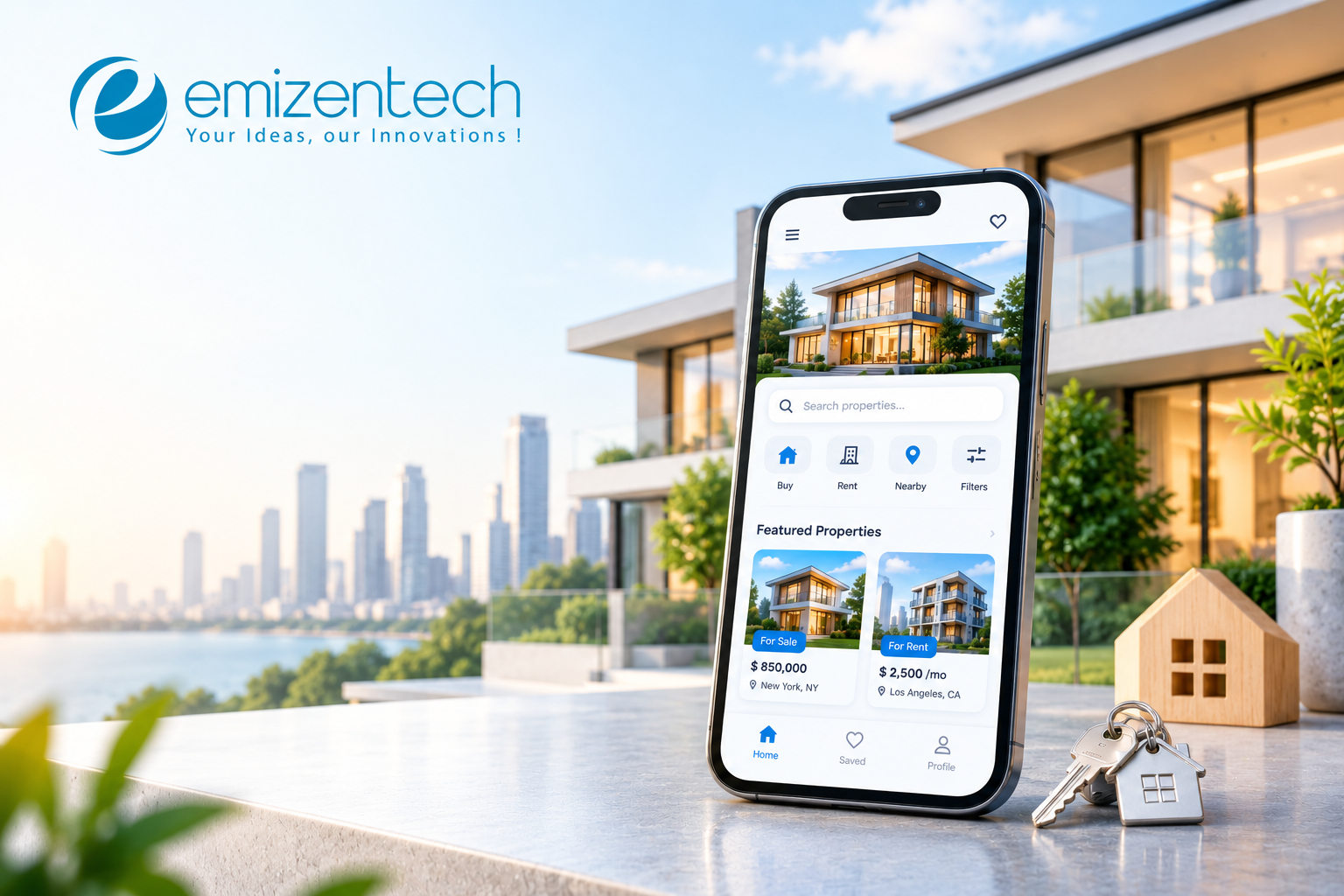

Two real estate apps can look alike on a phone screen and still differ by tens of thousands of dollars in budget. The gap rarely comes from guesswork. It comes from scope: which features go in, how many platforms are covered, and who builds it. This guide breaks down typical cost ranges for 2026, what pushes the price up, and where money is often saved.
Real Estate Mobile App Cost at a Glance
Before getting into details, it helps to see the broad picture. Most projects fall into three tiers, based on how much the app needs to do at launch. The figures below are rough estimates and shift with region, team, and scope.
| App type | Estimated cost (USD) | Typical timeline | Example features |
|---|---|---|---|
| Basic (MVP) | $15,000 – $40,000 | 3-4 months | Listings, search, filters, saved homes, contact form |
| Mid-level | $40,000 – $90,000 | 4-7 months | Chat, agent profiles, map view, 360° photo tours, push alerts |
| Advanced | $90,000 – $200,000+ | 7-12 months | 3D walkthroughs, AR, CRM integration, payments, analytics |
What Drives Real Estate App Development Cost
Price is the sum of many small decisions, and a few of them carry most of the weight. Understanding these helps you question a quote instead of just accepting it.
- Feature depth: A listing app with search is one build, while an app with live chat, mortgage calculators, and 3D tours is another. Every added feature adds design, development, and testing time.
- Platform choice: Building natively for iOS and Android costs more than a single cross-platform codebase in Flutter or React Native.
- Design effort: Custom interfaces, animations, and detailed user flows take more hours than a standard template-based layout.
- Integrations: Map services, listing data feeds, payment gateways, and CRM connections each need setup and ongoing maintenance. A project that needs custom data syncing and tour viewers usually works with real estate app development solutions, so the backend, listing sources, and front end are planned together from the start.
- Team location and size: Hourly rates differ widely by region, and a larger team shortens the timeline but raises the monthly spend.
Cost Breakdown by Development Stage
Money is spent in stages, and knowing the split makes budgets easier to track. Development takes the largest share, but planning and testing decide whether that share is spent well. Percentages below are typical, not fixed.
- Discovery and planning (5-10%): Market research, feature list, and technical scoping.
- Design (10-15%): Wireframes, user flows, and the visual interface.
- Development (45-55%): Front end, backend, APIs, and integrations.
- Testing (10-15%): Device testing, performance checks, and bug fixes.
- Launch and deployment (5-10%): Store submission, server setup, and release support.
Hidden and Ongoing Costs to Plan For
The development invoice is not the full bill. Several expenses start after launch and continue every month, and they catch first-time owners off guard.
- Hosting and storage: 3D tours and high-resolution photos use a lot of cloud storage and bandwidth.
- Third-party fees: Map services, SMS, and listing data APIs often charge by usage.
- Maintenance: Annual upkeep commonly runs 15-20% of the original build cost, covering OS updates and bug fixes.
- Security and compliance: Apps that store contact details and documents need encryption and regular audits.
- Marketing: An app with no users earns nothing, so budget for acquisition too.
Ways to Reduce Real Estate App Development Cost
Lower cost does not have to mean a weaker app. It usually means a tighter first release, with only the features that earn their place on day one. These practical steps help keep the budget under control.
- Start with an MVP: Launch with search, listings, and one tour format. A startup that plans agent portals, mortgage tools, AR staging, and video calls at once can often cut its first budget by half by releasing a lean version first.
- Use cross-platform frameworks: Flutter or React Native lets one codebase serve both iOS and Android, which lowers build and testing effort.
- Reuse proven SDKs: Tools like Matterport for 3D tours save the time and cost of building a viewer from scratch.
- Release features in phases: Fund later features from early revenue and real user feedback instead of paying for everything upfront.
- Scope custom work carefully: Build tailored parts only where standard tools fall short, and keep the rest on ready-made components.
- Get itemised quotes: Compare what each quote includes, such as design, testing, and post-launch support, not just the final number.
Conclusion
The right budget is not the lowest quote. It is the one tied to a clearly defined first release. Write down every feature you want, split the list into 'must-have' and 'later', and request quotes against only the first group. Emizentech can help test that list against real cost ranges before any work begins. Whatever route you take, a small, well-built launch almost always beats a large, unfinished one.
Frequently Asked Questions
1. How long does it take to develop a real estate mobile app?
A basic app takes around three to four months, while advanced apps with 3D tours and integrations can take up to a year. Scope and team size set the pace.
2. Is it cheaper to build for one platform first?
Yes. Launching on one platform, or with a cross-platform framework, lowers the first budget and lets you test demand before expanding.
3. How much does it cost to maintain a real estate app each year?
Yearly maintenance commonly falls between 15% and 20% of the original build cost, plus hosting and third-party service fees.
4. Does adding 3D tours or AR increase the cost significantly?
It can. 3D and AR need specialised development, larger storage, and extra testing. Starting with 360-degree photo tours keeps the first release affordable.
5. How do real estate apps earn back their development cost?
Common models include listing fees, agent subscriptions, paid lead generation, featured placements, and transaction commissions.



