

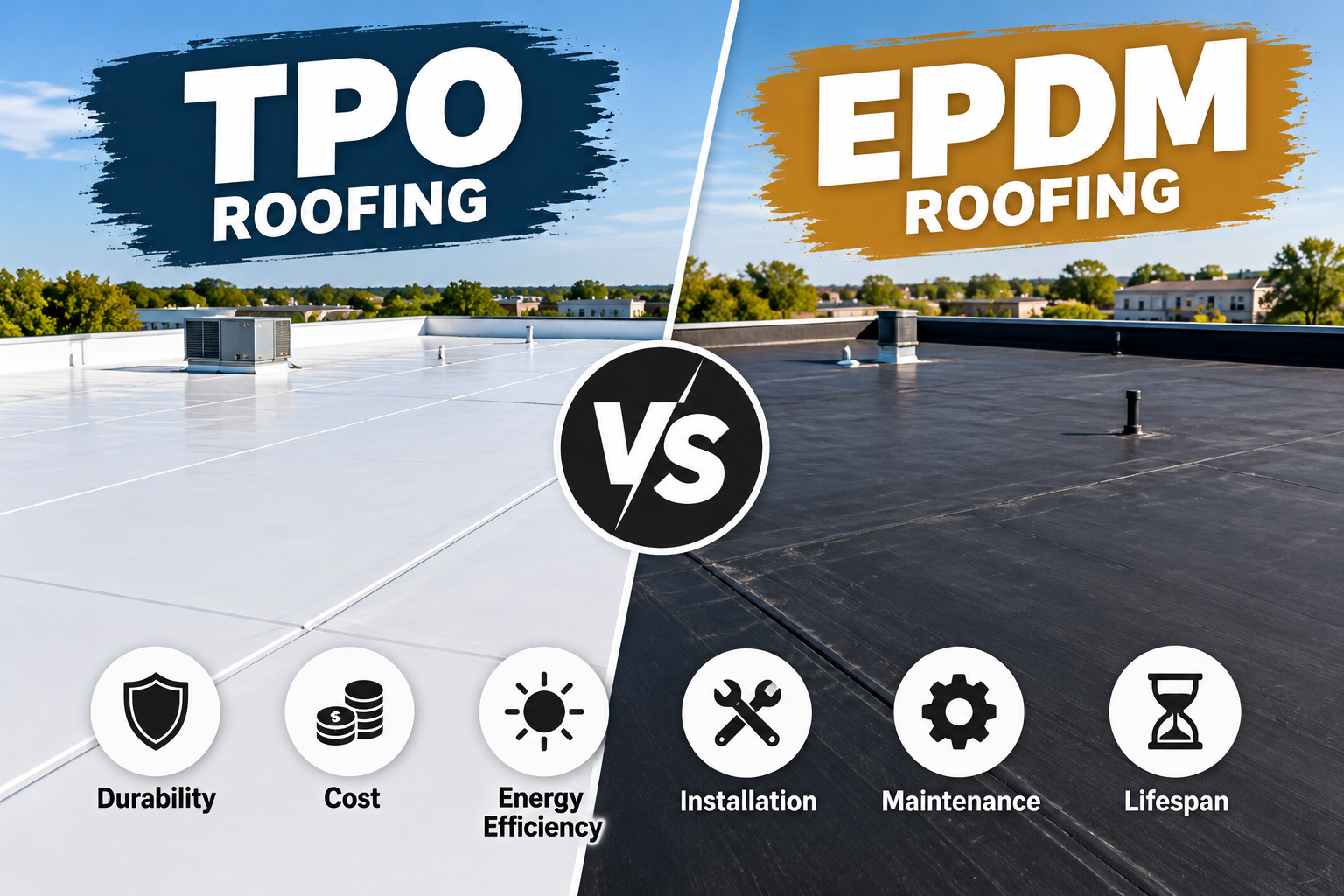

Flat and low-slope roofs have a short list of popular membrane options, and two names come up again and again: TPO and EPDM. Both are single-ply sheets, both cover big areas quickly, and both can work well. The better one depends on your climate, your building, and how the roof will be used.
If you want a quick side-by-side before you read on, this comparison of TPO vs EPDM roofing covers the headline differences. The sections below explain what each material is, where each one shines, and what to ask a roofer before you decide.
What Is EPDM?
EPDM is a synthetic rubber membrane. It’s flexible, tough, and has been used on low-slope roofs for a long time, so there’s a long track record behind it. It’s most often black, though lighter colors exist.
Sheets are usually joined with seam tape or adhesive. The membrane can be fully adhered, mechanically fastened, or held down with ballast such as stone, depending on the building and the system.
What Is TPO?
TPO stands for thermoplastic polyolefin. It’s a plastic-based membrane, usually white or light gray, and it’s popular on commercial buildings. Its light color reflects sunlight, which can help reduce cooling needs in warm climates.
Seams are typically welded with hot air, which creates a bonded joint. TPO is newer than EPDM, and formulations vary from one manufacturer to another, so brand and product quality matter a lot.
Heat and Energy
Color is the biggest practical difference here. A white TPO roof reflects more sunlight, so the roof surface stays cooler. In hot regions that can lower the load on air conditioning.
A black EPDM roof absorbs more heat. In cold regions, that can be a mild advantage, since the roof warms up in winter sun. In hot regions it usually means a warmer roof surface and potentially higher cooling costs. White EPDM is available for people who want the material but need a reflective surface.
Seams and Installation
Seams are where many flat roof problems start, so this matters. TPO’s heat-welded seams are a strength when done well. They need trained installers and proper equipment, and poor welds can fail.
EPDM seams rely on tape or adhesive. Modern products perform well, but the quality of the seam work still depends on the crew and on clean, dry surfaces. In both cases, ask who will install the roof and how many similar jobs they’ve done.
Flexibility and Weather
EPDM is known for staying flexible in cold weather and handling temperature swings well. That helps it cope with movement in the building and the roof deck.
TPO is generally stiffer. Many TPO roofs perform well in a range of climates, but because formulations differ, ask the manufacturer how a specific product handles cold, heat, and UV exposure over time.
Punctures, Foot Traffic, and Chemicals
Neither membrane is puncture proof. Foot traffic, dropped tools, and falling branches can damage either one. Walkway pads help on roofs where people go often, such as around rooftop equipment.
Chemical exposure matters on some buildings. Restaurant exhaust can put grease on a roof, and some roofs see oils or other substances. TPO often handles this better than EPDM, but check the manufacturer’s guidance for your situation instead of assuming.
Repairs and Maintenance
Small repairs are possible on both. EPDM is commonly patched with tape or adhesive, which many roofers can do quickly. TPO repairs usually involve welding a patch, which can take more equipment and skill.
Whichever you choose, schedule regular inspections, especially after storms. Keep drains clear, check seams and flashings, and fix small problems early.
Cost and Lifespan
Costs depend on your region, the roof size, the thickness of the membrane, the attachment method, and the insulation underneath. Prices for TPO and EPDM are often in a similar range, but the only reliable way to compare is to get written quotes for the same roof.
Lifespan depends on the product quality, the installation, the climate, and the maintenance. Warranties vary between manufacturers, so read the terms carefully and ask what voids them.
Quick Comparison
| Factor | EPDM | TPO |
|---|---|---|
| Material | Synthetic rubber | Thermoplastic polyolefin |
| Common color | Black (white available) | White or light gray |
| Seams | Tape or adhesive | Heat-welded |
| Heat reflection | Lower unless white | Higher |
| Cold flexibility | Strong | Varies by product |
| Track record | Long | Shorter, varies by brand |
How to Choose
Think first about your climate. In a hot region with high cooling costs, a reflective TPO or white membrane is worth a serious look. In a cold climate, EPDM’s flexibility and heat absorption can be a plus.
Then consider your building. Does it have rooftop equipment, grease exhaust, or heavy foot traffic? Is the roof deck in good condition? What insulation is already in place? Finally, ask roofers for itemized quotes, product data sheets, and warranty terms for both materials, and ask for references on recent jobs.
Final Thoughts
There’s no single winner. TPO suits buildings that benefit from a reflective surface and welded seams. EPDM suits those that want a long-proven, flexible membrane that handles cold well. Quality installation matters as much as the material you pick.
Compare real quotes, check product details, and talk with a qualified roofer about your specific roof. A little homework now helps you choose a membrane that serves the building for years.



