


Kratom Brands in 2026: What U.S. Consumers Should Know
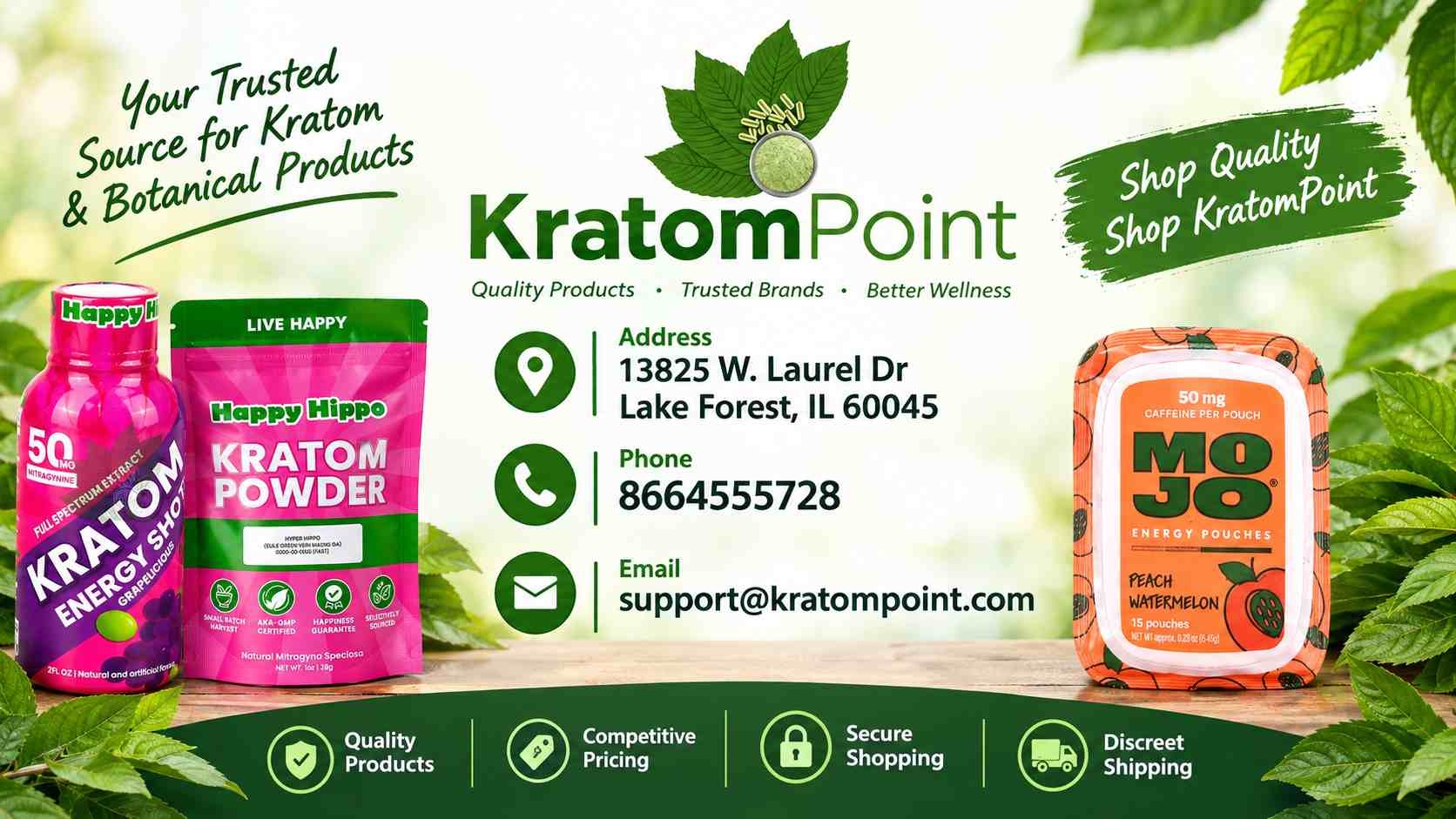
The kratom market in the United States has changed significantly over the past several years. Consumers may now encounter powders, capsules, extracts, tablets, flavored products, and other formulations sold under many different kratom brands.
That variety can also create confusion.
Who actually makes kratom products? Is the company on the label always the manufacturer? What information should appear on packaging? And how does the changing U.S. regulatory environment affect the industry in 2026?
This guide explains how a kratom company typically operates, how the supply chain works, why product transparency matters, and what consumers should understand before interpreting claims made by manufacturers or sellers.
Importantly, kratom has not been approved by the FDA for medical use, and federal agencies continue to raise safety concerns about kratom-related substances.
What Are Kratom Brands?
Kratom brands are companies or product labels that package, market, distribute, or sell products made from the Mitragyna speciosa plant.
A brand does not necessarily grow the plant or manufacture every product itself.
The company whose name appears on a package may be responsible for branding and distribution while obtaining raw botanical material or finished products from another supplier.
That distinction is important because several businesses may participate before a product reaches the market.
A typical supply chain may involve:
-
Botanical growers or suppliers
-
Exporters
-
U.S. importers
-
Processing facilities
-
Packaging companies
-
Distributors
-
Retail brands
For this reason, asking “who makes kratom?” does not always have one simple answer.
Who Makes Kratom Products?
Most botanical kratom originates from Southeast Asia, where Mitragyna speciosa grows naturally.
After harvesting, plant material may be dried and processed before moving through exporters, importers, processors, distributors, and individual kratom companies.
Kratom Manufacturer vs. Kratom Brand
A kratom manufacturer and a kratom brand are not necessarily the same business.
A manufacturer may handle steps such as:
-
Processing botanical material
-
Grinding dried leaves
-
Packaging products
-
Preparing capsules or other formats
-
Conducting or arranging laboratory analysis
A brand may instead concentrate on:
-
Product naming
-
Packaging design
-
Distribution
-
Customer support
-
Retail operations
Some larger businesses perform several of these functions themselves.
Others use outside suppliers or contract manufacturers.
Consumers therefore should not assume that seeing a recognizable company name automatically identifies where the botanical material was grown or processed.
Why Kratom Companies Can Differ So Much
There is no single standardized business model followed by every kratom company.
Products can differ in several important ways.
Product Format
The market can include botanical powders, capsules and more concentrated formulations.
Different product forms should not automatically be treated as equivalent because their chemical composition may differ.
This has become particularly important as regulators focus more closely on concentrated 7-hydroxymitragynine, commonly shortened to 7-OH.
In 2026, federal agencies increased scrutiny of products containing concentrated or intentionally enhanced 7-OH. DEA announced actions aimed at temporarily controlling certain high-concentration 7-OH and related substances, while distinguishing those products from botanical kratom containing naturally occurring trace amounts.
Ingredient Transparency
Clear labeling helps people understand what a product claims to contain.
A useful label should make ingredients understandable rather than hiding important information behind unclear marketing terms.
Recent FDA recalls also illustrate why ingredient disclosure matters. In May 2026, products marketed under the Better Weather name were recalled after FDA analysis identified undeclared mitragynine and mitragynine pseudoindoxyl.
Manufacturing Transparency
Companies may provide different amounts of information about where products are processed, how batches are identified, and what quality-control procedures are used.
Greater transparency does not automatically prove that a product is safe, but it makes claims easier to evaluate.
What Should Consumers Know About Kratom Labels?
Product packaging deserves careful attention.
A professional-looking package alone does not establish product quality, safety, purity, or regulatory approval.
Look for Clear Product Identification
Labels should clearly identify what the product contains.
Vague names can make it difficult to distinguish ordinary botanical material from concentrated or modified products.
Consumers should be cautious about assuming that every item described with the word “kratom” has the same chemical profile.
Understand That “Natural” Does Not Mean Risk-Free
Kratom comes from a plant, but plant origin does not guarantee safety.
The DEA states that kratom contains psychoactive alkaloids including mitragynine and 7-hydroxymitragynine and reports potential risks including dependence and other adverse effects.
The word natural therefore should not be treated as a substitute for reliable safety information.
Be Careful With Medical Claims
Another important warning sign is a product being promoted as a treatment, cure, or guaranteed solution for a health condition.
The FDA has not approved kratom for medical use.
Health decisions should instead be discussed with an appropriate healthcare professional.
The U.S. Kratom Industry in 2026
The legal and regulatory environment surrounding kratom continues to evolve in the United States.
Federal Status Is Only Part of the Picture
Kratom itself has historically not been federally scheduled under the Controlled Substances Act, although DEA identifies it as a Drug of Concern.
However, that does not mean every kratom-related substance or product is treated identically.
In July 2026, DEA announced its intent to temporarily place certain 7-OH and related substances into Schedule I under specified conditions. Federal authorities continued updating that approach in October 2026 as additional scientific analysis became available.
State Rules May Differ
Individual states and local jurisdictions may impose their own restrictions or requirements.
That means a product being offered somewhere in the United States does not automatically establish that the same rules apply everywhere.
Regulations can also change.
For current legal questions, consumers should rely on official government information rather than older blog posts or social-media claims.
How to Evaluate Claims Made by Kratom Companies
When researching kratom brands, separating verifiable facts from marketing language is important.
1. Separate Brand Claims From Evidence
Words such as:
-
Premium
-
Ultra
-
Pure
-
Natural
-
Professional grade
-
Strong
are primarily marketing terms unless accompanied by meaningful supporting information.
A product description should not be treated as scientific evidence simply because it sounds authoritative.
2. Check Whether Information Is Specific
Useful information tends to be specific.
For example, clearly identifying ingredients and the responsible company provides more meaningful information than broad claims about superiority.
3. Pay Attention to Changing Regulations
Information written several years ago may no longer reflect the current regulatory environment.
The 2026 federal attention surrounding 7-OH is a good example of why publication dates matter when researching kratom-related products.
4. Avoid Assuming Popularity Equals Safety
A well-known kratom brand is still selling a psychoactive botanical product.
Popularity, online reviews, attractive packaging, or a large social-media following do not replace independent safety evidence.
Why There Are So Many Kratom Brands
The large number of kratom companies reflects the structure of the modern botanical-products industry.
One processor may supply multiple brands.
Similarly, businesses can sell products under different names even when parts of their supply chains overlap.
This explains why two packages may look completely different while originating from related upstream suppliers.
It also explains why consumers should evaluate claims individually rather than assuming that every product from one category is identical.
Frequently Asked Questions About Kratom Brands
What is a kratom brand?
A kratom brand is the company name or product identity under which a kratom-related product is marketed or distributed. The brand may or may not be the company that grew, imported, processed, or manufactured the underlying botanical material.
Who makes kratom?
Kratom products can pass through several companies before reaching the U.S. market. Growers, exporters, importers, processors, contract manufacturers, distributors, and retail brands can all participate in the supply chain.
Is a kratom company the same as a kratom manufacturer?
Not always. A kratom company may primarily market or distribute products while another company performs processing or manufacturing.
Is kratom FDA-approved?
No. FDA has not approved kratom for medical use. Federal agencies continue to monitor kratom and related compounds, with particular attention in 2026 to concentrated 7-OH products.
Are all kratom products the same?
No. Products can differ in form, processing, labeling, ingredients, concentration and chemical composition. Consumers should therefore avoid treating every product carrying the kratom name as equivalent.
Final Thoughts on Kratom Brands in 2026
The growing number of kratom brands in the United States can make the market difficult to understand.
The most important distinction is that a brand name does not necessarily reveal who grew, imported, processed, or manufactured a product.
Understanding the difference between a kratom manufacturer, distributor, retailer, and brand can make industry information easier to interpret.
Consumers should also remember that kratom is psychoactive, has not been approved by the FDA for medical use, and remains an area of active federal regulatory attention.
For educational information about kratom and botanical-product terminology, visit the KratomPoint blog and continue checking official U.S. regulatory sources for updated safety and legal information.
- Goth Lifestyle
- Fashion & Style
- Music & Bands
- Art & Photography
- Creative Writing & Poetry
- Events & Scene
- Occult & Spirituality
- DIY & Tutorials
- Beauty & Self-Care
- Relationships & Dating
- Gaming & Media
- Tech & Gadgets
- Body Art & Piercings
- Underground Culture
- Spotlights & Interviews
- Travel & Places
- Lifestyle & Daily Life
- Fitness & Health
- Travel & Adventure
- Books & Literature
- Tech & Gaming
- Movies & TV
- Food & Drinks
- Humor & Memes
- Pets & Animals
- General Arts & Crafts

 English
 Arabic
 French
 Portuguese
 Deutsch
 Turkish
 Dutch
Dutch
 Italiano
 Russian
 Romaian
 Portuguese (Brazil)
 Greek
Greek
