


What a Two-Way Radio Set Does in Real Life
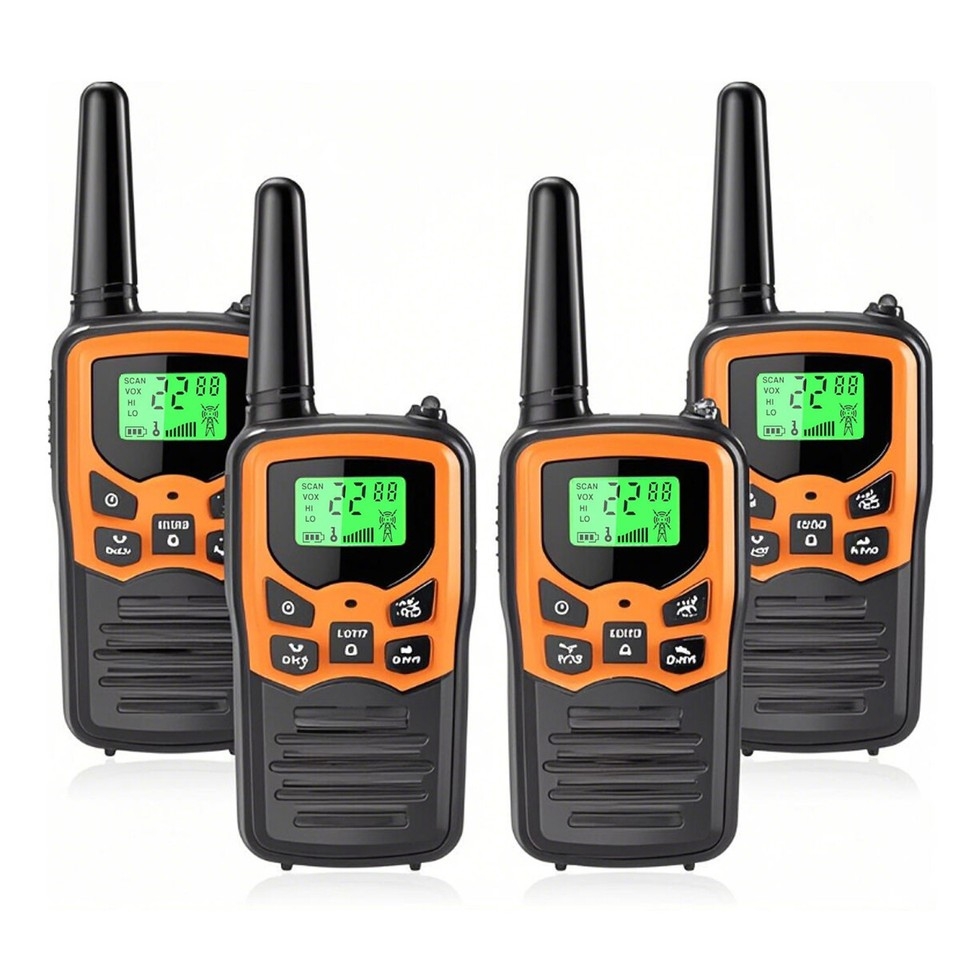
A two-way radio set is one of those everyday tools that often goes unnoticed until it is needed urgently. In real life, it helps people communicate instantly without relying on mobile phone signal, internet access, or lengthy dialling. That simple function makes it valuable in workplaces, outdoor settings, events, transport, security, hospitality, and emergency situations. For anyone trying to understand how a two way radio set actually fits into day-to-day use, the answer is straightforward: it keeps people connected when quick, reliable communication matters most.
Unlike a phone call, which is usually one-to-one and depends on a network, a two-way radio allows a user to press a button and speak immediately to one person or an entire group on the same channel. That makes it practical in busy environments where speed, coordination, and clarity are essential. Whether used by site teams on a building project or staff managing customers in a large venue, the radio helps reduce delays, confusion, and unnecessary movement.
Key points
- Two-way radios allow instant voice communication without mobile coverage.
- They are useful in workplaces, events, security, transport, and outdoor activities.
- They support group coordination as well as direct one-to-one contact.
- They help improve response times, safety, and operational efficiency.
- Different models suit different distances, environments, and usage needs.
What a two-way radio set actually does
At its core, a two-way radio set sends and receives voice messages over radio frequencies. In practical terms, this means one user speaks into the handset, the message travels to another radio, and the other user listens straight away. The process is quick and does not depend on public infrastructure in the way a mobile phone does.
This is particularly useful in places where a phone might be awkward or too slow. A warehouse worker can contact a supervisor without leaving their post. A steward at a concert can report an issue immediately. A driver can inform a depot about delays without stopping to make a call. The radio shortens the gap between seeing a problem and acting on it.
Simple communication in busy settings
Two-way radios are designed for short, clear messages. People tend to use them for practical instructions such as where to meet, which area needs attention, or whether assistance is required. This keeps communication focused and efficient. In many settings, that is far more useful than a long phone conversation.
Where two-way radios are used in real life
Two-way radios appear in far more places than many people realise. They are not limited to specialist industries. In fact, they are often part of the unseen structure that keeps everyday operations running smoothly.
Construction and site work
On construction sites, workers are often spread across a large area with machinery operating nearby. Noise levels can be high, and moving across the site takes time. A radio helps teams stay in touch without delay. It can be used to warn of hazards, coordinate deliveries, and keep supervisors updated on progress.
Retail and hospitality
In shops, hotels, restaurants, and leisure venues, staff need to communicate discreetly and quickly. A radio can help colleagues request support at tills, manage room readiness, or respond to customer needs. This reduces waiting times and improves service flow.
Security and event management
Security teams rely on radios because situations can change in seconds. At sporting events, festivals, and public venues, staff need a dependable way to share information across a wide area. Radios help teams respond to incidents, monitor crowd movement, and coordinate checks without causing disruption.
Warehousing and logistics
In warehouses and distribution centres, radios are useful for coordinating picking, loading, dispatch, and stock movement. Staff can communicate while keeping both hands free for work. This supports safer and more efficient operations, especially in environments with forklifts and moving vehicles.
Outdoor activities and travel
For walking groups, campsites, mountain rescue teams, and outdoor event organisers, radios are valuable where phone coverage may be unreliable. They are often used when people need to stay in touch across hills, fields, or remote areas. In these situations, the radio becomes a practical safety tool as much as a communication device.
Why people still use radios instead of phones
It is easy to assume that mobile phones have replaced radios, but that is not the case. Radios offer advantages that phones cannot always match. The most obvious is immediacy. With a radio, there is no need to dial, wait for a ring, or worry about a missed call. Pressing the button and speaking is often enough.
Another advantage is group communication. One message can be heard by several people at once, which is ideal for teams working to the same objective. This is especially important in settings where time matters, such as emergency response, security, and transport coordination.
Radios also work well in places where mobile reception is poor or unavailable. Buildings, basements, rural sites, and large structures can all create coverage problems for phones. A radio can avoid those limitations depending on the model and setup.
How a radio supports safety
One of the most important real-life functions of a two-way radio set is improving safety. Clear communication helps people avoid accidents, report hazards, and respond faster when something goes wrong. In workplaces with moving vehicles, heavy equipment, or public access, this can make a significant difference.
For example, if a pallet falls in a warehouse aisle, a worker can alert others immediately. If a crowd begins to gather in the wrong area at an event, staff can act before the situation escalates. If a lone worker needs assistance outdoors, a radio can help them request support quickly. These are practical benefits, not theoretical ones.
Reducing confusion
Radio communication can also reduce misunderstandings. Because teams use short, direct messages, instructions are usually clearer than those passed through several people by word of mouth. That can matter greatly in a noisy or fast-moving environment.
What affects how well a two-way radio works
Not every radio performs the same way. Range depends on the environment, the type of radio, obstacles, building materials, and local conditions. A radio that works well in open countryside may behave differently inside a concrete building. Likewise, a device with strong battery life and good audio quality will generally be more reliable during a long shift.
Users should also think about channel organisation, licensing requirements where relevant, and whether they need simple handsets or more advanced features such as hands-free operation, rechargeable batteries, or waterproofing. The right choice depends on how and where the radio will be used.
Matching the device to the job
A small team in a retail unit may need only a basic, easy-to-use model. A security operation across multiple floors may need something more robust. Outdoor users may prioritise weather resistance and long battery life. In other words, the usefulness of a radio comes from how well it matches the task at hand.
Everyday examples of radio use
Imagine a hotel during a busy weekend. Reception needs housekeeping to prepare a room quickly, while maintenance is asked to check a fault. Radios help staff coordinate without leaving their posts. In a warehouse, a supervisor can tell a loading team that a delivery has arrived. On a building site, one worker can warn another before a vehicle reverses into a shared area.
These examples show that a two-way radio set is not just a communication device. It is a coordination tool. It helps people act faster, work more smoothly, and support one another across a shared space.
Conclusion
In real life, a two-way radio set does a very practical job. It connects people instantly, supports safety, and helps teams stay organised in places where phones may be too slow or unreliable. From construction and logistics to hospitality and outdoor use, its value lies in simplicity and speed. It is a tool built for direct communication, and that makes it useful in many situations where clear contact is essential.
For anyone looking at how teams keep in touch efficiently, the radio remains a dependable solution. Its strength is not in complexity, but in doing one job extremely well: helping people speak, listen, and respond when it matters.
FAQ
What is the main purpose of a two-way radio set?
The main purpose is instant voice communication between users. It allows people to talk and listen quickly without using a phone network.
Can two-way radios work without mobile signal?
Yes. That is one of their biggest advantages. They do not rely on mobile coverage in the same way as smartphones.
Are two-way radios only for professional use?
No. They are used in professional settings, but they are also helpful for outdoor activities, family trips, and events where quick communication is needed.
How far can a two-way radio reach?
Range depends on the model and the environment. Open spaces usually allow greater range, while buildings, hills, and walls can reduce it.
Why are radios useful in busy workplaces?
They allow staff to share short, clear instructions immediately, which saves time and helps teams respond faster to changing situations.
Do two-way radios improve safety?
Yes. They help people warn others about hazards, request assistance, and coordinate responses more quickly than many alternative methods.
- Goth Lifestyle
- Fashion & Style
- Music & Bands
- Art & Photography
- Creative Writing & Poetry
- Events & Scene
- Occult & Spirituality
- DIY & Tutorials
- Beauty & Self-Care
- Relationships & Dating
- Gaming & Media
- Tech & Gadgets
- Body Art & Piercings
- Underground Culture
- Spotlights & Interviews
- Travel & Places
- Lifestyle & Daily Life
- Fitness & Health
- Travel & Adventure
- Books & Literature
- Tech & Gaming
- Movies & TV
- Food & Drinks
- Humor & Memes
- Pets & Animals
- General Arts & Crafts

 English
 Arabic
 French
 Spanish
 Portuguese
 Deutsch
 Turkish
 Dutch
Dutch
 Italiano
 Russian
 Romaian
 Greek
Greek
