


Can a Tile Vibrator Support Large Format Tile Installation
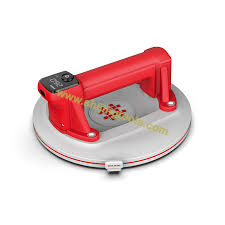
Large format tiles have become a common choice for floors, walls, kitchens, bathrooms, commercial interiors, and architectural spaces because their broad surfaces create a clean visual appearance with fewer joints. At the same time, their size can make installation considerably different from working with smaller pieces, particularly when installers need to position a slab accurately and establish suitable contact with the adhesive layer. A Tile Vibrator can be used as part of certain installation methods to help a large tile settle into its prepared bedding material, while shijingtools provides paving and handling equipment for professional tile work, but is this type of tool actually suitable for large format tiles?
Understanding Large Format Tile Installation
A large tile covers a substantial surface area, so the installation process requires attention across the entire slab rather than at one small section. When a panel is placed over adhesive, the installer needs to maintain suitable alignment while encouraging the underside to establish consistent contact with the supporting material.
Manual pressure can be used during some paving operations, although applying an even force across a broad panel may be difficult, particularly when the material is heavy or the installation position is challenging. Workers may need to adjust several areas during placement, and excessive handling can make the process unnecessarily demanding.
A vibration-based device approaches the task from another direction. Controlled movement can encourage a tile to settle into the adhesive bed after positioning, helping the material beneath the slab spread into areas that require contact. The purpose is not simply to make the tile move, but to support a controlled bedding process when the adhesive system and substrate are prepared appropriately.
This method can be relevant to porcelain panels, ceramic products, stone surfaces, and other large-format materials, although the exact working procedure depends on the manufacturer's instructions and the characteristics of the installation system.
How Vibration Supports Surface Contact
The principle behind a tile vibration tool is relatively straightforward. A powered mechanism creates repeated movement through the contact surface, transferring controlled vibration to the tile after it has been positioned. This movement can help the slab settle while the adhesive remains workable.
For a large panel, this can be useful because the installer does not need to rely entirely on repeated hand pressure across the whole surface. The vibration can be applied through an appropriate contact arrangement, allowing the operator to work progressively while observing the position and surface of the tile.
Adhesive selection remains important. Different products have different working characteristics, and the bonding material needs to be prepared according to its technical requirements. If the substrate contains significant irregularities, a vibration tool cannot correct the underlying problem by itself.
The timing of the operation also matters. Once an adhesive begins to lose its workable condition, unnecessary movement may interfere with the intended installation process. Operators should therefore understand the working window of the adhesive and follow the recommended procedure for the specific material.
Where Large Format Tiles Can Benefit
Large porcelain slabs are frequently used in open-plan interiors, kitchens, bathrooms, hotel spaces, retail environments, offices, and residential projects. Their broad dimensions can reduce visual interruptions, but handling and positioning them requires suitable equipment and preparation.
Wall applications can present another challenge because gravity affects the material while the adhesive is being established. Installers may need to combine lifting equipment, positioning tools, leveling systems, and other accessories according to the project requirements.
Floor applications also require careful control. A large slab needs suitable support from the prepared substrate, and the adhesive should be distributed according to the selected installation method. Once the tile has been positioned, controlled vibration may assist the bedding process when the equipment and materials are compatible.
Natural stone and other slab products should be evaluated separately because surface texture, thickness, density, weight, and underside characteristics can vary. Equipment that works well with one material should not automatically be transferred to another without checking its suitability.
What Should Installers Check Before Use?
Before operating any paving equipment, the work area should be prepared properly. Dust, loose particles, excess moisture, and other contaminants can interfere with the installation process, while an unsuitable substrate can create difficulties that no mechanical tool can fully resolve.
The tile itself should also be examined. Large slabs can require careful transportation before they reach the installation position, and visible cracks, edge damage, or other defects should be identified before placement.
The adhesive should be mixed and applied according to its product instructions. Coverage requirements can vary according to the material, substrate, tile format, and selected installation method, so installers should follow the technical guidance supplied for the particular project.
Equipment inspection is equally relevant. Handles, contact surfaces, power components, switches, and other working parts should be checked before use. Any unusual movement or operating condition should be investigated rather than ignored.
During vibration, the operator should watch the slab position and surrounding area while maintaining controlled movement. The goal is to support the installation process without applying unnecessary force or movement that could disturb alignment.
Choosing Equipment for Professional Paving Work
A professional paving tool should fit the material, project conditions, and working habits of the installer. Portability can matter when equipment needs to move between rooms or construction areas, while handle design can influence how easily the operator maintains control during repeated operations.
Power configuration is another consideration. Different work environments may call for different equipment arrangements, and the selected model should correspond with the available power source and intended application.
The contact surface deserves attention as well. It should provide appropriate interaction with the tile without creating unnecessary pressure points. The equipment's operating characteristics should also correspond with the type of tile being installed.
Maintenance is part of regular equipment use. After a project, working surfaces should be cleaned, components should be inspected, and the tool should be stored in a suitable location. Keeping equipment in proper condition helps installers prepare for subsequent jobs without overlooking basic operational checks.
SHIJING focuses on tools associated with tile installation and paving work, with its range covering equipment for cutting, handling, positioning, leveling, and related construction tasks. This product structure allows contractors to explore different tool categories according to the specific stages of a paving project.
Combining Handling and Installation Equipment
Large format tile work often involves several stages rather than a single operation. A slab may need to be transported from a storage area, lifted into position, aligned with the surrounding layout, and then settled into the adhesive layer.
For this reason, handling equipment can work alongside paving tools. Vacuum suction cups or lifting frames can assist with moving large materials, while leveling accessories can support alignment during placement. A vibration device can then be used where the installation method calls for controlled settling.
Such an arrangement allows each tool to perform a defined function instead of asking one piece of equipment to handle every stage. The result is a workflow that follows the actual sequence of large-format installation, from material preparation through positioning and bedding.
Contractors should still evaluate each project independently. Tile dimensions, weight, substrate condition, adhesive characteristics, working position, and site access can all influence equipment selection.
For tile installers, renovation contractors, distributors, and construction teams seeking equipment for large-format paving work, SHIJING offers a dedicated range of professional tools covering handling, cutting, positioning, leveling, and installation applications. The available paving equipment can be viewed at https://www.shijingtools.com, where users can explore products suited to different tile installation conditions and select a Tile Vibrator according to the requirements of their own projects.
- Goth Lifestyle
- Fashion & Style
- Music & Bands
- Art & Photography
- Creative Writing & Poetry
- Events & Scene
- Occult & Spirituality
- DIY & Tutorials
- Beauty & Self-Care
- Relationships & Dating
- Gaming & Media
- Tech & Gadgets
- Body Art & Piercings
- Underground Culture
- Spotlights & Interviews
- Travel & Places
- Lifestyle & Daily Life
- Fitness & Health
- Travel & Adventure
- Books & Literature
- Tech & Gaming
- Movies & TV
- Food & Drinks
- Humor & Memes
- Pets & Animals
- General Arts & Crafts
 English
 Arabic
 French
 Spanish
 Portuguese
 Deutsch
 Turkish
 Dutch
Dutch
 Italiano
 Russian
 Romaian
 Portuguese (Brazil)
 Greek
Greek