


How Barcode Scanners Improve Accuracy in High-Volume Order Fulfillment
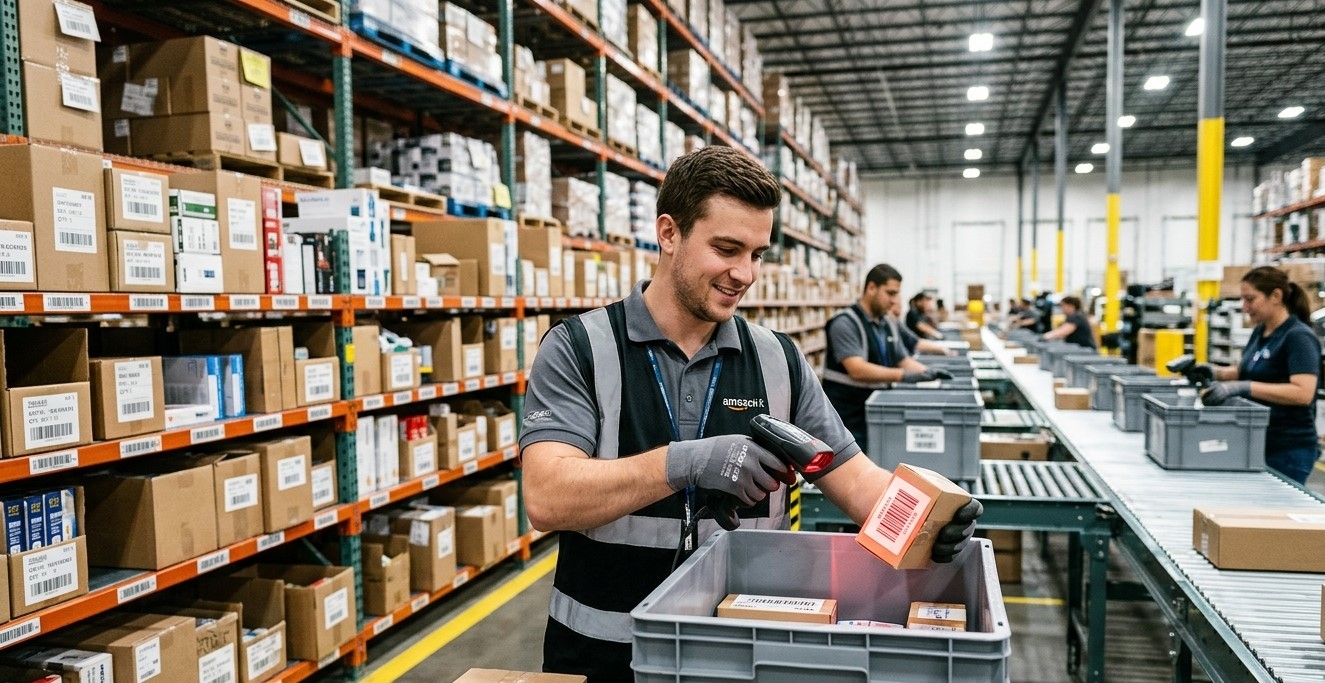
In high-volume warehouses and distribution centers, order fulfillment accuracy is essential for maintaining customer satisfaction and controlling operational costs. As the number of orders increases, relying on manual data entry and paper-based processes can lead to picking mistakes, incorrect shipments, inventory discrepancies, and delays. Barcode scanners provide an efficient way to reduce these errors by automating product identification and data capture throughout the fulfillment process.
Businesses looking for reliable barcode and identification solutions can work with Pointus Solutions to implement technologies that support faster and more accurate warehouse operations. From barcode scanners and mobile computers to Shop Barcode solutions and Printing Products, the right combination of equipment can help organizations create a more dependable order fulfillment workflow.
What Is High-Volume Order Fulfillment?
High-volume order fulfillment refers to the process of receiving, picking, packing, and shipping a large number of customer orders within a specific period. This type of operation is common in:
- E-commerce warehouses
- Retail distribution centers
- Third-party logistics providers
- Manufacturing facilities
- Wholesale businesses
- Pharmaceutical distribution
- Food and beverage operations
- Courier and logistics companies
When hundreds or thousands of items need to be processed every day, even a small percentage of errors can result in significant costs. Barcode scanning helps businesses verify information at each stage instead of depending entirely on employees to identify products manually.
Why Accuracy Matters in Order Fulfillment
Order fulfillment accuracy directly affects customer experience and warehouse performance. Sending the wrong product, quantity, or shipment can result in returns, replacement costs, additional shipping expenses, and dissatisfied customers.
Common fulfillment problems include:
- Picking the wrong product
- Selecting an incorrect quantity
- Shipping an order to the wrong location
- Entering product information incorrectly
- Updating inventory inaccurately
- Misplacing products during warehouse operations
- Packing the wrong items together
- Failing to record completed transactions
Barcode scanners help address these challenges by allowing workers to verify products electronically during critical steps in the fulfillment process.
How Barcode Scanners Work in Order Fulfillment
A barcode scanner reads the information encoded in a barcode and transfers that information to a connected system, such as a warehouse management system (WMS), enterprise resource planning (ERP) platform, or inventory management application.
The basic process is simple:
- A product is assigned a barcode.
- The barcode is printed on a label or packaging.
- The product enters the warehouse.
- A worker scans the barcode during receiving, storage, picking, or packing.
- The system identifies the product.
- The transaction is recorded automatically.
- Inventory information is updated according to the workflow.
Instead of manually typing product codes or descriptions, employees can scan the barcode and allow the system to retrieve the associated information.
1. Reducing Picking Errors
Picking is one of the most important stages of order fulfillment. Employees must locate the correct products and quantities based on customer orders. In a large warehouse, similar-looking products or multiple product variations can make manual identification difficult.
Barcode scanners provide an additional verification step. When a worker scans an item's barcode, the warehouse system can compare the scanned product with the item required for the order.
If the wrong item is scanned, the system can alert the worker before the product moves to packing.
This process helps reduce:
- Wrong-product shipments
- SKU selection errors
- Quantity mistakes
- Manual identification problems
As a result, businesses can improve order accuracy without adding unnecessary manual checking procedures.
2. Improving Inventory Accuracy
Accurate inventory information is essential for high-volume fulfillment. If the system says a product is available but the item cannot be found, orders may be delayed or canceled.
Barcode scanners allow warehouse employees to record inventory movements as they happen. Products can be scanned when they are:
- Received
- Put away
- Moved
- Picked
- Packed
- Shipped
- Returned
This creates a more consistent flow of inventory information and helps reduce discrepancies between physical stock and digital records.
3. Faster Product Identification
In a busy warehouse, employees may need to identify thousands of products. Reading product descriptions, searching SKU numbers, and manually entering information can consume valuable time.
Barcode scanning makes identification much faster. A worker can scan a product within seconds, allowing the system to display information such as:
- Product name
- SKU
- Stock status
- Location
- Quantity
- Order information
- Batch or lot information
Faster identification allows employees to spend more time performing productive warehouse tasks rather than entering information manually.
4. Minimizing Manual Data Entry
Manual data entry is one of the major sources of operational errors. A single incorrect digit in a product code can cause an incorrect inventory transaction or shipment.
Barcode scanners reduce the amount of information employees need to type manually. Instead, data is captured directly from the barcode and transferred to the connected software.
This can improve data consistency and reduce common typing errors.
For businesses processing large numbers of orders, reducing manual entry can have a significant impact on overall workflow efficiency.
5. Improving Packing Accuracy
Barcode scanning is not limited to the picking stage. It can also be used during packing to verify that the correct products have been placed inside an order.
For example, a packing station can require employees to scan each product before the package is sealed. The system can compare the scanned products with the order information.
If an item is missing or does not belong to the order, the employee can correct the problem immediately.
This approach is particularly useful for e-commerce operations where orders may contain multiple products.
6. Supporting Shipping Verification
The final stage before an order leaves the warehouse is shipping verification. Barcode scanners can help confirm that the correct package is associated with the correct order.
Employees can scan:
- Product barcodes
- Order barcodes
- Package labels
- Shipping labels
- Tracking numbers
The system can then associate the shipment with the correct customer order and update its status.
This reduces the possibility of shipping incorrect packages and provides better visibility into outbound operations.
7. Improving Warehouse Productivity
Accuracy and productivity are closely connected. Correcting an error after a shipment has left the warehouse can take much longer than preventing the error in the first place.
Barcode scanners allow workers to verify information during the normal workflow rather than relying on extensive manual checking afterward.
A streamlined scanning process can help employees:
- Locate products faster
- Confirm product identity
- Update inventory immediately
- Process more orders
- Reduce repeated work
- Spend less time correcting errors
When barcode scanning is integrated properly, accuracy improvements can occur without significantly slowing down warehouse operations.
8. Supporting Real-Time Inventory Visibility
High-volume fulfillment requires businesses to know what inventory is available and where it is located. Barcode scanning helps create a continuous flow of inventory transactions.
When products are scanned at different stages, warehouse software can receive updated information about their status.
For example:
Receiving → Put-Away → Storage → Picking → Packing → Shipping
Scanning at each stage gives businesses greater visibility into product movement.
This can help warehouse managers identify bottlenecks, investigate discrepancies, and make better operational decisions.
9. Choosing the Right Barcode Scanner
Different fulfillment environments require different types of barcode scanners. Businesses should consider their warehouse layout, order volume, barcode types, scanning distance, and operating conditions.
Handheld Barcode Scanners
Handheld scanners are suitable for many general warehouse and retail applications. They provide flexibility because workers can move the scanner between different work areas.
Wireless Barcode Scanners
Wireless scanners are useful when employees need to move freely around the warehouse. They can reduce cable restrictions and support mobile workflows.
Mobile Computers
Mobile computers combine barcode scanning capabilities with a display and computing functions. They are particularly useful for warehouse workers who need access to inventory or order information while moving through storage areas.
Fixed Barcode Scanners
Fixed scanners can be installed at conveyor lines, packing stations, or other controlled points. They are useful for automated or high-throughput processes.
10. Integrating Barcode Scanners With Warehouse Software
Barcode scanners deliver the greatest value when they are integrated with business software.
A warehouse management system can use scanned information to automate processes such as:
- Inventory updates
- Order verification
- Picking instructions
- Location tracking
- Shipment confirmation
- Stock adjustments
- Return processing
Integration reduces the need to transfer information manually between different systems.
Before implementing a barcode scanning solution, businesses should evaluate compatibility between their scanners, barcode labels, software, network infrastructure, and existing warehouse processes.
Best Practices for Improving Fulfillment Accuracy
To get the most value from barcode scanning, businesses should follow a few practical guidelines.
Use Clear and Readable Barcodes
Poor-quality or damaged labels can make scanning difficult. Businesses should use appropriate barcode printers, materials, and printing settings.
Standardize Barcode Placement
Products should have barcodes placed in consistent and easily accessible locations whenever possible.
Train Warehouse Employees
Employees should understand how and when to scan products, locations, packages, and shipping information.
Maintain Scanning Equipment
Regular cleaning, inspection, charging, and maintenance can help keep scanners operating reliably.
Monitor Error Rates
Track fulfillment errors before and after implementation to identify areas where scanning workflows can be improved.
Integrate Scanning With Business Systems
A scanner should not operate as an isolated device. Connecting it with inventory, order management, ERP, or WMS software can provide much greater operational value.
The Role of Barcode Labels and Printing Solutions
Reliable scanning begins with reliable barcode labels. A scanner can only capture information effectively when the barcode is printed clearly and remains readable throughout the product's handling cycle.
Businesses should select label materials, sizes, adhesives, and printing technologies based on their operating environment. For example, warehouse products may require durable labels, while shipping operations may require larger labels that remain visible throughout transportation.
Using appropriate Printing Products can help businesses produce consistent labels for products, shelves, bins, pallets, cartons, and shipments.
Businesses can also Shop Barcode equipment and related identification solutions based on their operational requirements, including scanners, printers, labels, mobile devices, and accessories.
Measuring the Impact of Barcode Scanning
Businesses can evaluate barcode scanning performance by tracking several key metrics:
- Order accuracy rate
- Picking accuracy
- Packing accuracy
- Inventory accuracy
- Orders processed per hour
- Picking time per order
- Number of shipping errors
- Return rate caused by fulfillment mistakes
- Manual data-entry errors
Monitoring these measurements helps management determine whether the scanning solution is delivering measurable improvements.
Conclusion
High-volume order fulfillment requires speed, consistency, and accuracy. Barcode scanners provide businesses with a practical way to automate product identification, reduce manual data entry, verify orders, improve inventory accuracy, and minimize fulfillment mistakes.
From receiving and put-away to picking, packing, and shipping, barcode scanning can create verification points throughout the warehouse workflow. When scanners are integrated with inventory management, WMS, ERP, and order fulfillment systems, businesses can gain better visibility while improving operational efficiency.
For organizations looking to strengthen their warehouse and fulfillment processes, Pointus Solutions can support the implementation of barcode and Auto-ID technologies. Businesses can Shop Barcode scanners, warehouse identification equipment, and related Printing Products to build a reliable solution that matches their operational requirements. With the right combination of hardware, labels, software, and processes, barcode technology can become an important part of a faster and more accurate order fulfillment operation.
- Goth Lifestyle
- Fashion & Style
- Music & Bands
- Art & Photography
- Creative Writing & Poetry
- Events & Scene
- Occult & Spirituality
- DIY & Tutorials
- Beauty & Self-Care
- Relationships & Dating
- Gaming & Media
- Tech & Gadgets
- Body Art & Piercings
- Underground Culture
- Spotlights & Interviews
- Travel & Places
- Lifestyle & Daily Life
- Fitness & Health
- Travel & Adventure
- Books & Literature
- Tech & Gaming
- Movies & TV
- Food & Drinks
- Humor & Memes
- Pets & Animals
- General Arts & Crafts
 English
 Arabic
 French
 Spanish
 Portuguese
 Deutsch
 Turkish
 Dutch
Dutch
 Italiano
 Russian
 Romaian
 Portuguese (Brazil)
 Greek
Greek