


How to Organize a Lab Workbench for Faster Daily Operations?
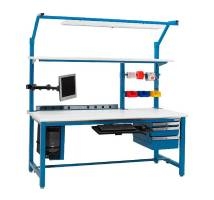
An organized laboratory is the foundation of efficient, accurate, and safe work. If you spend valuable time searching for tools, supplies, or documents, your productivity decreases and the risk of errors increases. By organizing your lab workbench strategically, you can streamline daily operations, reduce unnecessary movement, and maintain a cleaner workspace. Whether you work in research, quality control, pharmaceutical manufacturing, electronics, or cleanroom environments, a well-planned workbench helps you complete tasks faster while supporting consistent results.
This guide explains practical ways to organize your lab workbench for improved efficiency without sacrificing safety or compliance.
Start with a Clean Workspace
Before reorganizing your laboratory, remove everything from your workbench and evaluate each item.
Ask yourself:
- Do you use it every day?
- Does it belong on the workbench?
- Can it be stored elsewhere?
Dispose of expired materials, broken tools, duplicate equipment, and unnecessary paperwork. Keeping only frequently used items on the bench creates more working space and reduces distractions.
A clutter-free environment also minimizes contamination risks and supports better laboratory practices.
Divide Your Workbench into Functional Zones
Rather than placing equipment wherever space is available, assign dedicated zones for specific activities.
Common workbench zones include:
- Sample preparation
- Instrument operation
- Documentation
- Chemical handling
- Storage of frequently used tools
- Waste collection
Keeping similar tasks together reduces unnecessary movement and helps you establish an efficient workflow from one step to the next.
Store Frequently Used Items Within Easy Reach
Daily-use items should always remain within comfortable arm's reach.
Examples include:
- Pipettes
- Forceps
- Laboratory notebooks
- Small measuring devices
- Cleaning wipes
- Safety glasses
- Disposable gloves
Less frequently used supplies should be stored in cabinets or shelves nearby instead of occupying valuable bench space.
This simple adjustment can save several minutes during every experiment.
Choose the Right Laboratory Workbench
Your workbench itself plays a major role in organization. A durable surface with sufficient workspace allows you to arrange equipment efficiently while supporting demanding laboratory applications.
If you're planning an upgrade, explore phenolic top Lab Workbench solutions for laboratory efficiency and heavy-duty scientific applications that provide durability, chemical resistance, and reliable performance for daily operations.
Selecting the appropriate workbench helps create a more structured workspace while improving long-term productivity.
Label Everything Clearly
Proper labeling eliminates confusion.
Clearly identify:
- Drawers
- Storage bins
- Chemical containers
- Equipment locations
- Calibration tools
- Frequently used accessories
Consistent labeling allows every laboratory team member to quickly locate and return items without disrupting workflow.
Color-coded labels can further improve identification in busy laboratory environments.
Keep Cables Organized
Modern laboratories rely on multiple electronic devices, creating cable clutter.
Use:
- Cable clips
- Cable sleeves
- Under-bench cable trays
- Label tags
- Velcro straps
Proper cable management improves safety, simplifies equipment maintenance, and makes cleaning much easier.
It also prevents accidental unplugging of sensitive laboratory instruments.
Arrange Equipment by Workflow
Instead of organizing equipment by size, arrange it according to the order you perform tasks.
For example:
- Sample preparation
- Measurement
- Analysis
- Recording results
- Sample storage
This workflow-based arrangement minimizes unnecessary walking and repeated handling of materials.
The fewer interruptions you experience, the faster your daily operations become.
Maximize Vertical Storage
Many laboratories overlook vertical space.
Install:
- Shelving units
- Pegboards
- Tool holders
- Wall-mounted dispensers
- Overhead storage racks
Vertical storage frees valuable workbench space while keeping essential equipment easily accessible.
Avoid stacking supplies directly on the work surface whenever possible.
Separate Clean and Dirty Areas
Maintaining designated clean and contaminated zones reduces cross-contamination.
Use separate sections for:
- Sterile materials
- Used instruments
- Waste disposal
- Cleaning supplies
Physical separation supports laboratory cleanliness and improves regulatory compliance in controlled environments.
Standardize Storage Locations
Every item should have one permanent location.
When every technician knows exactly where equipment belongs, setup time decreases significantly.
Develop simple storage rules such as:
- Return tools immediately after use.
- Restock consumables daily.
- Remove waste after every procedure.
- Clean the workbench before leaving.
These habits create consistency across every shift.
Perform Daily End-of-Shift Organization
The best-organized laboratories stay organized because cleanup becomes part of the workflow.
Spend five to ten minutes at the end of each shift to:
- Wipe surfaces
- Dispose of waste
- Return equipment
- Refill supplies
- Inspect tools
- Prepare materials for the next day
Daily maintenance prevents clutter from accumulating and keeps operations running efficiently.
Improve Ergonomics for Better Productivity
An organized workbench should also reduce physical strain.
Adjust:
- Chair height
- Monitor position
- Frequently used equipment placement
- Lighting
- Foot support
Comfortable technicians experience less fatigue, maintain higher concentration, and make fewer operational errors during long laboratory sessions.
Review Your Organization Regularly
Laboratory workflows evolve over time.
Schedule monthly evaluations to determine whether:
- Equipment placement remains effective.
- Storage capacity is sufficient.
- Frequently used tools have changed.
- New instruments require additional space.
Continuous improvement helps your laboratory adapt without sacrificing efficiency.
Working with experienced laboratory equipment providers like CleaTech LLC for high-quality laboratory workbench solutions and cleanroom equipment can help you design workspaces that support both productivity and long-term operational performance.
If you're planning a new laboratory or upgrading an existing workspace, Contact us today for expert guidance on selecting the right laboratory workbench and workspace solutions tailored to your operational needs.
Conclusion
A well-organized lab workbench does more than improve appearance—it directly impacts speed, accuracy, safety, and overall productivity. By reducing clutter, creating functional work zones, improving storage, organizing equipment according to workflow, and maintaining consistent daily habits, you can significantly enhance laboratory efficiency. Small organizational improvements often produce substantial long-term gains, allowing your team to complete more work with fewer interruptions while maintaining the high standards expected in modern laboratory environments.
Frequently Asked Questions
Why is organizing a lab workbench important?
An organized lab workbench improves efficiency, reduces errors, enhances safety, and helps technicians complete daily tasks more quickly.
What should always stay on a lab workbench?
Keep only frequently used tools, essential equipment, safety items, and current project materials on the workbench.
How often should a lab workbench be cleaned?
You should clean and organize your lab workbench at the end of every shift and perform a more thorough review regularly.
How can vertical storage improve laboratory organization?
Vertical storage frees valuable workspace, keeps tools accessible, reduces clutter, and supports a more efficient workflow.
What type of workbench is best for laboratory use?
A durable, chemical-resistant laboratory workbench with sufficient workspace and ergonomic design is ideal for supporting efficient daily laboratory operations.
Original Source: https://laboratoryquipment.blogspot.com/2026/07/how-to-organize-lab-workbench-for.html
- Goth Lifestyle
- Fashion & Style
- Music & Bands
- Art & Photography
- Creative Writing & Poetry
- Events & Scene
- Occult & Spirituality
- DIY & Tutorials
- Beauty & Self-Care
- Relationships & Dating
- Gaming & Media
- Tech & Gadgets
- Body Art & Piercings
- Underground Culture
- Spotlights & Interviews
- Travel & Places
- Lifestyle & Daily Life
- Fitness & Health
- Travel & Adventure
- Books & Literature
- Tech & Gaming
- Movies & TV
- Food & Drinks
- Humor & Memes
- Pets & Animals
- General Arts & Crafts

 English
 Arabic
 French
 Spanish
 Portuguese
 Turkish
 Dutch
Dutch
 Italiano
 Russian
 Romaian
 Portuguese (Brazil)
 Greek
Greek