


Roof Solar Panel Cleaning in Sui Gas Society, Lahore
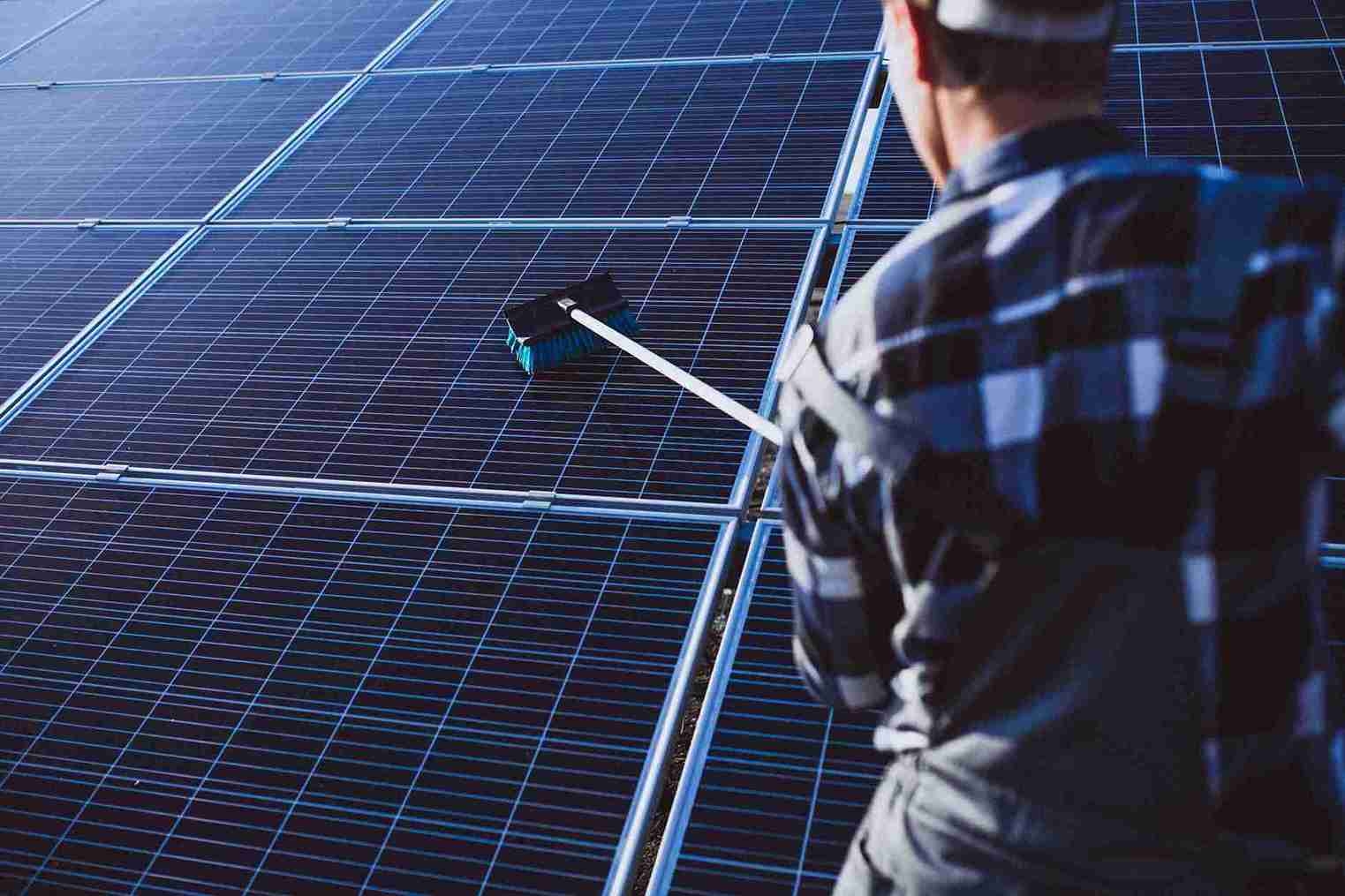
Many homes in Sui Gas Society use rooftop solar because Lahore gets strong sun for most of the year, but dust can quietly eat into that benefit. Roof solar panel cleaning is the process of safely removing dust, bird droppings, pollen, construction residue, and grime from panels installed on a roof without damaging the glass, frame, wiring, or roof surface.
This guide explains how rooftop panels should be cleaned in Sui Gas Society, how often cleaning makes sense, what tools are safe, and what mistakes can reduce output or create a safety risk. The goal is simple: clean panels properly, not aggressively.
Why do solar panels get dirty so quickly in Sui Gas Society?
Solar panels in Sui Gas Society get dirty because Lahore’s air carries dust, smoke particles, pollen, and construction debris that settle on flat or slightly tilted glass surfaces. A thin dust layer may look harmless, but it can reduce the amount of sunlight reaching the solar cells.
In practical terms, rooftops near main access roads, open plots, under-construction houses, and boundary walls collect dirt faster. In Lahore, dry months before monsoon are usually worse because there is less natural rainwater rinsing the panel surface. After a few weeks, dust can form a dull film, especially on panels installed at a low tilt.
Bird droppings are more serious than ordinary dust. They create hard spots that block sunlight from specific cells. If one section stays covered for too long, the panel may produce less energy than expected, and the inverter data may show a visible drop during peak sun hours.
Tree sap and leaf stains are also common in residential areas. A roof with nearby neem, mango, or ornamental trees may need more attention than an open roof. The cleaning schedule should match the roof conditions, not a random monthly habit copied from someone else.
How often should rooftop solar panels be cleaned?
In Sui Gas Society, rooftop solar panels usually need cleaning every 3 to 6 weeks, depending on dust exposure, panel angle, nearby construction, trees, and bird activity. A clean system in a dusty lane can lose its shine again faster than a system on a higher, open rooftop.
A simple check works better than guessing. Look at the panels early in the morning or late afternoon when glare is lower. If the glass looks grey, patchy, streaked, or covered with bird marks, cleaning is due. If the inverter production has dropped without cloudy weather, dirt may be part of the problem.
During dry Lahore weather, especially before heavy summer rain, panels may need more frequent attention. After a proper monsoon shower, light dust may wash off naturally, but sticky dirt and droppings often remain. Rain is not a complete cleaning method because it can leave muddy edges along the lower side of the panel.
For most homes, solar system cleaning should be treated as routine performance care, not emergency work. Waiting until panels look extremely dirty means the system has already been underperforming for days or weeks.
What is the safest time for roof solar panel cleaning?
The safest time for roof solar panel cleaning is early morning or late afternoon, when the panels are cooler and sunlight is less intense. Cleaning hot panels at noon is a bad move because sudden cold water on hot glass may create thermal stress.
Early morning has one strong advantage: dust is softer because of light moisture in the air. Dirt lifts more easily, and less pressure is needed. That means lower risk to the panel surface and less water waste.
Late afternoon can also work, but only after the panels have cooled. In Lahore’s summer, roof surfaces can stay hot even after direct sun reduces. Touching metal frames, pipes, or roof tiles can be uncomfortable and unsafe during peak heat.
Never clean during strong wind, rain, or unstable weather. Wet roofs become slippery, and wind can make long cleaning poles harder to control. A fall from even a single-storey roof can cause serious injury. Clean energy is great; becoming a rooftop pancake is not the plan.
What tools should be used on rooftop solar panels?
The right tools for rooftop solar panels are soft, non-abrasive, and easy to control from a stable position. A soft-bristle solar panel cleaning brush, clean water, a lightweight extension pole, and a rubber squeegee are usually enough for normal dust and stains.
Do not use steel wool, hard floor brushes, rough cloth, detergent powder, acid, bleach, or pressure washers. Solar panel glass is tough, but it is not a bathroom tile. Scratches, chemical residue, and forced water near seals can create long-term problems.
A basic safe tool setup includes:
- Soft-bristle brush made for glass surfaces
- Clean water with low dirt or sand content
- Extension pole long enough to avoid stepping on panels
- Microfiber cloth for small stubborn marks
- Squeegee for reducing water spots
- Safety shoes with grip
A dedicated automated solar panel cleaning system may make sense for large commercial rooftops or hard-to-access arrays, but most homes in Sui Gas Society do not need that level of equipment. For residential roofs, correct manual cleaning usually gives better value when done with safe tools and proper timing.
How should panels be cleaned without damaging them?
Panels should be cleaned with gentle water flow, soft brushing, and controlled movement from the upper edge toward the lower edge. The aim is to loosen dirt and rinse it away, not scrub the panel like a dirty driveway.
Start by turning off the solar system only if the installer’s safety instructions require it. Many homeowners should not touch electrical isolators unless they understand the setup. If there is exposed wiring, cracked glass, loose frames, or inverter warnings, cleaning should stop until the system is checked.
Rinse the panel lightly first. This softens dust and reduces scratching. Then use a soft brush in straight, overlapping passes. Avoid circular aggressive scrubbing because trapped grit can mark the glass. For bird droppings, soak the spot for a few minutes before brushing.
Never stand on a solar panel. Panels are designed to handle weather loads, not a person’s full weight on one point. Also avoid pulling cables, leaning ladders against panel frames, or dragging tools across the glass.
After cleaning, rinse again and let the water run off naturally. A squeegee can reduce spotting if the water is hard. In Lahore, mineral marks can appear when dirty or hard water dries under strong sunlight.
What mistakes should homeowners avoid?
The biggest mistake is cleaning panels with the wrong tool because it looks faster. A hard brush may remove dirt quickly, but it can leave fine scratches that reduce clarity over time.
Another common mistake is using household cleaners. Dishwashing liquid, surf, glass spray, and bleach are not made for solar panels. Some cleaners leave residue that attracts more dust. Others may affect rubber seals or panel coating.
Walking on wet roofs without grip shoes is also risky. Many rooftops in Lahore have smooth tiles, water tanks, pipes, low parapet walls, and uneven slopes near drains. Cleaning should be planned around safe movement, not just panel access.
Homeowners should also avoid cleaning only the visible front row. Dirt often collects near the lower edges of panels and between rows. If only the easy section is cleaned, performance may still remain uneven.
AfinitySolar often sees that poor cleaning habits create more problems than dust itself. A careful 30-minute cleaning is better than a rushed 10-minute job that scratches panels, bends frames, or leaves muddy streaks.
Can dirty panels really reduce electricity production?
Yes, dirty panels can reduce electricity production because dust and stains block sunlight from reaching the photovoltaic cells. The exact loss depends on the thickness of the dirt layer, panel angle, weather, and how long the surface stays dirty.
Light dust may cause a small drop. Heavy dust, bird droppings, cement powder, and sticky grime can cause a much bigger impact. The loss is usually most visible during peak sunlight hours, when clean panels should be producing strongly.
For a homeowner, the easiest sign is comparison. Check inverter output on similar sunny days before and after cleaning. If production improves clearly after cleaning, dirt was affecting the system. This is not laboratory testing, but it gives a useful real-world signal.
Rooftop systems in Sui Gas Society also face another issue: nearby construction dust. Cement particles can settle more firmly than ordinary dust. If left for too long, they may need more soaking and careful brushing. Harsh scraping is still not the answer.
Should homeowners clean panels themselves or use a service?
Homeowners can clean panels themselves if the roof is safe, the panels are easy to reach, and the right tools are available. Professional help makes more sense when the roof is high, slippery, crowded with panels, or close to electrical hazards.
A small single-storey home with open roof access is usually manageable. A multi-storey house, steep layout, narrow side access, or panels installed near the roof edge is a different story. Saving a small cleaning cost is not clever if the risk is a fall or panel damage.
Professional cleaners should use soft tools, controlled water flow, and safe roof movement. They should not drag pipes across panels or step between frames carelessly. Good cleaning is boring to watch because it is slow, methodical, and controlled. Flashy speed is usually a red flag.
If someone is comparing solar panel cleaning services sui gas society, they should ask about tools, timing, water method, and roof safety first. Price matters, but the cleaning method matters more.
FAQ
Can I clean solar panels with tap water?
Yes, tap water can be used, but it should be clean and free from visible sand or debris. If the water is hard, drying marks may appear, so early morning cleaning and a squeegee can help reduce spots.
Is rain enough to clean rooftop solar panels?
Rain can remove loose dust, but it rarely removes bird droppings, sticky grime, cement residue, or dirt collected along panel edges. Rain helps, but it is not a full cleaning plan.
Can pressure washing damage solar panels?
Yes, high-pressure washing can damage seals, force water into weak points, or stress panel edges. Gentle water flow is safer for rooftop solar panels.
How do I know cleaning improved performance?
Compare inverter production on two similar sunny days, one before cleaning and one after cleaning. A clear output improvement usually means dirt was reducing sunlight absorption.
Final thoughts
Clean panels are not about looks. They are about letting the system receive the sunlight it was installed to capture. In Sui Gas Society, dust, construction activity, birds, and Lahore’s dry weather make regular cleaning a practical part of owning rooftop solar.
Roof solar panel cleaning works best when it is done gently, at the right time, with the right tools, and with basic roof safety in mind. The smart approach is not “clean harder.” It is clean before dirt becomes stubborn, use soft equipment, and never treat panels like ordinary glass.
- Goth Lifestyle
- Fashion & Style
- Music & Bands
- Art & Photography
- Creative Writing & Poetry
- Events & Scene
- Occult & Spirituality
- DIY & Tutorials
- Beauty & Self-Care
- Relationships & Dating
- Gaming & Media
- Tech & Gadgets
- Body Art & Piercings
- Underground Culture
- Spotlights & Interviews
- Travel & Places
- Lifestyle & Daily Life
- Fitness & Health
- Travel & Adventure
- Books & Literature
- Tech & Gaming
- Movies & TV
- Food & Drinks
- Humor & Memes
- Pets & Animals
- General Arts & Crafts
 English
 Arabic
 French
 Spanish
 Portuguese
 Deutsch
 Turkish
 Dutch
Dutch
 Italiano
 Russian
 Romaian
 Portuguese (Brazil)
 Greek
Greek