

How to Prepare Your Construction Business for the Next Economic Slowdown
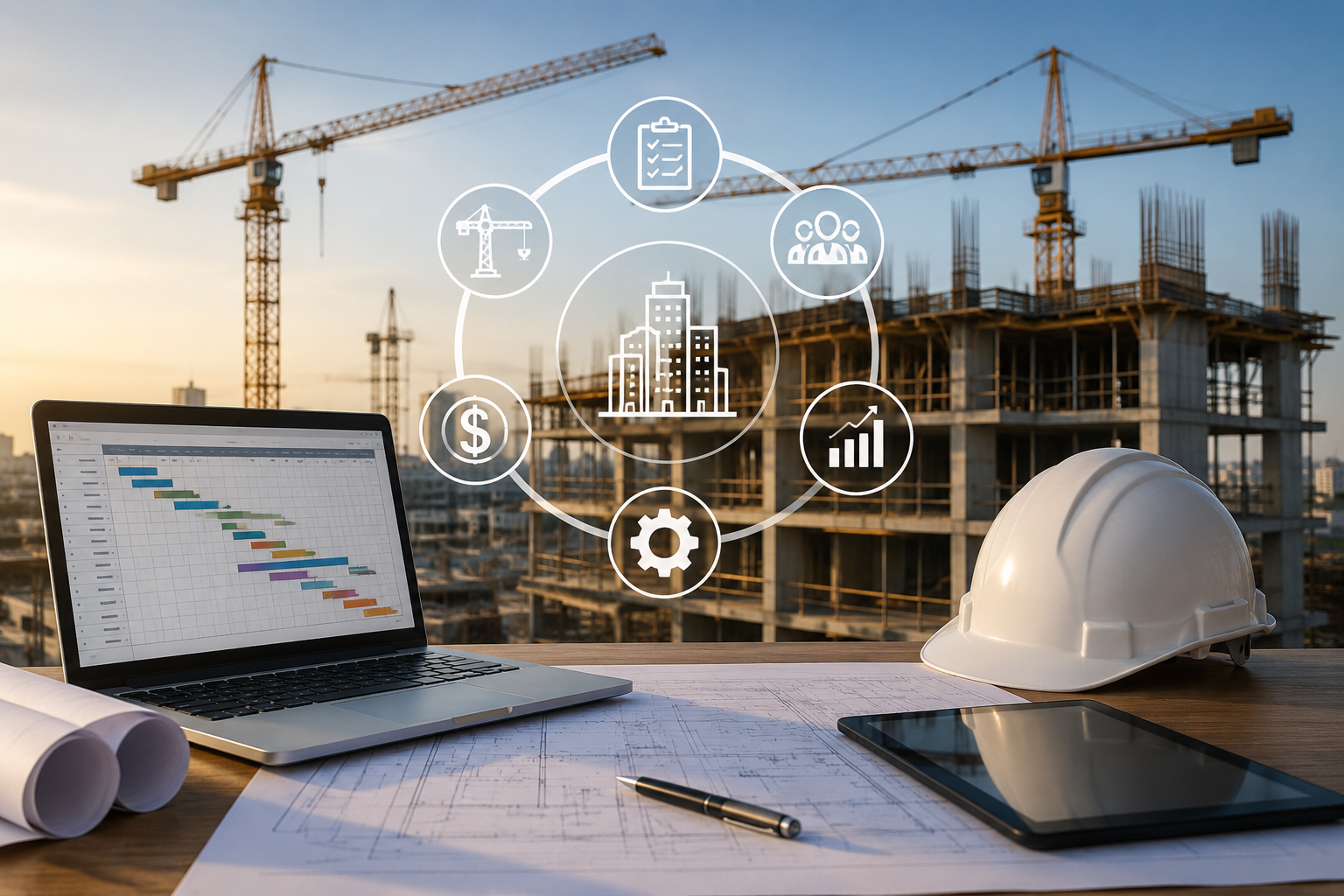
Economic downturns don't arrive with much warning. For construction businesses, the impact can be sudden — projects get delayed, clients pull back, and cash flow tightens fast. The good news is that companies with solid construction program management practices in place tend to weather these periods far better than those without.
This post walks through practical steps you can take now to strengthen your business before the next slowdown hits.
Why Construction Businesses Are Vulnerable During Economic Downturns
Construction is one of the first industries to feel the effects of an economic contraction. When credit tightens or confidence drops, private development slows and public funding gets scrutinized. Projects that were moving forward get paused or cancelled.
Common risks during a slowdown include:
-
Cash flow gaps caused by delayed payments or scope reductions
-
Resource underutilization when crews and equipment sit idle
-
Contract disputes as clients try to exit or renegotiate agreements
-
Subcontractor failures that disrupt active project timelines
Understanding these risks ahead of time gives you the room to plan around them.
Build a Resilient Construction Program Management Framework
A reactive approach rarely works during an economic downturn. What does work is having a construction program management structure that gives you real-time visibility, adaptable workflows, and clear decision-making processes across all your projects.
1. Centralize Project Oversight
When you're managing multiple projects, fragmented information creates blind spots. A centralized management approach means you can see cost performance, schedule status, and resource allocation across your entire portfolio — not just project by project.
This matters most during a slowdown because you need to make fast decisions about where to allocate resources, which projects to prioritize, and where to reduce costs without compromising delivery.
2. Tighten Cost Tracking and Forecasting
Many construction businesses track costs after the fact. That approach leaves little room to course-correct when margins start compressing.
Shift toward forward-looking cost management:
-
Set up earned value tracking so you can spot cost overruns early
-
Update forecasts monthly — or more frequently during volatile periods
-
Flag projects where cost-at-completion is trending above contract value
The earlier you identify a cost problem, the more options you have to address it.
3. Strengthen Contract and Risk Management
Contracts are your first line of financial protection. Before a slowdown hits, review your standard agreements for:
-
Payment terms — ensure milestone-based payments are clearly defined
-
Force majeure clauses — understand what economic conditions might trigger them
-
Change order processes — document these carefully to avoid disputes
On the risk side, update your project risk registers to include economic scenarios. Assign ownership for each risk and define the response plan before issues arise.
Diversify Your Project Portfolio
Heavy reliance on a single market segment — say, commercial office development — creates significant exposure. If that segment contracts, your pipeline can dry up quickly.
Consider broadening your portfolio to include:
-
Public sector and infrastructure projects, which often remain funded during private-sector downturns
-
Renovation and retrofit work, which tends to hold up as clients upgrade existing assets rather than build new ones
-
Mission-critical sectors such as healthcare, data centers, and utilities
Diversification doesn't eliminate risk, but it means a slowdown in one segment doesn't threaten your entire business.
Strengthen Subcontractor and Supplier Relationships
During economic stress, subcontractors and suppliers face their own pressures. Some may cut corners, delay deliveries, or go out of business entirely — and that directly affects your project performance.
Take steps now to build more resilient supply chain relationships:
-
Qualify multiple subcontractors for key trades so you're not reliant on one
-
Review the financial health of your top suppliers annually
-
Maintain open communication with key partners so you're not caught off guard by capacity issues
Strong relationships also give you more leverage to negotiate favorable terms when you need flexibility.
Use Technology to Improve Program Visibility
Construction program management has become significantly more data-driven over the past decade. Businesses that use integrated project management platforms have a clearer picture of performance — and can respond faster when conditions change.
Technology tools that support resilience include:
-
Project management platforms that consolidate scheduling, cost, and document control
-
Dashboards and reporting tools that surface KPIs in real time
-
Document management systems that keep contracts, change orders, and submittals organized and accessible
You don't need to digitize everything overnight. Start with the areas where visibility is weakest and build from there.
Review Your Financial Reserves and Lines of Credit
Cash is what keeps a construction business running when projects slow down. Before a downturn, take a close look at your financial position:
-
Operating reserves — how many months of expenses can you cover if revenue drops?
-
Credit facilities — do you have access to working capital you can draw on if needed?
-
Receivables — are there outstanding invoices you should be collecting more aggressively?
Building up reserves during good periods is one of the most straightforward ways to create stability. If your reserves are thin, now is the time to address it.
Train Your Team for Adaptive Project Execution
Your team's ability to adapt is one of your biggest competitive advantages. During a slowdown, projects may need to be restructured, re-sequenced, or managed with leaner crews.
Invest in training that builds capacity for:
-
Value engineering and scope optimization
-
Lean construction practices that reduce waste
-
Client communication and relationship management
Teams that understand how to deliver value under pressure are far more effective at retaining clients and winning work in competitive environments.
Conclusion
Preparing for an economic slowdown is fundamentally about building discipline into how you run your business — not just reacting when things get hard. A well-structured construction program management approach gives you the visibility, flexibility, and control you need to make smart decisions across your portfolio when conditions tighten.
Start by reviewing your cost tracking, contract terms, and project oversight processes. Diversify your pipeline, strengthen supplier relationships, and ensure your financial position is solid. The businesses that emerge from downturns in good shape are almost always the ones that prepared before the pressure arrived.
- Goth Lifestyle
- Fashion & Style
- Music & Bands
- Art & Photography
- Creative Writing & Poetry
- Events & Scene
- Occult & Spirituality
- DIY & Tutorials
- Beauty & Self-Care
- Relationships & Dating
- Gaming & Media
- Tech & Gadgets
- Body Art & Piercings
- Underground Culture
- Spotlights & Interviews
- Travel & Places
- Lifestyle & Daily Life
- Fitness & Health
- Travel & Adventure
- Books & Literature
- Tech & Gaming
- Movies & TV
- Food & Drinks
- Humor & Memes
- Pets & Animals
- General Arts & Crafts

 English
 Arabic
 French
 Spanish
 Portuguese
 Turkish
 Dutch
Dutch
 Italiano
 Russian
 Romaian
 Portuguese (Brazil)
 Greek
Greek