

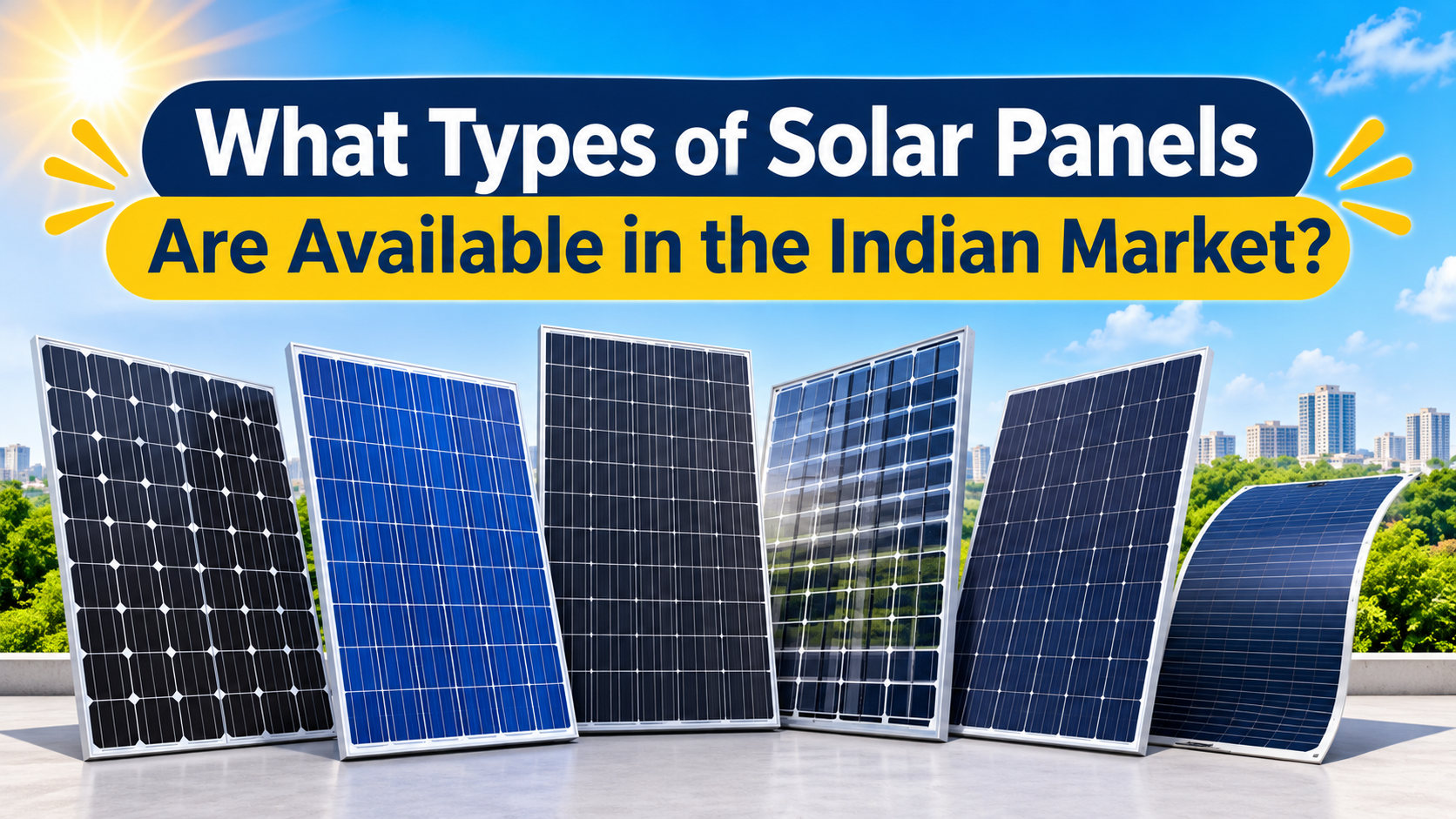

Solar energy is becoming an important source of renewable electricity in India. With increasing awareness about energy conservation and rising electricity requirements, homeowners, commercial establishments, industries, and agricultural businesses are exploring solar power solutions. Solar panels are available in different technologies, sizes, and power capacities to meet these requirements.
However, choosing the right solar panel requires an understanding of how different technologies work, their efficiency, advantages, and suitable applications. Knowing the available options can help buyers make informed decisions before investing in a solar energy system.
Understanding Different Types of Solar Panels
Solar panels work by converting sunlight into electricity through photovoltaic (PV) cells. These cells absorb sunlight and generate direct current (DC) electricity, which can be converted into usable alternating current (AC) through an inverter.
When exploring products from a Solar Panel Supplier in India, buyers may come across different types of solar modules designed for residential rooftops, commercial buildings, industrial facilities, and large-scale solar power plants. Each technology has its own characteristics, making it important to understand the differences before selecting a suitable option.
1. Monocrystalline Solar Panels
Monocrystalline solar panels are among the widely used solar technologies in the Indian market. They are manufactured using high-purity silicon crystals and generally have a dark, uniform appearance.
These panels are known for their relatively high efficiency and ability to generate more electricity from limited installation space.
Key features:
-
High power generation efficiency.
-
Relatively compact design.
-
Suitable for residential and commercial rooftops.
-
Good performance in various installation conditions.
-
Long-term electricity generation potential.
Monocrystalline panels are particularly useful for buildings where rooftop space is limited. Their higher efficiency can help maximise electricity generation from the available area.
2. Polycrystalline Solar Panels
Polycrystalline solar panels are manufactured using multiple silicon crystals melted together. They generally have a blue, textured appearance and were commonly used in earlier solar installations.
Although newer technologies have gained popularity, polycrystalline panels may still be found in certain markets and existing solar projects.
Key features:
-
Manufactured using multiple silicon crystals.
-
Generally lower efficiency than modern monocrystalline alternatives.
-
Often have a distinctive blue appearance.
-
Available in different power capacities.
-
Can be considered for installations with sufficient space.
These panels may be suitable for certain applications where available space and overall project economics are more important than achieving the highest possible efficiency.
3. TOPCon Solar Panels
TOPCon stands for Tunnel Oxide Passivated Contact. It is an advanced solar cell technology designed to improve energy conversion efficiency and reduce electrical losses.
TOPCon solar modules are increasingly available in the Indian market as manufacturers expand their production of advanced solar technologies.
Key features:
-
Higher efficiency potential compared with conventional P-type technologies.
-
Improved cell passivation.
-
Reduced recombination losses.
-
Good potential for long-term energy generation.
-
Available in different module configurations.
TOPCon panels are used in residential, commercial, and utility-scale solar projects. Their efficiency makes them an important option for buyers looking for modern solar technology.
4. Bifacial Solar Panels
Bifacial solar panels are designed to generate electricity from both their front and rear surfaces. The front side captures direct sunlight, while the rear side can capture reflected sunlight from the surrounding surface.
The additional electricity generation depends on installation conditions, ground reflectivity, mounting height, and system design.
Key features:
-
Electricity generation from both sides.
-
Potential for additional energy output.
-
Suitable for ground-mounted solar installations.
-
Can be used in commercial and utility-scale projects.
-
Performance depends on surrounding environmental conditions.
Bifacial modules are particularly useful in installations where the rear side receives sufficient reflected light.
5. PERC Solar Panels
PERC stands for Passivated Emitter and Rear Cell. This technology adds a passivation layer to the rear side of solar cells to improve light absorption and reduce energy losses.
PERC technology has been widely used in monocrystalline and polycrystalline solar modules.
Key features:
-
Improved light absorption.
-
Better efficiency than conventional cell designs.
-
Reduced energy losses.
-
Available in different module capacities.
-
Suitable for various rooftop and ground-mounted applications.
Although newer technologies such as TOPCon are gaining market share, PERC panels remain relevant in existing installations and certain product categories.
6. Thin-Film Solar Panels
Thin-film solar panels are manufactured by depositing thin layers of photovoltaic materials onto a supporting surface. Unlike traditional crystalline silicon panels, they do not use thick silicon wafers.
Common thin-film technologies include cadmium telluride (CdTe) and amorphous silicon.
Key features:
-
Lightweight construction in some designs.
-
Flexible product options are available.
-
Different appearance compared with crystalline panels.
-
Can be suitable for selected specialised applications.
-
Generally lower efficiency than conventional crystalline modules.
Thin-film panels are used in specific projects where their physical characteristics offer practical advantages. However, their suitability depends on installation space, climate, and energy requirements.
7. Half-Cut Cell Solar Panels
Half-cut cell technology involves dividing conventional solar cells into smaller sections. This design can reduce electrical resistance and improve the overall performance of the module.
Many modern monocrystalline and TOPCon solar panels use half-cut cell designs.
Key features:
-
Reduced electrical losses.
-
Improved module performance.
-
Better handling of certain partial-shading conditions.
-
Lower operating current in individual cell sections.
-
Available in multiple power ratings.
Half-cut cell technology is not a separate silicon material category. Instead, it is a cell design that can be combined with different solar technologies.
Factors to Consider When Choosing Solar Panels
Before purchasing solar panels, buyers should evaluate several factors to identify products suitable for their requirements.
1. Efficiency: Check how effectively the panel converts sunlight into electricity. Higher efficiency can be useful when installation space is limited.
2. Power rating: Solar panels are available in different wattage capacities. Select a suitable rating based on the total system size and electricity requirements.
3. Available installation space: Measure the rooftop or ground area before selecting module dimensions and quantities.
4. Temperature performance: Solar panels operate under different environmental conditions. Check the temperature coefficient to understand how output changes as module temperature increases.
5. Warranty: Review product and performance warranties provided by the manufacturer.
6. Certifications: Check applicable certifications, testing standards, and documentation to verify product compliance.
7. Budget: Compare the overall cost of the solar system rather than considering the panel price alone.
Conclusion
The Indian solar market offers several types of solar panels, including monocrystalline, polycrystalline, TOPCon, bifacial, PERC, thin-film, and half-cut cell modules. Each option has different features, efficiency levels, and applications. Understanding these differences can help homeowners, installers, and businesses select suitable solar products for their projects. Before making a purchase, compare technical specifications, warranty conditions, certifications, and long-term performance. Choosing a reliable best Solar Panel distributor in India can also help buyers access suitable products and the technical information needed to make informed solar purchasing decisions.



