

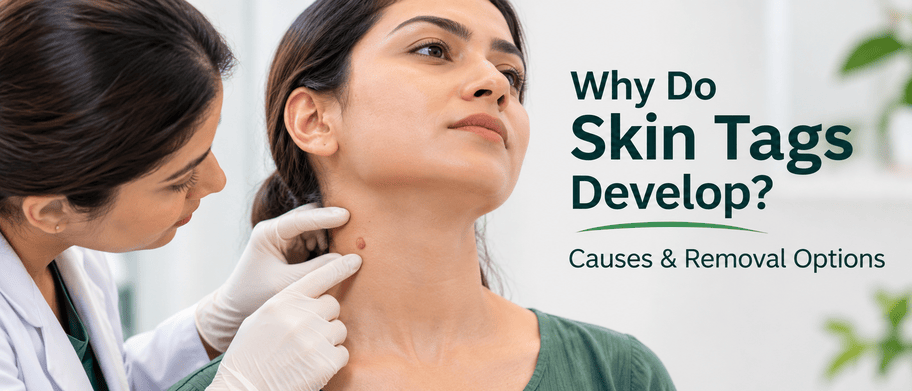

You may notice a small, soft piece of skin appearing on your neck while looking in the mirror or feel a tiny growth under your arm when washing or shaving. At first, it might seem like a pimple or a small mole. But when similar growths begin appearing around the neck, underarms, eyelids or other skin folds, it is natural to wonder why they keep developing.
These growths are commonly known as skin tags, or acrochordons. They are usually harmless and do not generally require medical treatment. Still, their appearance can raise questions about friction, ageing, genetics, weight changes and underlying health conditions.
For people considering Skin tags removal treatment, understanding why these growths develop is a useful starting point. Removing a visible tag may address irritation or cosmetic concerns, but it does not necessarily explain why other tags have appeared.
This article explains the common contributing factors, where skin tags usually occur, how they differ from other skin growths, when medical assessment is appropriate and which professional removal methods may be considered.
A skin growth may look simple, but understanding why it develops helps you make better decisions about your skin.
Key Considerations
- Skin tags are generally benign growths made up of skin tissue and small blood vessels.
- Repeated friction between skin folds, clothing and jewellery is one of their common contributing factors.
- Age, genetics, pregnancy, obesity and metabolic conditions may be associated with their development.
- Most skin tags do not require removal unless they cause discomfort, irritation or cosmetic concern.
- A changing, painful or bleeding growth should be assessed by a healthcare professional before treatment.
What Are Skin Tags and How Do They Form?
Skin tags are small, soft growths that develop on the skin's surface. Their medical name is acrochordons. They are generally benign, meaning they are not cancerous, and commonly appear as small pieces of excess skin attached by a narrow stalk.
They can occur individually or in groups, and their appearance may vary depending on their size, location and skin tone.
Understanding the Structure of a Skin Tag
A typical skin tag consists of loose collagen fibres, small blood vessels and surrounding skin tissue. Collagen is a structural protein that helps provide support to the skin.
Unlike a flat mole, which develops from pigment-producing cells, a skin tag usually projects outward from the skin. It may have a narrow base or a slightly broader attachment.
Common characteristics include:
- Soft or slightly flexible texture.
- Flesh-coloured, pinkish or slightly darker appearance.
- Small, hanging or stalk-like shape.
- Usually painless when left undisturbed.
- Variable size, ranging from tiny growths to larger lesions.
According to the NHS guidance on skin tags, these growths are common and usually harmless.
Why Do They Develop Gradually?
Skin tags are thought to develop through a combination of local skin irritation and individual biological factors. Repeated rubbing may contribute to their development, especially in areas where skin remains in contact for long periods.
The exact biological mechanism is not fully established. Not every person exposed to friction develops skin tags, which suggests that other factors also influence their formation.
A person might notice one small growth for years, while someone else may develop several over time. This variation is normal and does not automatically indicate an underlying illness.
Why Do Skin Tags Commonly Appear on the Neck and Underarms?
The neck and underarms are among the most frequent locations for skin tags. Both areas experience regular movement, skin-to-skin contact and friction from everyday activities.
The repeated contact between skin surfaces may contribute to the formation of these small growths.
Here are some reasons these areas are particularly affected:
- Repeated skin friction: The neck and underarms move throughout the day. Skin rubbing against adjacent skin may contribute to local irritation and skin tag development.
- Clothing and accessories: Tight collars, necklaces, straps and other accessories can repeatedly rub against the same area, irritating existing skin growths.
- Moisture and sweating: Underarms can remain warm and moist, particularly during exercise or hot weather. This can increase friction and irritation between skin surfaces.
- Natural skin folds: People with deeper skin folds may experience more frequent skin-to-skin contact around the neck, armpits and other body areas.
- Shaving and grooming: Razors can catch existing skin tags, causing irritation, soreness or bleeding.
For example, someone who regularly wears a tight necklace may notice an existing neck skin tag becoming irritated. Similarly, a skin tag under the arm may repeatedly catch against clothing during exercise.
These situations do not mean that friction is the only cause. They explain why certain areas are more susceptible to irritation and where skin tags commonly occur.
Which Factors Can Make Skin Tags More Likely?
Although friction plays a role, several personal and biological factors may increase the likelihood of developing skin tags. These factors do not affect everyone in the same way.
Understanding them can help explain why some people develop multiple skin tags while others rarely experience them.
Age and Genetic Factors
Skin tags become more common as people grow older. Changes in skin structure, elasticity and repeated exposure to friction may contribute to their development over time.
Family history can also play a role. If close family members frequently develop skin tags, an individual may have a greater tendency to experience them.
However, having relatives with skin tags does not mean that someone will necessarily develop them.
Pregnancy and Hormonal Changes
Hormonal fluctuations during pregnancy may influence the development of skin tags. Some pregnant women notice new growths around their neck, underarms and breasts.
These changes may occur alongside natural changes in skin folds and body weight.
Not every skin tag that appears during pregnancy requires treatment. Any new or unusual growth should be assessed before a removal procedure is considered, particularly during pregnancy.
Obesity and Increased Skin Folds
People living with obesity may have deeper or more numerous skin folds. This can increase friction between adjacent skin surfaces.
Areas such as the neck, underarms, abdomen and inner thighs may therefore become more prone to irritation.
This does not mean skin tags are caused simply by body weight. Genetics, age and other biological factors can also influence their occurrence.
Insulin Resistance and Metabolic Factors
Research has reported associations between skin tags and metabolic conditions, including insulin resistance, type 2 diabetes and metabolic syndrome.
These relationships are discussed further below because they are particularly relevant when multiple skin tags develop over a relatively short period.
Where Else Can Skin Tags Develop?
Skin tags can appear on almost any area of the body, although they are more common in places exposed to repeated friction or natural skin folding.
Apart from the neck and underarms, other common locations include:
- Eyelids: Small growths may develop around the eyelids, where they can become irritating or occasionally interfere with vision depending on their position.
- Under the breasts: Skin folds beneath the breasts can experience repeated contact, movement and moisture, creating conditions that may contribute to skin tags.
- Groin area: Skin-to-skin rubbing around the groin and inner thighs can contribute to the development of small skin growths.
- Upper chest: Clothing, jewellery and natural skin movement can repeatedly irritate areas around the upper chest.
- Abdomen and back: People with natural folds around the abdomen may develop skin tags in areas where the skin frequently rubs together.
- Around the buttocks: Skin folds and regular friction may contribute to growths around this area.
The appearance and location of a growth do not establish its identity. Similar-looking lesions can have different causes, so unusual growths should be assessed rather than assumed to be skin tags.
Are Skin Tags Connected to Insulin Resistance and Diabetes?
One question that often arises when several skin tags appear is whether they could indicate an underlying health problem.
There is a recognised association between skin tags and insulin resistance, obesity and type 2 diabetes. Insulin resistance occurs when the body's cells respond less effectively to insulin, the hormone that helps regulate blood glucose.
A person searching for a dermatologist in Harley Street may be looking for an assessment that considers both the visible skin growths and any relevant health concerns.
How Insulin Resistance May Be Related
Research suggests that higher insulin levels and metabolic changes may influence processes involved in skin cell growth.
Some clinical studies have reported a greater occurrence of skin tags among people with insulin resistance and metabolic syndrome.
A 2025 clinical review published in NCBI Bookshelf's StatPearls discusses these associations, including links with obesity, diabetes and abnormal lipid levels.
However, an association does not establish that one condition directly causes the other.
Do Skin Tags Mean You Have Diabetes?
No. Having one or several skin tags does not mean that you have diabetes.
Skin tags are common among people without diabetes, and many people with diabetes never develop them.
However, if numerous new skin tags appear, particularly alongside other health concerns, discussing your overall health with a GP may be sensible.
Depending on your medical history and symptoms, a doctor may consider checking blood glucose or other metabolic markers.
When a General Health Assessment May Be Useful
A healthcare professional may discuss further assessment when skin tags occur alongside:
- A family history of type 2 diabetes.
- Increased waist circumference or obesity.
- Previously identified insulin resistance.
- High blood pressure or abnormal cholesterol.
- Other symptoms that may suggest a metabolic condition.
The purpose is to assess the person's overall health rather than assume that the skin growths provide a diagnosis.
How Can You Tell Skin Tags Apart from Other Skin Growths?
Not every small growth on the skin is a skin tag. Moles, warts, seborrhoeic keratoses and other benign skin lesions can sometimes look similar.
This distinction matters because the appropriate management depends on the actual diagnosis.
Skin Tags and Warts
Skin tags are generally soft, smooth and attached to the skin by a narrow stalk.
Common warts, by comparison, are usually firmer and have a rough or irregular surface. Warts are caused by human papillomavirus (HPV), whereas typical skin tags are not considered HPV-related growths.
Skin Tags and Moles
Moles develop from pigment-producing cells and often appear as flat or raised spots with a distinct colour.
Skin tags generally have a flesh-coloured or slightly darker appearance and project outward from the skin.
A mole that changes in shape, colour or size should be medically assessed rather than treated as a cosmetic skin tag.
Skin Tags and Seborrhoeic Keratoses
Seborrhoeic keratoses are benign skin growths that may appear waxy, rough or slightly raised. They can sometimes resemble stuck-on patches of skin.
Their texture and appearance differ from typical soft, stalk-like skin tags, although there can be overlap in how patients describe them.
Why Clinical Assessment Matters
Visual inspection can help a doctor assess a typical skin tag. In some cases, dermoscopy or a biopsy may be appropriate, particularly when a growth has unusual features or the diagnosis is uncertain.
A correct diagnosis should always come before cosmetic removal.
When Should a Skin Tag Be Checked by a Medical Professional?
Most skin tags do not cause health problems. Nevertheless, changes in their appearance or behaviour should not be ignored.
A healthcare professional can assess whether a growth has the typical characteristics of a skin tag or requires a different investigation.
Changes in Size or Appearance
Arrange a medical assessment when a skin growth:
- Becomes noticeably larger over a short period.
- Changes colour or develops an unusual appearance.
- Becomes firm, irregular or fixed to the underlying skin.
- Starts bleeding without an obvious cause.
- Develops an open sore or ulcer.
- Causes persistent or unusual pain.
These features do not automatically indicate a serious condition. They do mean that the growth should not be removed without an appropriate assessment.
Multiple New Skin Tags
Developing several new skin tags over a relatively short period may be worth discussing with a doctor.
Although many skin tags are harmless, numerous new growths can sometimes occur alongside metabolic conditions or other health changes.
A clinician can assess the growths and decide whether further investigation is appropriate.
Irritation and Everyday Discomfort
A skin tag may become troublesome even when it is medically benign.
For example, a growth under the arm might repeatedly catch on clothing, while a neck skin tag may become irritated by necklaces or shaving.
Professional removal may be considered when repeated irritation affects comfort or daily activities.
Growths Around Sensitive Areas
Skin tags around the eyelids or genital region require particular care.
Their location may affect the removal method, the structures surrounding the growth and the possibility of complications.
Professional assessment is advisable before attempting any procedure in these areas.
Which Professional Removal Methods Are Available?
Skin tags do not always need to be removed. When treatment is appropriate, the method depends on the size, location, number and attachment of the growths.
A healthcare professional can assess the lesion and recommend an appropriate technique.
Surgical Excision
Surgical excision involves removing the skin tag using sterile surgical scissors or a blade.
For many procedures, the doctor first applies a local anaesthetic to numb the surrounding area.
The growth is then carefully removed, and any bleeding is controlled. A dressing may be applied depending on the size and location of the treated area.
This technique may be considered for larger or deeper skin tags where precise removal is appropriate.
Cryotherapy
Cryotherapy uses extreme cold, commonly liquid nitrogen, to freeze the targeted skin tissue.
The treated area may develop a small blister or scab before healing. Some skin tags may require additional treatment depending on their size and response.
Cryotherapy can be suitable for selected superficial growths, although the doctor must assess whether freezing is appropriate for the location and appearance.
Electrocautery and Electrodessication
Another method used in dermatology is electrodessication. It uses controlled electrical energy to destroy the targeted tissue.
A small scab generally develops at the treatment site while the skin heals.
This method is not suitable for every skin tag, and its availability varies between clinics.
Choosing the Appropriate Technique
The decision is based on several considerations:
- Size and attachment of the growth.
- Location and sensitivity of the surrounding skin.
- Number of skin tags being treated.
- Individual skin characteristics and medical history.
- Potential for scarring or changes in pigmentation.
There is no single procedure that is automatically suitable for every patient. The focus should be on accurate diagnosis, appropriate technique and careful aftercare.
Good removal begins with a clear diagnosis, careful technique and realistic expectations.
How Should You Prepare for Skin Tag Removal and Care for Your Skin Afterwards?
Even a minor skin procedure requires appropriate preparation and aftercare. Taking a few sensible steps can help reduce avoidable irritation and support normal healing.
Before undergoing treatment, consider the following:
- Have the growth examined: Do not assume that every skin-coloured growth is a skin tag. Let a qualified professional assess its appearance and suitability for removal.
- Discuss your medical history: Mention existing health conditions, allergies, previous skin reactions and any medicines that may affect bleeding or healing. Do not stop prescribed medication without medical advice.
- Understand the procedure: Ask whether the treatment involves local anaesthesia, freezing or another technique, and discuss the possible risks.
- Follow aftercare instructions: Keep the treated area clean and follow the specific wound-care advice provided by your clinician.
- Avoid unnecessary friction: Clothing, jewellery and shaving can irritate a recently treated area. Allow the skin to heal according to your clinician's instructions.
- Watch for signs of infection: Increasing redness, warmth, swelling, worsening pain or discharge should be reported to a healthcare professional.
- Attend follow-up appointments when advised: Review may be needed to assess healing or examine any growths that remain uncertain.
Health Snapshot
- Skin tags are usually harmless and commonly appear in areas exposed to repeated friction.
- Age, family history, pregnancy, obesity and metabolic conditions may contribute to their development.
- Multiple new growths do not automatically indicate diabetes, but discussing relevant health concerns with a doctor may be appropriate.
- Cryotherapy and surgical excision are established professional removal methods, with suitability depending on the individual lesion.
- Never cut, tie off or apply unverified removal products to a skin tag yourself. Seek assessment for growths that change, bleed or become painful.
What Should You Consider When Choosing a Skin Tag Removal Clinic?
Choosing a clinic for a skin procedure involves more than comparing the available removal methods.
The professional carrying out the procedure should first establish that the growth is a skin tag and determine whether removal is appropriate.
The clinic should also explain the procedure, possible complications, costs and aftercare before treatment begins.
When considering a provider, pay attention to the following:
- Medical qualifications: Check the clinician's professional registration, relevant qualifications and experience with minor skin procedures.
- Accurate assessment: A proper consultation should establish whether the growth is a skin tag or another type of skin lesion.
- Suitable treatment methods: The recommended procedure should reflect the size, location and characteristics of the growth.
- Safety and hygiene: The clinic should use appropriate sterile equipment and follow established infection-control procedures.
- Clear pricing: Ask about consultation fees, procedure charges and any additional costs before agreeing to treatment.
- Aftercare support: You should receive clear instructions about wound care, healing and the circumstances in which you should contact the clinic.
Professional Skin Tag Assessment at Harley Street Prestige Medical
Harley Street Prestige Medical provides skin tag removal services at its clinic at 104 Harley Street, London.
Its published skin tag service page lists two main options:
- Surgical excision: A minor procedure under local anaesthesia, described by the clinic for larger or deeper skin tags.
- Cryotherapy: A freezing technique listed for selected superficial skin tags.
The clinic explains that treatment selection depends on the growth's characteristics and that patients receive an assessment before proceeding.
For someone experiencing repeated irritation from skin tags or concerned about their appearance, a consultation provides an opportunity to discuss the available procedures, possible risks and expected recovery.
You can read more about the clinic's skin tag removal services in London or arrange an appointment through its booking service.
The most appropriate treatment is the one recommended after an individual medical assessment, rather than simply choosing the procedure that sounds quickest.
Comparing Professional Skin Tag Removal Methods
Different procedures work in different ways. The following table summarises the commonly used options and the factors a clinician may consider when selecting a method.
| Removal Method | How It Works | Common Considerations | Possible Side Effects |
| Surgical excision | Growth is removed using a sterile blade or scissors | Useful for selected larger or deeper tags; local anaesthesia may be used | Bleeding, infection, scarring |
| Cryotherapy | Targeted tissue is frozen | May suit selected superficial skin tags | Blistering, temporary colour changes, irritation |
| Electrodessication | Controlled electrical energy destroys the tissue | Used for selected growths by appropriately trained clinicians | Scabbing, pigmentation changes, scarring |
| Home removal | Cutting, tying or applying unverified products | Not recommended without medical guidance | Infection, bleeding, tissue damage and scarring |
The best option depends on the individual growth and the patient's medical circumstances. Even when a procedure is considered minor, no method can guarantee a completely scar-free result.
Frequently Asked Questions
Why am I suddenly getting skin tags on my neck?
Several factors may contribute, including repeated friction, ageing, genetics, weight changes and hormonal fluctuations. If many new growths appear over a short period, arrange a medical assessment to confirm their identity and discuss whether further health checks are appropriate.
Are skin tags a sign of high blood sugar?
Not necessarily. Skin tags are associated with insulin resistance and type 2 diabetes, but they can also occur in people with normal blood glucose levels. A doctor can advise whether blood glucose testing is appropriate based on your overall health and medical history.
Can skin tags disappear without treatment?
Yes. Some skin tags may dry out and fall off naturally, although many remain unchanged. They do not generally need removal unless they cause discomfort, repeated irritation or cosmetic concern.
Does removing a skin tag prevent new ones from developing?
No. Removing an existing skin tag generally addresses that particular growth, but it does not prevent other skin tags from developing elsewhere. Friction, genetics, age and other contributing factors may continue to influence their occurrence.
Is professional skin tag removal painful?
The experience depends on the removal method and the location of the growth. A local anaesthetic may be used for surgical excision, while cryotherapy can cause temporary stinging or discomfort. Your clinician should explain what to expect before treatment.
Final Thoughts
Skin tags are common skin growths that usually develop in areas where skin folds rub against each other. This explains why the neck, underarms, eyelids and areas beneath the breasts are frequent locations. Age, genetics, hormonal changes and metabolic factors may also influence their development.
Although most skin tags are harmless, changes in their size, colour or texture deserve medical attention. Multiple new growths may also be worth discussing with a healthcare professional, particularly when other health concerns are present.
Removal is a personal decision based on symptoms, location and cosmetic preferences. Professional options such as surgical excision and cryotherapy can address selected growths, but the correct method should always follow an assessment.
For anyone concerned about persistent or bothersome skin growths, a consultation with an appropriately qualified medical professional is a sensible first step. At Harley Street Prestige Medical, patients can discuss their skin concerns and available removal options during a clinical consultation.
Healthy skin decisions start with understanding your skin, not simply treating what you see.
Medical Disclaimer: This article is intended for general educational purposes and does not replace an individual medical consultation, diagnosis or treatment advice. Skin growths that change, bleed, become painful or have unusual characteristics should be assessed by a qualified healthcare professional. Treatment suitability and recovery vary between individuals.



