

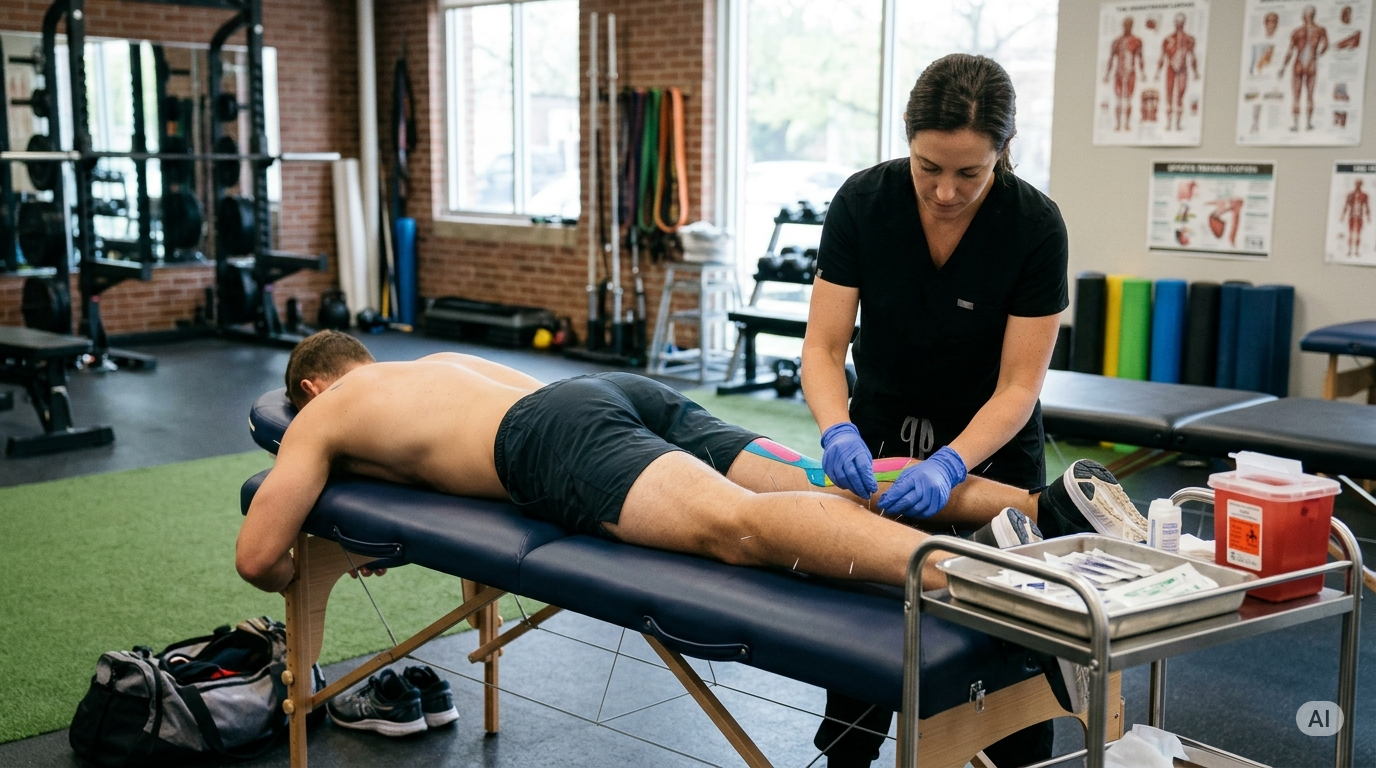
Acupuncture for Sports Performance: Should You Try It Before an Important Competition?

As competition day approaches, athletes often look for ways to feel prepared, recover well, and manage the pressure of performing. If you are considering whether acupuncture for sports performance could fit into your competition preparation, timing and expectations matter. A session should not be treated as a guaranteed way to improve speed, strength, endurance, or results. It is better to understand what the treatment involves, discuss suitability with a qualified practitioner, and avoid experimenting with an unfamiliar approach immediately before an important event.
The most useful competition plan is built around familiar training, adequate recovery, nutrition, hydration, sleep, and a realistic schedule. Complementary care, if chosen, should fit around those foundations rather than replace them.
Why the days before competition are different
An ordinary training week gives you opportunities to observe how your body responds to a new routine. You can adjust the next session, take an easier day, or discuss an unexpected reaction with your coach.
The final days before competition are different. Your schedule may include travel, equipment checks, weigh-ins, team meetings, practice sessions, and a carefully planned reduction in training load. An unexpected reaction to a new treatment can become an unnecessary distraction.
Even an appointment that is generally well tolerated may involve temporary soreness, bruising, fatigue, or discomfort for some people. The response varies between individuals. That is one reason to avoid treating competition week as the ideal time to test an unfamiliar service.
Does a session immediately before an event improve performance?
There is no established universal rule that acupuncture immediately before competition improves athletic performance. Studies of acupuncture and related interventions have examined different outcomes, including pain, muscle soreness, flexibility, and aspects of recovery. They do not establish that every athlete will perform better after a session or that a particular pre-event timing produces a reliable advantage.
Some recent reviews suggest possible short-term effects for selected symptoms, but the evidence is limited by small study numbers, different treatment methods, and variation in how outcomes are measured. A reduction in perceived soreness is not the same as an improvement in race time, strength, accuracy, or match performance.
A responsible practitioner should not promise a personal best, faster reaction time, improved endurance, or a guaranteed competitive edge.
Decide what you are trying to achieve
Before booking, separate your goal from the result you hope to achieve on competition day.
|
Your reason for considering a session |
A realistic way to frame the goal |
What not to assume |
|
General relaxation |
You want a calm appointment as part of your routine |
That it will remove all competition anxiety |
|
Existing muscle discomfort |
You want to discuss an optional approach to symptom management |
That pain relief proves an injury has healed |
|
Recovery routine |
You want to explore an additional recovery option |
That it replaces sleep, nutrition, or planned rest |
|
Familiarity with treatment |
You already know how you respond and want to discuss timing |
That your previous response guarantees the same result |
|
Curiosity before a major event |
You want to see whether a new treatment feels useful |
That competition week is a good time to experiment |
A clear goal makes it easier to decide whether the appointment is worthwhile. If your only reason is the belief that one session will guarantee better performance, the expectation needs to be reconsidered.
Why trying something new at the last minute can backfire
Athletes often spend months preparing for a competition and may be reluctant to change anything close to the event. That caution is sensible.
A new treatment can introduce uncertainty:
-
You may not know how your body responds.
-
The appointment may take time away from rest or travel preparation.
-
Temporary discomfort may affect your usual training routine.
-
You may become distracted by monitoring how you feel.
-
The treatment may not match the schedule recommended by your coach or healthcare professional.
This does not mean that every new appointment is harmful. It means that the final preparation period is not the ideal time to make an unnecessary change without understanding the possible response.
A practical decision process for competition week
Use the following steps to decide whether an appointment belongs in your schedule.
-
Check your competition calendar. Identify travel dates, weigh-ins, practice sessions, recovery periods, and the event itself. Do not assume there will be time for an additional appointment.
-
Clarify the purpose. Decide whether you are seeking general wellbeing support, discussing an existing symptom, or exploring a treatment you have used before.
-
Review your health status. If you have an injury, unexplained pain, illness, dizziness, or another concern, seek appropriate medical advice before considering an optional session.
-
Speak with your coach or healthcare professional. Explain what you are considering and ask whether it fits your current training and recovery plan.
-
Discuss timing with the practitioner. Share the competition date and ask about possible temporary effects, including soreness or bruising. Do not rely on a generic schedule.
-
Avoid untested changes. If you have never received the treatment before, consider whether it is better to explore it during a less demanding training period rather than immediately before an event.
-
Keep the core preparation unchanged. Prioritise your established warm-up, nutrition, hydration, sleep, equipment checks, and competition strategy.
-
Review the experience afterwards. If you choose to attend, note how you feel and discuss any concerns before making future appointments.
What to prioritise in the final 48 hours
The final two days are usually better spent following a familiar plan than trying to introduce several new recovery methods.
|
Preparation area |
Practical priority |
Common mistake |
|
Sleep |
Keep a familiar sleep routine and allow enough time to rest |
Staying up late to add more preparation |
|
Nutrition |
Follow your established meal plan |
Trying unfamiliar foods or supplements |
|
Hydration |
Follow a suitable hydration routine for your sport and conditions |
Drinking excessive amounts at the last minute |
|
Training |
Follow the taper or light-session plan set by your coach |
Adding extra high-intensity work |
|
Equipment |
Check clothing, footwear, protective gear, and supplies |
Waiting until event morning |
|
Mental preparation |
Use familiar focus and relaxation strategies |
Trying several new techniques at once |
|
Optional treatments |
Attend only if already considered suitable and well timed |
Assuming a last-minute appointment will create a performance advantage |
The best preparation is not necessarily the one with the most activities. It is the one that leaves you ready to compete without unnecessary uncertainty.
Two examples of competition-week decisions
Example 1: A first-time appointment before a marathon
A runner hears from a friend that acupuncture helped them feel better before a race. The runner has never tried it and considers booking a session two days before a marathon. After reviewing the schedule, the runner decides not to introduce an unfamiliar treatment so close to the event. Instead, they follow their established taper, meal plan, sleep routine, and race preparation.
This is not a claim that treatment would necessarily cause a problem. It is a decision to avoid an unknown response when there is little time to adjust.
Example 2: An athlete who already has an established routine
A competitive swimmer has previously attended acupuncture appointments during ordinary training periods and understands how they respond. Before a major meet, the swimmer discusses the proposed timing with the practitioner and coach. They review the event schedule and decide whether an appointment is appropriate without changing the prescribed training or recovery plan.
The second situation is different because the athlete is not experimenting with an unfamiliar service. Even so, there is no guarantee of a performance benefit.
Illustrative Case Study: Keeping competition preparation predictable
Marcus is preparing for a major cycling event. He has followed a structured training plan for several months and is now reducing training volume. A teammate recommends an acupuncture session shortly before the event, saying it may improve performance.
Marcus has never tried it. Rather than booking immediately, he speaks with his coach and reviews the remaining preparation schedule. He learns that there is little time to assess how he might respond to a new treatment. He decides to keep the final week familiar and discuss the option during a future training block.
After the event, Marcus can consider whether complementary care fits his longer-term wellbeing routine. He does not treat the decision to skip a last-minute appointment as a missed opportunity for guaranteed performance improvement.
The lesson is that competition preparation should be planned around what is known to work for the individual athlete. A new intervention does not become necessary simply because the event is important.
How to evaluate claims about performance improvement
When researching acupuncture for sports performance, pay attention to the exact outcome being discussed. A study that measures pain is not necessarily measuring athletic performance. A study that looks at muscle soreness does not automatically establish faster recovery or improved competition results.
Ask these questions:
-
Was the research conducted with athletes in a sport similar to yours?
-
Did it measure an actual performance outcome or only a symptom?
-
Was the study large enough to support a reliable conclusion?
-
Was there a suitable comparison group?
-
Were the results consistent across studies?
-
Were adverse effects and limitations reported?
This helps you distinguish a possible supportive effect from a claim that goes beyond the evidence.
Conclusion
The final days before competition are a time to protect preparation, not create unnecessary uncertainty. A familiar routine, adequate rest, appropriate nutrition, and a well-planned training schedule should remain the foundation.
If you are considering acupuncture for sports performance, discuss the purpose and timing with a qualified practitioner and your relevant sports or healthcare team. Avoid treating an unfamiliar session as a guaranteed performance enhancer, particularly when there is little time to assess your response.
For more information about the services offered by Swiss Acupuncture, visit the clinic's website and discuss your sport, competition schedule, health history, and expectations before arranging an appointment.
Frequently Asked Questions
Should I try acupuncture for the first time just before a competition?
It is generally more sensible to avoid introducing an unfamiliar treatment immediately before an important event. You may not know how you will respond, and there may be little time to adjust your preparation if you experience temporary discomfort.
Can acupuncture improve my competition results?
There is no guarantee that it will improve results. Research has examined different outcomes, but evidence for consistent improvements in actual athletic performance remains limited.
Is a session appropriate during a training taper?
That depends on your previous experience, health status, training plan, and the practitioner's advice. Discuss the timing with your coach or healthcare professional rather than assuming it is suitable.
Can acupuncture replace my warm-up or recovery routine?
No. It should not replace sport-specific warm-ups, planned recovery, sleep, nutrition, hydration, or medical care.
What should I tell the practitioner before a competition?
Share the sport, event date, training schedule, current symptoms, injury history, medical conditions, medication, and any relevant advice from your coach or healthcare professional.
Is reduced soreness proof of better performance?
No. Feeling less sore does not automatically mean that strength, speed, endurance, coordination, or competition readiness has improved. Performance should be evaluated using relevant sport-specific measures.



