

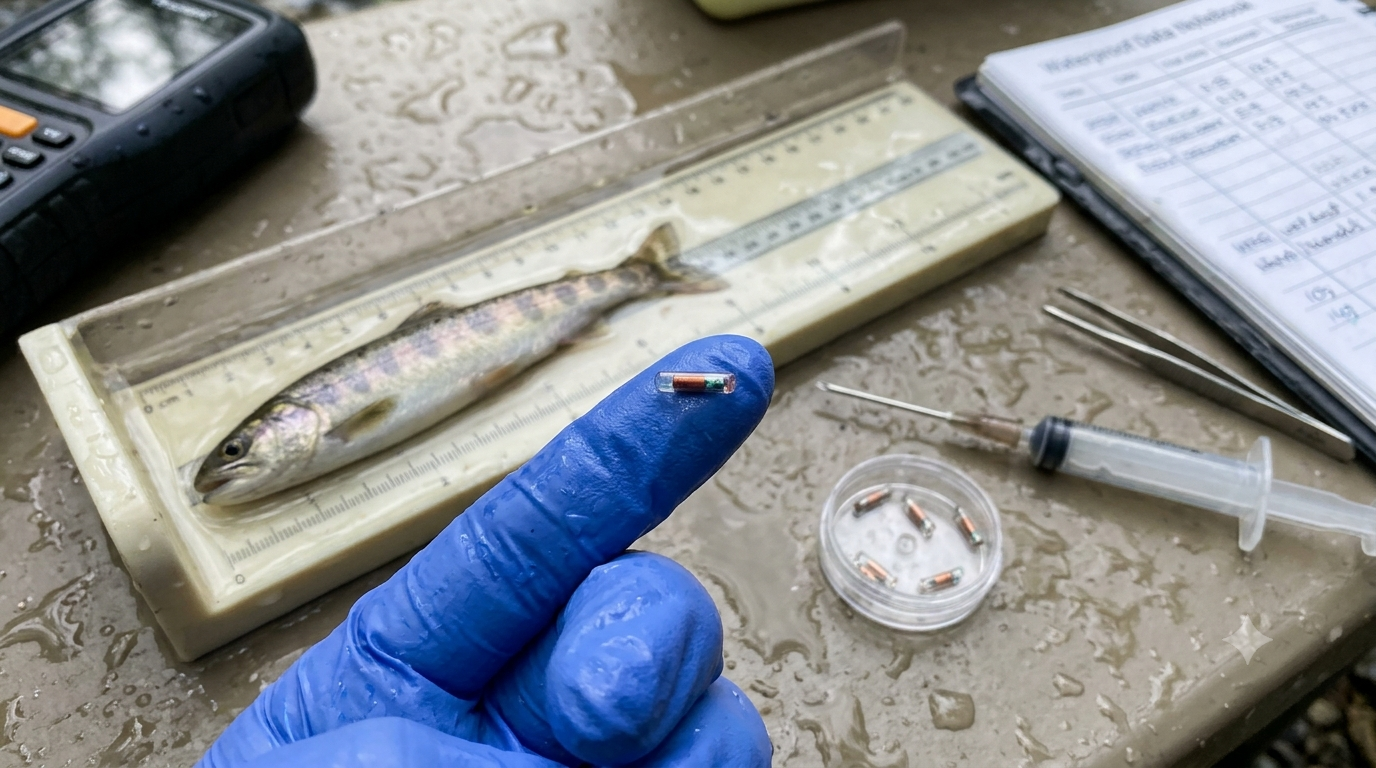
How to Create a Standard Operating Checklist for Reader Maintenance and Equipment Checks

Why equipment checks should be part of the regular workflow
Identification equipment is often used repeatedly across sampling sessions, hatchery activities and research locations. Over time, devices and accessories may experience normal wear, charging issues, connection problems or changes in operating performance.
When equipment checks are left until something goes wrong, a small issue can interrupt a planned session. Staff may discover a damaged accessory, an insufficiently charged battery or an unexpected error only after arriving at the monitoring site.
A suitable tag reader for fish identification and monitoring should therefore be supported by a routine inspection and maintenance process. This process helps staff identify obvious problems early, maintain equipment records and follow the manufacturer's recommendations.
A checklist does not replace technical servicing. Its purpose is to make routine checks consistent and ensure that faults are reported rather than ignored.
1. Create an equipment register
Before introducing a maintenance checklist, identify the equipment that the organisation owns or uses.
An equipment register helps staff distinguish between devices, track their condition and locate the relevant documentation.
Include information such as:
|
Register field |
Information to record |
|
Equipment name |
Product or device name |
|
Model |
Model or product reference |
|
Serial number |
Manufacturer's unique equipment reference, if available |
|
Purchase date |
Date acquired |
|
Assigned location |
Facility or team responsible |
|
Accessories |
Relevant cables, chargers or components |
|
Documentation |
Manual or supplier guidance location |
|
Service history |
Previous inspections or repairs |
|
Current status |
Available, under review or out of service |
Use a consistent internal equipment identifier if several devices are in use. This makes it easier to connect inspection records with the correct item.
2. Establish a pre-use inspection routine
A pre-use check should be short enough to fit into normal work but detailed enough to identify obvious problems.
The inspection should follow the manufacturer's instructions and the organisation's approved procedure.
Staff may be asked to confirm:
-
The device exterior appears undamaged.
-
The display and controls operate as expected.
-
The battery status is suitable for the planned session.
-
Required accessories are available.
-
Connections and cables appear secure and undamaged.
-
The device starts normally.
-
The approved functional check can be completed.
-
The correct project workflow is available.
If an inspection reveals a problem, staff should follow the reporting procedure. They should not continue using equipment that appears unsafe or is outside its approved operating condition.
3. Check power and charging arrangements
Power-related interruptions are among the practical issues that can affect field and hatchery work.
The organisation should define how devices are charged, stored and prepared for the next session. Follow the manufacturer's battery and charging instructions rather than applying a general rule to every device.
A power-management checklist may include:
-
Confirm the battery condition before use.
-
Use the specified charging equipment.
-
Check charging cables and connectors for visible damage.
-
Store batteries as directed by the manufacturer.
-
Record any repeated power-related problems.
-
Remove damaged or suspect components from use according to the approved procedure.
If equipment is shared between teams, assign responsibility for returning it in the agreed condition. This avoids situations where the next operator discovers that the device has not been prepared.
4. Keep accessories in the maintenance process
Accessories are easy to overlook because attention is often focused on the main device.
However, a damaged cable, missing charger or unsuitable accessory can prevent the equipment from being used as intended.
Create an accessory list for each device. Identify which components are required, which are optional and which are approved alternatives.
During inspection, check that accessories match the equipment and follow the relevant manufacturer's instructions. Do not substitute a component simply because it appears to fit.
Where accessories are shared, use a simple issue-and-return record so that missing items can be identified promptly.
5. Follow the manufacturer's cleaning and storage guidance
Cleaning and storage procedures should reflect the device's design and environmental protection limits.
Do not assume that a device can be exposed to water, cleaning agents or high-pressure cleaning simply because it is used in fisheries work. Review the manufacturer's instructions for permitted cleaning methods, environmental conditions and storage requirements.
The organisation should document:
-
Approved cleaning materials and methods.
-
Conditions in which the equipment must be stored.
-
Protection required during transport.
-
Inspection after exposure to challenging conditions.
-
Any restrictions on opening or repairing the device.
If staff are unsure whether a cleaning method is suitable, they should seek guidance rather than experiment.
6. Maintain a record of inspections and faults
A maintenance process becomes more useful when inspection results are recorded.
The record does not need to be lengthy. It should identify the device, date, person completing the check and any problem found.
|
Date |
Equipment ID |
Check completed |
Result |
Action |
|
3 April |
R-001 |
Pre-use inspection |
No issue found |
Ready for approved use |
|
8 April |
R-001 |
Cable inspection |
Damage observed |
Removed from use for review |
|
9 April |
R-002 |
Power check |
Normal |
Ready for approved use |
|
15 April |
R-001 |
Service review |
Awaiting assessment |
Remains unavailable |
These are illustrative entries. The organisation should use its own maintenance categories and authorisation requirements.
A record of recurring faults can help identify whether a device needs technical assessment, replacement or a change in how it is handled.
7. Define when equipment must be removed from use
Not every problem can be resolved during a routine inspection.
Staff should know when to stop using a device and report it. Examples may include visible damage, repeated error messages, abnormal operation or a failed check under the approved procedure.
Create a clear status system, such as:
-
Available: Routine checks completed with no issue identified.
-
Under review: A concern has been reported and the device needs assessment.
-
Out of service: The device must not be used until the appropriate person authorises its return.
Only authorised personnel should approve repairs or return equipment to service. Staff should not open, modify or attempt unauthorised repairs on electronic equipment.
8. Schedule periodic reviews
Pre-use checks help identify immediate issues, but they should be supported by periodic equipment reviews.
The review frequency should follow manufacturer guidance, usage levels and organisational requirements.
A periodic review may include:
-
Inspection of the device and accessories.
-
Review of reported faults.
-
Confirmation that documentation is current.
-
Assessment of service requirements.
-
Review of storage and charging arrangements.
-
Confirmation that staff understand the approved procedure.
For heavily used equipment, the organisation may need a more structured maintenance schedule. Less frequently used devices should still be checked before they return to service.
Two examples of maintenance planning
Example 1: A reader shared by several field teams
A research organisation has one portable device used by different teams throughout the week. Previously, each team returned the equipment without recording its condition.
The organisation introduces a simple return checklist. Staff confirm that the device and accessories have been returned, record any issue and follow the agreed charging and storage procedure.
The next team can review the equipment status before departure rather than discovering a missing component at the field site.
Example 2: Managing a recurring equipment fault
A hatchery team notices that one device has displayed an intermittent error on several occasions. Staff had previously restarted the device and continued without recording the issue.
The supervisor introduces a fault-reporting form that records the date, device identification, circumstances and error message. The repeated issue becomes visible in the maintenance history and is referred for technical assessment.
The team now has a record that can support a more informed service decision.
Illustrative case study: Preventing repeated interruptions through inspection records
This hypothetical example explains a maintenance process and is not a real customer service report.
A fisheries project uses several identification devices across different monitoring locations. During a busy sampling period, one device becomes unavailable because an accessory is damaged.
The project reviews its equipment records and discovers that earlier inspection notes had mentioned the same accessory, but no follow-up action was recorded.
The team introduces a process requiring every reported fault to have an assigned action and status. Equipment marked for review is kept out of routine circulation until it has been assessed.
The change helps the organisation distinguish between a problem that has merely been reported and one that has actually been resolved.
How to select equipment with maintenance in mind
When comparing equipment, consider more than the initial purchase specification. Review the operating instructions, environmental limits, available accessories, service arrangements and supplier support.
Voda IQ offers PIT and RFID reader equipment for identification applications. Organisations evaluating its products should review the current product information and confirm which accessories, maintenance guidance and support arrangements apply to the specific model.
Ask questions before purchase if the organisation needs a particular service arrangement or intends to use the device in demanding field conditions.
A suitable maintenance plan should be practical for the team that will use the equipment. It should not depend on specialist knowledge that routine operators do not have.
Conclusion
Regular equipment checks help fisheries and research teams identify problems before they interrupt important work. A clear process should cover the equipment register, pre-use inspections, charging, accessories, cleaning, storage, fault reporting and periodic reviews.
A well-maintained tag reader is supported by more than a quick visual inspection. Staff need to follow manufacturer instructions, record problems and understand when equipment must be removed from use.
By introducing a simple checklist and assigning responsibility for follow-up, organisations can improve equipment readiness and create a more dependable monitoring workflow.
Frequently Asked Questions
1. How often should identification reader equipment be inspected?
Complete the required checks before use and follow the manufacturer's maintenance schedule. Inspection frequency may need to increase with heavier use or demanding operating conditions.
2. Can staff clean electronic readers with any available cleaning product?
No. Use only cleaning methods and materials permitted by the manufacturer's instructions. Unsuitable products or methods may damage the device.
3. What should staff do if a reader displays repeated errors?
Record the issue, stop using the device if required by the approved procedure and report it to the responsible person or supplier. Do not attempt unauthorised repairs.
4. Why should accessories be included in the equipment register?
Accessories may be essential to normal operation. Tracking them helps teams identify missing, damaged or incompatible components before a monitoring session.
5. Does a pre-use checklist replace technical servicing?
No. A checklist supports routine inspection and fault reporting. Servicing and repairs should follow manufacturer guidance and be completed by appropriately authorised personnel.



