

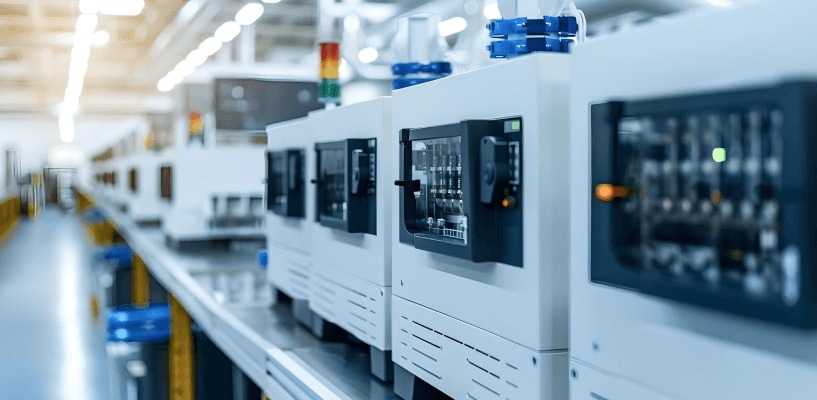
Inverter Business Plan Report: Manufacturing Process, Project Cost, Technical Feasibility and Financial Analysis

IMARC Group’s “Inverter Manufacturing Plant Project Report 2026: Industry Trends, Plant Setup, Machinery, Raw Materials, Investment Opportunities, Cost and Revenue” report provides a comprehensive guide on how to successfully set up an inverter manufacturing plant. The report offers clarifications on various aspects, such as unit operations, raw material requirements, utility supply, infrastructural needs, machinery models, labour necessities, transportation timelines, packaging costs, and other essential requirements.
The report also provides comprehensive insights into the inverter business plan, covering capital investments (CapEx), operating expenses (OpEx), project funding requirements, income and expenditure projections, fixed and variable costs, direct and indirect expenses, expected return on investment (ROI), net present value (NPV), profit and loss accounts, and overall financial analysis. It serves as a valuable resource for investors, electrical equipment manufacturers, electronics companies, entrepreneurs, and businesses assessing the financial feasibility of setting up an inverter manufacturing facility. Additionally, the report examines the inverter manufacturing process, machinery and equipment requirements, production capacity planning, and infrastructure development for establishing an efficient inverter manufacturing plant.
What is an Inverter?
An inverter is an essential electrical and power electronic device that converts direct current (DC) into alternating current (AC) for applications requiring AC electricity. It is widely used in solar power systems, wind energy installations, electric vehicles, battery energy storage systems, industrial drives, and residential and commercial backup power solutions. Modern inverters incorporate power semiconductor components, control circuits, capacitors, transformers, heat sinks, and protective systems to ensure efficient power conversion, voltage regulation, grid synchronization, and reliable operation.
Inverters serve as important components in renewable energy systems, industrial automation, electric mobility, energy storage, and electrical infrastructure. Depending on their applications, they are available in different configurations, including solar inverters, grid-tied inverters, off-grid inverters, hybrid inverters, and industrial drive inverters. The inverter manufacturing process generally involves printed circuit board (PCB) assembly, component mounting, soldering, transformer integration, heat sink installation, enclosure assembly, firmware programming, electrical calibration, functional testing, and final packaging. The production process is designed to ensure power conversion efficiency, thermal stability, electrical safety, and long-term product reliability.
Market Trend and Drivers of Inverter:
The global inverter market was valued at USD 21.7 Billion in 2025 and is projected to reach USD 72.3 Billion by 2034, exhibiting a CAGR of 14.3% during 2026–2034. Market growth is supported by increasing renewable energy adoption, rising electric vehicle penetration, and the expansion of residential and commercial energy storage systems.
The renewable energy sector represents an important demand driver, as the growing installation of solar and wind power systems is increasing the requirement for efficient power conversion technologies. The expansion of residential rooftop solar installations, commercial solar projects, and utility-scale renewable energy facilities is supporting demand for advanced inverters. Additionally, the increasing adoption of electric vehicles and charging infrastructure is creating opportunities for power electronics manufacturers. The growing deployment of battery energy storage systems, industrial automation equipment, and backup power solutions is further contributing to market expansion. Government initiatives supporting renewable energy capacity, grid modernization, domestic electronics manufacturing, and electrification are also encouraging investments in inverter manufacturing facilities.
Minimum Cost Required to Set Up an Inverter Manufacturing Plant:
The investment required for an inverter manufacturing plant depends on production capacity, product configuration, automation levels, PCB assembly requirements, machinery selection, and infrastructure development. Based on indicative India-based plant setup estimates, investment requirements can vary considerably across different production scales.
- Small-Scale Inverter Manufacturing Plant Cost (USD 0.35–0.90 million): Capacity: 30,000–60,000 units per year. Includes basic PCB assembly equipment, manual or semi-automatic assembly stations, soldering machines, transformer integration equipment, capacitor installation systems, aluminum heat sink fitting stations, calibration equipment, insulation testers, functional testing systems, and semi-automatic packaging machinery.
- Medium-Scale Inverter Manufacturing Plant Setup Cost (USD 4.5–9 million): Capacity: 300,000–500,000 units per year. Includes automated SMT assembly lines, wave soldering machines, PCB inspection systems, transformer winding and assembly equipment, automated component mounting stations, environmental testing chambers, burn-in testing systems, calibration equipment, thermal imaging cameras, and advanced quality control infrastructure.
- Large-Scale Inverter Manufacturing Plant (USD 17–34 million): Capacity: 1 million units per year or more. Features multiple automated SMT lines, high-speed PCB assembly systems, robotic assembly stations, advanced transformer manufacturing equipment, automated testing and calibration systems, environmental stress testing chambers, thermal cycling units, research and development laboratories, and integrated packaging facilities.
Request a Sample Report: https://www.imarcgroup.com/inverter-manufacturing-plant-project-report/requestsample
How to Setup an Inverter Manufacturing Plant?
Setting up an inverter manufacturing plant requires careful planning of production technology, raw material procurement, machinery selection, infrastructure, and quality control. The following considerations are important when establishing a commercially viable inverter manufacturing facility:
- Detailed Process Flow: Establish a production sequence covering PCB preparation, electronic component mounting, soldering, power semiconductor integration, capacitor installation, transformer assembly, heat sink fitting, control circuit integration, enclosure assembly, firmware programming, calibration, electrical testing, and packaging. Maintain appropriate process controls to achieve the required power conversion efficiency, electrical performance, thermal stability, and product reliability.
- Site Selection: Select an industrial location with access to essential raw materials such as IGBTs/MOSFETs, capacitors, printed circuit boards (PCBs), aluminum heat sinks, transformers, enclosures, connectors, and wiring components. Consider proximity to electronics suppliers, renewable energy companies, solar EPC contractors, distributors, and target customers to manage procurement and distribution expenses.
- Plant Layout Optimization: Design separate areas for raw material storage, PCB assembly, electronic component mounting, soldering, transformer integration, inverter assembly, firmware programming, testing, quality control, and finished goods storage. Provide suitable arrangements for material movement, equipment maintenance, electrostatic discharge (ESD) protection, worker safety, and future expansion.
- Equipment Selection: Procure suitable automated assembly lines, SMT machines, wave soldering machines, PCB inspection systems, transformer winding equipment, component mounting stations, calibration systems, insulation testers, environmental stress testing chambers, thermal imaging cameras, burn-in testing equipment, quality control stations, and advanced packaging machinery. Equipment selection should reflect production capacity, inverter specifications, automation requirements, and product complexity.
- Raw Material Sourcing: Establish reliable supply arrangements for IGBTs/MOSFETs, capacitors, PCBs, aluminum heat sinks, transformers, enclosures, connectors, control boards, wiring harnesses, cooling fans, and protective components. Evaluate component quality, electrical specifications, procurement costs, supplier reliability, and delivery timelines to maintain uninterrupted production.
- Safety and Environmental Compliance: Install appropriate electrical protection systems, ESD-safe workstations, ventilation, fire detection and suppression equipment, electrical testing safeguards, waste management facilities, and personal protective equipment. Ensure safe handling of electronic components, soldering materials, electrical equipment, and manufacturing waste in accordance with applicable industrial and environmental requirements.
- Quality Assurance Systems: Implement testing procedures to monitor power conversion efficiency, output voltage, frequency regulation, electrical insulation, thermal performance, load handling, and protective functions. Use calibration systems, insulation testers, thermal imaging cameras, and environmental testing chambers to maintain consistent product quality. Maintain batch records and establish quality checks throughout PCB assembly, component integration, calibration, and final testing.
Requirements to Setup an Inverter Plant:
- Funds
- Machinery
- Lands
Types of Costs to Setup an Inverter Factory:
- Land, Location and Site Development Cost
- Plant Layout Cost
- Inverter Plant Machinery Cost
- Raw Material Requirements and Costs
- Packaging Requirements and Costs
- Transportation Requirements and Costs
- Utility Requirements and Costs
- Human Resource Requirements and Costs
Project Economics:
- Capital Investments
- Operating Costs
- Expenditure Projections
- Revenue Projections
- Taxation and Depreciation
- Profit Projections
- Financial Analysis
Inverter Plant Profit Margins:
The profitability of an inverter manufacturing plant depends on raw material procurement, production efficiency, component quality, capacity utilization, and selling prices. According to the project report, the estimated gross profit margin ranges between 30–40%, while the net profit margin is approximately 12–18% under the stated project assumptions. Efficient component sourcing, automation, product differentiation, and effective inventory management are important factors in maintaining healthy profit margins.
Inverter Plant Cost Analysis:
Raw material consumption represents the largest share of operating expenditure in inverter manufacturing. According to the report, raw materials, particularly capacitors, account for approximately 70–80% of total OpEx. Utilities contribute around 5–10% of operating expenditure. Other expenses include transportation, packaging, salaries and wages, depreciation, taxes, repairs, and maintenance. Consequently, efficient semiconductor and capacitor sourcing, inventory management, production optimization, and energy management are important factors in controlling overall manufacturing costs.
For investors evaluating the solar inverter manufacturing plant cost, additional considerations include SMT assembly lines, automated PCB testing, burn-in chambers, thermal cycling equipment, and grid-connected inverter testing infrastructure. Similarly, the cost of an inverter battery factory should be evaluated separately, as battery manufacturing involves different raw materials, production machinery, chemical processing requirements, and environmental compliance considerations. An inverter manufacturing facility primarily focuses on power electronics assembly and testing, whereas an inverter battery factory focuses on energy storage product manufacturing.
Ask Analyst for Customized Report: https://www.imarcgroup.com/request?type=report&id=8926&flag=C
How IMARC Can Help?
IMARC Group provides comprehensive support to businesses planning to establish or expand inverter manufacturing facilities. Its services include detailed project feasibility studies, inverter manufacturing process evaluation, machinery and raw material assessments, inverter assembly line planning, plant layout development, capital and operating cost analysis, financial modelling, and investment advisory. The company also assists investors in evaluating market demand, identifying suitable manufacturing technologies, assessing production capacity, estimating infrastructure requirements, and preparing bankable Detailed Project Reports (DPRs) to support informed investment decisions. These services help entrepreneurs evaluate inverter manufacturing plant cost, solar inverter manufacturing plant cost, equipment procurement, and overall investment feasibility.
Services:
- Plant Setup
- Factory Auditing
- Regulatory Approvals, and Licensing
- Company Incorporation
- Incubation Services
- Recruitment Services
- Marketing and Sales
Contact Us:
IMARC Group
134 N 4th St. Brooklyn, NY 11249, USA
Email: [email protected]
Tel No: (D) +91 120 433 0800
United States: (+1–201971–6302)



