

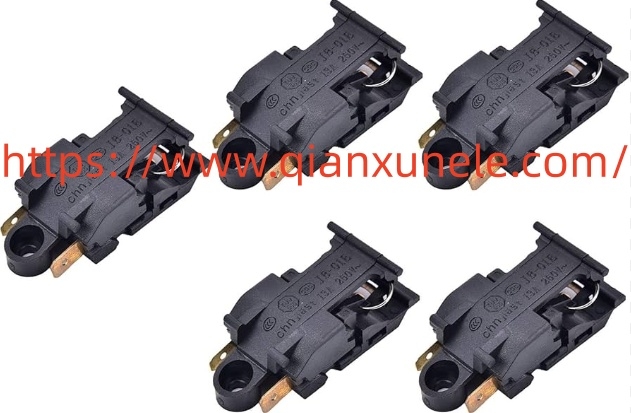

Kettlet Thermostat Coupling is an important connection component in electric kettle assemblies, providing an electrical interface between the appliance and its power base. Its design affects connection compatibility, assembly arrangements, and electrical performance. For international buyers, selecting a suitable model requires more than comparing product appearance or quotations. Understanding the construction, rated parameters, contact materials, and manufacturing arrangements can help purchasing teams identify products that correspond with their appliance designs.
Examine the Connection Structure
The structural arrangement should be one of the first considerations during product evaluation. A two-piece configuration consists of separate sections designed to work together when the kettle is placed on its power base.
Buyers should understand how the upper and lower sections connect, how the contacts align, and how the assembly fits into the appliance structure.
The matching dimensions of both sections are particularly important. Differences in height, diameter, or terminal position may affect installation and connection stability.
Manufacturers can request product drawings and physical samples to examine the construction before making a purchasing decision. This is especially useful when developing a new kettle model or replacing an existing connection assembly.
Verify Electrical Ratings
Electrical specifications determine whether a component is appropriate for the intended appliance circuit. Buyers should confirm rated voltage, current capacity, and operating frequency before placing an order.
For reference, the QX158B-A1 model listed in the qianxunele product range includes the following specifications:
- Rated voltage: 250V
- Rated current: 10A/13A
- Rated frequency: 50Hz/60Hz
- Contact resistance: ≤50mΩ
- Insulation resistance: ≥100MΩ (DC500V/1s)
These figures provide a technical reference for purchasing and engineering teams.
However, different models may have different electrical configurations. Buyers should always verify the actual specifications of the selected model and compare them with their appliance requirements.
Pay Attention to Contact Materials
The electrical contacts are responsible for maintaining the connection between the kettle and its power supply base. Their materials, surface condition, and contact arrangement can influence electrical continuity and heat generation.
During supplier evaluation, buyers should ask about the contact material, terminal construction, and relevant inspection methods.
Contact resistance is another parameter worth reviewing. A clearly specified value helps engineering teams assess the electrical characteristics of the product.
Insulation performance should also be considered because the component contains conductive sections operating within a household electrical appliance.
Requesting technical documentation can help purchasing teams understand these characteristics before approving a model for production.
Check Temperature Protection Parameters
Temperature protection is an important part of kettle appliance design. Buyers should review the operating temperature, protection temperature, and reset characteristics of the selected configuration.
For example, the published QX158B-A1 specifications include an operating temperature of 70±5℃ and a protection temperature of 130±5℃. The product information also identifies a self-reset dry-burning protection function.
These parameters should be evaluated according to the kettle's heating arrangement and intended operating conditions.
Manufacturers should ask suppliers how the protection mechanism operates and which testing procedures are used to verify its function. They should also confirm that the selected configuration meets the applicable requirements for the target market.
Evaluate Installation and Assembly Requirements
A component may have suitable electrical parameters but still require further evaluation if its dimensions do not match the appliance structure.
Buyers should check several physical details:
- Overall dimensions and mounting positions.
- Alignment between the two sections.
- Terminal direction and connection arrangement.
- Housing shape and fixing structure.
- Compatibility with the existing power base.
These details can influence assembly efficiency and the coordination of different appliance parts.
For OEM projects, engineering teams should conduct sample installation before confirming regular production. This allows potential fitting issues to be identified while product adjustments are still being discussed.
Review Quality Inspection and Documentation
Manufacturing processes and inspection arrangements deserve attention when selecting a long-term component supplier.
Buyers can ask about incoming material inspection, assembly management, dimensional verification, electrical testing, and finished product checks.
For this type of electrical component, relevant evaluation items may include contact resistance, insulation resistance, temperature response, and functional operation.
Certification documents are also worth discussing. The published product information lists CQC, TUV, CE, CB, and CCC certifications. Buyers should confirm which documents apply to the exact model they intend to purchase rather than assuming that every certification covers the entire product range.
qianxunele offers different product configurations for kettle applications, allowing buyers to discuss model specifications and relevant technical requirements with the manufacturer.
Discuss Customization and Delivery Arrangements
Different appliance manufacturers may have different requirements for terminal positions, dimensions, electrical ratings, and assembly methods. For this reason, customization possibilities should be discussed before production starts.
Buyers can prepare technical drawings, reference samples, estimated quantities, and target specifications to help suppliers understand the project.
It is also useful to confirm sample availability, minimum order quantities, packaging requirements, and delivery schedules. These details help purchasing departments coordinate component procurement with their production plans.
For distributors and importers, consistent product specifications across repeated orders can also simplify inventory planning and supplier communication.
Selecting a suitable connection assembly involves evaluating its electrical characteristics, physical construction, temperature protection functions, and compatibility with the intended appliance. Buyers who prepare clear technical requirements and arrange sample verification can make more informed purchasing decisions. For electric kettle manufacturers, distributors, and OEM purchasing teams seeking suitable components, qianxunele welcomes product inquiries and cooperation discussions. Visit https://www.qianxunele.com/ to review available products, request technical information, and discuss manufacturing requirements.



