

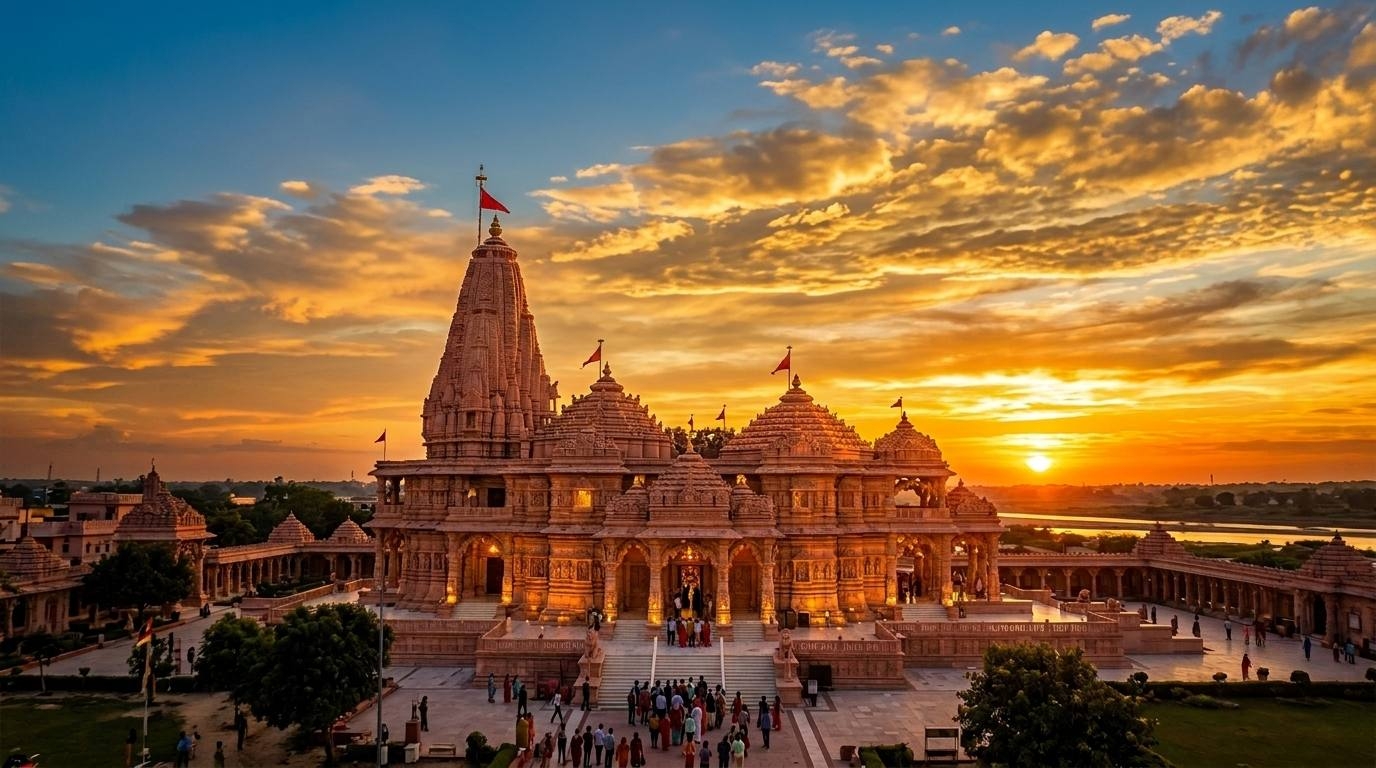

Kusum Sarovar holds a special place in the hearts of Krishna devotees because of its association with the divine pastimes of Radha and Krishna. Located near Govardhan in the Braj region, this historic water reservoir represents devotion, divine love, spiritual remembrance and the cultural heritage of Krishna's sacred land.
1. The Divine Connection Between Radha and Krishna
For Krishna devotees, the importance of this sacred reservoir begins with the stories of Radha and Krishna. According to popular Braj traditions, this is believed to be a place where Radha Rani and Lord Krishna met during their divine pastimes.
The name itself carries a beautiful meaning. The Sanskrit word Kusum means flower, while Sarovar means lake or reservoir. Together, the name refers to a lake associated with flowers.
Local devotional traditions describe Radha Rani visiting this area to collect flowers for her friends. Krishna would meet her here, and their playful conversations became part of the stories remembered by devotees.
These accounts are cherished as expressions of divine love rather than ordinary romantic encounters. In the devotional understanding of Braj, the relationship between Radha and Krishna represents the connection between the soul and the Supreme.
For visitors, understanding this background makes the experience more meaningful. The water, surrounding gardens and old stone structures are not simply historical features. They are part of a landscape remembered through centuries of devotion.
2. Why Kusum Sarovar Is Important in Krishna Devotion
The spiritual importance of this place goes beyond its association with a particular legend. It represents the wider devotional culture of Braj Bhoomi, where natural landscapes, village traditions and religious stories are closely connected.
Many Krishna devotees visit Govardhan to remember the pastimes of Lord Krishna. They consider the surrounding hills, ponds, forests and pathways sacred because of their connections with Krishna's life.
This reservoir is especially meaningful because it is associated with Radha Rani and the gopis. Their stories remind devotees of selfless devotion, affection and surrender.
Some visitors spend time quietly sitting near the water, remembering Radha Krishna through naam jap, prayer or personal reflection. Others visit as part of a larger pilgrimage around Govardhan.
There is no requirement to perform an elaborate ritual to appreciate the spiritual atmosphere. Even a peaceful visit, accompanied by respectful behaviour and remembrance of Radha Krishna, can become a meaningful experience.
For devotees who want to understand the wider Braj region before travelling, the Mathura Vrindavan pilgrimage travel resource can help with general destination planning.
3. Its Historical Importance and Beautiful Cenotaphs
Apart from its religious associations, this reservoir is an important part of the architectural history of the Mathura region.
The site was developed as a proper water reservoir by Raja Veer Singh Deo of Orchha around 1675. Later, the surrounding landscape received attention under Maharaja Suraj Mal, the ruler of Bharatpur.
The historical structures seen beside the water are particularly significant. These include sandstone cenotaphs, also known as chhatris, built in memory of Maharaja Suraj Mal and his queens.
The memorial complex was constructed under the patronage of his son, Maharaja Jawahar Singh, in the eighteenth century. Its architectural details reflect the craftsmanship and artistic traditions of that period.
Visitors can notice several interesting features:
- Elaborately carved sandstone pillars.
- Decorative domes and chhatris.
- Symmetrical architectural arrangements.
- Stone terraces overlooking the reservoir.
- Detailed carvings that reflect historical artistic traditions.
The cenotaphs provide a different perspective on the destination. While devotees connect the landscape with Radha Krishna, history enthusiasts can appreciate the patronage, architecture and craftsmanship associated with the Bharatpur rulers.
It is worth remembering that the religious legends and the documented history belong to different kinds of traditions. Both contribute to the identity of this place.
4. Its Connection With Govardhan Parikrama
Another reason devotees consider this destination important is its location along the traditional Govardhan pilgrimage route.
Govardhan Hill holds enormous significance in Krishna devotion. According to Hindu tradition, Lord Krishna lifted Govardhan Hill on his little finger to protect the people of Braj from torrential rain sent by Indra.
This event is remembered through Govardhan Parikrama, in which devotees circumambulate the sacred hill as an act of faith.
The traditional parikrama route passes several religious and historical places, including Manasi Ganga, Radha Kund, Shyam Kund and this historic reservoir.
For pilgrims, visiting these locations offers an opportunity to understand different aspects of Krishna's pastimes and the devotional traditions of Braj.
Some people complete the entire parikrama on foot, while others visit selected places according to their available time and physical comfort.
A visit to this reservoir can therefore be included as part of a broader Govardhan pilgrimage rather than treated as an isolated sightseeing stop.
If you are planning a full parikrama, remember that the walking distance and physical demands can be considerable. Elderly devotees and people with mobility concerns should plan suitable transport and resting arrangements.
5. A Place for Peace, Prayer and Spiritual Reflection
One of the most noticeable features of this destination is its peaceful atmosphere.
Unlike busy temple courtyards, where visitors often concentrate on entering the sanctum and completing darshan, the open surroundings here allow people to spend more time observing and reflecting.
The reservoir creates a calm setting for devotional activities. Visitors may sit quietly, remember Krishna's pastimes, chant devotional names or simply appreciate the surroundings.
For many devotees, the experience is closely connected with the idea of smaran, which means remembering the divine.
In Krishna bhakti, remembering the Lord is considered an important spiritual practice. Places associated with Krishna's pastimes naturally become meaningful settings for this remembrance.
Early morning is particularly suitable for people who prefer quieter surroundings and softer natural light. The atmosphere can be more comfortable before the afternoon heat, especially during warmer months.
Visitors should remember that this is a sacred and historical location. Loud music, littering, disturbing other visitors and treating the water as a recreational swimming area are inappropriate.
The best way to experience the place is to give yourself enough time rather than rushing through it for photographs.
6. The Best Time to Visit and What to Expect
Planning your visit properly can make a considerable difference, particularly if you are travelling with family or elderly members.
The Incredible India tourism listing gives the visiting hours as 6:00 AM to 6:00 PM. However, visitors should check locally for any changes or temporary restrictions before travelling.
Here is a practical guide to choosing your visiting time.
Early morning
Morning visits are suitable for devotees who prefer a quieter atmosphere. The weather is generally more comfortable, particularly during summer. It is also a good time for peaceful photography and prayer.
Late afternoon
The later part of the afternoon can be pleasant during cooler months. The changing natural light also makes the sandstone architecture particularly interesting to observe.
Winter months
November to February is generally a comfortable period for exploring Govardhan and its surrounding religious sites. Mornings and evenings can be cold, so carrying a light jacket is sensible.
Summer months
April to June can be extremely hot in this part of Uttar Pradesh. If visiting during this period, prefer early morning hours, carry drinking water and avoid prolonged outdoor activity around midday.
Monsoon season
The surrounding landscape can appear greener during the rainy season. However, wet pathways and changing weather conditions require additional care, particularly for elderly visitors.
Festivals and major pilgrimage occasions can bring larger crowds to the Govardhan area. If you prefer a quieter experience, consider choosing an ordinary weekday outside major festival periods.
7. Important Things to Remember Before Visiting
A little preparation helps visitors enjoy the spiritual and historical character of the destination without unnecessary inconvenience.
Dress respectfully: Choose comfortable and modest clothing suitable for visiting a religious destination. Traditional Indian clothing is perfectly appropriate, although there is no need to purchase special clothing.
Wear comfortable footwear: You may need to walk around the surrounding area and explore the architectural complex. Comfortable footwear is useful, particularly when visiting several Govardhan locations in one day.
Respect the water: Avoid entering the reservoir for swimming or washing. Do not throw flowers, plastic, food packets or other waste into the water.
Be considerate while photographing: The architecture offers many interesting photography opportunities. However, avoid disturbing people who are praying or engaging in devotional activities.
Carry essentials: Drinking water, sun protection, personal medicines and some cash can be useful. Facilities may differ depending on the area and season.
Plan transport carefully: If you are visiting from Mathura or Vrindavan, consider the time required to travel between destinations. Govardhan has several religious sites, and attempting to cover everything in a few hours can make the day tiring.
Give the location enough time: Do not treat the visit as simply another photography stop. Spend some time understanding its history and religious significance.
These small considerations help maintain the peaceful environment that makes the destination meaningful for devotees.
Frequently asked questions
1. Why is Kusum Sarovar famous among Krishna devotees?
It is associated with popular Braj traditions about the divine meetings and pastimes of Radha and Krishna. Its connection with flowers, devotion and the wider Govardhan pilgrimage makes it an important destination for Krishna devotees.
2. Where is Kusum Sarovar located?
It is located near Govardhan in the Mathura district of Uttar Pradesh. It is situated along the traditional Govardhan Parikrama route and can be included in a pilgrimage covering other sacred locations in the region.
3. What is the meaning of the name Kusum Sarovar?
Kusum means flower in Sanskrit, while Sarovar means lake or reservoir. The name reflects the traditional association of this place with flowers and the stories of Radha Rani collecting flowers during Krishna's pastimes.
4. What are the visiting hours?
The Incredible India tourism listing mentions visiting hours of 6:00 AM to 6:00 PM. It is sensible to confirm local access arrangements before travelling, as timings and restrictions can sometimes change.
5. Can Kusum Sarovar be visited during Govardhan Parikrama?
Yes. It is situated along the traditional Govardhan Parikrama route, making it a natural stop for pilgrims. Visitors can explore the historical structures, spend time in prayer and learn about the devotional traditions associated with the area.



