

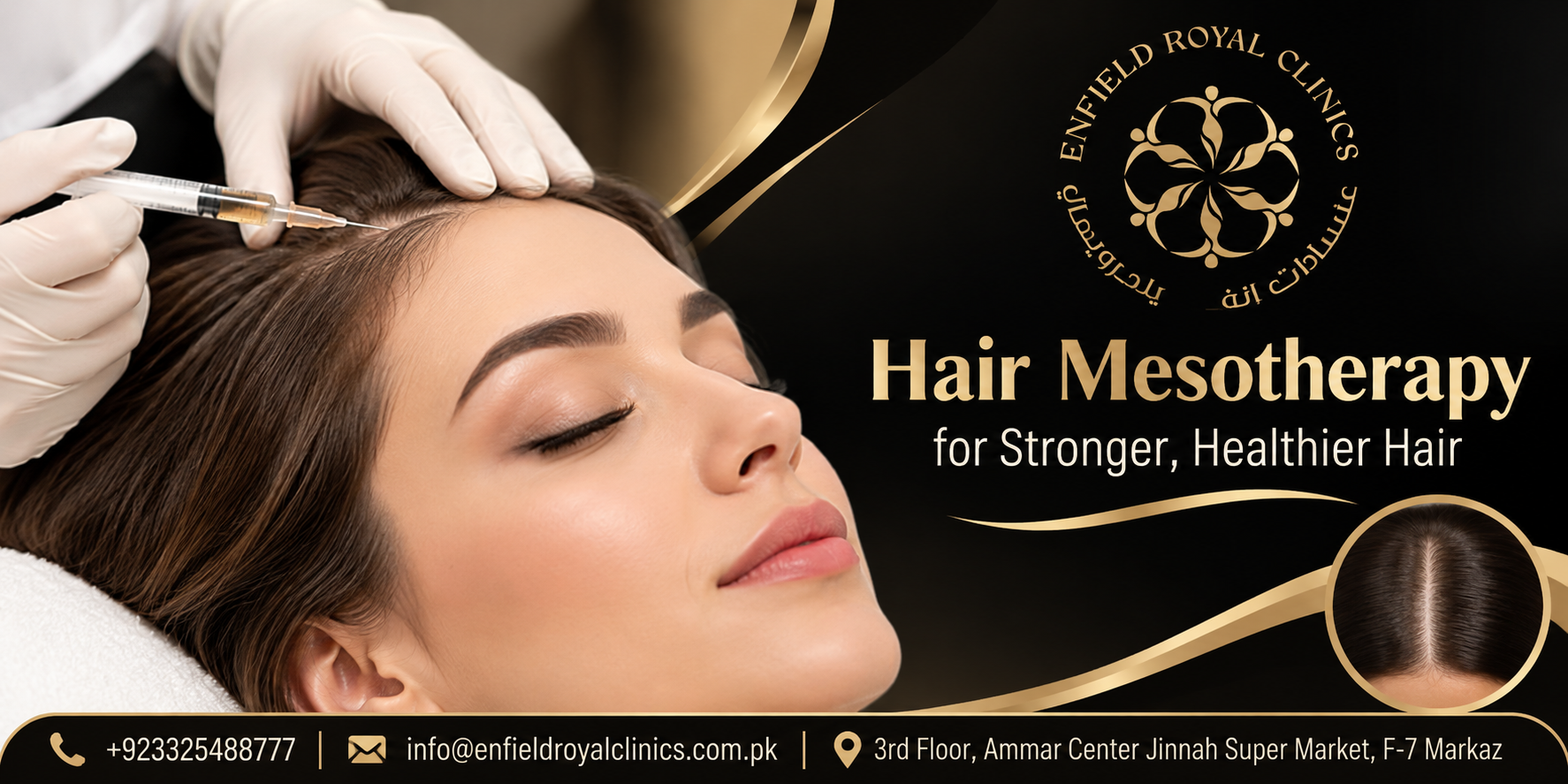

Hair loss is a common concern among men and women, affecting hair thickness, scalp health, and overall appearance. Factors such as genetics, hormonal changes, nutritional deficiencies, stress, and lifestyle habits can contribute to excessive hair shedding and gradual hair thinning. As people look for effective ways to manage these concerns, non-surgical hair restoration options have become increasingly popular. One treatment gaining attention is hair mesotherapy.
Hair Mesotherapy Treatment in Islamabad is an option for individuals interested in improving scalp health, nourishing hair follicles, and managing certain types of hair thinning. The treatment involves delivering selected nutrients and other active ingredients into the scalp through small injections. These ingredients are intended to support the hair follicles and create a healthier environment for hair growth.
Understanding how this treatment works, its potential benefits, and the results patients can expect can help individuals make informed decisions about their hair restoration journey.
What Is Hair Mesotherapy Treatment?
Hair mesotherapy is a minimally invasive procedure designed to support scalp health and address certain hair loss concerns. It involves injecting a customized combination of vitamins, minerals, amino acids, and other selected ingredients into the scalp.
These ingredients are intended to provide nutritional support to the scalp and hair follicles. Depending on the formulation, the treatment may aim to improve scalp nourishment, support existing hair, and reduce some forms of excessive hair shedding.
Unlike hair transplantation, mesotherapy does not involve surgically moving hair follicles from one area of the scalp to another. Instead, it focuses on supporting the existing follicles.
The treatment may be considered by individuals experiencing:
-
Mild to moderate hair thinning.
-
Excessive hair shedding.
-
Weak or fragile hair strands.
-
Reduced hair density.
-
Early signs of hair loss.
-
Scalp conditions affecting hair quality.
However, its effectiveness depends on the underlying cause of hair loss, the ingredients used, and the individual's response. It is important to understand that scientific evidence supporting hair mesotherapy remains limited, and it is not a guaranteed solution for every type of hair loss.
How Does Hair Mesotherapy Treatment Promote Hair Growth?
Hair mesotherapy aims to support the natural hair growth process by delivering selected ingredients directly into the scalp. Healthy hair growth depends on several factors, including follicle function, adequate nutrition, circulation, and a balanced scalp environment.
The treatment may support these factors in different ways.
1. Supporting Hair Follicle Nutrition
Hair follicles require essential nutrients to maintain normal growth and produce healthy hair strands. Certain mesotherapy formulations contain vitamins, minerals, amino acids, and other compounds selected to support follicle health.
These ingredients are intended to provide nutritional support around the treated areas. However, the results depend on the formulation, and injections cannot necessarily correct nutritional deficiencies throughout the body.
2. Improving the Scalp Environment
A healthy scalp plays an important role in maintaining strong hair. Dryness, irritation, inflammation, and certain scalp conditions can affect hair quality and contribute to shedding.
Hair mesotherapy may help support scalp health through carefully selected ingredients. A suitable treatment plan also considers existing scalp conditions and addresses them separately when necessary.
3. Supporting Existing Hair Follicles
Hair thinning can occur when follicles gradually produce finer and weaker strands. Some mesotherapy formulations are designed to support the function of existing follicles.
This approach may be more relevant to people with early hair thinning than individuals with completely bald areas where follicles are no longer producing hair.
4. Supporting Hair Quality
Some individuals experience weak, brittle, and dull hair because of nutritional or scalp-related concerns. Mesotherapy may help support the scalp environment, although improvements in hair strength and texture are not guaranteed.
It is important to remember that the treatment does not create new follicles or permanently reverse genetic hair loss.
What Are the Main Benefits of Hair Mesotherapy Treatment?
Hair mesotherapy has become an option for individuals who prefer non-surgical approaches to managing hair concerns. Its potential benefits depend on the patient's condition and the specific ingredients used.
Some commonly discussed advantages include:
-
Non-surgical approach: The procedure does not require incisions, stitches, or hair follicle transplantation.
-
Targeted application: Selected ingredients are delivered into specific areas of the scalp.
-
Scalp nourishment: Certain formulations are intended to support the nutritional environment around hair follicles.
-
Personalized treatment: The ingredients and treatment plan may be adjusted according to individual concerns.
-
Minimal downtime: Many patients can return to normal daily activities relatively quickly.
-
Support for existing hair: It may be considered as part of a broader hair management plan for selected patients.
Although these advantages make the procedure appealing, patients should have realistic expectations. Hair mesotherapy is not equally effective for everyone, and stronger evidence is needed to establish its long-term benefits.
Who Is a Suitable Candidate for Hair Mesotherapy?
Not everyone experiencing hair loss is an ideal candidate for mesotherapy. A proper scalp examination and assessment of the underlying cause are important before starting treatment.
Individuals who may be considered for the procedure include those experiencing early hair thinning, excessive shedding, or reduced hair density.
It may also be discussed as a complementary option for individuals who want to explore non-surgical hair restoration methods.
However, patients with advanced baldness may not achieve meaningful regrowth through mesotherapy alone. When hair follicles are permanently damaged or absent, other treatment options may be more appropriate.
People experiencing sudden hair loss, severe scalp irritation, infections, or unexplained shedding should receive a proper medical assessment before undergoing injections.
A qualified healthcare professional may recommend blood tests or other investigations to identify possible causes, such as iron deficiency, thyroid problems, or hormonal changes.
What Happens During a Hair Mesotherapy Session?
Understanding the treatment process can help patients feel more comfortable before their appointment.
Initial Consultation
The process generally begins with an assessment of the patient's hair condition, medical history, scalp health, and pattern of hair loss. This helps determine whether mesotherapy is an appropriate option.
Scalp Preparation
Before the procedure, the scalp is cleaned to reduce the risk of infection. Depending on the patient's comfort and treatment approach, a topical numbing product may be used.
Application of Mesotherapy Ingredients
Small injections are administered into selected areas of the scalp using fine needles or an appropriate injection device. The formulation varies according to the treatment plan.
The procedure usually takes a relatively short time, although the duration depends on the size of the treated area.
Aftercare Instructions
Following the session, patients may experience mild redness, tenderness, swelling, or small injection marks. These effects generally improve within a short period.
Patients are usually advised to follow specific aftercare instructions, avoid irritating the scalp, and keep the treated area clean.
How Many Sessions Are Needed for Visible Results?
Hair mesotherapy usually involves multiple sessions rather than a single appointment. The number and frequency of sessions depend on the patient's hair condition, treatment formulation, and response.
Some treatment plans involve sessions scheduled several weeks apart, followed by an assessment of progress.
Hair growth is a gradual biological process, so patients should not expect immediate changes. Any improvement in hair shedding, density, or quality may take several months to become noticeable.
Photographs taken before and during treatment can help patients monitor changes more accurately.
It is also important to understand that the results may not be permanent. Hair loss can continue because of genetics, hormonal changes, medical conditions, or other underlying factors. Maintenance or alternative treatments may be discussed depending on the patient's needs.
Is Hair Mesotherapy Treatment Safe?
Hair mesotherapy is generally considered minimally invasive, but it still involves injections and carries potential risks.
Possible side effects include:
-
Temporary redness and swelling.
-
Mild pain or tenderness.
-
Bruising around injection sites.
-
Itching or scalp irritation.
-
Infection if proper hygiene is not maintained.
-
Allergic reactions to injected ingredients.
The safety of the procedure depends on the substances used, the patient's medical history, and the qualifications of the person performing it.
Patients should ask about the exact ingredients in the formulation, potential allergic reactions, and available evidence supporting its use. Treatment should only be performed by an appropriately qualified healthcare professional using sterile equipment.
Why Consider Hair Mesotherapy Treatment in Islamabad?
Individuals exploring hair restoration options can find different approaches to managing hair loss. Choosing the right treatment requires understanding the cause of the problem rather than focusing only on cosmetic improvements.
Hair Mesotherapy Treatment in Islamabad may be considered by people interested in a non-surgical approach to scalp and hair care. However, a professional consultation is essential to determine whether the procedure is suitable.
Patients should consider the following factors before making a decision:
-
The qualifications and experience of the treating professional.
-
The ingredients and safety of the mesotherapy formulation.
-
The expected benefits and possible limitations.
-
The number of sessions recommended.
-
The availability of appropriate follow-up care.
-
Other evidence-based treatments that may be more suitable.
For some patients, treatments such as topical minoxidil or other medically recommended therapies may offer better-established benefits, depending on the diagnosis.
A personalized approach can help patients avoid unnecessary procedures and choose a treatment plan that addresses their actual hair concerns.
For more information visit Enfield royal clinic in islamabad
Frequently Asked Questions (FAQs)
1. Does hair mesotherapy treatment promote hair growth?
Hair mesotherapy aims to support scalp health and existing hair follicles by delivering selected ingredients into the scalp. However, evidence of its effectiveness for promoting significant hair regrowth remains limited.
2. Is hair mesotherapy treatment painful?
Patients may experience mild discomfort during the injections. Some treatment providers use topical numbing products to make the procedure more comfortable.
3. How long does hair mesotherapy treatment take to show results?
Hair growth takes time, and any noticeable changes may require several months. Results vary depending on the individual's hair condition, treatment formulation, and underlying cause of hair loss.
4. Can hair mesotherapy treatment stop hair fall permanently?
No treatment can guarantee permanent prevention of hair loss. Mesotherapy may support scalp health, but ongoing hair loss caused by genetics, hormonal changes, or medical conditions may require additional treatment.
5. Is hair mesotherapy suitable for both men and women?
It may be considered for both men and women experiencing certain types of hair thinning. Suitability depends on the cause and severity of hair loss and an individual's medical history.
6. Can hair mesotherapy treat advanced baldness?
Hair mesotherapy is unlikely to restore hair in completely bald areas where follicles are no longer functional. Individuals with advanced hair loss may need to explore other options, such as hair transplantation, after professional assessment.
Conclusion
Hair mesotherapy is a non-surgical approach designed to support scalp health and provide selected nutrients around existing hair follicles. It may be considered by individuals experiencing early hair thinning, excessive shedding, or reduced hair quality. However, its effectiveness varies, and scientific evidence supporting its ability to produce significant hair regrowth is still limited.
People considering Hair Mesotherapy Treatment in Islamabad should first identify the underlying cause of their hair loss and discuss suitable treatment options with a qualified healthcare professional. A personalized approach, realistic expectations, and appropriate follow-up care can help individuals make better decisions about maintaining healthier hair.



