

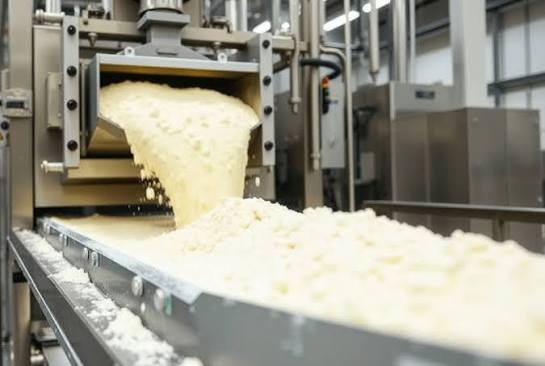
Milk Powder Manufacturing Plant Cost: Break-Even Analysis, Capacity Utilization and Profit Forecast

IMARC Group's report, "Milk Powder Manufacturing Plant Project Report 2026: Industry Trends, Plant Setup, Machinery, Raw Materials, Investment Opportunities, Cost and Revenue", offers a comprehensive guide for establishing a manufacturing plant. The milk powder plant cost report offers insights into the manufacturing process, financials, capital investment, expenses, ROI, and more for informed business decisions.
Milk Powder Manufacturing Plant Project Report Summary: -
- Comprehensive guide for setting up a milk powder manufacturing plant.
- Covers market trends and industry outlook for 2026.
- Detailed project setup, including unit operations and processes.
- Raw material and utility requirements.
- Infrastructure and machinery specifications.
- Workforce and staffing requirements.
- Packaging and transportation details.
- Financial aspects: investment opportunities, cost analysis, and revenue projections.
In addition to covering operational aspects, the report offers detailed insights into the milk powder manufacturing plant process and project economics.
- Detailed insights into the milk powder manufacturing plant
- In-depth project economics and financial metrics.
- Covers capital investments and project funding.
- Analysis of operating expenses and income projections.
- Breakdown of fixed and variable costs, direct and indirect expenses.
- Evaluation of ROI (Return on Investment) and NPV (Net Present Value).
- Profit and Loss account analysis.
- Comprehensive financial analysis for decision-making.
- Provides a roadmap for successfully establishing a milk powder manufacturing plant.
Request for a Sample Report: https://www.imarcgroup.com/milk-powder-manufacturing-plant-project-report/requestsample
What is milk powder?
Milk powder is a dairy product produced by removing moisture from liquid milk through processes such as spray drying or roller drying, resulting in a dry, shelf-stable powder. It is available in different varieties, including whole milk powder, skimmed milk powder, and buttermilk powder, depending on its fat content and processing method. Milk powder retains essential nutrients, including proteins, carbohydrates, vitamins, and minerals, making it a valuable ingredient in various food and beverage applications. It is widely used in the production of bakery products, confectionery, chocolates, infant formula, dairy beverages, ice cream, and processed foods. Its extended shelf life, reduced storage requirements, and ease of transportation make it a practical alternative to liquid milk, particularly in regions with limited cold-chain infrastructure. Additionally, milk powder can be reconstituted with water for consumption or incorporated directly into food formulations. Its versatility, nutritional value, and convenience have established it as an important ingredient across the global dairy and food processing industries.
Market Trends and Drivers:
The global milk powder market is primarily driven by increasing demand for convenient, nutritious, and shelf-stable dairy products across households and food processing industries. The expanding bakery, confectionery, infant nutrition, and ready-to-eat food sectors is supporting the widespread adoption of milk powder as a functional ingredient. Its ability to improve texture, flavor, nutritional content, and product consistency makes it valuable in various commercial food applications. The growing popularity of packaged and fortified foods, along with rising consumer awareness regarding protein intake, is further contributing to market expansion. Moreover, the increasing demand for infant formula and specialized nutritional products is creating opportunities for milk powder manufacturers. The global milk powder market size was valued at USD 38.47 Billion in 2025. According to IMARC Group estimates, the market is expected to reach USD 61.76 Billion by 2034, exhibiting a CAGR of 5.4% from 2026 to 2034.
Additionally, advancements in spray-drying technologies, improved processing efficiency, and enhanced packaging solutions are supporting product quality and shelf stability. The growth of e-commerce, expanding international dairy trade, and increasing demand from emerging economies are further strengthening market prospects. These factors, combined with the growing need for efficient dairy storage and transportation, are expected to support the continued development of the milk powder industry.
Break-Even Analysis for a Milk Powder Manufacturing Plant
The break-even analysis for a milk powder manufacturing plant helps investors determine the production and sales levels required to cover total capital and operating costs. The financial assessment considers raw milk procurement, utilities, labour, packaging, transportation, equipment maintenance, depreciation, and taxation to estimate the minimum revenue needed to achieve profitability. According to the IMARC Group report, raw materials account for approximately 75–85% of total operating expenses (OpEx), while utilities contribute around 10–15%. These cost components play a significant role in determining the break-even point and overall financial viability of the project. A comprehensive feasibility study should also assess fixed and variable costs, product pricing, cash flow, and sensitivity to changes in raw milk prices and production expenses. This analysis enables investors to evaluate financial risks, plan working capital requirements, and establish realistic profitability targets.
Production Capacity Utilization and Operational Efficiency
Milk powder manufacturing plant capacity utilization directly influences production efficiency, unit manufacturing costs, and revenue generation. According to the IMARC Group report, the proposed facility is designed with an annual production capacity of 10,000–20,000 metric tons. Achieving efficient capacity utilization requires a consistent supply of raw milk, reliable processing equipment, effective production scheduling, and adequate market demand. The manufacturing process involves pasteurization, evaporation, spray drying, and packaging, with each stage requiring effective resource management to maintain product quality and minimize operational interruptions. Optimizing equipment performance, reducing material wastage, and ensuring reliable utilities can help manufacturers improve output and control production costs. Financial projections should evaluate different capacity utilization levels to understand their impact on operating expenses, sales revenue, cash flow, and overall plant profitability.
Milk Powder Plant Profit Forecast and Financial Projections
The milk powder manufacturing plant profit forecast evaluates the relationship between production volumes, selling prices, operating expenses, and expected revenue. According to IMARC Group, the project demonstrates potential gross profit margins of 20–30% and net profit margins of 8–12% under normal operating conditions. These estimates provide a reference for assessing the project's earning potential, although actual profitability depends on raw milk prices, capacity utilization, product mix, market demand, and operating efficiency. A detailed financial projection should include annual income and expenditure, capital investment, depreciation, taxation, working capital, and cash flow forecasts. Investors should also assess the return on investment (ROI), payback period, net present value (NPV), and internal rate of return (IRR) to evaluate the long-term financial sustainability of the project. Sensitivity analysis can further help identify the effects of changes in input costs, product prices, and production volumes on overall profitability.
Ask Analyst for Customization: https://www.imarcgroup.com/request?type=report&id=8428&flag=C
Customization Options Available:
- Plant Location: Selection of optimal location for the plant.
- Plant Capacity: Customization based on desired production capacity.
- Machinery: Choice between automatic, semi-automatic, or manual machinery.
- List of Machinery Providers: Identification of suitable machinery suppliers.
Key Questions Addressed in This Report:
- How has the milk powder market performed so far and how will it perform in the coming years?
- What is the market segmentation of the global milk powder market?
- What is the regional breakup of the global milk powder market?
- What are the price trends of various feedstocks in the milk powder industry?
- What is the structure of the milk powder industry and who are the key players?
- What are the various unit operations involved in a milk powder manufacturing plant?
- What is the total size of land required for setting up a milk powder manufacturing plant?
- What is the layout of a milk powder manufacturing plant?
- What are the machinery requirements for setting up a milk powder manufacturing plant?
- What are the raw material requirements for setting up a milk powder manufacturing plant?
- And more...
How IMARC Can Help?
IMARC Group is a global management consulting firm that helps the world's most ambitious changemakers to create a lasting impact. The company provide a comprehensive suite of market entry and expansion services. IMARC offerings include thorough market assessment, feasibility studies, company incorporation assistance, factory setup support, regulatory approvals and licensing navigation, branding, marketing and sales strategies, competitive landscape and benchmarking analyses, pricing and cost research, and procurement research.
Services:
- Plant Setup
- Factoring Auditing
- Regulatory Approvals, and Licensing
- Company Incorporation
- Incubation Services
- Recruitment Services
- Marketing and Sales
Contact Us:
IMARC Group
134 N 4th St. Brooklyn, NY 11249, USA
Email: [email protected]
Tel No:(D) +91 120 433 0800
United States: +1-201971-6302



