

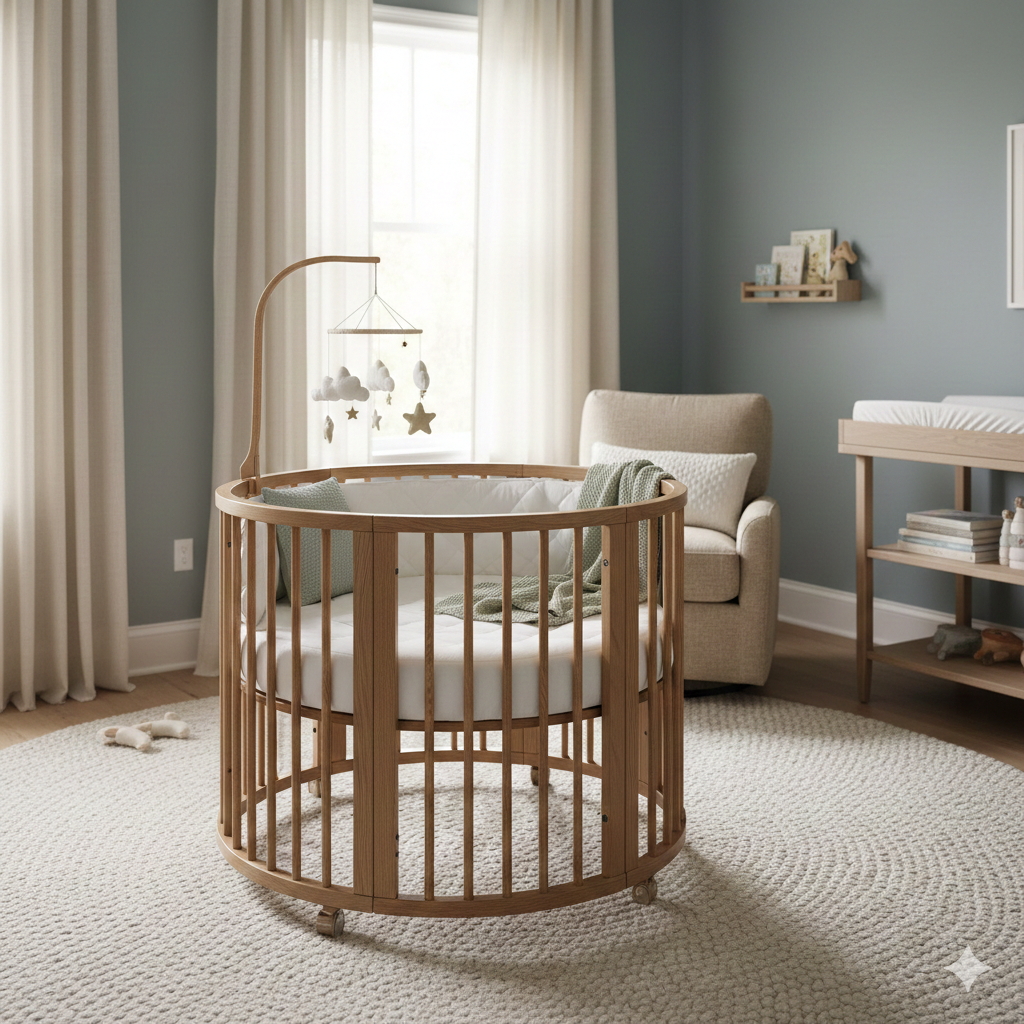
It's late, the baby is finally asleep, and you're scrolling for crib sheets. You add a pretty set to your cart, it arrives, and the fitted sheet hangs off the mattress like a loose sock. You paid for crib bedding, so why doesn't it fit your crib?
The answer is that your crib isn't the size most bedding is made for. Mini cribs are a different product, and their bedding follows different rules. This guide explains what changes, what to look for, and what to skip.
What changes the outcome most
A mini crib bedding set differs from a standard set mainly in size. It is cut for a smaller mattress, usually around 38 by 24 inches, while a standard crib mattress is about 52 by 28 inches. The set also tends to include fewer pieces, and a snug sheet matters more than any decorative item.
Four factors decide whether a set works well for you.
- Mattress dimensions. Mini crib mattresses vary by maker, so a few inches of difference can mean a loose sheet.
- Mattress thickness. A thicker mattress needs deeper sheet pockets.
- Fabric. Breathable, durable cotton or a cotton blend holds up better to repeated washing.
- Piece count. More pieces mean more fabric you shouldn't actually put in the crib.
Get the first two right and most other problems disappear.
Why size is not a small detail
A standard fitted sheet on a mini mattress bunches up. Loose fabric is a safety concern, because a baby can get tangled in it or pull it into the sleep space. A fitted sheet should sit taut and flat, with no gaps at the corners.
Measure the mattress itself, not the crib frame. Check length, width, and thickness, then compare those numbers with the sheet's listed size. If the product page only says "mini crib," look for exact measurements before you buy.
Some mini cribs also have rounded corners or unusual shapes. Those models often need sheets made for them, so don't assume any mini sheet will do.
What's in the box, and what should stay out
Standard sets often come with a quilt, a bumper, a dust ruffle, and a crib skirt, along with sheets. Mini sets are usually pared down, and that's a good thing. Current safe sleep guidance for infants calls for a firm, flat mattress covered only by a fitted sheet. No bumpers, pillows, plush toys, or loose blankets.
That makes the fitted sheet the one piece you will use every night. Everything else is optional, and some pieces shouldn't go in the crib at all.
Pieces worth having
- Two or three fitted sheets, so a spare is ready after a spill.
- A waterproof mattress protector that fits snugly beneath the sheet.
- A crib skirt, if you like the look, since it sits outside the crib.
Pieces to leave out of the sleep space
- Bumpers, including thin mesh versions.
- Quilts, comforters, and blankets for a baby under one year.
- Pillows and positioners.
A quilt can still be useful as a wall hanging or a play mat for supervised tummy time. If a set includes items you won't use, ask whether you're paying for them.
Fabric, fit, and washing
Mini crib sheets get washed often, so fabric quality shows quickly. Soft cotton jersey and cotton percale are both common. Jersey stretches and fits snugly but can pill, while percale feels crisp and tends to stay smooth.
Look for deep pockets and elastic that goes all the way around. Elastic on only the corners can let the sheet creep up the sides. Wash new bedding before first use, and check the care label, since some fabrics shrink. A sheet that shrinks slightly may fit better, but one that shrinks a lot can pop off the mattress.
Style without the clutter
Because mini sets have fewer pieces, the sheet carries the design. That's a real advantage in a small room. A bold pattern on a single sheet can set the whole mood without crowding the space.
If you're building a room around the crib, pick one pattern and pull two calmer colors from it for the walls and textiles. For more playful ideas for your nursery, start with things that sit outside the crib, like wall art, a rug, or a lamp. That way the sleep space stays plain and safe while the room still feels like yours.
Mistakes that cost money
Most disappointments come from a few repeat errors.
- Buying by the word "crib." Standard and mini sizes are not interchangeable.
- Skipping the measurement. Two mini mattresses can differ by an inch or more.
- Choosing a set for the extras. A bumper or heavy quilt looks cute but adds nothing you can safely use.
- Buying only one sheet. Nighttime accidents happen, and a spare saves a stressful scramble.
- Ignoring the mattress protector. A snug protector extends the life of the mattress.
A set that includes the right sheet size beats a bigger set with the wrong one.
Thinking about how long you'll use it
Mini cribs are made for the early months, and the bedding follows that timeline. If you're wondering how long can you use a mini crib, the answer depends on your child's size and development, as well as the manufacturer's limits. Bedding you buy should be easy to replace, because you may switch to a larger crib or toddler bed sooner than you expect.
That's another reason to keep the purchase simple. Two or three good sheets and a protector will serve you better than an elaborate set you'll outgrow.
A short buying checklist
Before you check out, run through this list.
- Confirm the exact mattress measurements, including thickness.
- Check that the sheet lists the same dimensions.
- Look for deep pockets and full-perimeter elastic.
- Choose breathable fabric with clear care instructions.
- Count the pieces you'll actually put in the crib.
If a set passes all five, it's probably a good fit.
Conclusion
A mini crib is smaller, so its bedding must be too. The right mattress measurements, a snug fitted sheet, and breathable fabric matter far more than the number of pieces in the box. Keep the sleep space simple, leave out bumpers and blankets, and buy a spare sheet. Put your style into the rest of the room, and let the crib itself stay plain.
Frequently Asked Questions
Do mini crib sheets fit a play yard mattress?
Not usually, because play yard mattresses are often a different size and shape. Measure the pad and compare it with the sheet's listed dimensions before buying.
Is a mini crib the same thing as a portable crib?
No, although they are often confused. A mini crib is a compact full-featured crib, while a portable crib or play yard folds down for travel and usually has its own pad.
How many fitted sheets do I really need?
Two is the practical minimum and three is comfortable. That lets you swap in a clean sheet at 3 a.m. without waiting for the dryer.
How often should I wash mini crib sheets?
Wash them weekly as a routine, and right away after spit-up, leaks, or diaper accidents. Frequent washing keeps the sleep surface clean and helps you notice when a sheet is wearing thin.
Are organic cotton sheets worth the extra cost?
They can be a good choice if you want fabric made with fewer chemical treatments, but they aren't required for safety. Fit and breathability matter more than the label.
Can I use a mattress topper to make the mini crib softer?
No, a baby's sleep surface should be firm and flat. Extra padding or toppers can raise the risk of suffocation, so use only the mattress made for your crib.
What colors and patterns are best for a small nursery?
Light, soft colors tend to make a small room feel larger. A single patterned sheet paired with calm walls gives you personality without visual clutter.



