

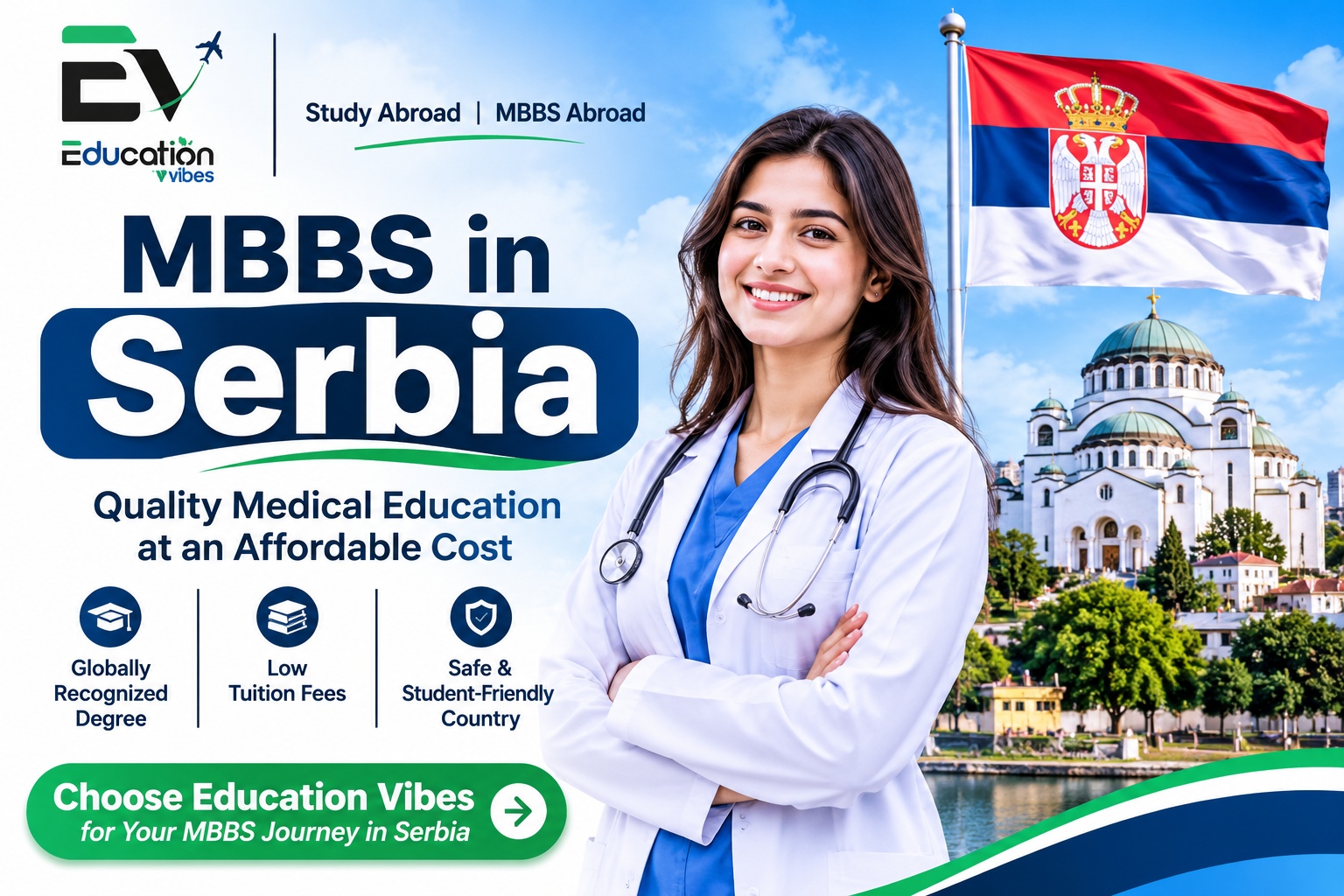
Planning Your Medical Career? Explore MBBS Opportunities in Serbia

In recent years, MBBS in Serbia has attracted attention from international students, including those from India. Serbian medical universities offer a 6-year medical degree, which includes 12 months of mandatory clinical internship. Students can benefit from European academic exposure, clinical training, and an affordable tuition fee. However, applicants should verify NMC compliance to build a bright career in their home country. Additionally, students should also check the university’s current accreditation, degree recognition, and clinical excellence.
Why consider MBBS in Serbia?
Serbia offers a good academic environment with the best medical facilities. The programme is taught in English to meet international standards.
-
Duration and course structure as per NMC guidelines
-
Affordable tuition fee and cost of living
-
English-language programme
-
International recognition
-
Clinical exposure
MBBS opportunities in Serbia
To pursue MBBS in Serbia, Indian students should choose a top university that complies with NMC guidelines. Also, admission requirements and cost are major factors in getting MBBS opportunities in Serbia.
Top universities of Serbia
-
University of Belgrade: University of Belgrade is one of the prominent choices for international medical students. Its English-language Medicine program follows a six-year integrated structure.
-
University of Novi Sad: The university’s English Medicine program lasts six years and carries 360 ECTS credits. It requires applicants to pass entrance examinations in Biology and Chemistry
-
University of Niš: The university also offers a six-year integrated Medicine program in English. For the 2026/27 academic year, its published tuition fee for Medicine in English is €6,000, making it an option worth investigating for students comparing overall study costs.
Admission Requirements
Admission requirements to study MBBS in Serbia include eligibility criteria for students and documentation.
Eligibility Criteria to study MBBS
In Serbia, eligibility criteria may vary by university and location. However, the basic eligibility criteria to study MBBS are as follows:
-
Previous qualifications: Students must pass the 12th from a recognised board or university with Physics, Chemistry, Biology, and English.
-
Academic percentage: The aggregate percentage in PCB must be at least 60%.
-
Minimum age: Students must be at least 17 years of age as of 31st December of the admission year.
-
NEET qualification: Indian graduates who intend to practice medicine in the home country must pass the NEET with at least the qualifying marks.
Documents for MBBS admission
The documents to be submitted during the admission process are as follows:
-
Passport-size photographs
-
Valid passport
-
10th and 12th marksheet
-
Medical Fitness certificate
-
Police clearance certificate
Costs and Financial Planning
Tuition is an important consideration when comparing Serbian medical schools. Apart from tuition fees, students should also budget for accommodation, food, transportation, health insurance, visa-related expenses, books, and other living costs. The actual budget will depend heavily on the city and individual lifestyle.
-
Tuition fee: 3000 to 8000 Euro per year
-
Hostel/accommodation: 800 to 1800 Euro per year
-
Health insurance: 200 to 500 Euro per year
What Indian Students Should Know
For Indian students, choosing a foreign medical university requires careful verification beyond tuition and admission requirements. The following points should be considered:
-
The Embassy of India in Belgrade specifically advises students to understand the requirements for medical registration in both Serbia and India.
-
Students intending to return to India after graduation must meet the applicable requirements of the Indian medical regulatory authorities.
-
Students should verify the university's current accreditation, degree recognition, clinical training structure, eligibility requirements, and the rules applicable to practising medicine in their intended country.
Final Thoughts
Serbia can be an attractive option for students seeking an English-taught medical degree in Serbia. Established universities, 6-year programs with practical clinical education, and competitive tuition at some institutions make it worth consideration. However, studying medicine abroad is a major financial and career decision. Students should compare universities carefully, check the latest admission requirements, understand recognition and licensing rules, and calculate the complete cost of education rather than focusing only on tuition fees. With thorough research and proper planning, Serbia could provide a valuable pathway toward an international medical education and a future career in medicine.



